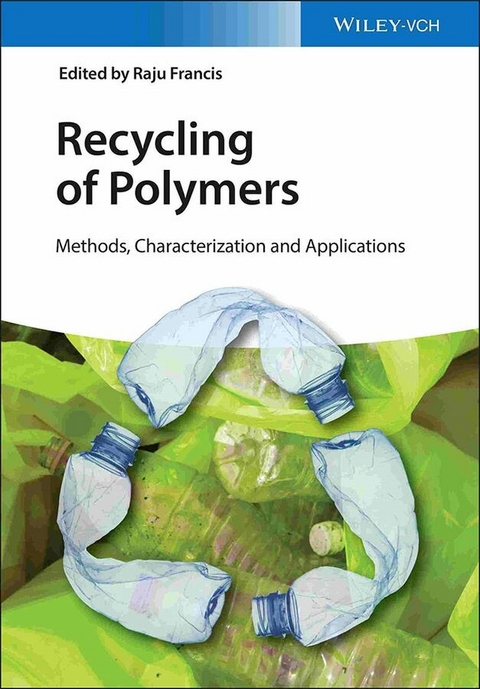
Recycling of Polymers (eBook)
Wiley-VCH Verlag GmbH & Co. KGaA
978-3-527-68903-3 (ISBN)
This timely reference on the topic is the only book you need for a complete overview of recyclable polymers.
Following an introduction to various polymer structures and their resulting properties, the main part of the book deals with different methods of recycling. It discusses in detail the recycling of such common polymers as polyethylene, polypropylene and PET, as well as rubbers, fibers, engineering polymers, polymer blends and composites. The whole is rounded off with a look at future technologies and the toxicological impact of recycled polymers.
An indispensable reference source for those working in the field, whether in academia or industry, and whether newcomers or advanced readers.
Raju Francis is associate professor at Mahatma Gandhi University, Kottayam, India. He obtained his PhD degree in chemistry from NIIST (RRL-T), University of Kerala, India, in 1998 and completed his postdoc at the University of Bordeaux, France, and at the University of Florida, USA. He was an exchange visitor at Toyo University, Japan, and at King Abdullah University of Science & Technology, Saudi Arabia.
His research interests include polymer-synthesis and applications, hybrid materials and environmental chemistry.
Raju Francis is associate professor at Mahatma Gandhi University, Kottayam, India. He obtained his PhD degree in chemistry from NIIST (RRL-T), University of Kerala, India, in 1998 and completed his postdoc at the University of Bordeaux, France, and at the University of Florida, USA. He was an exchange visitor at Toyo University, Japan, and at King Abdullah University of Science & Technology, Saudi Arabia. His research interests include polymer-synthesis and applications, hybrid materials and environmental chemistry.
Cover 1
Title Page 5
Copyright 6
Contents 7
Preface 13
List of Contributors 17
Abbreviations 19
Chapter 1 Introduction 21
1.1 Introduction 22
1.1.1 Why Recycling? 22
1.1.2 Sources of Waste 22
1.1.3 Plastics 23
1.1.4 Recycling of Plastics 23
1.1.5 Municipal Solid Waste 24
1.1.6 Various Stages of Recycling Plastic Wastes 26
1.1.7 Additives 26
1.1.8 Mixed Plastics 28
1.1.9 Composites 28
1.2 Conclusion 28
References 29
Chapter 2 Common Additives used in Recycling of Polymers 31
2.1 Review on Different Additives Used in Polymer Recycling 31
2.1.1 Introduction 31
2.1.1.1 Challenges in Recycling - Need for Additives 31
2.1.1.2 Equipment for Additive Processing 32
2.1.2 Different Types of Additives 32
2.1.2.1 Stabilizing Agents 34
2.1.2.2 Compatibilizers 39
2.1.2.3 Antioxidants 41
2.1.2.4 Impact Modifiers 43
2.1.2.5 Fillers and Modifiers 45
2.1.2.6 Antistatic Agents 46
2.1.2.7 Coloring Agents 46
2.1.2.8 Flame Retardants 47
2.1.2.9 Lubricants 48
2.1.2.10 Plasticizers 48
2.1.2.11 Antibacterial or Antimicrobial Additives 49
2.1.2.12 Coupling Agents 49
2.1.3 Conclusion 50
References 50
2.2 Recent Trends and Future of Polymer Additives in Macromolecular Recycling Technology: A Brief Overview 51
2.2.1 Introduction 51
2.2.2 Miscellaneous Additives 52
2.2.2.1 Nucleating Agents 52
2.2.2.2 Reinforcing Agents or Fillers 53
2.2.2.3 Optical Brighteners 56
2.2.2.4 Surface Improvers 57
2.2.2.5 Antiblocking Additives 59
2.2.2.6 Blowing Agents (Foaming Agents) 59
2.2.2.7 Antifogging Agents 61
2.2.3 New Trends in Additives Technology 63
2.2.3.1 Advances in Stabilizers 66
2.2.3.2 Advances in Flame Retardants (FRs) 66
2.2.3.3 Advances in Plasticizers 67
2.2.3.4 Advances in Coloring Agents 67
2.2.3.5 Advances in Fillers 68
2.2.3.6 Advances in Other Additive Classes 68
2.2.3.7 Multifunctional Additives 69
2.2.4 Conclusion 69
References 70
Chapter 3 Methods of Recycling 75
3.1 Methods of Recycling of Polymers: Addition Polymers 75
3.1.1 Introduction 75
3.1.2 Primary Recycling 78
3.1.3 Mechanical Recycling (or Secondary Recycling) 78
3.1.4 Chemical or Feedstock Recycling (Tertiary Recycling) 79
3.1.5 Energy Recovery (Quaternary Recycling) 80
3.1.6 Chemical Recycling of Polyethylene (LDPE and HDPE) 82
3.1.6.1 Introduction 82
3.1.6.2 Thermolysis Schemes and Technologies 83
3.1.6.3 Reactor Types 85
3.1.7 Polyolefin Thermal Cracking 86
3.1.7.1 Catalytic Degradation 86
3.1.8 Chemical Recycling of Polypropylene 87
3.1.8.1 Introduction 87
3.1.8.2 Pyrolysis 89
3.1.8.3 Co-pyrolysis 90
3.1.8.4 Catalytic Cracking 91
3.1.9 Chemical Recycling of Polystyrene 95
3.1.9.1 Introduction 95
3.1.9.2 Recycling Methods for Polystyrene Products 96
3.1.9.3 Future Prospects 103
3.1.10 Chemical Recycling of Poly(vinyl chloride) 103
3.1.10.1 Introduction 103
3.1.10.2 Mixed Plastic Recycling Processes 106
3.1.10.3 Mixed PVC Wastes World Initiatives 108
3.1.10.4 The BASF Feedstock Recycling Process 108
3.1.10.5 Veba Combi Cracking Process 110
3.1.11 Chemical Recycling of Poly(methyl methacrylate) 110
3.1.11.1 Introduction 110
3.1.11.2 Dissolution/Reprecipitation 111
3.1.11.3 Chemical/Feedstock Recycling 112
References 113
3.2 Methods of Recycling of Polymers: Condensation Polymers 121
3.2.1 Introduction 121
3.2.2 Chemical Recycling of Nylon 121
3.2.2.1 Introduction 121
3.2.2.2 Recycling Methods 121
3.2.3 Chemical Recycling Involving Depolymerization of Nylons Which Can Be Carried Out by Hydrolysis or Ammonolysis of Nylon 6,6 and Nylon 6 122
3.2.3.1 Hydrolysis of Nylon 6 122
3.2.3.2 Hydrolysis of Nylon 6,6 and Nylon 4,6 123
3.2.3.3 Ammonolysis of Nylon 6,6 123
3.2.3.4 Recovery of Nylon 6,6 Monomers 124
3.2.3.5 Catalytic Pyrolysis 125
3.2.3.6 Applications of Depolymerized Nylon 6 125
3.2.4 Chemical Recycling of Polycarbonate 125
3.2.4.1 Introduction 125
3.2.4.2 Recycling Techniques 126
3.2.5 Advantages of Recycling and Reuse of Polymers 130
References 132
Chapter 4 Recycling of Plastics 135
4.1 Introduction 135
4.2 Plastic Waste Management Scenario 137
4.3 Ways of Recycling 139
4.3.1 Reuse 140
4.3.2 Mechanical Recycling 141
4.3.3 Chemical Recycling 141
4.4 Poly(Lactic Acid) 142
4.5 Poly(Vinyl Chloride) 145
4.6 Polyethylene 146
4.7 Polypropylene 148
4.8 Polystyrene 149
4.9 Poly(Ethylene Terephthalate) (PET) 149
4.10 Applications 154
References 155
Chapter 5 Recycling of Rubber 161
5.1 Introduction 161
5.2 Rubber 162
5.3 Recycling of Rubber Products 163
5.3.1 Chemical Process 163
5.3.2 Physical Methods 165
5.3.2.1 Mechanochemical Techniques 165
5.3.2.2 Microwave Technique 166
5.3.2.3 Ultrasonic Technique 166
5.3.2.4 Twin-Screw Extruder 168
5.3.3 Biological Process 168
5.4 Applications of Recycled Rubber 172
5.4.1 Sound-Insulation Materials 172
5.4.2 Civil Engineering Applications 173
5.4.3 Oil Absorbent 174
5.4.4 Energy Production 174
5.4.5 Zinc Fertilizer 175
5.5 Concluding Remarks 175
References 176
Chapter 6 Fibers 183
6.1 Introduction 183
6.2 Natural Fibers 184
6.2.1 Kenaf 185
6.2.2 Cotton 187
6.2.3 Sisal 190
6.2.4 Asbestos 194
6.3 Synthetic Fibers 196
6.3.1 Nylon 197
6.3.2 Polyester 202
6.3.3 Glass Fiber 207
6.3.3.1 Glass Fiber-Reinforced Plastics 208
6.3.3.2 Mechanical Process 208
6.3.3.3 Thermal Process 208
6.3.3.4 Chemical Recycling 210
6.3.4 Carbon Fiber 212
6.3.4.1 Mechanical Recycling 212
6.3.4.2 Thermal Recycling 213
6.3.4.3 Chemical Recycling 215
6.4 Conclusion 218
References 218
Chapter 7 Recycling of Polymer Blends and Composites (Epoxy Blends) 229
7.1 Introduction 229
7.2 Polymer Blends and Composites 229
7.2.1 Methods of Recycling 233
7.2.1.1 Mechanical Recycling 233
7.2.1.2 Chemical Recycling 235
7.2.1.3 Thermal Recycling 236
7.3 Characterization and Application of Recyclates 238
7.4 Conclusions 239
References 239
Chapter 8 Recycling of Other Layered Mixed Plastics or Resins: Polyurethanes 243
8.1 Introduction 243
8.2 Mechanical Recycling 246
8.3 Chemical Recycling 247
8.3.1 Glycolysis 248
8.3.2 Hydrolysis 249
8.3.3 Aminolysis 249
8.4 Thermochemical methods 250
8.4.1 Pyrolysis 250
8.4.2 Gasification 250
8.4.3 Hydrogenation 250
8.5 Energy Recovery by Incineration 251
References 252
Chapter 9 Ecoprofiles of Recycled Polymers at a Glance 255
9.1 Advantages of Recycled Polymers on the Environment 255
9.1.1 Introduction 255
9.1.2 Poly(ethylene terephthalate) (PET) 256
9.1.3 High-Density Polyethylene (HDPE) 257
9.1.4 Poly(vinyl chloride) (PVC) 259
9.1.5 Polypropylene (PP) 260
9.1.6 Polystyrene (PS) 261
9.1.7 Other Polymers 262
9.1.8 Conclusion 265
References 265
9.2 Toxic or Environmental Effects of Recycled Polymers 268
9.2.1 Introduction 268
9.2.2 Will Recycling Reduce the Amount of Waste? 269
9.2.2.1 Recycling of Waste Electrical and Electronic Equipment (WEEE) 270
9.2.2.2 Recycling of Tires 271
9.2.2.3 Recycling of Plastics 271
9.2.2.4 Recycling of Polymers 271
9.2.2.5 Health Problems 272
9.2.2.6 Recycling by Polymer Incineration 272
9.2.3 Conclusion 273
References 273
Index 277
EULA 285
| Erscheint lt. Verlag | 6.10.2016 |
|---|---|
| Sprache | englisch |
| Themenwelt | Naturwissenschaften ► Chemie ► Organische Chemie |
| Technik | |
| Schlagworte | Additives • Chemical recycling • Chemie • Chemistry • Environmental Chemistry • Fibers • methods of recycling • Nachhaltige u. Grüne Chemie • Nachhaltige u. Grüne Chemie • Polymere • Polymer processing • Polymers • Polymer Science & Technology • Polymerverarbeitung • Polymerwissenschaft u. -technologie • Recycling • recycling plastic • recycling rubber • Sustainable Chemistry & Green Chemistry • thermolysis schemes • Umweltchemie |
| ISBN-10 | 3-527-68903-6 / 3527689036 |
| ISBN-13 | 978-3-527-68903-3 / 9783527689033 |
| Informationen gemäß Produktsicherheitsverordnung (GPSR) | |
| Haben Sie eine Frage zum Produkt? |
 PDF (Adobe DRM)
Kopierschutz: Adobe-DRM
Adobe-DRM ist ein Kopierschutz, der das eBook vor Mißbrauch schützen soll. Dabei wird das eBook bereits beim Download auf Ihre persönliche Adobe-ID autorisiert. Lesen können Sie das eBook dann nur auf den Geräten, welche ebenfalls auf Ihre Adobe-ID registriert sind.
Details zum Adobe-DRM
Dateiformat: PDF (Portable Document Format)
Mit einem festen Seitenlayout eignet sich die PDF besonders für Fachbücher mit Spalten, Tabellen und Abbildungen. Eine PDF kann auf fast allen Geräten angezeigt werden, ist aber für kleine Displays (Smartphone, eReader) nur eingeschränkt geeignet.
Systemvoraussetzungen:
PC/Mac: Mit einem PC oder Mac können Sie dieses eBook lesen. Sie benötigen eine
eReader: Dieses eBook kann mit (fast) allen eBook-Readern gelesen werden. Mit dem amazon-Kindle ist es aber nicht kompatibel.
Smartphone/Tablet: Egal ob Apple oder Android, dieses eBook können Sie lesen. Sie benötigen eine
Geräteliste und zusätzliche Hinweise
Buying eBooks from abroad
For tax law reasons we can sell eBooks just within Germany and Switzerland. Regrettably we cannot fulfill eBook-orders from other countries.
aus dem Bereich