
The Quantified Self (eBook)
John Wiley & Sons (Verlag)
978-1-5095-0063-5 (ISBN)
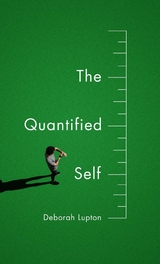
In this groundbreaking book Deborah Lupton critically analyses the social, cultural and political dimensions of contemporary self-tracking and identifies the concepts of selfhood and human embodiment and the value of the data that underpin them.
The book incorporates discussion of the consolations and frustrations of self-tracking, as well as about the proliferating ways in which people's personal data are now used beyond their private rationales. Lupton outlines how the information that is generated through self-tracking is taken up and repurposed for commercial, governmental, managerial and research purposes. In the relationship between personal data practices and big data politics, the implications of self-tracking are becoming ever more crucial.
Deborah Lupton is Centenary Research Professor at the University of Canberra
With the advent of digital devices and software, self-tracking practices have gained new adherents and have spread into a wide array of social domains. The Quantified Self movement has emerged to promote 'self-knowledge through numbers'. In this groundbreaking book Deborah Lupton critically analyses the social, cultural and political dimensions of contemporary self-tracking and identifies the concepts of selfhood and human embodiment and the value of the data that underpin them. The book incorporates discussion of the consolations and frustrations of self-tracking, as well as about the proliferating ways in which people's personal data are now used beyond their private rationales. Lupton outlines how the information that is generated through self-tracking is taken up and repurposed for commercial, governmental, managerial and research purposes. In the relationship between personal data practices and big data politics, the implications of self-tracking are becoming ever more crucial.
Deborah Lupton is Centenary Research Professor at the University of Canberra
Acknowledgements
Introduction
1 'Know Thyself': Self-tracking Practices and Technologies
2 'New Hybrid Beings': Theoretical Perspectives
3 'An Optimal Human Being': the Body and Self in Self-Tracking Cultures
4 'You are Your Data': Personal Data Meanings, Practices and Materialisations
5 'Data's Capacity for Betrayal': Personal Data Politics
Conclusion
References
Index
Shortlisted for the Foundation for the Sociology of Health and Illness Book Prize 2017
"Lupton's book is an excellent primer for readers interested in data surveillance, self-tracking cultures, and the increasing push to metricize aspects of personal experience that were previously not considered in statistical terms. Lupton's insight that no one alive today is exempt from becoming subjectedto digatization lends her project great immediate urgenc."
The British Society for Literature and Science
"The Quantified Self offers an excellent overview of the breadth and depth of issues related to self-tracking cultures. It is not only a useful resource for scholars and practitioners focusing on the value of quantified data with regard to health and bodily practices, but also an invitation to use self-tracking research in new kinds of political initiatives. Ultimately self-tracking is defined as a means of communicating and challenging dominant interests and aims."
Minna Ruckenstein, University of Helsinki
"Lupton's book is a fascinating read and I highly recommend it to researchers and practitioners who wish to gain a comprehensive account of self-tracking practices. Along with the commonly discussed topics of motivation and data representations, Lupton sheds light onto less explored topics, such as data-surveillance, while offering various theoretical foundations to support her arguments. Her writing is both visionary and provocative, and the book is a must read for researchers and practitioners of the Quantified Self movement."
Florian 'Floyd' Mueller, Director, Exertion Games Lab, RMIT University
"Impressive and comprehensive overview of the way in which people are tracking their lives using digital technologies"
Times Higher Education
"The Quantified Self is a careful, evenhanded survey of a trend that is on the cusp of seeming so ubiquitous that we'll soon forget how utterly specific the problems associated with this aspect of our sci-fi future are to the wealthy countries."
Inside Higher Education
1
‘Know Thyself’
Self-Tracking Technologies and Practices
The tracking and analysis of aspects of one's self and one's body are not new practices. People have been recording their habits and health-related metrics for millennia, as part of attempts at self-reflection and self-improvement. What is indisputably new is the term ‘the quantified self’ and its associated movement, as well as the novel ways of self-tracking with the help of digital technologies that have developed in recent years. In this chapter I discuss contemporary self-tracking practices and technologies, from the days of early lifelogging techniques and wearable computing devices with which people experimented in the 1990s to the vast array of technologies that are available today. This is followed by a review of existing empirical research, which has focused on those who take up self-tracking and their experiences.
The emergence of contemporary self-tracking
As I noted in the Introduction, various terms have been used over the years to describe self-tracking practices: lifelogging, personal informatics, personal analytics and the quantified self. Lifelogging is the most established term. The practice of lifelogging, under this name, emerged in the early days of personal computing, as computing engineers in research labs were experimenting with techniques and technologies (Sellen and Whittaker, 2010). Gordon Bell, an American computer scientist at Microsoft Research, is well known for his long-term lifelogging project. Bell took inspiration from an idea expounded by the American presidential science advisor, Vannevar Bush, who wrote an essay published in 1945 in which he asserted his belief that humans' ability to remember could be enhanced by technology. In this essay Bush introduced his idea of the Memex, a mechanised device in which people could store all their documents, records, books, letters and memos, as well as newspapers and an encyclopaedia. He suggested that people could also wear small cameras on their forehands to capture details of their daily lives and add them to the Memex archive (MyLifeBits, 2015; Thompson, 2006). Beginning in 1998, Gordon Bell attempted to record as many aspects of his life as possible using digital technologies, including all his correspondence and documents (scanning paper documents as well as storing emails and so on), books he had read, photos, home movies and videos, computer files, mementos, meetings, conversations and phone calls. Bell started wearing a camera in 2000 and an early health-tracking armband, BodyMedia, in 2002. He instigated the MyLifeBits project for Microsoft, expanding on this endeavour (MyLifeBits, 2015).
The developers of wearable computing devices were also among the earliest to experiment with monitoring aspects of their lives through these technologies. The first international symposium on wearable computers was held in 1997 and included papers that focused mainly on the uses of such devices (for example head-mounted devices and clothing embedded with sensors) for performing work-related tasks (IEEE, 1997). The symposium also discussed using wearable technologies for the performing arts, identifying emotions in the wearer, assisting people with disabilities, and telemedicine.
The Canadian computing engineer Steve Mann, a contributor to this first symposium, was one of the most prominent advocates of and experimenters with wearable computers in those early days. Mann began experimenting with using wearable computers in the 1970s. By the early 1980s he was using these devices, which to contemporary eyes appear very chunky and clunky, for recording personal information about his daily activities. Mann founded the MIT Wearable Computing Project at the MIT Media Lab in 1992. From 1993 on he wore a webcam and recorded and broadcast details of his everyday life in a continuous live feed, as part of his Wearable Wireless Webcam project. By 1998 Mann had reduced the size of his wearable recording device considerably and was wearing a pendant containing a camera as part of his attempts to create what he called a ‘lifeglog’ (a shortened version of the term ‘cyborglog’ or computerised automated lifelog) (Mann, 1997, 2013).
Artists and designers have experimented with lifelogging and wearable technologies for several decades. In 1974 Andy Warhol began a ‘time capsule’ project that continued until his death in 1987. It involved placing items that crossed his desk into cardboard boxes: books, catalogues, letters, photographs, newspapers and magazines, invitations and so on. By the time he died, he had accumulated over six hundred filled boxes, the contents of which have become archived and preserved at the Andy Warhol Museum (Allen, 2008). On Kawara, a Japanese conceptual artist who lived most of his adult life in the United States, spent decades noting down details of the people he met each day, the places he visited and the books he read. He developed a massive archive of these details that he enshrined in bound volumes. During an 11-year period, Kawara sent a postcard each day to friends and colleagues, recording the time he had awoken that morning and his geographical location. Each day for almost half a century – from 1966 to 2013 – Kawara also produced a ‘date painting’ recording each day's date; the ‘date painting’ was often accompanied by a storage box that usually contained a cutting from a newspaper published on that date. Another conceptual artist, the Italian Alberto Frigo, has embarked on a long-term lifelogging project that began when he was 24 and has spanned more than a decade thus far (Frigo, 2015). He plans to continue until 2040, when he turns 60: hence the title of his project, ‘2004–2040’. The project involves photographing every object that his right hand uses, as a way of monitoring his everyday activities. Frigo has also begun recording many other aspects of his life: details of his dreams, the songs he listens to, the external surroundings in which he moves each day, people he meets, new ideas, cloud shapes and the daily weather.
Developments in small-scale computerised technologies in the 1990s inspired many designers to experiment with wearable fashion and other objects that could be worn on the body, such as jewellery. Several of these designs involved methods of tracking and displaying elements of the wearers' bodies. An area of human–computing research also developed in this era, called ‘affective computing’ or ‘affective wearables’, which concentrated on working on wearables that were embedded with sensors designed to read users' emotional states and communicate them to others (Picard, 2000). The design arms of companies such as the electronics company Philips developed such prototypes. In 2008, for instance, Philips released a prototype called Fractals, digital jewellery or scarf arrangements that were designed to be a hybrid between clothing and jewellery. These objects sensed bodily changes of the wearer as well as the proximity of others' bodies, using LED (light-emitting diode) configurations to display the data that they gathered (Ryan, 2014).
Perhaps the most public face of self-tracking these days is the Quantified Self website. The term ‘quantified self’ was invented in 2007 by two Wired magazine editors, Gary Wolf and Kevin Kelly. They went on to establish meeting groups for interested people and then set up the official website (see Quantified Self, 2015c) and its associated Quantified Self Labs – a collaboration of users and toolmakers who are interested in working together to share technical expertise and experiences of self-tracking. The Quantified Self website provides discussion forums, supports regional meetings of members and two annual international conferences (QS Global in California and QS Europe in Amsterdam), and publishes a blog in which various aspects of self-tracking are explained and the strategies and findings of members about their own self-tracking efforts are publicised. An academic research institute, named the Quantified Self Institute, has also been established in the Netherlands by the Hanze University of Applied Science in collaboration with the Quantified Self Labs. According to the Quantified Self website, as of July 2015 there were 207 quantified self ‘meetup’ groups in 37 countries around the world, with a total of over 52,000 members (Quantified self meetup groups, 2015). Many of these groups hold regular meetings involving ‘show-and-tell’ discussions of how members have been engaging in self-tracking activities. Most of the groups are in the United States, but there are also many in Europe, ten in Asia and two in Australia.
As a journalist specialising in digital technologies and as co-founder of the Quantified Self movement, Gary Wolf has played a major role in announcing the quantified-self ethos and outlining its development. He wrote an initial article seeking to explain the concept of the quantified self for Wired. It was entitled ‘Know thyself: Tracking every facet of life, from sleep to mood to pain, 24/7/365’ (Wolf, 2009). Wolf's first paragraph described some of the numbers he has collected on his own life. These included the time he rose from bed each morning, how often he woke during the night, his heart rate, blood pressure, the time he spent exercising in the past 24 hours, his caffeine and alcohol consumption and his narcissism score. He...
| Erscheint lt. Verlag | 7.9.2016 |
|---|---|
| Sprache | englisch |
| Themenwelt | Naturwissenschaften |
| Sozialwissenschaften ► Kommunikation / Medien ► Kommunikationswissenschaft | |
| Sozialwissenschaften ► Kommunikation / Medien ► Medienwissenschaft | |
| Sozialwissenschaften ► Politik / Verwaltung | |
| Sozialwissenschaften ► Soziologie | |
| Schlagworte | Communication & Media Studies • Data • Data Mining • Internet surveillance • Kommunikation u. Medienforschung • <p>self-tracking • Media Studies • Medienforschung • Mediensoziologie • Neue Medien • New Media • self-improvement • Sociology • Sociology of the Media • Soziologie • Technology • wearable tech</p> |
| ISBN-10 | 1-5095-0063-4 / 1509500634 |
| ISBN-13 | 978-1-5095-0063-5 / 9781509500635 |
| Informationen gemäß Produktsicherheitsverordnung (GPSR) | |
| Haben Sie eine Frage zum Produkt? |
 EPUB (Adobe DRM)
Kopierschutz: Adobe-DRM
Adobe-DRM ist ein Kopierschutz, der das eBook vor Mißbrauch schützen soll. Dabei wird das eBook bereits beim Download auf Ihre persönliche Adobe-ID autorisiert. Lesen können Sie das eBook dann nur auf den Geräten, welche ebenfalls auf Ihre Adobe-ID registriert sind.
Details zum Adobe-DRM
Dateiformat: EPUB (Electronic Publication)
EPUB ist ein offener Standard für eBooks und eignet sich besonders zur Darstellung von Belletristik und Sachbüchern. Der Fließtext wird dynamisch an die Display- und Schriftgröße angepasst. Auch für mobile Lesegeräte ist EPUB daher gut geeignet.
Systemvoraussetzungen:
PC/Mac: Mit einem PC oder Mac können Sie dieses eBook lesen. Sie benötigen eine
eReader: Dieses eBook kann mit (fast) allen eBook-Readern gelesen werden. Mit dem amazon-Kindle ist es aber nicht kompatibel.
Smartphone/Tablet: Egal ob Apple oder Android, dieses eBook können Sie lesen. Sie benötigen eine
Geräteliste und zusätzliche Hinweise
Buying eBooks from abroad
For tax law reasons we can sell eBooks just within Germany and Switzerland. Regrettably we cannot fulfill eBook-orders from other countries.
aus dem Bereich