A Cultural Sociology of Anglican Mission and the Indian Residential Schools in Canada (eBook)
XIII, 161 Seiten
Palgrave Macmillan US (Verlag)
978-1-137-48671-4 (ISBN)
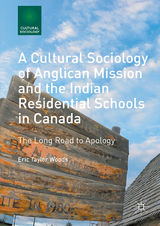
This book focuses on the recurring struggle over the meaning of the Anglican Church's role in the Indian residential schools--a long-running school system designed to assimilate Indigenous children into Euro-Canadian culture, in which sexual, psychological, and physical abuse were common. From the end of the nineteenth century until the outset of twenty-first century, the meaning of the Indian residential schools underwent a protracted transformation. Once a symbol of the Church's sacred mission to Christianize and civilize Indigenous children, they are now associated with colonialism and suffering. In bringing this transformation to light, the book addresses why the Church was so quick to become involved in the Indian residential schools and why acknowledgment of their deleterious impact was so protracted. In doing so, the book adds to our understanding of the sociological process by which perpetrators come to recognize themselves as such.
Eric Taylor Woods is Senior Lecturer in Sociology at the University of East London, UK. In addition to serving on the editorial boards of several journals, including Cultural Sociology and Nations and Nationalism, Woods is a Faculty Fellow of the Center for Cultural Sociology at Yale University, USA, and serves as an advisor to the Association for the Study of Ethnicity and Nationalism at the London School of Economics, UK.
This book focuses on the recurring struggle over the meaning of the Anglican Church's role in the Indian residential schools--a long-running school system designed to assimilate Indigenous children into Euro-Canadian culture, in which sexual, psychological, and physical abuse were common. From the end of the nineteenth century until the outset of twenty-first century, the meaning of the Indian residential schools underwent a protracted transformation. Once a symbol of the Church's sacred mission to Christianize and civilize Indigenous children, they are now associated with colonialism and suffering. In bringing this transformation to light, the book addresses why the Church was so quick to become involved in the Indian residential schools and why acknowledgment of their deleterious impact was so protracted. In doing so, the book adds to our understanding of the sociological process by which perpetrators come to recognize themselves as such.
Eric Taylor Woods is Senior Lecturer in Sociology at the University of East London, UK. In addition to serving on the editorial boards of several journals, including Cultural Sociology and Nations and Nationalism, Woods is a Faculty Fellow of the Center for Cultural Sociology at Yale University, USA, and serves as an advisor to the Association for the Study of Ethnicity and Nationalism at the London School of Economics, UK.
ContentsPreface
Introduction
Chapter One
Chapter Two
Chapter Three
Chapter Four
Conclusion
References
| Erscheint lt. Verlag | 14.7.2016 |
|---|---|
| Reihe/Serie | Cultural Sociology | Cultural Sociology |
| Zusatzinfo | XIII, 161 p. |
| Verlagsort | New York |
| Sprache | englisch |
| Themenwelt | Naturwissenschaften |
| Sozialwissenschaften ► Politik / Verwaltung | |
| Sozialwissenschaften ► Soziologie ► Spezielle Soziologien | |
| Schlagworte | anglican • Apology • Area Studies • Canada • Christianity • Civilizing Mission • Colonialism • Cultural Sociology • cultural trauma • Indian residential schools • Indigenous |
| ISBN-10 | 1-137-48671-6 / 1137486716 |
| ISBN-13 | 978-1-137-48671-4 / 9781137486714 |
| Informationen gemäß Produktsicherheitsverordnung (GPSR) | |
| Haben Sie eine Frage zum Produkt? |
 PDF (Wasserzeichen)
DRM: Digitales Wasserzeichen
Dieses eBook enthält ein digitales Wasserzeichen und ist damit für Sie personalisiert. Bei einer missbräuchlichen Weitergabe des eBooks an Dritte ist eine Rückverfolgung an die Quelle möglich.
Dateiformat: PDF (Portable Document Format)
Mit einem festen Seitenlayout eignet sich die PDF besonders für Fachbücher mit Spalten, Tabellen und Abbildungen. Eine PDF kann auf fast allen Geräten angezeigt werden, ist aber für kleine Displays (Smartphone, eReader) nur eingeschränkt geeignet.
Systemvoraussetzungen:
PC/Mac: Mit einem PC oder Mac können Sie dieses eBook lesen. Sie benötigen dafür einen PDF-Viewer - z.B. den Adobe Reader oder Adobe Digital Editions.
eReader: Dieses eBook kann mit (fast) allen eBook-Readern gelesen werden. Mit dem amazon-Kindle ist es aber nicht kompatibel.
Smartphone/Tablet: Egal ob Apple oder Android, dieses eBook können Sie lesen. Sie benötigen dafür einen PDF-Viewer - z.B. die kostenlose Adobe Digital Editions-App.
Buying eBooks from abroad
For tax law reasons we can sell eBooks just within Germany and Switzerland. Regrettably we cannot fulfill eBook-orders from other countries.
aus dem Bereich