Membrane Reactor Engineering (eBook)
John Wiley & Sons (Verlag)
978-1-118-90681-1 (ISBN)
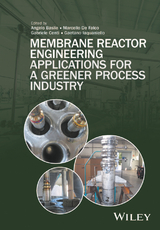
Uniquely focussed on the engineering aspects of membrane reactors
- Provides tools for analysis with specific regard to sustainability
- Applications include water treatment, wastewater recycling, desalination, biorefineries, agro-food production
- Membrane reactors can bring energy saving, reduced environmental impact and lower operating costs
Uniquely focussed on the engineering aspects of membrane reactors Provides tools for analysis with specific regard to sustainability Applications include water treatment, wastewater recycling, desalination, biorefineries, agro-food production Membrane reactors can bring energy saving, reduced environmental impact and lower operating costs
Angelo Basile is a senior researcher at the Institute on Membrane Technology (ITM) of the Italian National Research Council (CNR). His research is focussed on ultra-pure hydrogen production and CO2 capture using inorganic membrane reactors as well as on the polymeric membranes (preparation and characterization) to be used for gas separation. Basile has published over 100 papers in the field of membrane technology, written over 50 book chapters and edited or co-edited 15 books. Marcello De Falco is a researcher in the Engineering Faculty of University Campus Bio-Medico of Rome, Italy, and Assistant Professor of Dynamics and Control of Industrial Processes. His research activity is mainly focused on chemical reactors mathematical modelling, hydrogen production processes, solar technologies, and cogeneration plants design. He has edited 3 books. Gaetano Iaquaniello is Vice President Technology and Business Development at KT Kinetics Technology Spa, Rome, Italy, where he has worked for more than 30 years. He has published in the area of combustion and combustion control, syngas manufacturing and optimization, and more recently on membrane reactors. He is also author of more than 10 patents and patents' application. Gabriele Centi is Professor of Industrial Chemistry at the University of Messina, Italy, and President of the European Research Institute of Catalysis (ERIC). His research interests are in the areas of applied heterogeneous catalysis, sustainable energy and chemical processes, and environment protection. He has published over 30 reviews, over 300 scientific publications, is author/editor of 10 books of catalysis and over 10 special issues of international journals.
Preface vii
Contributors x
Part 1 Fundamental Studies on Membrane Reactor Engineering 1
1 Membrane Reactors: The Technology State-of-the-Art and Future Perspectives 3
Gaetano Iaquaniello, Gabriele Centi, Marcello De Falco and Angelo Basile
2 Criteria for a Palladium Membrane Reactor or Separator Design II: Concentration Polarization Effects 22
Moshe Sheintuch
3 Structured Catalysts and Support for Membrane Reactors 37
Vincenzo Palma, Marco Martino, Antonio Ricca and Paolo Ciambelli
4 Elements of Reactor Design and Development of Process Schemes for Membrane Reactors 59
Marcello De Falco and Angelo Basile
5 Ceramic Membranes with Mixed Ionic and Electronic Conductivity: Oxygen and Hydrogen Transporting Membranes - Synthesis, Characterization, Applications 75
Juergen Caro and Yanying Wei
6 Polymeric Membrane Reactors 104
K. Ghasemzadeh, A. Aghaeinejad?-Meybodi and Angelo Basile
7 Ceramic Membrane Reactors: Theory and Applications 138
K. Ghasemzadeh and Angelo Basile
Part 2 Applications 163
8 Membrane Reactors for Hydrocarbon Dehydrogenation 165
Gaetano Iaquaniello, F.S. Martorelli, Emma Palo, Annarita Salladini and Angelo Basile
9 Pd?-Based Membrane Reactors for Syngas Preparation and WGS 184
Gaetano Iaquaniello, Emma Palo and Annarita Salladini
10 Membrane Reactors Powered by Solar Energy 201
Alberto Giaconia and Luca Turchetti
11 Molten Salt Solar Steam Reforming: Process Schemes Analysis 225
Barbara Morico, Alessio Gentile and Gaetano Iaquaniello
12 Membrane Reforming Pilot Testing: KT Experiences 242
Annarita Salladini, Gaetano Iaquaniello and Emma Palo
13 Gas Separation by Polymer Membranes: Research Activity and Industrial Applications 256
Pluton Pullumbi
14 Pervaporation and Membrane Contactors 280
Angelo Basile, F. Galiano, S. Santoro and Alberto Figoli
15 Fuel Cells: A General Overview, Applications and Future Trends 313
Michel Cassir and Aturo Meléndez-Ceballos
Index 328
1
Membrane Reactors: The Technology State‐of‐the‐Art and Future Perspectives
Gaetano Iaquaniello1, Gabriele Centi2, Marcello De Falco3 and Angelo Basile4
1 Processi Innovation SRL, KT – Kinetics Technology S.p.A., Rome, Italy
2 Department of MIFT University of Messina, ERIC AISBL and INSTM/CASPE, Messina, Italy
3 Department of Engineering, University Campus Bio‐Medico of Rome, Italy
4 Institute of Membrane Technology of the Italian National Research Council (ITM‐CNR), Rende, Italy
1.1 Selective Membranes: State‐of‐the‐Art
IUPAC [1] defines membranes as structures having lateral dimensions much greater than their thickness, with the mass transfer regulated by a driving force, expressed as gradient of concentration, pressure, temperature, electric potential, and so on. In other words, a membrane is a permeable phase between two fluid mixtures, which allows a preferential permeation to at least one species of the mixture. So, the membrane acts as a barrier for some species whereas for other species it does not. In effect, the main function of the membrane is to control the relative rates of transport of the various species through its matrix structure giving a stream (permeate) concentrated in (at least) one species and another stream (retentate) depleted with the same species.
The performance of a membrane is related to two simple factors: flux and selectivity. The flux through the membrane (or permeation rate) is the amount (mass or molar) of fluid passing through the membrane per unit area of membrane and per unit of time. Selectivity measures the relative permeation rates of two species through the membrane, in the same conditions (pressure, temperature, etc.). The fraction of solute in the feed retained by the membrane is the retention. Generally, as a rule, a high permeability corresponds to a low selectivity and, vice versa, a low permeability corresponds to a high selectivity and an attempt to maximize one factor is compromised by a reduction of the other one. Ideally membrane with a high selectivity and with high permeability is required.
Membranes are used for many different separations: the separation of mixtures of fluids (gas, vapor, and miscible liquids such as organic mixtures and aqueous/organic ones) and solid/liquid and liquid/liquid dispersions, and dissolved solids and solutes from liquids [2].
Membrane processes are a well‐established reality in various technology fields, as testified, for example, by Figure 1.1, which describes the trend in scientific publications regarding “membranes” in the last 15 years.
Figure 1.1 Number of publications about “membranes” versus time. (Scopus database: www.scopus.com)
Membranes are applied to fluid treatment and they can be involved in different processes such as Microfiltration (MF), Ultrafiltration (UF), Nanofiltration (NF), Pervaporation (PV), Gas Permeation (GP), Vapor Permeation (VP), and Reverse Osmosis (RO) processes.
To briefly summarize [2]:
- MF is related to the filtration of micron and submicron size particulates from liquid and gases.
- UF refers to the removal of macromolecules and colloids from liquids containing ionic species.
- PV refers to the separation of miscible liquids.
- The selective separation of mixtures of gases and vapor and gas mixtures are called GP and VP, respectively.
- RO refers to the (virtual) complete removal of all material, suspended and dissolved, from water or other solvents.
The selective separation of species among others is related, in the aforementioned cases, to molecular size dimensions (see Figure 1.2). Furthermore, as reported in Figure 1.3, the pore size of useful membranes sets which kind of processes they can be applied for.
Figure 1.2 Separation capabilities of pressure driven membrane separation processes
Figure 1.3 Separation process as a function of the membrane pore diameter
Nowadays, membranes are also applied in many other important technological fields such as dialysis, electrodialysis, hemodialysis, electrofiltration, liquid membrane contactors, and membrane reactors. A schematic view to classify membranes is shown in Figure 1.4, in which they are subdivided by nature and geometry.
Figure 1.4 Schematic classification of the membranes.
Adapted from [3]
Membranes subdivided by their nature can be distinguished into biological and synthetic, differing completely by functionality and structure [4]. Biological membranes are simple to manufacture, presenting, however, a limited operating temperature (below 100°C) and pH range, and are difficult to clean‐up besides having a consistent exposure to microbial attacks. Synthetic membranes can be further classified into organic and inorganic. The organic membranes are limited under operation up to 250°C, whereas the inorganic ones show great stability in the range 300–800°C, sometimes up to 1000°C [5].
With particular reference to the fields of gas separation and membrane reactors, inorganic membranes can be porous [then classified according to their pore diameter in microporous (dp < 2 nm), mesoporous (2 nm < dp < 50 nm), macroporous (dp > 50 nm)] and dense. Moreover, microporous membranes may have “small pores” (dp ≈ 0.5 nm), “large pores” (dp = 0.5 – 2 nm), and a metal organic framework [6]. Inorganic membranes are defined as dense when dp < 0.5 nm.
Various mechanisms may regulate mass transport through membranes; some of them are very important and shown in Figure 1.5.
Figure 1.5 Representation of some mass transport mechanism through membranes
The Poiseuille (viscous flow) takes place in cases where the average pore diameter is bigger than the average free path of fluid molecules. A high number of collisions among different molecules is more frequent and consistent than that between the molecules and the porous wall, with the consequential absence of selective separation [7]. The Knudsen mechanism regulates mass transport when the average pore diameter is similar to the average free path of fluid molecules. In this case, the collisions between the molecules and the porous wall are very frequent and the permeating flux of such species is calculated by Eq. 1.1 [7]:
Ji is the flux of the i‐species permeating through the membrane, G is the factor depending on the membrane porosity and the pore tortuosity, Mi the molecular weight of the i‐species, R the universal gas constant, T the absolute temperature, Δpi pressure difference of species, and δ the membrane thickness. The surface diffusion takes place if the permeating molecules are adsorbed on the pore wall due to the active sites present in the membrane. This mechanism can be present when combined with Knudsen transport, even though it becomes less significant at higher temperatures because of the progressive decrease in the bond strength between molecules and surface. Capillary condensation occurs in the case of condensation of a species within pores because of capillary forces. This is possible only at low temperature and in the presence of small pores. Multi‐layer diffusion occurs in presence of strong interactions between molecule and surface, involving an intermediate flow regime between surface diffusion and capillary condensation [8]. The molecular sieve takes place in the case of very small pore diameters, allowing the permeation of only smaller molecules.
Regarding dense membranes, palladium and/or its alloys are the dominant materials in the field of hydrogen separation over a number of alternative materials such as tantalum, vanadium, nickel, titanium, and so on (cheaper than palladium and its alloys), particularly due to their characteristics of high hydrogen solubility in the membrane lattice, see Figure 1.6. Indeed, hydrogen molecular transport in dense membranes, with particular reference to palladium, takes place as a solution/diffusion mechanism developed for dense film thicker than 5 µm in six different activated steps [10] (see Figure 1.7):
- dissociation of molecular hydrogen at the gas/metal interface,
- adsorption of the atomic hydrogen on membrane surface,
- dissolution of atomic hydrogen into the palladium matrix,
- diffusion of atomic hydrogen through the membrane,
- re‐combination of atomic hydrogen to form hydrogen molecules at the gas/metal interface,
- desorption of hydrogen molecules.
Figure 1.6 Solubility of hydrogen in various metals.
Adapted from [9]
Figure 1.7 Permeation of hydrogen through a metallic membrane.
Adapted from [11]
In the case of full hydrogen perm‐selective palladium membranes, the equation regulating hydrogen permeating flux may be...
| Erscheint lt. Verlag | 1.8.2016 |
|---|---|
| Sprache | englisch |
| Themenwelt | Naturwissenschaften ► Chemie ► Technische Chemie |
| Technik ► Umwelttechnik / Biotechnologie | |
| Schlagworte | chemical engineering • Chemie • Chemische Verfahrenstechnik • Chemistry • Energie • Energieeffizienz • Energy • energy efficiency • Fuel cells • Grüne Chemie • Grüne Chemie • Inorganic membranes • Membrane • Membrane contactors • membrane gas separation • Membrane reactor • Membranreaktor • Nachhaltige u. Grüne Chemie • Nachhaltige u. Grüne Chemie • Pervaporation • Polymeric Membranes • Process modelling and optimization • Reactor Design • Sustainable Chemistry & Green Chemistry • Technology |
| ISBN-10 | 1-118-90681-0 / 1118906810 |
| ISBN-13 | 978-1-118-90681-1 / 9781118906811 |
| Informationen gemäß Produktsicherheitsverordnung (GPSR) | |
| Haben Sie eine Frage zum Produkt? |
 EPUB (Adobe DRM)
Kopierschutz: Adobe-DRM
Adobe-DRM ist ein Kopierschutz, der das eBook vor Mißbrauch schützen soll. Dabei wird das eBook bereits beim Download auf Ihre persönliche Adobe-ID autorisiert. Lesen können Sie das eBook dann nur auf den Geräten, welche ebenfalls auf Ihre Adobe-ID registriert sind.
Details zum Adobe-DRM
Dateiformat: EPUB (Electronic Publication)
EPUB ist ein offener Standard für eBooks und eignet sich besonders zur Darstellung von Belletristik und Sachbüchern. Der Fließtext wird dynamisch an die Display- und Schriftgröße angepasst. Auch für mobile Lesegeräte ist EPUB daher gut geeignet.
Systemvoraussetzungen:
PC/Mac: Mit einem PC oder Mac können Sie dieses eBook lesen. Sie benötigen eine
eReader: Dieses eBook kann mit (fast) allen eBook-Readern gelesen werden. Mit dem amazon-Kindle ist es aber nicht kompatibel.
Smartphone/Tablet: Egal ob Apple oder Android, dieses eBook können Sie lesen. Sie benötigen eine
Geräteliste und zusätzliche Hinweise
Buying eBooks from abroad
For tax law reasons we can sell eBooks just within Germany and Switzerland. Regrettably we cannot fulfill eBook-orders from other countries.
aus dem Bereich