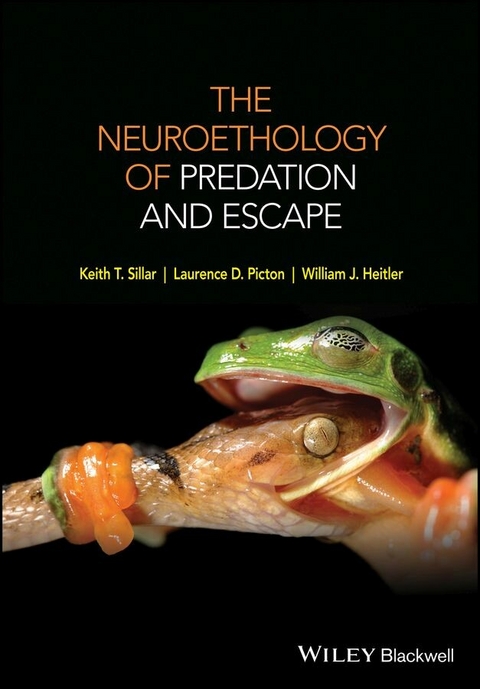
The forces of natural selection have been a primary driver in the evolution of adaptive animal behaviours. On the one hand animals must evade predation in order to survive and pass on their genes; on other hand, and for the same underlying reasons, animals must also be capable of successfully capturing prey. This situation has led to an evolutionary arms race in which predator and prey are locked in the battle to survive. A common strategy in each situation is to enhance the speed of response, resulting in the evolution of neural, muscular and biomechanical designs that produce supremely fast and eye-catching behavioral responses.
The aim of this book is to illuminate the design principles of escape and predatory behaviours using a series of case histories from different animal groups and to emphasize the convergent evolution of neural circuitry that optimizes the chances of survival. Using these case histories the authors describe sensory mechanisms that aid prey and predator detection, central neural circuit designs that increase speed of response and neuromuscular and biomechanical properties that aid the performance of escape and predatory movements.
Keith T. Sillar is Professor and Head of theSchool of Psychology & Neuroscience at the University of St Andrews, in Scotland. His research interests include neurology, neuroscience and amphibian neurology. Along with Dr Heitler, he teaches an exchange course on neuroethology in the US.
Dr William J Heitler is a reader at the School of Biology, University of St Andrews in Scotland, where his research interests include the neurology of crayfish and other crustacea, and escape behavior as well as more general neurology and neuroscience. He teaches an exchange course on neuroethology in the US in conjunction with Professor Sillar.
Laurence Picton is at the School of Psychology and Neuroscience at University of St Andrews, Scotland.
THE NEUROETHOLOGY OF PREDATION AND ESCAPE To eat and not get eaten is key to animal survival, and the arms race between predators and prey has driven the evolution of many rapid and spectacular behaviours. This book explores the neural mechanisms controlling predation and escape, where specialisations in afferent pathways, central circuits, motor control and biomechanics can be traced through to natural animal behaviour. Each chapter provides an integrated and comparative review of case studies in neuroethology. Ranging from the classic studies on bat biosonar and insect counter-measures, through to fish-eating snails armed with powerful neurotoxins, the book covers a diverse and fascinating range of adaptations. Common principles of biological design and organization are highlighted throughout the text. The book is aimed at several audiences: for lecturers and students. This synthesis will help to underpin the curriculum in neuroscience and behavioural biology, especially for courses focusing on neuroethology for postgraduate students. The sections devoted to your area of specialism will give a flying start to your research reading, while the other chapters offer breadth and insights from comparative studies for academic researchers. The book will provide a valuable resource and an enjoyable read Above all, we hope this book will inspire the next generation of neuroethologists.
Keith T. Sillar School of Psychology and Neuroscience, University of St Andrews, Scotland, UK Laurence D. Picton School of Psychology and Neuroscience, University of St Andrews, Scotland, UK William J. Heitler School of Biology, University of St Andrews, Scotland, UK
| Erscheint lt. Verlag | 1.4.2016 |
|---|---|
| Sprache | englisch |
| Themenwelt | Naturwissenschaften ► Biologie ► Ökologie / Naturschutz |
| Naturwissenschaften ► Biologie ► Zoologie | |
| Technik | |
| Schlagworte | Ãkologie u. Biologie der Organismen • animal behavior • Animal behaviour • Behavior & Behavioral Ecology • Biomechanics • Biowissenschaften • Ecology & Organismal Biology • Escape • Evolution, Ethology • Life Sciences • Neural Circuits • Neuroethologie • neuroethology • Neuroscience • Ökologie • Ökologie u. Biologie der Organismen • predation • startle • Verhalten • Verhaltensneurologie • Verhaltensphysiologie • Verhalten, Verhaltensökologie • Verhalten, Verhaltensökologie • Zoologie / Verhaltensforschung |
| ISBN-13 | 9781118527160 / 9781118527160 |
| Informationen gemäß Produktsicherheitsverordnung (GPSR) | |
| Haben Sie eine Frage zum Produkt? |
 PDF (Adobe DRM)
Kopierschutz: Adobe-DRM
Adobe-DRM ist ein Kopierschutz, der das eBook vor Mißbrauch schützen soll. Dabei wird das eBook bereits beim Download auf Ihre persönliche Adobe-ID autorisiert. Lesen können Sie das eBook dann nur auf den Geräten, welche ebenfalls auf Ihre Adobe-ID registriert sind.
Details zum Adobe-DRM
Dateiformat: PDF (Portable Document Format)
Mit einem festen Seitenlayout eignet sich die PDF besonders für Fachbücher mit Spalten, Tabellen und Abbildungen. Eine PDF kann auf fast allen Geräten angezeigt werden, ist aber für kleine Displays (Smartphone, eReader) nur eingeschränkt geeignet.
Systemvoraussetzungen:
PC/Mac: Mit einem PC oder Mac können Sie dieses eBook lesen. Sie benötigen eine
eReader: Dieses eBook kann mit (fast) allen eBook-Readern gelesen werden. Mit dem amazon-Kindle ist es aber nicht kompatibel.
Smartphone/Tablet: Egal ob Apple oder Android, dieses eBook können Sie lesen. Sie benötigen eine
Geräteliste und zusätzliche Hinweise
Buying eBooks from abroad
For tax law reasons we can sell eBooks just within Germany and Switzerland. Regrettably we cannot fulfill eBook-orders from other countries.
aus dem Bereich