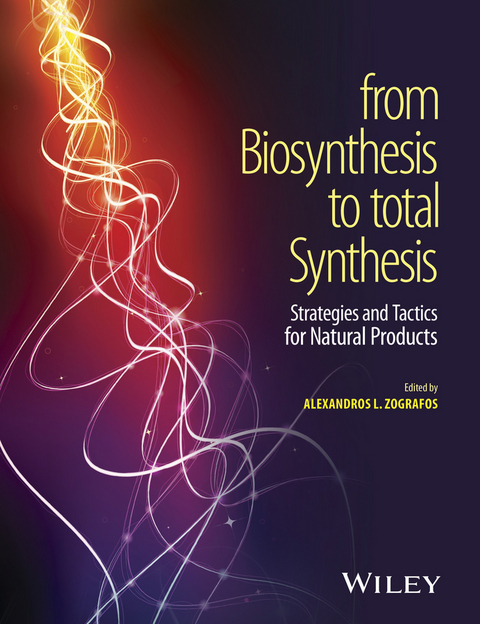
From Biosynthesis to Total Synthesis (eBook)
John Wiley & Sons (Verlag)
978-1-118-75363-7 (ISBN)
Focusing on biosynthesis, this book provides readers with approaches and methodologies for modern organic synthesis. By discussing major biosynthetic pathways and their chemical reactions, transformations, and natural products applications; it links biosynthetic mechanisms and more efficient total synthesis.
• Describes four major biosynthetic pathways (acetate, mevalonate, shikimic acid, and mixed pathways and alkaloids) and their related mechanisms
• Covers reactions, tactics, and strategies for chemical transformations, linking biosynthetic processes and total synthesis
• Includes strategies for optimal synthetic plans and introduces a modern molecular approach to natural product synthesis and applications
• Acts as a key reference for industry and academic readers looking to advance knowledge in classical total synthesis, organic synthesis, and future directions in the field
Alexandros L. Zografos graduated as a chemist from National University of Athens, Greece. After earning his PhD in 2001 at National Technical University of Athens he pursued postdoctoral studies with Prof. Phil Baran at The Scripps Research Institute and Prof. Scott Snyder at Columbia University before he moved back to Greece to work as a senior researcher at National University of Athens and NCRS Demokritos Institute. In 2009 he began his independent career at Aristotle University of Thessaloniki where he is currently Assistant Professor of Organic Chemistry. His group is working on divergent total synthesis of complex natural products and in the development of novel CH-activations.
Focusing on biosynthesis, this book provides readers with approaches and methodologies for modern organic synthesis. By discussing major biosynthetic pathways and their chemical reactions, transformations, and natural products applications; it links biosynthetic mechanisms and more efficient total synthesis. Describes four major biosynthetic pathways (acetate, mevalonate, shikimic acid, and mixed pathways and alkaloids) and their related mechanisms Covers reactions, tactics, and strategies for chemical transformations, linking biosynthetic processes and total synthesis Includes strategies for optimal synthetic plans and introduces a modern molecular approach to natural product synthesis and applications Acts as a key reference for industry and academic readers looking to advance knowledge in classical total synthesis, organic synthesis, and future directions in the field
Alexandros L. Zografos graduated as a chemist from the National and Kapodistrian University of Athens, Greece. After earning his PhD in 2001 at the National Technical University of Athens, he pursued his postdoctoral studies with Prof. Phil Baran at the Scripps Research Institute and Prof. Scott Snyder at Columbia University before he moved back to Greece to work as a senior researcher at the National and Kapodistrian University of Athens and NCRS Demokritos Institute. In 2009, he began his independent career at the Aristotle University of Thessaloniki, Greece, where he is currently an assistant professor of organic chemistry. His group is working on divergent total synthesis of complex natural products and on the development of novel CH activation reactions.
"The richness of the material in this book will appeal to
students as well as scientists alike...It can serve as an addition to a course on
natural products, but will also be of benefit to scientists
when looking into new or neighboring territory. I
am wholeheartedly can recommend the book to
anybody interested in the synthesis of natural
products." (Angewandte Chemie International Edition May 2017)
1
FROM BIOSYNTHESES TO TOTAL SYNTHESES: AN INTRODUCTION
Bastien Nay1 and Xu-Wen Li2
1 Muséum National d'Histoire Naturelle and CNRS (UMR 7245), Unité Molécules de Communication et Adaptation des Microorganismes, Paris, France
2 Shanghai Institute of Material Medica, Chinese Academy of Science, Shanghai, China
1.1 FROM PRIMARY TO SECONDARY METABOLISM: THE KEY BUILDING BLOCKS
1.1.1 Definitions
The primary and secondary metabolisms are traditionally distinguished by their distribution and utility in the living organism network. Primary metabolites include carbohydrates, lipids, nucleic acids, and proteins (or their amino acid constituents) and are shared by all living organisms on Earth. They are transformed by common pathways, which are studied by biochemistry (Fig. 1.1). Secondary metabolites are structurally diverse compounds usually produced by a limited number of organisms, which synthesize them for a special purpose, like defense or signaling, through specific biosynthetic pathways. They are studied by natural product chemistry. This distinction is not always so obvious and some compounds can be studied in the context of both primary and secondary metabolisms. This is especially true nowadays with the use of genetic and biomolecular tools, which tend to make natural product sciences more and more integrative. However, an important point to remember is that the primary metabolism furnishes key building blocks to the secondary metabolism. It would be difficult to describe in detail the full biosynthetic pathways in this section. We tried to organize the discussion as a vade mecum, synthetically gathering information from extremely useful sources, which will be cited at the end of this chapter.
Figure 1.1 Primary versus secondary metabolisms.
1.1.2 Energy Supply and Carbon Storing at the Early Stage of Metabolisms
The sunlight is essential to life except in some part of the deep oceans. It provides energy for plant photosynthesis that splits molecules of water into protons and electrons and releases O2 (Scheme 1.1). A proton gradient inside the plant chloroplasts then drags a transmembrane ATP synthase complex that produces adenosine triphosphate (ATP) while electrons released from water are transferred to the coenzyme reducer nicotinamide adenine dinucleotide phosphate hydride (NADPH). A major function of chloroplasts is to fix CO2 as a combination to ribulose-1,5-bisphosphate (RuBP) performed by RuBP carboxylase (rubisco), forming an instable “C6” β-ketoacid. This is cleaved into two molecules of 3-phosphoglycerate (3-PGA), which is then reduced into 3-phosphoglyceraldehyde (3-PGAL, a “C3” triose phosphate) during the Calvin cycle. This is one of the major metabolites in the biosynthesis of carbohydrates like glucose and a biochemical mean for storing and retaining carbon atoms in the living cells.
Scheme 1.1 The photosynthetic machinery (PS-I and PS-II, photosystems I and II).
1.1.3 Glucose as a Starting Material Toward Key Building Blocks of the Secondary Metabolism
Glucose-6-phosphate arises from the phosphorylation of glucose. It is the starting material of glycolysis, an important process of the primary metabolism, which consists in eight enzymatic reactions leading to pyruvic acid (PA) (Scheme 1.2). Important intermediates for the secondary metabolism are produced during glycolysis. Glucose, glucose-6-phosphate, and fructose-6-phosphate can be converted to other hexoses and pentoses that can be oligomerized and enter in the composition of heterosides. Additionally, fructose-6-phosphate connects the pentose phosphate pathway, leading to erythrose-4-phosphate toward shikimic acid, which is a key metabolite in the biosynthesis of aromatic amino acids (phenylalanine, tyrosine, or C6C3 units) and C6C1 phenolic compounds. The next important intermediate in glycolysis is 3-PGAL, which can be redirected toward methylerythritol-4-phosphate (MEP) in the chloroplast. MEP is a starting block in the biosynthesis of terpenes through C5 isoprene units (isopentenyl diphosphate (IPP) and dimethylallyl diphosphate (DMAPP)), especially those in C10, C20, and C40 terpenes. 3-PGA is a precursor of serine and other amino acids, while phosphoenolpyruvate (PEP), the precursor of PA, is also an intermediate toward the previously mentioned shikimic acid. Lastly, PA is not only a precursor of the fundamental “C2” acetyl coenzyme A (AcCoA) unit but also an intermediate toward aliphatic amino acids and MEP.
Scheme 1.2 The building block chart, involving glycolysis, and the Krebs cycle.
AcCoA is the building block of fatty acids, polyketides, and mevalonic acid (MVA), a cytosolic precursor of the C5 isoprene units for the biosynthesis of terpenes in the C15 and C30 series (mind it is different from the MEP pathway, in product, and in cell location). Finally, AcCoA enters the citric acid or Krebs cycle, which leads to several precursors of amino acids. These are oxaloacetic acid, precursor of aspartic acid through transamination (thus toward lysine as a nitrogenated C5N linear unit and methionine as a methyl supplier), and 2-oxoglutaric acid, precursor of glutamic acid (and subsequent derivatives such as ornithine as a nitrogenated C4N linear unit). All these amino acids are key precursors in the biosynthesis of many alkaloids.
1.1.4 Reactions Involved in the Construction of Secondary Metabolites
Most reactions occurring in the living cells are performed by specialized enzymes, which have been classified in an international nomenclature defined by an enzyme commission (EC) number. There are six classes of enzymes depending on the biochemical reaction they catalyze: EC-1, oxidoreductases (catalyzing oxidoreduction reactions); EC-2, transferases (catalyzing the transfer of functional groups); EC-3, hydrolases (catalyzing hydrolysis); EC-4, lyases (breaking bonds through another process than hydrolysis or oxidation, leading to a new double bond or a new cycle); EC-5, isomerases (catalyzing the isomerization of a molecule); and EC-6, ligases (forming a covalent bond between two molecules). Many subclasses of these enzymes have been described, depending on the type of atoms and functional groups involved in the reaction and, if any, on the cofactor used in this reaction. For example, several cofactors can be used by dehydrogenases like NAD(P)/NAD(P)H, FAD/FADH2, or FMN/FMNH2. For a description of this classification, the reader can refer to specialized Internet websites like ExplorEnz [1]. What is important to realize is that most enzymes are substrate specific and have been selected during evolution to perform specific transformations, making natural products with often and yet unknown functions.
Secondary metabolites arise from specific biosynthetic pathways, which use the previously defined building blocks. The bunch of organic reactions involved in these biosyntheses allows the construction of natural product frameworks, which are finally diversified through “decoration” steps (Scheme 1.3). It is not the purpose of this introductive chapter to describe in detail all biosynthetic pathways and the reader can refer to excellent books and articles, which have been published elsewhere [2, 3].
Scheme 1.3 (a) From building blocks to natural products and (b) the example of 10-deacetylbaccatin III.
The reactions involved in the construction of natural product skeletons will be described later for representative classes of compounds. The identification of the building block footprint in the natural product skeleton will be emphasized as much as possible, sometimes referring to biogenetic speculations [4]. After the framework construction, the decoration steps will involve as diverse reactions as aliphatic CH oxidations (e.g., involving a cytochrome P450 oxygenase) occasionally triggering a rearrangement, heteroatom alkylations (e.g., methylation by S-adenosylmethionine) or allylation (by DMAPP), esterifications, heteroatom or C-glycosylations (leading to heterosides), radical couplings (especially for phenols), alcohol oxidations or ketone reductions, amine/ketone transaminations, alkene dihydroxylations or epoxidations, oxidative halogenations, Baeyer–Villiger oxidations, and further oxygenation steps. At the end of the biosynthesis, such transformations may totally hide the primary building block origin of natural products.
1.1.5 Secondary Metabolisms
1.1.5.1 Polyketides
Polyketides (or polyacetates) are issued from the oligomerization of C2 acetate units performed by polyketide synthases (PKS) and leading to (C2)n linear intermediates [5, 6]. If the (C2)n intermediates arise from successive Claisen reactions performed by ketosynthase domains (KS, in nonreducing PKS), a highly reactive poly-β-ketoacyl intermediate H(CH2CO)nOH is formed, leading to phenolic and aromatic products through further intramolecular Claisen condensations. Furthermore, highly reducing PKSs are made of specialized enzymatic subunits working in line or iteratively to functionalize each C2 linker bond as CH(OH)CH2 (by ketoreductases (KR)), then as HCCH (by dehydratases (DH)), and as CH2CH2 (by enoyl reductases (ER)), leading to a...
| Erscheint lt. Verlag | 22.3.2016 |
|---|---|
| Sprache | englisch |
| Themenwelt | Naturwissenschaften ► Biologie ► Biochemie |
| Naturwissenschaften ► Chemie ► Organische Chemie | |
| Technik | |
| Schlagworte | Biochemie • Biochemie u. Chemische Biologie • Biochemistry (Chemical Biology) • Biosynthese • biosynthesis • biosynthetic mechanisms • biosynthetic pathways • biosynthetic routes • Biowissenschaften • Cell & Molecular Biology • Chemical Transformations • Chemie • Chemistry • Life Sciences • Natural Products Synthesis • Organic Chemistry • organic synthesis • Organische Chemie • Totalsynthese • total synthesis • Zell- u. Molekularbiologie |
| ISBN-10 | 1-118-75363-1 / 1118753631 |
| ISBN-13 | 978-1-118-75363-7 / 9781118753637 |
| Informationen gemäß Produktsicherheitsverordnung (GPSR) | |
| Haben Sie eine Frage zum Produkt? |
 EPUB (Adobe DRM)
Kopierschutz: Adobe-DRM
Adobe-DRM ist ein Kopierschutz, der das eBook vor Mißbrauch schützen soll. Dabei wird das eBook bereits beim Download auf Ihre persönliche Adobe-ID autorisiert. Lesen können Sie das eBook dann nur auf den Geräten, welche ebenfalls auf Ihre Adobe-ID registriert sind.
Details zum Adobe-DRM
Dateiformat: EPUB (Electronic Publication)
EPUB ist ein offener Standard für eBooks und eignet sich besonders zur Darstellung von Belletristik und Sachbüchern. Der Fließtext wird dynamisch an die Display- und Schriftgröße angepasst. Auch für mobile Lesegeräte ist EPUB daher gut geeignet.
Systemvoraussetzungen:
PC/Mac: Mit einem PC oder Mac können Sie dieses eBook lesen. Sie benötigen eine
eReader: Dieses eBook kann mit (fast) allen eBook-Readern gelesen werden. Mit dem amazon-Kindle ist es aber nicht kompatibel.
Smartphone/Tablet: Egal ob Apple oder Android, dieses eBook können Sie lesen. Sie benötigen eine
Geräteliste und zusätzliche Hinweise
Buying eBooks from abroad
For tax law reasons we can sell eBooks just within Germany and Switzerland. Regrettably we cannot fulfill eBook-orders from other countries.
aus dem Bereich