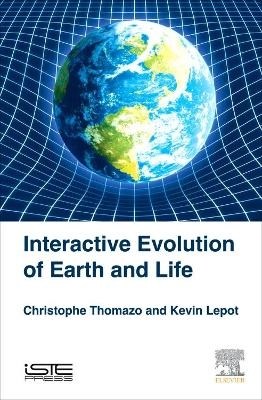
Interactive Evolution of Earth and Life
ISTE Press Ltd - Elsevier Inc (Verlag)
9781785481482 (ISBN)
Following different key geological formations of Precambrian ages, the authors present a general evolutionary scheme from an abiotic, hot, and anoxic inhospitable Earth system to the evolution of Eukaryotes in an environment suitable for the evolution for complex life. Key scientific results using geochemistry and micro- to nano-scale analyses are presented together with ongoing scientific debate on the biogenicity of the earliest traces of life on earth and the nature of their host environments.
Christophe Thomazo studied geology and biology at the University of Paris 7 and completed his PhD between 2005 and 2008 at the Institut de Physique du Globe de Paris. During his PhD he reported the results of an integrated stable isotope (carbon, oxygen, sulphur, and nitrogen) study of the Mesoarchean Tumbiana Formation and of the Paleoarchean North Pole Group (Dresser Formation; Western Australia) in order to put further insights on life evolution through carbon, sulphur, and nitrogen anabolism and catabolism pathways. He worked as a post doc associate researcher between 2009 and 2010 in the laboratory of Prof. Harald Strauß in the Institute of Geology and Palaeontology at the University of Muenster (Germany), where he explored the Precambrian evolution, in particular using multiple sulfur isotope (so called Mass Indepent Fractionation) to trace the oxygenation of the young earth. In 2010 he was appointed Associate Professor (Maître de conférences) in the Biogéosciences Laboratory (CNRS) of the University of Burgundy (Dijon, France). Dr Kevin Lepot is a lecturer within the Geosystems Lab at the University of Lille. His teaching consists of early microbial life, geobiology. His research group has extensive experience of characterization of rocks and living or sub-fossil microbial ecosystems using state of the art micro- to nano-scale characterization techniques. He has used these techniques to investigate the oldest microfossils, the oldest biomineralizations, as well as fossilization and mineralization processes in living and subfossil microbial mats and to investigate Precambrian microfossils and fossil macrostructures that putatively formed by microbial processes from Siberia, comparitively with modern microbially-formed macrostructures found in salt flats in France.
1. 4.4 Gy ago: Earth’s infancy.
2. 3.8 Gy ago: Oldest rocks and first evidences for life on Earth?
3. 3.5 Gy ago: Microbial sulfate reduction in marine and hydrothermal settings.
4. 3.4 to 3.2 Gy ago: The first morphological traces of life?
5. 2.9 Gy ago: The First Ice Age and the importance of methane in the early atmosphere.
6. 2.7 Gy ago: Stromatolite limestones and increasing metabolic diversity in oceans and lakes.
7. 2.5 Gy ago: Oceanic and atmospheric oxygenation and its consequences.
8. 2.3-1.8 Gy ago: Gunflint-type microbiota and the demise of ferruginous oceans.
9. 1.7-0.8 Gy ago - a boring, or exciting billion?
| Erscheinungsdatum | 03.12.2016 |
|---|---|
| Sprache | englisch |
| Maße | 152 x 229 mm |
| Themenwelt | Naturwissenschaften ► Biologie ► Evolution |
| Naturwissenschaften ► Biologie ► Ökologie / Naturschutz | |
| ISBN-13 | 9781785481482 / 9781785481482 |
| Zustand | Neuware |
| Informationen gemäß Produktsicherheitsverordnung (GPSR) | |
| Haben Sie eine Frage zum Produkt? |
aus dem Bereich