Fragment-based Drug Discovery (eBook)
416 Seiten
Wiley-VCH (Verlag)
978-3-527-68362-8 (ISBN)
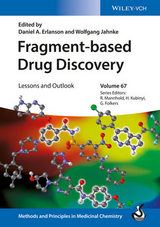
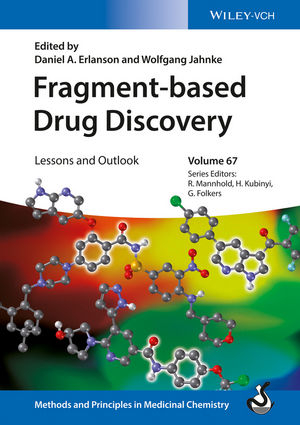
From its origins as a niche technique more than 15 years ago, fragment-based approaches have become a major tool for drug and ligand discovery, often yielding results where other methods have failed. Written by the pioneers in the field, this book provides a comprehensive overview of current methods and applications of fragment-based discovery, as well as an outlook on where the field is headed.
The first part discusses basic considerations of when to use fragment-based methods, how to select targets, and how to build libraries in the chemical fragment space. The second part describes established, novel and emerging methods for fragment screening, including empirical as well as computational approaches. Special cases of fragment-based screening, e. g. for complex target systems and for covalent inhibitors are also discussed. The third part presents several case studies from recent and on-going drug discovery projects for a variety of target classes, from kinases and phosphatases to targeting protein-protein interaction and epigenetic targets.
Daniel A. Erlanson is the co-founder and President of Carmot Therapeutics, Inc., which is developing fragment-based approaches to address unmet needs in drug discovery. Prior to Carmot, Dr. Erlanson worked in medicinal chemistry and technology development at Sunesis Pharmaceuticals, which he joined at the company's inception. Before Sunesis, he was an NIH postdoctoral fellow with Dr. James A. Wells at Genentech. Dr. Erlanson earned his Ph.D. in chemistry from Harvard University in the laboratory of Gregory L. Verdine and his BA in chemistry from Carleton College. He edits a blog devoted to fragment-based drug discovery, Practical Fragments.
Wolfgang Jahnke is a Director and Leading Scientist at the Novartis Institutes for Biomedical Research in Basel, Switzerland. His major interests are Structural Biophysics and Fragment-based Drug Discovery. He has received several honors, among them the Industrial Investigator Award from the Swiss Chemical Society, and several Novartis-internal Awards. Dr. Jahnke received his PhD from the TU München, working with Horst Kessler on the development and application of novel NMR methods. Prior to joining Novartis, he worked with Peter Wright at the Scripps Research Institute in La Jolla.
Daniel A. Erlanson is the co-founder and President of Carmot Therapeutics, Inc., which is developing fragment-based approaches to address unmet needs in drug discovery. Prior to Carmot, Dr. Erlanson worked in medicinal chemistry and technology development at Sunesis Pharmaceuticals, which he joined at the company's inception. Before Sunesis, he was an NIH postdoctoral fellow with Dr. James A. Wells at Genentech. Dr. Erlanson earned his Ph.D. in chemistry from Harvard University in the laboratory of Gregory L. Verdine and his BA in chemistry from Carleton College. He edits a blog devoted to fragment-based drug discovery, Practical Fragments. Wolfgang Jahnke is a Director and Leading Scientist at the Novartis Institutes for Biomedical Research in Basel, Switzerland. His major interests are Structural Biophysics and Fragment-based Drug Discovery. He has received several honors, among them the Industrial Investigator Award from the Swiss Chemical Society, and several Novartis-internal Awards. Dr. Jahnke received his PhD from the TU München, working with Horst Kessler on the development and application of novel NMR methods. Prior to joining Novartis, he worked with Peter Wright at the Scripps Research Institute in La Jolla.
PART I: The Concept of Fragment-based Drug Discovery
# 01 The Role of Fragment-Based Approaches in Lead Finding
# 02 Selecting the Right Targets for FBDD
# 03 Enumeration of Chemical Fragment Space
# 04 Ligand Efficiency Metrics and their Use in Fragment Optimizations
PART II: Methods and Approaches for Fragment-based Drug Discovery
# 05 Strategies for Fragment Library Design
# 06 The Synthesis of Biophysical Methods In Support of Robust Fragment-Based Lead Discovery
# 07 Differential Scanning Fluorimetry as Part of a Biophysical Screening Cascade
# 08 Emerging Technologies for Fragment Screening
# 09 Computational Methods to Support Fragment Based Drug Discovery
# 10 Making FBDD Work in Academia
# 11 Site-Directed Fragment Discovery for Allostery
# 12 Fragment Screening in Complex Systems
# 13 Protein-Templated Fragment Ligation Methods: Emerging Technologies in Fragment-Based Drug Discovery
PART III: Successes from Fragment-based Drug Discovery
# 14 BACE Inhibitors
# 15 Epigenetics and Fragment Based Drug Discovery
# 16 Discovery of Inhibitors of Protein-Protein Interactions Using Fragment-Based Methods
# 17 Fragment-Based Discovery of Inhibitors of Lactate Dehydrogenase A
# 18 FBDD Applications to Kinase Drug Hunting
# 19 An Integrated Approach for Fragment Based Lead Discovery: Virtual, NMR and High-Throughput Screening Combined with Structure Guided Design. Application to the Aspartyl Protease Renin
1
The Role of Fragment-based Discovery in Lead Finding
Roderick E. Hubbard
1.1 Introduction
Fragment-based lead discovery (FBLD) is now firmly established as a mature collection of methods and approaches for the discovery of small molecules that bind to protein or nucleic acid targets. The approach is being successfully applied in the search for new drugs, with many compounds now in clinical trials (see summary in [1]) and with the first fragment-derived compound now treating patients [2]. The approach has also had a number of other impacts such as providing starting points for lead discovery for challenging, unconventional targets such as protein–protein interactions [3–5], increasing the use of biophysics to characterize compound binding and properties, and providing small groups, particularly in academia, with access to the tools to identify chemical probes of biological systems [6,7].
The other chapters in this book will discuss the details and new advances in the methods and provide examples of how fragments have been used in specific projects. In this chapter, I will draw on my own experiences and view of the literature to discuss three main areas. First, I will review current practice in FBLD, highlighting how and when fragments have an impact on the drug discovery process. Second, I will then review how the ideas have developed, with particular emphasis on the past 10 years. I will discuss how fragment methods and thinking have been extended and refined and how these developments have affected the lead discovery process in drug discovery. Finally, I will discuss some of the areas where we can see that improvements in fragment methods could have further impact on discovery.
The discussion will focus on fragment-based discovery against protein targets. Although there are a few examples of fragments being used against RNA [8–10] and DNA [11] targets, the majority of reported campaigns are against proteins. Two types of protein target will be considered. The first shall be called conventional targets. These are proteins such as kinases where although it is never straightforward to achieve the required selectivity and balance of physicochemical properties in the compound, the proteins usually behave in most of the experiments and assays. Crystal structures are usually readily obtained, large amounts of pure, homogeneous, and functional proteins can be generated for biophysical studies, and the activity assays are robust and well understood. The second class of target shall be called unconventional targets. There are two types here – the first are protein–protein interaction targets such as the proapoptotic Bcl-2 family or Ras, where experience over the years has eventually established reasonably robust assays and although crystal structures take some time to determine and the protein does not always behave in biophysical assays, it is possible to establish structure-based discovery. The main challenge here is the nature of the binding sites, with often large, hydrophobic, and sometimes flexible sites. The second type of unconventional targets are the results of recent advances in our understanding of mammalian disease biology and consist of new classes of enzymes (such as the ubiquitin processing machinery [12]), disrupting multiprotein complexes, and proteins that are intrinsically disordered in some way (such as the one described in [13]). Here, the primary challenges are often in producing sufficient, homogeneous, functional protein for study, knowing what the post-translational modification state or even which complex is the true target and establishing robust assays to report on activity or binding. This last issue is often not appreciated – it can take a long time to establish the assays on new classes of target, not only because there is intrinsic variability in the behavior of the system but also because there is often not a tool compound available with which to validate the assay.
1.2 What is FBLD?
There are two distinctive features of fragment-based discovery compared to other approaches to lead finding. The first is that the discovery process begins with screening a small (usually 1–2000 member) library of low molecular weight (typically less than 20 heavy atom) compounds for binding to a particular site on the target. Key is the molecular weight of the fragments – they are big enough to probe interactions in the protein but small enough to minimize chances of unfavorable interactions. The second distinctive feature lies in the approach to optimizing these hits to lead compounds, either through careful, usually structure-guided, growth of the fragment or through merging information from fragments and elsewhere to generate optimized hits.
In many ways, fragments can be viewed as a state of mind – an approach to use the fragments as chemical tools to dissect what the requirements are for the chemical matter that affects a particular target in the desired way (affinity, selectivity) and using a combination of rational, usually structure-guided, and often biophysics-based methods for generation of the optimized compounds. We can define a fragment approach as one of intent – and that intent affects the strategy, methods, and thinking that is applied during the early parts of a discovery project. Detection and characterization of such weakly binding compounds can be problematic for some classes of target, with concerns over false positive and false negative hits, changes in binding mode, and so on. So, fragment methods engender a questioning, problem-solving approach to research. This is carried through into the usually structure-guided evolution of the initial fragment hits, which allows careful assembly of compounds that bind with high efficiency combined with suitable compound properties.
1.3 FBLD: Current Practice
Figure 1.1 and its legend summarize the contemporary approach to fragment-based discovery followed by most practitioners. There are five main components to a fragment platform: a fragment library, a method for finding which fragments bind, characterizing how the fragments bind by determining structure and biophysical measurements, exploring fragment SAR to identify the best fragment(s) to progress, and using the fragment(s) to generate lead compounds. Figure 1.1 also emphasizes how information about binding motifs is combined with information from HTS hits, literature compounds, or virtual screening hits. Other chapters in this book will provide detail on each of these different areas. In this chapter, I am focusing on the impact fragments have had on the lead discovery process. This is best done with some examples.
Figure 1.1 the FBLD process. There are five main components to a fragment platform. (a) Fragment library: there is an extensive literature on the design of fragment libraries [26,31,32,41]. The choice of compounds is constrained both by the demands of the screening methods (solubility, detection) and by the need to evolve the compounds (elaboration vectors, synthetic tractability) as well as avoiding reactive or toxic substructures. Key is the number of heavy atoms in the compounds. Analyses by Reymond [38,39] suggest that the number of possible lead-like compounds (chemical space) increases by around eightfold for each heavy atom. There are many approximations but this means that a fragment library of 1000 compounds of average MW 190 is equivalent to 108 compounds of MW 280 and 1018 compounds of MW 450. (b) Fragment screening: Table 1.1 summarizes the experiences at Vernalis over the years that are variously described elsewhere [15]. For all techniques, the main limitations are whether the protein target can be prepared in a suitable format for screening and whether the fragments are sufficiently soluble. The most robust method of screening is ligand-observed NMR, which has the dynamic range (typically from 5 mM to 100 nM) seen for fragment binding and particularly important for unconventional targets, as the integrity of the ligand and protein is checked at each experiment. (c) Characterizing fragment binding: for conventional targets, it is often possible to rapidly determine crystal structures of the fragment binding to the protein and, if the biochemical or binding assay is not suitable, use a biophysical method to validate and if possible quantify potency. For unconventional targets, this step is particularly important as the targets can have challenging binding sites, where conformational flexibility or large hydrophobic surfaces can challenge reliable detection of fragment binding. NMR methods can be used for unconventional targets, ranging from binding site localization (HSQC) to NMR-guided models (measuring NOE distances from ligand atoms to protein residues) and full structure determination. These are constrained by the size of the protein and requirement for isotope labeling. (d) Fragment SAR and optimization: there are two well-established methods – (1) SAR by catalog where features of the fragment are used to identify commercially available compounds for purchase and assay and (2) detailed design of bespoke compounds to optimize the fragment itself and explore potential vectors for elaboration. More recently, there have been new methods such as off-rate screening [16] that allow rapid profiling of compounds where substituents have been added to particular positions on the fragment, prospecting for suitable vectors for fragment evolution. This can be particularly important when limited structural information is available. (e) Fragment to candidate: medicinal chemistry optimization, supported where possible by rapid crystal...
| Erscheint lt. Verlag | 2.12.2015 |
|---|---|
| Reihe/Serie | Methods & Principles in Medicinal Chemistry |
| Methods and Principles in Medicinal Chemistry | Methods and Principles in Medicinal Chemistry |
| Mitarbeit |
Herausgeber (Serie): Raimund Mannhold, Hugo Kubinyi, Gerd Folkers |
| Sprache | englisch |
| Themenwelt | Naturwissenschaften ► Chemie |
| Technik | |
| Schlagworte | BACE inhibitors • Chemie • Chemistry • Computational Chemistry & Molecular Modeling • Computational Chemistry u. Molecular Modeling • Drug Discovery & Development • drug target screening • epigenetic medicinal chemistry • FBDD • Fragment-Based Drug Discovery • Fragmentbasierte Wirkstoffforschung • Fragment Screening • kinase drug hunting • kinase modeling • Methods - Synthesis & Techniques • Organische Chemie • Organische Chemie / Methoden, Synthesen, Verfahren • phosphatases • Wirkstoffforschung • Wirkstoffforschung u. -entwicklung |
| ISBN-10 | 3-527-68362-3 / 3527683623 |
| ISBN-13 | 978-3-527-68362-8 / 9783527683628 |
| Informationen gemäß Produktsicherheitsverordnung (GPSR) | |
| Haben Sie eine Frage zum Produkt? |
 EPUB (Adobe DRM)
Kopierschutz: Adobe-DRM
Adobe-DRM ist ein Kopierschutz, der das eBook vor Mißbrauch schützen soll. Dabei wird das eBook bereits beim Download auf Ihre persönliche Adobe-ID autorisiert. Lesen können Sie das eBook dann nur auf den Geräten, welche ebenfalls auf Ihre Adobe-ID registriert sind.
Details zum Adobe-DRM
Dateiformat: EPUB (Electronic Publication)
EPUB ist ein offener Standard für eBooks und eignet sich besonders zur Darstellung von Belletristik und Sachbüchern. Der Fließtext wird dynamisch an die Display- und Schriftgröße angepasst. Auch für mobile Lesegeräte ist EPUB daher gut geeignet.
Systemvoraussetzungen:
PC/Mac: Mit einem PC oder Mac können Sie dieses eBook lesen. Sie benötigen eine
eReader: Dieses eBook kann mit (fast) allen eBook-Readern gelesen werden. Mit dem amazon-Kindle ist es aber nicht kompatibel.
Smartphone/Tablet: Egal ob Apple oder Android, dieses eBook können Sie lesen. Sie benötigen eine
Geräteliste und zusätzliche Hinweise
Buying eBooks from abroad
For tax law reasons we can sell eBooks just within Germany and Switzerland. Regrettably we cannot fulfill eBook-orders from other countries.
aus dem Bereich