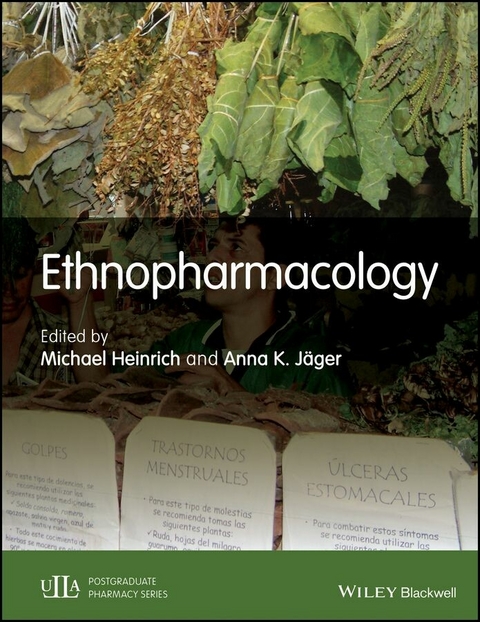
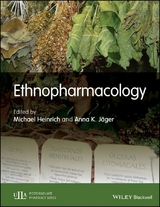
Ethnopharmacology is one of the world's fastest-growing scientific disciplines encompassing a diverse range of subjects. It links natural sciences research on medicinal, aromatic and toxic plants with socio-cultural studies and has often been associated with the development of new drugs. The Editors of Ethnopharmacology have assembled an international team of renowned contributors to provide a critical synthesis of the substantial body of new knowledge and evidence on the subject that has emerged over the past decade.
Divided into three parts, the book begins with an overview of the subject including a brief history, ethnopharmacological methods, the role of intellectual property protection, key analytical approaches, the role of ethnopharmacology in primary/secondary education and links to biodiversity and ecological research. Part two looks at ethnopharmacological contributions to modern therapeutics across a range of conditions including CNS disorders, cancer, bone and joint health and parasitic diseases. The final part is devoted to regional perspectives covering all continents, providing a state-of-the -art assessment of the status of ethnopharmacological research globally.
- A comprehensive, critical synthesis of the latest developments in ethnopharmacology.
- Includes a section devoted to ethnopharmacological contributions to modern therapeutics across a range of conditions.
- Contributions are from leading international experts in the field.
This timely book will prove invaluable for researchers and students across a range of subjects including ethnopharmacology, ethnobotany, medicinal plant research and natural products research.
Ethnopharmacology- A Reader is part of the ULLA Series in Pharmaceutical Sciences www.ullapharmsci.org
Professor Michael Heinrich, UCL School of Pharmacy, UK.
Dr Anna K. Jäger, Department of Drug Design and Pharmacology, University of Copenhagen, Denmark.
Ethnopharmacology is one of the world s fastest-growing scientific disciplines encompassing a diverse range of subjects. It links natural sciences research on medicinal, aromatic and toxic plants with socio-cultural studies and has often been associated with the development of new drugs. The Editors of Ethnopharmacology have assembled an international team of renowned contributors to provide a critical synthesis of the substantial body of new knowledge and evidence on the subject that has emerged over the past decade. Divided into three parts, the book begins with an overview of the subject including a brief history, ethnopharmacological methods, the role of intellectual property protection, key analytical approaches, the role of ethnopharmacology in primary/secondary education and links to biodiversity and ecological research. Part two looks at ethnopharmacological contributions to modern therapeutics across a range of conditions including CNS disorders, cancer, bone and joint health and parasitic diseases. The final part is devoted to regional perspectives covering all continents, providing a state-of-the art assessment of the status of ethnopharmacological research globally. A comprehensive, critical synthesis of the latest developments in ethnopharmacology. Includes a section devoted to ethnopharmacological contributions to modern therapeutics across a range of conditions. Contributions are from leading international experts in the field. This timely book will prove invaluable for researchers and students across a range of subjects including ethnopharmacology, ethnobotany, medicinal plant research and natural products research. Ethnopharmacology- A Reader is part of the ULLA Series in Pharmaceutical Sciences www.ullapharmsci.org
Professor Michael Heinrich, UCL School of Pharmacy, UK. Dr Anna K. Jäger, Department of Drug Design and Pharmacology, University of Copenhagen, Denmark.
"Ethnopharmacology is a remarkable book that comprises cutting-edge research from a range of world-class authorities from many countries across the world. This makes it one of the most authoritative books ever written on this subject and on phytotherapy in general"...."in my opinion, the real appeal of the book is the diversity of the subjects covered, which include the comparative and quantitative methods of ethnopharmacological research; biodiversity, conservation, and ethnopharmacology; ecopharmacognosy; the use of novel nuclear magnetic resonance techniques in natural product research; and ethnopharmacology and intellectual property rights"....."Ethnopharmacology is indeed a valuable book for natural-product researchers, especially those interested in novel approaches for uncovering new leads for the development of essential medicines from plant and animal sources.I have no doubt in my mind that it will serve the purpose for which it is intended: a cutting-edge text meant to equip postgraduate students in pharmacy, pharmaceutical sciences, and other related disciplines, anywhere in the world, with sound knowledge of the newly developing field of ethnopharmacology" Bioscience, July 2016
Contributors
- Christian Agyare Department of Pharmaceutics, Faculty of Pharmacy and Pharmaceutical Sciences, College of Health Sciences, Kwame Nkrumah University of Science and Technology, Ghana
- Pravit Akarasereenont Department of Pharmacology, Faculty of Medicine Siriraj Hospital, Mahidol University, Thailand, and Center of Applied Thai Traditional Medicine, Faculty of Medicine Siriraj Hospital, Mahidol University, Thailand.
- Adolfo Andrade-Cetto Department of Cell Biology, School of Sciences, National Autonomous University of Mexico, Mexico
- Adeyemi O. Aremu Research Centre for Plant Growth and Development, School of Life Sciences, University of KwaZulu-Natal, South Africa
- Alex Asase Department of Botany, University of Ghana, Ghana
- Shiv Bahadur School of Natural Product Studies, Department of Pharmaceutical Technology, Jadavpur University, India
- Maíra Bidart de Macedo Laboratory of Microbiology, Parasitology and Hygiene, Faculty of Pharmaceutical, Biomedical and Veterinary Sciences, University of Antwerp, Belgium
- Anthony Booker Research Cluster ‘Biodiversity and Medicines’, UCL School of Pharmacy, UK
- Eric Brand School of Chinese Medicine, Hong Kong Baptist University, China
- Robert Bye Jardín Botánico del Instituto de Biología, Universidad Nacional Autónoma de México, Mexico
- Salvador Cañigueral Unitat de Farmacologia i Farmacognòsia, Facultat de Farmàcia, Universitat de Barcelona, Spain
- Sushil K. Chaudhary School of Natural Product Studies, Department of Pharmaceutical Technology, Jadavpur University, India
- Sofie Clais Laboratory of Microbiology, Parasitology and Hygiene, Faculty of Pharmaceutical, Biomedical and Veterinary Sciences, University of Antwerp, Belgium
- Geoffrey A. Cordell Natural Products Inc., USA
- Paul Cos Laboratory of Microbiology, Parasitology and Hygiene, Faculty of Pharmaceutical, Biomedical and Veterinary Sciences, University of Antwerp, Belgium
- Marianne J. Datiles Centre for Pharmacognosy and Phytotherapy/Research Cluster Biodiversity and Medicines, UCL School of Pharmacy, UK
- Hugo de Boer Naturalis Biodiversity Center, Leiden University, The Netherlands, and Department of Organismal Biology, Uppsala University, Sweden, and The Natural History Museum, University of Oslo, Norway
- Pratip K. Debnath Gananath Sen Institute of Ayurveda and Research, India
- Gunter P. Eckert Goethe-University, Campus Riedberg, Department of Pharmacology, Germany
- Thomas Efferth Department of Pharmaceutical Biology, Institute of Pharmacy and Biochemistry, Johannes Gutenberg University, Germany
- Elaine Elisabetsky Labratório de Etnofarmacologia, Universidade Federal do Rio Grande do Sul, Brazil
- José Fajardo Instituto Botánico, Jardín Botánico de Castilla La Mancha, Spain, and Universidad Popular, Spain
- Jorge García-Alvarez Department of Cell Biology, School of Sciences, National Autonomous University of Mexico, Mexico
- Bertrand Graz Social and Preventive Medicine, University of Lausanne, Switzerland
- Andreas Hensel Institute of Pharmaceutical Biology and Phytochemistry, University of Münster, Germany
- Henry J. Greten Abel Salazar Biomedical Sciences Institute, University of Porto, Portugal, and Heidelberg School of Chinese Medicine, Germany
- Ping Guo School of Chinese Medicine, Hong Kong Baptist University, China
- Michael Heinrich Centre for Pharmacognosy and Phytotherapy/Research Cluster Biodiversity and Medicines, UCL School of Pharmacy, University of London, London, UK
- Alan Hesketh Indigena Biodiversity Limited, London, UK
- Vernon H. Heywood School of Biological Sciences, University of Reading, UK
- Peter J. Houghton Department of Pharmacy and Forensic Science, Institute of Pharmaceutical Sciences, King's College London, London, UK.
- Anna K. Jäger Department of Drug Design and Pharmacology, Faculty of Health and Medicinal Sciences, University of Copenhagen, Denmark
- Emelia Kisseih Institute of Pharmaceutical Biology and Phytochemistry, University of Münster, Germany
- Ellen Lanckacker Laboratory of Microbiology, Parasitology and Hygiene, Faculty of Pharmaceutical, Biomedical and Veterinary Sciences, University of Antwerp, Belgium
- Andreas Lardos Research Cluster Biodiversity and Medicines/Centre for Pharmacognosy and Phytotherapy, UCL School of Pharmacy, London, UK
- Marco Leonti Department of Biomedical Sciences, University of Cagliari, Italy
- Matthias Lechtenberg Institute of Pharmaceutical Biology and Phytochemistry, University of Münster, Germany
- Graham Lloyd Jones Pharmaceuticals and Nutraceuticals Group, Centre for Bioactive Discovery in Health and Ageing, University of New England Armidale, Australia
- Emerson Silva Lima Faculdade de Ciências Farmacêuticas, Universidade Federal do Amazonas, Brasil
- Edelmira Linares Jardín Botánico del Instituto de Biología, Universidad Nacional Autónoma de México, Mexico
- Natchagorn Lumlerdkij Center of Applied Thai Traditional Medicine, Faculty of Medicine Siriraj Hospital, Mahidol University, Thailand, and Centre for Pharmacognosy and Phytotherapy/Research Cluster Biodiversity and Medicines, UCL School of Pharmacy, London, UK
- Louis Maes Laboratory of Microbiology, Parasitology and Hygiene, Faculty of Pharmaceutical, Biomedical and Veterinary Sciences, University of Antwerp, Belgium
- Daniel E. Moerman William E Stirton Emeritus Professor of Anthropology, University of Michigan-Dearborn, USA
- Mack Moyo Research Centre for Plant Growth and Development, School of Life Sciences, University of KwaZulu-Natal, South Africa
- Pulok K Mukherjee School of Natural Product Studies, Department of Pharmaceutical Technology, Jadavpur University, India
- Concepción Obón Depto. de Biología Aplicada, Escuela Politécnica Superior de Orihuela. Universidad Miguel Hernández, Spain
- Manuel Pardo-de-Santayana Departamento de Biología (Botánica). Universidad Autónoma de Madrid, Spain
- Frank Petereit Institute of Pharmaceutical Biology and Phytochemistry, University of Münster, Germany
- Andrea Pieroni University of Gastronomic Sciences, Italy
- Jose M. Prieto Centre for Pharmacognosy and Phytotherapy/Research Cluster Biodiversity and Medicines, UCL School of Pharmacy, London, UK
- Cassandra L. Quave Center for the Study of Human Health, Emory University, USA, and Department of Dermatology, Emory University School of Medicine, USA
- Diego Rivera Depto. Biología Vegetal, Fac. Biología, Universidad de Murcia, Spain
- Jaume Sanz-Biset Unitat de Farmacologia i Farmacognòsia, Facultat de Farmàcia, Universitat de Barcelona, Spain
- Nicholas J. Sadgrove Pharmaceuticals and Nutraceuticals Group, Centre for Bioactive Discovery in Health and Ageing, University of New England Armidale, Australia
- Ean-Jeong Seo Department of Pharmaceutical Biology, Institute of Pharmacy and Biochemistry, Johannes Gutenberg University, Germany
- Renata Sõukand Estonian Literary Museum, Estonia
- Dan Staerk Department of Drug Design and Pharmacology, Faculty of Health and Medical Sciences, University of Copenhagen, Denmark
- Alexandra Towns Naturalis Biodiversity Center, Leiden University, The Netherlands
- Arturo Valdés Instituto Botánico, Jardín Botánico de Castilla La Mancha, Spain
- José Ramón Vallejo Depto. de Terapéutica Médico-Quirúrgica, Fac. de Medicina, Universidad de Extremadura, Spain
- Tinde van Andel Naturalis Biodiversity Center, Leiden University, The Netherlands
- Johannes van Staden Research Centre for Plant Growth and Development, School of Life Sciences, University of KwaZulu-Natal, Pietermaritzburg, Scottsville 3209, South Africa
- Ina Vandebroek Matthew Calbraith Perry Assistant Curator of Economic Botany and Caribbean Program Director, The New York Botanical Garden, Bronx, New York, USA
- Alonso Verde Instituto Los Olmos, Albacete. Spain, and Instituto Botánico, Jardín Botánico de Castilla La Mancha, Spain
- Joachim Møllesøe Vinther Department of Drug Design and Pharmacology, Faculty of Health and Medical Sciences, University of Copenhagen, Denmark
- Caroline S. Weckerle Institute of Systematic Botany, University of Zürich, Switzerland
- Merlin Willcox Nuffield Department of Primary Care Health Sciences, University of Oxford, UK
- Elizabeth M. Williamson The School of Pharmacy, University of Reading, UK
- Colin W. Wright Bradford School of Pharmacy, University of Bradford, UK
- Ching-Fen Wu Department of Pharmaceutical Biology, Institute of Pharmacy and Biochemistry, Johannes Gutenberg University, Germany
- Sileshi Gizachew Wubshet...
| Erscheint lt. Verlag | 25.8.2015 |
|---|---|
| Reihe/Serie | Postgraduate Pharmacy Series |
| Postgraduate Pharmacy Series | ULLA Series in Pharmaceutical Sciences |
| Sprache | englisch |
| Themenwelt | Medizin / Pharmazie ► Gesundheitsfachberufe |
| Medizin / Pharmazie ► Medizinische Fachgebiete ► Pharmakologie / Pharmakotherapie | |
| Medizin / Pharmazie ► Naturheilkunde | |
| Naturwissenschaften ► Chemie | |
| Schlagworte | Biowissenschaften • Botanik / Biochemie • Chemie • Chemistry • Ethnopharmacology, medicinal plants, Natural Science, botanical drugs, therapeutics, Drug development, biodiversity, CNS disorders, cancer, bone and joint health, parasitic diseases, ethnopharmacological research, cancer treatment, wound healing • Life Sciences • Medical Science • Medizin • Pharmaceutical & Medicinal Chemistry • Pharmacology & Pharmaceutical Medicine • Pharmakologie u. Pharmazeutische Medizin • Pharmazeutische u. Medizinische Chemie • plant biochemistry |
| ISBN-10 | 1-118-93072-X / 111893072X |
| ISBN-13 | 978-1-118-93072-4 / 9781118930724 |
| Informationen gemäß Produktsicherheitsverordnung (GPSR) | |
| Haben Sie eine Frage zum Produkt? |
 EPUB (Adobe DRM)
Kopierschutz: Adobe-DRM
Adobe-DRM ist ein Kopierschutz, der das eBook vor Mißbrauch schützen soll. Dabei wird das eBook bereits beim Download auf Ihre persönliche Adobe-ID autorisiert. Lesen können Sie das eBook dann nur auf den Geräten, welche ebenfalls auf Ihre Adobe-ID registriert sind.
Details zum Adobe-DRM
Dateiformat: EPUB (Electronic Publication)
EPUB ist ein offener Standard für eBooks und eignet sich besonders zur Darstellung von Belletristik und Sachbüchern. Der Fließtext wird dynamisch an die Display- und Schriftgröße angepasst. Auch für mobile Lesegeräte ist EPUB daher gut geeignet.
Systemvoraussetzungen:
PC/Mac: Mit einem PC oder Mac können Sie dieses eBook lesen. Sie benötigen eine
eReader: Dieses eBook kann mit (fast) allen eBook-Readern gelesen werden. Mit dem amazon-Kindle ist es aber nicht kompatibel.
Smartphone/Tablet: Egal ob Apple oder Android, dieses eBook können Sie lesen. Sie benötigen eine
Geräteliste und zusätzliche Hinweise
Buying eBooks from abroad
For tax law reasons we can sell eBooks just within Germany and Switzerland. Regrettably we cannot fulfill eBook-orders from other countries.
aus dem Bereich