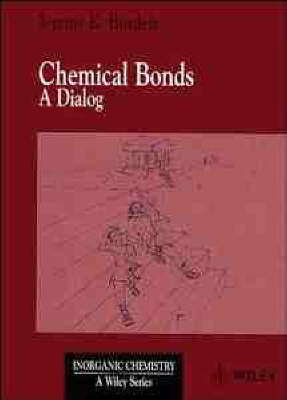
Chemical Bonding
John Wiley & Sons Ltd (Verlag)
978-0-471-97129-0 (ISBN)
- Titel ist leider vergriffen;
keine Neuauflage - Artikel merken
What is the Nature of the Chemical Bond?; What is the Basis of the Model We Use to Describe the Orbital Structure of Molecules?; Sp3 Hybrids and the Molecular Orbitals of Methane. What's the Difference?; Why are the Elements Of the First Short Period, Li-Ne (and the First Row Transition Metals) so Special?; Why Does the Molecular Orbital Model Often Give the Wrong Products of Dissociation?; How Important are D Orbitals in Main Group Chemistry?; What's the Best Way of Looking at The Interaction of Transition Metals?; Are Main Group Molecules and Transition Metal Complexes Not So Different After All?; What is the Metallic Bond?; Is the Electronic Description of Solids just like that for Large Molecules? How Should You Count Electrons in "Electron Deficient" Molecules?; Is Delocalization of Electrons Always Stabilizing? Or why is Benzene a Regular Hexagon?; What is the Origin of Hnckel's Rule?; Is the Jahn Teller Effect as Simple as it Seems?; What is the Origin of Steric Repulsion?; Why does N2O have the Structure NNO and not NON?; What is Behind the VSEPR Scheme?
| Erscheint lt. Verlag | 23.4.1997 |
|---|---|
| Reihe/Serie | Inorganic Chemistry S. |
| Zusatzinfo | Illustrations, 1 port. |
| Verlagsort | Chichester |
| Sprache | englisch |
| Maße | 193 x 253 mm |
| Gewicht | 570 g |
| Themenwelt | Naturwissenschaften ► Chemie ► Anorganische Chemie |
| Naturwissenschaften ► Chemie ► Physikalische Chemie | |
| ISBN-10 | 0-471-97129-4 / 0471971294 |
| ISBN-13 | 978-0-471-97129-0 / 9780471971290 |
| Zustand | Neuware |
| Informationen gemäß Produktsicherheitsverordnung (GPSR) | |
| Haben Sie eine Frage zum Produkt? |
aus dem Bereich