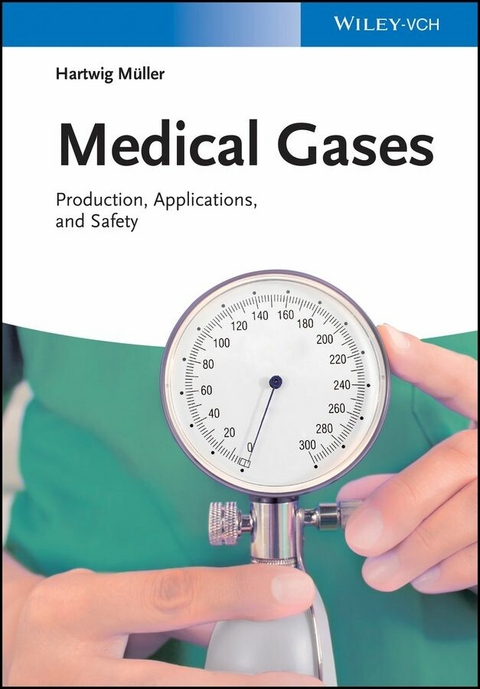
Medical Gases (eBook)
XIV, 250 Seiten
Wiley-VCH (Verlag)
978-3-527-67603-3 (ISBN)
Dr. Hartwig Müller is the Head of the Safety Department of AIR LIQUIDE Medical in Germany, a subsidiary of AIR LIQUIDE selling only medical gases and accessories. He received both his degree and doctorate in Chemistry from the Technical University of Berlin, Germany and spent more than 30 years in the gas industry, occupied with Specialty and Medical Gases and their analytics. He has been member of international working groups of the European Industrial Gas Association and an Expert to the European Pharmacopoeia Commission for Medical Gases.
Dr. Hartwig Müller is the Head of the Safety Department of AIR LIQUIDE Medical in Germany, a subsidiary of AIR LIQUIDE selling only medical gases and accessories. He received both his degree and doctorate in Chemistry from the Technical University of Berlin, Germany and spent more than 30 years in the gas industry, occupied with Specialty and Medical Gases and their analytics. He has been member of international working groups of the European Industrial Gas Association and an Expert to the European Pharmacopoeia Commission for Medical Gases.
General Remarks
Medicinal Gases: Manufacturing
Pressure Vessels and their Accessories
Analytical Methods for Gases (as described in Ph. Eur.)
European Pharmacopoeia Specifications
Medical Gases Production - Special Handling to Comply with GMP-Rulings
Requirements of the new Good Distribution Practice (GDP)
Safe Handling of Gases
Chapter 1
Medicinal Gases – Manufacturing
1.1 Where Do the Gases Come from?
Oxygen as the most prominent (medicinal) gas often lets us think that all other gases are of the same origin, coming right from the air. However, this is not the case. In addition to the very well-known oxygen, argon, and nitrogen, it might be advantageous to use other sources owing to technical or economic reasons. In addition, quite often specific methods of manufacturing or synthesis lead to specific types of impurities. In this chapter, we take a look at different gases, their sources, and the types of impurities that are characteristic of these different sources.
1.1.1 Gases Obtained from Air: Oxygen, Nitrogen, Argon, Xenon
Ambient air is a fascinating reservoir of numerous meteorological effects and has been known since the beginning of mankind. That atmospheric air is a gas and thus just a specific form of matter, and, moreover, that it not only contains water but is a mixture of different gases, was discovered only a few centuries ago.
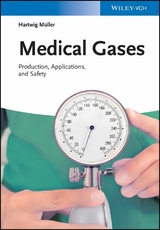
Until the seventeenth century, it was a general opinion that air is an element, and as such indivisible. In laboratories as shown in the cover of the book (Figure 1.1), researchers like Jan Baptist van Helmont, (1577–1644) from the (then Spanish) Netherlands (Figure 1.1) recognized that gas is not a unique element but composed from different gases.
Figure 1.1 Jan Baptist van Helmont (1577–1644) [1].
He noticed the difference between the chemical properties of hydrogen (developed by the reaction of hydrochloric acid and zinc) and carbon dioxide (developed by the fermentation of yeast) [1]. The two compounds had a physical property that was named “chaos” by van Helmont – a word that had the same pronunciation in Dutch as “gas,” – and this became the term for this state of matter.
He discovered two gases, with almost similar physical properties as air, but with different chemical properties: hydrogen readily burned when ignited, while carbon dioxide remained chemically stable under most conditions, but giving a white precipitate with barium chloride solution.
Lavoisier et al. [2] discovered that air is composed of different gases in the late eighteenth century. They showed through chemical methods that there were at least two main components in the air, one being chemically reactive and the other one chemically inert [3]. Besides chemical absorption by specific reactions, air can be separated into its constituents by fractional distillation as with the liquids, to obtain its pure constituents, depending upon the knowledge of the art of fractionation.
As can be seen in Table 1.1, the major components of air have critical temperatures far below 0 °C. Above this temperature, no liquefaction of the gas is possible, indicating that the gas has to be cooled down first to below the critical temperature, before condensation starts, if the cooling is continued. Two well-known processes had been developed toward the end of the nineteenth and in the beginning twentieth century, respectively, by German (von Linde, 1895 [6]) and French (Claude, 1902 [7]) scientists.
Table 1.1 Composition of ambient air, typical components [4].
| Name of the gas | Content (approximately) | b.p. (°C) | b.p. (K) |
| Nitrogen | 78.1 vol% | −196 | 77.4 |
| Oxygen | 20.8 vol% | −183 | 90.2 | Σ 99.8 vol% |
| Argon | 0.9 vol% | −186 | 87.3 |
| Carbon dioxide | 390 ppm | −78 | 197.7 |
| Neon | 18.2 ppm | −246 | 27.1 |
| Helium | 5.2 ppm | −269 | 4.2 | Σ 26 ppm |
| Methane | 1.5 ppm | −162 | 111.6 |
| Krypton | 1.14 ppma | −153 | 119.8 K |
| Hydrogen | 0.5 ppm | −253 | 20.4 |
| Carbon monoxide | 0.2 ppma | −192 | 81.6 |
| Xenon | 0.089 ppm | −108 | 165.1 | Σ 1 ppm |
| Nitrous oxide | 0.3 ppm | −88 | 184.7 |
| Sulfur dioxide | a | −10 | 263.1 |
| Sulfur hexafluoride | a | −63.9 | 209.2 |
| Carbon tetrafluoride | a | −128 | 145.2 |
a Under influence of human activities: depending upon localization of sampling, carbon monoxide and sulfur dioxide can be detected near industrial activities in considerable levels under specific conditions, sulfur hexafluoride and carbon tetrafluoride are gases that often escape during aluminum electrolysis, while krypton is contaminated with the radioactive isotope Kr-85, emanated during numerous nuclear processes [5].
While Linde's process works with a throttle to release the tension of the gas and to cool down the compressed gas (the Joule–Thomson effect), Claude's method uses an adiabatic expansion machine. The result is a “cryogenic” liquid with remarkable properties, having an average boiling point of about −194 to −185 °C. This liquid can be distilled in appropriate columns.
Some of the low- or high-boiling components are emitted during human activities (industrial activities such as coal mining (methane), aluminum electrolysis (carbon tetrafluoride and sulfur hexafluoride)) or general activities such as those of traffic, power stations, and incineration plants (carbonmonoxide, carbon dioxide, nitric oxides).
On a technical scale, the air separation plant is a huge setup with separation columns reaching heights often of 20–50 m. A typical construction is shown in the Figure 1.2. The sequential steps of the air separation process of the incoming air can be described as follows:
Figure 1.2 Air separation: schematic drawing [8].
Those contaminants that would precipitate under cryogenic temperatures have to be removed first (water, carbon dioxide, sulfur dioxide, higher hydrocarbons). The low-boiling pollutants, such as nitric oxides, sulfur hexafluoride, carbon tetrafluoride, methane, and acetylene accumulate in the oxygen fraction of the column. As a consequence, all these impurities show very clearly the increase in air pollution.
While the main constituents of ambient air (except water) remain constant in their concentration (although they are part of huge biological and microbiological cycles, such as the nitrogen and oxygen cycles), trace impurities present often are dependent on the specific localization, which is, the positioning of the air separation unit (ASU).
Sometimes, these impurities undergo an increase or a decrease during a longer period of time, for example, since the 1950s, trace concentrations of carbon tetrafluoride and sulfur hexafluoride have shown continuous increase.
All nuclear events of the past released radioactive material into the atmosphere [8], krypton being the most prominent gas emanated. Radioactive isotopes of krypton kept changing in their concentration, depending on nuclear activities (atmospheric nuclear bomb tests in the 1950s, test ban in the 1960s, nuclear fallout following the Chernobyl disaster in the 1980s and the Fukushima blasts in the twenty-first century).
All these atmospheric ingredients, oxygen, nitrogen, and even the trace gases are integrated parts of appropriate cyclic equilibrium processes triggered by the dynamic chemical and meteorological phenomena of the atmosphere created by sunlight.
The fundamental starting point is that of cool gas sinking to the ground, while warm gas rises up in height; on the way upward, the warm gas is cooled down again and starts descending to the ground at another place. In addition, the possible content of water, as vapor or as droplets, which is directly linked to the temperature of the gas, is cause for many additional effects such as the generation of clouds and fog, as well as rain and snow.
Chemical effects are an integrated part of the meteorological effects in the air. Numerous reactive constituents forming reaction chains that are constantly stimulated by the UV part of sunlight, lightning in thunderstorms, and so on. All this depends on the height of the layer in the atmosphere.
Figure 1.3 shows the different layers schematically. Every layer has its own specific contribution to the chemistry of the atmosphere depending on the specific conditions (composition and physics, such as UV-radiation and water content). This leads to a gradient in the concentration of most trace gases at different heights above the ground.
Figure 1.3 Different layers in the terrestrial atmosphere [10].
The upper layers of the atmosphere being subject to high...
| Erscheint lt. Verlag | 7.7.2015 |
|---|---|
| Sprache | englisch |
| Themenwelt | Naturwissenschaften ► Chemie |
| Technik | |
| Schlagworte | Allgemeine u. Innere Medizin • Chemie • Chemistry • General & Internal Medicine • Industrial Chemistry • Medical Science • Medizin • Medizinische Chemie • Medizinische Gase • Pharmaceutical & Medicinal Chemistry • Pharmazeutische u. Medizinische Chemie • Technische u. Industrielle Chemie |
| ISBN-10 | 3-527-67603-1 / 3527676031 |
| ISBN-13 | 978-3-527-67603-3 / 9783527676033 |
| Informationen gemäß Produktsicherheitsverordnung (GPSR) | |
| Haben Sie eine Frage zum Produkt? |
 EPUB (Adobe DRM)
Kopierschutz: Adobe-DRM
Adobe-DRM ist ein Kopierschutz, der das eBook vor Mißbrauch schützen soll. Dabei wird das eBook bereits beim Download auf Ihre persönliche Adobe-ID autorisiert. Lesen können Sie das eBook dann nur auf den Geräten, welche ebenfalls auf Ihre Adobe-ID registriert sind.
Details zum Adobe-DRM
Dateiformat: EPUB (Electronic Publication)
EPUB ist ein offener Standard für eBooks und eignet sich besonders zur Darstellung von Belletristik und Sachbüchern. Der Fließtext wird dynamisch an die Display- und Schriftgröße angepasst. Auch für mobile Lesegeräte ist EPUB daher gut geeignet.
Systemvoraussetzungen:
PC/Mac: Mit einem PC oder Mac können Sie dieses eBook lesen. Sie benötigen eine
eReader: Dieses eBook kann mit (fast) allen eBook-Readern gelesen werden. Mit dem amazon-Kindle ist es aber nicht kompatibel.
Smartphone/Tablet: Egal ob Apple oder Android, dieses eBook können Sie lesen. Sie benötigen eine
Geräteliste und zusätzliche Hinweise
Buying eBooks from abroad
For tax law reasons we can sell eBooks just within Germany and Switzerland. Regrettably we cannot fulfill eBook-orders from other countries.
aus dem Bereich