• The development of basic understanding through the collection of data with specialised instrumentation in experimental basins
• The study of extreme flows – both floods and droughts
• The role moisture in the soil
• Studies of the processes controlling evaporation
• Water resource studies
• Modelling and prediction of the extremes of flow improved
• Understanding of water quality issues
• A widening recognition of the importance of an ecosystem approach
• Meeting the challenges of climate change,
• Data handling
• Future developments in hydrology and the pressures which generate them.
Readership: hydrologists in both academia and a wide range of applied fields such as civil engineering, meteorology, geography and physics, as well as advanced students in earth science, environmental science and physical geography programmes worldwide.
John Rodda has a life time of experience as a hydrologist with UK governmental and international bodies, particularly the World Meteorological Organization, Geneva, where he was Director of the Hydrology & Water Resources Department. He has authored some 100 scientific papers and 8 books on a wide range of topics. He has held the office of President of the International Association of Hydrological Sciences and several other prominent positions in the international world of water.
Mark Robinson has a lengthy career as a hydrologist, working at the Centre for Ecology and Hydrology, Institute of Hydrology and at several UK universities. His work has encompassed land use change studies including agricultural drainage and forest hydrology, and for over a decade he was responsible for some of the UK’s longest running catchment studies. He has published extensively and is co-author of two highly regarded hydrological textbooks.
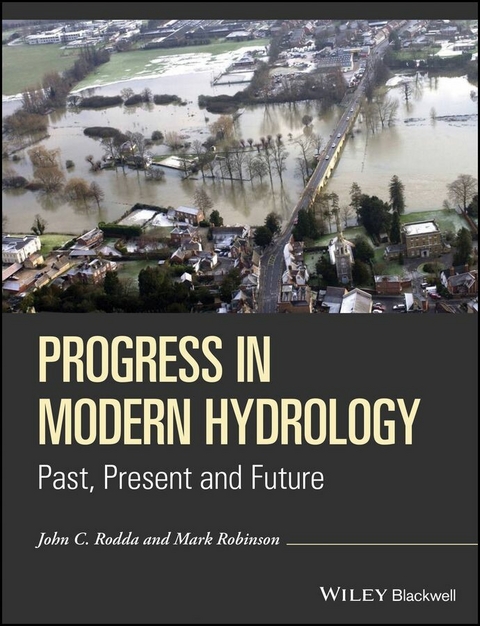
Hydrology is vital to human civilisations as well as to natural ecosystems, yet it has only emerged as a distinct scientific discipline during the last 50 years or so. This book reviews the development of modern hydrology primarily through the experiences of the multidisciplinary team of scientists and engineers at Wallingford, near Oxford, who have been at the forefront of many of the developments in UK hydrological research. These topics include: The development of basic understanding through the collection of data with specialised instrumentation in experimental basins The study of extreme flows both floods and droughts The role moisture in the soil Studies of the processes controlling evaporation Water resource studies Modelling and prediction of the extremes of flow improved Understanding of water quality issues A widening recognition of the importance of an ecosystem approach Meeting the challenges of climate change, Data handling Future developments in hydrology and the pressures which generate them.Readership: hydrologists in both academia and a wide range of applied fields such as civil engineering, meteorology, geography and physics, as well as advanced students in earth science, environmental science and physical geography programmes worldwide.
John Rodda has a life time of experience as a hydrologist with UK governmental and international bodies, particularly the World Meteorological Organization, Geneva, where he was Director of the Hydrology & Water Resources Department. He has authored some 100 scientific papers and 8 books on a wide range of topics. He has held the office of President of the International Association of Hydrological Sciences and several other prominent positions in the international world of water. Mark Robinson has a lengthy career as a hydrologist, working at the Centre for Ecology and Hydrology, Institute of Hydrology and at several UK universities. His work has encompassed land use change studies including agricultural drainage and forest hydrology, and for over a decade he was responsible for some of the UK's longest running catchment studies. He has published extensively and is co-author of two highly regarded hydrological textbooks.
List of Contributors ix
Chapter Reviewers xiii
Foreword xv
Preface xvii
Acknowledgements xix
Acronyms xxi
1 INTRODUCTION 1
John C. Rodda, Mark Robinson, Jim McCulloch, Christine McCulloch, Alan Jenkins, Terry Marsh, Celia Kirby, Ian Littlewood, Max Beran and Graham Leeks
2 BASIN STUDIES AND INSTRUMENTATION 23
Ian Strangeways, Mark Robinson, Jim Hudson, John C. Rodda, Malcolm Newson and David J. Cooper
3 RISKS AND EXTREMES 60
Lisa Stewart, Max Beran, Frank Farquharson, Duncan Faulkner, David Jones, Thomas Kjeldsen, Malcolm Newson, Enda O'Connell and John Sutcliffe
4 TERRESTRIAL HYDROLOGICAL PROCESSES 100
David J. Cooper, John Bell, Martin Hodnett, Keith Beven, Kevin Gilman, Atul Haria, Cate Gardner, Mark Robinson, Jon Evans and Helen Ward
5 THE PHYSICS OF ATMOSPHERIC INTERACTION 135
Colin Lloyd and Sylvia Oliver
6 WATER RESOURCES SECURITY 183
Frank Farquharson, Max Beran, John Bromley, Alan Gustard, Helen Houghton-Carr, Gwyn Rees, John Sutcliffe and Andy Young
7 HYDROLOGICAL MODELLING 216
Keith Beven, James Bathurst, Enda O'Connell, Ian Littlewood, Jim Blackie and Mark Robinson
8 WATER QUALITY 240
Richard Williams, Colin Neal, Helen Jarvie, Andrew Johnson, Paul Whitehead, Mike Bowes and Alan Jenkins
9 ECOHYDROLOGY 267
Mike C. Acreman, James R. Blake, Laurence R. Carvalho, Mike J. Dunbar, Iain D. M. Gunn, Alan Gustard, Ian D. Jones, Cedric Laizé, Stephen C. Maberly, Eleanor B. Mackay, Linda May, J. Owen Mountford, Bryan M. Spears, Charlie J. Stratford, Stephen J. Thackeray and Ian J. Winfield
10 CLIMATE CHANGE AND HYDROLOGY 302
Richard Harding, Nigel Arnell, Nick Reynard, Christel Prudhomme, Eleanor Blyth and Chris Taylor
11 HYDROLOGICAL DATA ACQUISITION AND EXPLOITATION 324
Terry Marsh, Roger Moore, Harry Dixon, Jamie Hannaford, Alan Gustard, Andy Young, Melinda Lewis, Colin Neal and Gwyn Rees
12 LOOKING TOWARDS THE FUTURE 366
John C. Rodda, Mark Robinson, Alan Jenkins, Keith Beven, Max Beran and Graham Leeks
Index 379
Chapter 1
Introduction
JOHN C. RODDA1, MARK ROBINSON1, JIM MCCULLOCH2, CHRISTINE MCCULLOCH3, ALAN JENKINS1, TERRY MARSH1, CELIA KIRBY4, IAN LITTLEWOOD4, MAX BERAN2, AND GRAHAM LEEKS1
1Centre for Ecology and Hydrology, Wallingford, Oxfordshire, UK
2Ex-Institute of Hydrology, Wallingford, UK
3School of Geography and Environment, University of Oxford, Oxford, UK
4British Hydrological Society, UK
- 1.1 Starting Point
- 1.2 Setting the Scene
- 1.3 Early Days at Wallingford
- 1.4 NERC's Role in Promoting Hydrological Research
- 1.5 Countering Water Problems
- 1.6 The Beginnings of Experimental Hydrology
- 1.7 Fighting Floods
- 1.8 Gaining International Recognition
- 1.9 Governmental Turbulence
- 1.10 An Expanding Role
- 1.11 Extending Hydrological Research into the Eighties
- 1.12 Into the Nineties
- 1.13 Moving into the New Millennium
- 1.14 Looking Ahead
- 1.15 References
1.1 Starting Point
Hydrology can claim to be one of the oldest, yet one of the youngest of the natural sciences. Since the start of civilisation it has been applied to control and manage water; yet, hydrology only emerged as a distinct scientific discipline during the latter half of the twentieth century.
This book reviews the development of modern hydrology primarily, but not exclusively, through the experiences of the scientists and engineers at Wallingford, near Oxford, who have been at the forefront of many of the developments in hydrological research over last 50 years. Coming from very differing academic backgrounds, they form an effective multidisciplinary team, one which includes a number of foreign members. Together they describe the results of their scientific research which seeks to improve understanding of the vicissitudes of the hydrological cycle in order to apply knowledge for a variety of purposes. These include data collection on the ground and from space, together with the management and application of these data to: prediction and forecasting of extremes, husbanding surface and groundwater water resources and the control of pollution. Initially, this research aimed to answer to just one question – what is the impact of land use on water resources? But as might be expected, seeking this answer raised a host of other questions. Indeed, as time progressed the ambit of Wallingford hydrology has widened immeasurably to the extent that the complexion of research in 2015 includes hues that were not even thought about in 1965. The new knowledge generated by research emanating from Wallingford has acted as a catalyst on the hydrological community in the United Kingdom and internationally, both informally and through specific technology transfer initiatives.
1.2 Setting the Scene
The story of progress in hydrological research at Wallingford (Chapter 1) mirrors that of advances made by similar institutions in several other nations and in the developments achieved at the international level. Essential to tackling practical questions and advancing scientific understanding is the collection of high-quality data on the ground and from space. This necessitated the development of specialised instrumentation, and often their conjunctive use in experimental basins (Chapter 2). An early concern was the study of extreme flows – initially floods – but later droughts – the importance of the variability of the hydrological cycle in space and time was seen as a key issue (Chapter 3). Central to most hydrological processes is the role moisture in the soil, influencing recharge of groundwater, determining the availability of water for plants and generating runoff (Chapter 4). It became apparent that it was not sufficient to observe differences in behaviour between sites and basins, since the reasons ‘why’ needed to be understood and predicted through process studies (Chapter 5). Although much of the hydrological development work and its application was UK based, there has always been a strong overseas component to the work at Wallingford, especially in water resources (Chapter 6). As hydrological understanding developed and grew, modelling and prediction of the extremes of flow improved (Chapter 7), along with understanding of water quality issues (Chapter 8). There is widening recognition of the importance of an ecosystem approach (Chapter 9). The application of the experience gained is needed to meet the challenges of climate change, where water has a key role (Chapter 10). The generation of large amounts of data need skills in quality control, handling, storage and retrieval (Chapter 11). Finally, Chapter 12 tries to capture the essence of the gain in hydrological understanding and looks to future developments in hydrology and the pressures which generate them.
The United Kingdom shares most of the hydrological problems that affect other nations, excepting those concerned with glaciers, ice and large rivers. It occupies one relatively large island, part of another and a series of smaller islands covering a total area of nearly 250,000 km2 on the eastern edge of the Atlantic Ocean. Westerly airflows predominate but weather systems can arrive from all points of the compass. Consequently, the generally temperate climate is inherently very variable. Ancient igneous and metamorphic formations elevate the north and west, whereas more recent sedimentary deposits floor the south and east. The drainage patterns across the United Kingdom are largely a response to regional and more local contrasts in geology. Carved into the landscape are almost 1500 discrete river systems draining to the sea through over 100 estuaries. The rivers and streams are major agents of landscape modification and, in turn, their characteristics are greatly influenced by the catchments through which they flow. The diverse patterns of climate, topography, geology and land use make for a rich variety of watercourses and aquatic environments.
The regular passage of Atlantic low-pressure systems ensures that the United Kingdom is one of the wettest countries in Europe. Average annual rainfall totals grade across the country from over 4000 mm in the higher north and west to less than 600 in the lower south and east. The daily maximum recorded rainfall has once reached 280 mm and totals exceeding 100 mm are not uncommon in the western high lands. However, short period rainfall intensities are relatively low on the world scale, but the number of days with rainfall is high. Absolute droughts extending over 45 days or more are rare, but accumulated rainfall deficiencies over periods of six months or more can have substantial impacts on society, particularly in relation to water resources.
On average, rainfall is evenly distributed throughout the year but with a tendency towards a late autumn and early winter maximum. By contrast, evaporation losses are highly seasonal with around 80% of the average annual evaporation normally occurring over the April–September period. Evaporation is a relatively stable variable with annual losses generally in the 400–560 mm range, accounting for around 40% of the annual rainfall at the national scale but rising to over 85% in the driest parts of the country.
The residual rainfall (rainfall minus evaporation) ranges from less than 100 mm a year over much of South East England to over 3500 mm in parts of Scotland and Wales. It is markedly seasonal with the bulk of the annual runoff occurring in the November–March period when fluvial and groundwater flooding is most frequent; in contrast, urban flash flooding is most common following intense summer storms. Annual minimum flows in western and northern rivers generally occur in June or July but, to the east and south, flows are typically at their lowest during the late summer and early autumn – and later in rivers draining some permeable catchments where groundwater, via springs and seepages, is a major component of low flows.
The spatial trend in average runoff across the country is largely the reverse of the distribution of the population; this creates problems of water supply. Indeed, much of South East England can be classed, according to the World Bank criterion (less than 1000 m3 per head per year of available water), as suffering from serious water stress. This is likely to be exacerbated as the population rises by 10% from a total of 63.7 million in 2012 to a forecast 70 million by 2027, with much of the increase occurring where water resources are under most pressure. New environmental controls are also limiting abstractions. Groundwater from the Chalk is the chief source in the South East, whereas some parts of the Midlands and north of England rely on groundwater from Permian, Triassic and Jurassic formations. The Thames is the principal source of London's drinking water and the river supplies a number of other towns and cities along its course. This pattern is replicated in many other UK rivers. The pattern of multiple abstractions and discharges of treated effluent causes concern over the long-term effects on human health, particularly during droughts when dilution is low. Long-standing problems include high levels of nitrate and phosphate as well as newer challenges such as oestrogens and nanoparticles. Reservoirs in the high rainfall areas of the north and west supply by aqueduct the cities and towns in those parts of the United Kingdom. Usually supplies...
| Erscheint lt. Verlag | 9.7.2015 |
|---|---|
| Sprache | englisch |
| Themenwelt | Naturwissenschaften ► Geowissenschaften ► Geologie |
| Naturwissenschaften ► Geowissenschaften ► Hydrologie / Ozeanografie | |
| Technik | |
| Schlagworte | Chemie • Chemistry • earth sciences • Geowissenschaften • Groundwater & Hydrogeology • Grundwasser u. Hydrogeologie • Hydrological Sciences • Hydrologie • hydrology, hydrological sciences, water resources, basin studies, basin science, terrestrial hydrology, atmospheric science, oceanography, water resources, hydrological modeling, water quality, ecohydrology, climate change, data analysis • Wasserchemie • water chemistry |
| ISBN-10 | 1-119-07431-2 / 1119074312 |
| ISBN-13 | 978-1-119-07431-1 / 9781119074311 |
| Informationen gemäß Produktsicherheitsverordnung (GPSR) | |
| Haben Sie eine Frage zum Produkt? |
 EPUB (Adobe DRM)
Kopierschutz: Adobe-DRM
Adobe-DRM ist ein Kopierschutz, der das eBook vor Mißbrauch schützen soll. Dabei wird das eBook bereits beim Download auf Ihre persönliche Adobe-ID autorisiert. Lesen können Sie das eBook dann nur auf den Geräten, welche ebenfalls auf Ihre Adobe-ID registriert sind.
Details zum Adobe-DRM
Dateiformat: EPUB (Electronic Publication)
EPUB ist ein offener Standard für eBooks und eignet sich besonders zur Darstellung von Belletristik und Sachbüchern. Der Fließtext wird dynamisch an die Display- und Schriftgröße angepasst. Auch für mobile Lesegeräte ist EPUB daher gut geeignet.
Systemvoraussetzungen:
PC/Mac: Mit einem PC oder Mac können Sie dieses eBook lesen. Sie benötigen eine
eReader: Dieses eBook kann mit (fast) allen eBook-Readern gelesen werden. Mit dem amazon-Kindle ist es aber nicht kompatibel.
Smartphone/Tablet: Egal ob Apple oder Android, dieses eBook können Sie lesen. Sie benötigen eine
Geräteliste und zusätzliche Hinweise
Buying eBooks from abroad
For tax law reasons we can sell eBooks just within Germany and Switzerland. Regrettably we cannot fulfill eBook-orders from other countries.
aus dem Bereich