


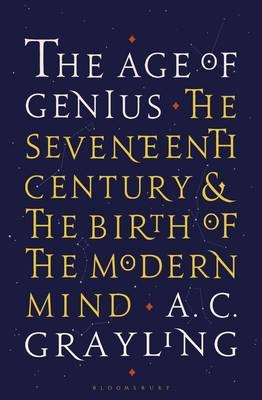
The Age of Genius
The Seventeenth Century and the Birth of the Modern Mind
Seiten
2016
Bloomsbury Publishing PLC (Verlag)
978-0-7475-9942-5 (ISBN)
Bloomsbury Publishing PLC (Verlag)
978-0-7475-9942-5 (ISBN)
- Titel ist leider vergriffen;
keine Neuauflage - Artikel merken
What happened to the European mind between 1605, when an audience watching Macbeth at the Globe might believe that regicide was such an aberration of the natural order that ghosts could burst from the ground, and 1649, when a large crowd, perhaps including some who had seen Macbeth forty-four years earlier, could stand and watch the execution of a king? Or consider the difference between a magus casting a star chart and the day in 1639, when Jonathan Horrock and William Crabtree watched the transit of Venus across the face of the sun from their attic, successfully testing its course against Kepler’s Tables of Planetary Motion, in a classic case of confirming a scientific theory by empirical testing.
In this turbulent period, science moved from the alchemy and astrology of John Dee to the painstaking observation and astronomy of Galileo, from the classicism of Aristotle, still favoured by the Church, to the evidence-based, collegiate investigation of Francis Bacon. And if the old ways still lingered and affected the new mind set – Descartes’s dualism an attempt to square the new philosophy with religious belief; Newton, the man who understood gravity and the laws of motion, still fascinated to the end of his life by alchemy – by the end of that tumultuous century ‘the greatest ever change in the mental outlook of humanity’ had irrevocably taken place.
In this turbulent period, science moved from the alchemy and astrology of John Dee to the painstaking observation and astronomy of Galileo, from the classicism of Aristotle, still favoured by the Church, to the evidence-based, collegiate investigation of Francis Bacon. And if the old ways still lingered and affected the new mind set – Descartes’s dualism an attempt to square the new philosophy with religious belief; Newton, the man who understood gravity and the laws of motion, still fascinated to the end of his life by alchemy – by the end of that tumultuous century ‘the greatest ever change in the mental outlook of humanity’ had irrevocably taken place.
A.C. Grayling is Professor of Philosophy at and Master of the New College of the Humanities, London. He believes that philosophy should take an active, useful role in society and is a prolific author, whose books include philosophy, ethics, biography, history, drama and essays. He has been a regular contributor to The Times, Financial Times, Observer, Independent on Sunday, Economist, Literary Review, New Statesman and Prospect, and is a frequent and popular contributor to radio and television programmes, including Newsnight, Today, In Our Time, Start the Week, and CNN News. His most recent book is The Challenge of Things, published in 2015.
| Erscheint lt. Verlag | 10.3.2016 |
|---|---|
| Zusatzinfo | 1 x 8pp colour plates |
| Verlagsort | London |
| Sprache | englisch |
| Maße | 153 x 234 mm |
| Gewicht | 702 g |
| Themenwelt | Geschichte ► Allgemeine Geschichte ► Neuzeit (bis 1918) |
| Geisteswissenschaften ► Geschichte ► Regional- / Ländergeschichte | |
| Geisteswissenschaften ► Philosophie | |
| Naturwissenschaften | |
| Sozialwissenschaften ► Politik / Verwaltung | |
| ISBN-10 | 0-7475-9942-4 / 0747599424 |
| ISBN-13 | 978-0-7475-9942-5 / 9780747599425 |
| Zustand | Neuware |
| Informationen gemäß Produktsicherheitsverordnung (GPSR) | |
| Haben Sie eine Frage zum Produkt? |
Mehr entdecken
aus dem Bereich

aus dem Bereich
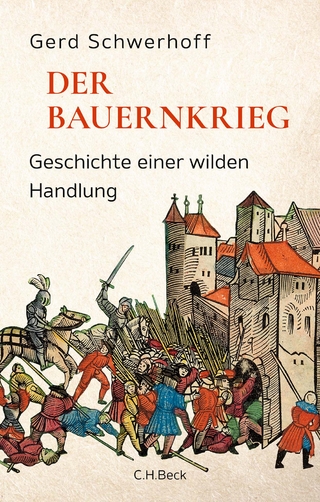
Geschichte einer wilden Handlung
Buch | Hardcover (2024)
C.H.Beck (Verlag)
CHF 47,60


