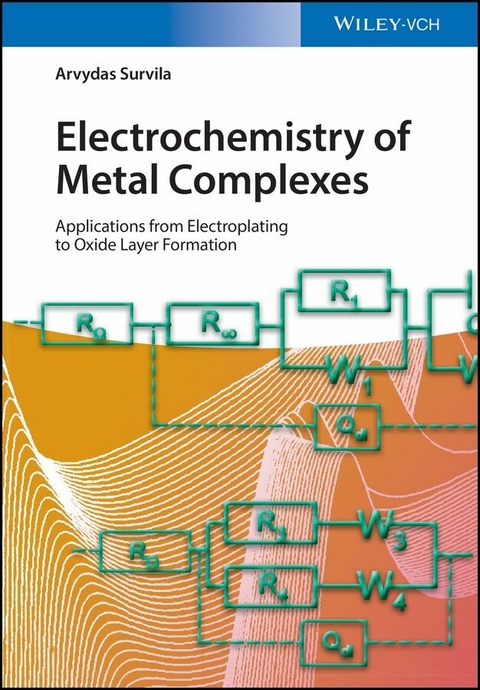
Electrochemistry of Metal Complexes (eBook)
Starting with general considerations on equilibria in solutions and at interfaces as well as on mass transport, the text acquaints readers with the theory and common experimental practice for studying electrochemical reactions of metals complexes. The core part of the book deals with all important aspects of electroplating, including a systematic discussion of co-deposition of metals and formation of alloys. It also discusses such related subjects as oxide layer formation and hydrogen evolution as a side reaction.
Arvydas Survila is head researcher at the Center for Physical Sciences and Technology in Vilnius, Lithuania. Having obtained his academic degrees from Moscow State University, he spent most of his career working as professor at Vilnius University and Vytautas Magnus University (Kaunas). Simultaneously, he was the Head of Department of Electrochemical Kinetics at the Institute of Chemistry (Vilnius). Professor Survila has authored about 300 scientific publications. He obtained the prestigious Lithuanian Scientific Award (physical sciences) and J. Matulis Award from Lithuanian Academy of Science. He is also member of the International Society of Electrochemistry and of the Advisory Board of the Russian Journal of Electrochemistry.
Arvydas Survila is head researcher at the Center for Physical Sciences and Technology in Vilnius, Lithuania. Having obtained his academic degrees from Moscow State University, he spent most of his career working as professor at Vilnius University and Vytautas Magnus University (Kaunas). Simultaneously, he was the Head of Department of Electrochemical Kinetics at the Institute of Chemistry (Vilnius). Professor Survila has authored about 300 scientific publications. He obtained the prestigious Lithuanian Scientific Award (physical sciences) and J. Matulis Award from Lithuanian Academy of Science. He is also member of the International Society of Electrochemistry and of the Advisory Board of the Russian Journal of Electrochemistry.
INTRODUCTION
Symbols and Abbreviations
EQUILIBRIUM PROPERTIES OF COMPLEX SYSTEMS
General Definitions
Equilibria in the Solutions of Complex Compounds
Distribution of Complexes and Ligands in Solution
EQUILIBRIUM ELECTRODE POTENTIALS
Electrodes of the First Kind
Equilibria Involving Intermediates
Electrodes of the Second Kind
Open-Circuit Potentials. Examples of Experimental Investigations
System Cu/Cu(I), CN-
System Cu/Cu(II), beta-alanine
HALF-WAVE POTENTIALS
Analysis of Reversible Polarograms
Irreversible Polarograms
Quasi-Reversible Polarograms
MASS TRANSPORT
Two Models of Diffusive Mass Transport
Diffusion to Different Electrode Types (Planar, Cylindrical, Micro)
Mass Transport of Chemically Interacting Particles
Competition of Diffusion and Ligand Exchange Kinetics
Concentration Profiles
Labile Systems
Systems With Limited Lability
PECULIARITIES OF ELECTROCHEMICAL PROCESSES INVOLVING LABILE COMPLEXES
Steady-State Voltammograms
Potential Transients
Current Transients
QUANTITATIVE MODELLING OF QUASI-REVERSIBLE ELECTROCHEMICAL PROCESSES INVOLVING LABILE COMPLEXES OF METALS
Kinetic Equations
Tafel Plots Normalized With Respect to the Surface Concentration of EAC
Techniques Based on the Control of the Intensity of Forced Convection
Isosurface Concentration Voltammetry
Determination of the Exchange Current Density from Polarization Resistance
Electrochemical Impedance Spectroscopy Under Forced Convection Conditions
DETERMINATION OF MECHANISM OF ELECTROCHEMICAL PROCESSES INVOLVING METAL COMPLEXES
Introduction: General Reaction Mechanisms
Determination of the Mechanism According to Vetter
Method of Isopotential Solutions
ADSORPTION
Thermodynamic Aspects
Model Aspects
ELECTROCHEMICAL PROCESSES IN REAL SYSTEMS
Experimental Details
Cyanide Systems
System Cu|Cu(I), CN-
System Ag|Ag(I), CN
System Au|Au(I), CN
Ecological Systems Containing Hydroxy Acids
Electroreduction of Cu(II) Complexes
Electroreduction of Sn(II) Complexes
Electroreduction of Zn(II) Complexes
ELECTROCHEMICAL DEPOSITION OF ALLOYS
General Concepts
Mass Transport
Distribution of Species at the Electrode Surface
Effects of the Underpotential Deposition
Codeposition of Cobalt and Tin
Deposition of Brass Coatings
Partial Processes
Codeposition of Copper and Zinc
Deposition of Bronze Coatings
Surface Activity of Polyethers on Copper and Tin Substrates
Effect of Halides
Effect of Length of the Hydrocarbon Chain
Codeposition of Copper and Tin
RELATED PHENOMENA
Spontaneous Formation of Photosensitive Oxide Layers
Two Mechanisms of Cu2O Formation
Electrochemical Reduction of Oxide Layers
Photoelectrochemical Properties of Oxide Layers
Photoelectrochemical Stability of Oxide Layers
Effect of Semiconducting Layers on Cu(II) Reduction
Hydrogen Evolution Involving Ligands As Proton Donors
Current Oscillations
CONCLUDING REMARKS
1
Introduction
At present, coordination compounds are widely applied in various fields of science and technology. One hundred and fifty years have passed since the time when Cato Maximilian Guldberg and Peter Waage formulated the Law of Mass Action. They suggested that the driving force (chemical affinity) for both forward and backward reactions is equal when the mixture is at equilibrium (today, the expression for the equilibrium constant is derived by setting the chemical potential of forward and backward reactions to be equal). The elaboration of successful theory became one of the cornerstones of coordination chemistry. This branch of science started to develop rapidly only in the middle of the past century after Jannik Bjerrum announced his thesis [1] in 1941, which was later translated into many languages. The key to Bjerrum's method was the use of the then recently developed glass electrode and pH meter to determine the concentration of hydrogen ions in solution. Bjerrum recognized that the formation of a metal complex with a ligand was a kind of acid–base equilibrium: there is competition for the ligand, L, between the metal ion, Mn+, and the hydrogen ion, H+.
Main conceptions of this work, which have not lost their value and importance up to date, provided a strong stimulus for further investigations. The number of publications devoted to the problems of coordination compounds started to grow at a fast rate. The first calculations were done by hand using the so-called graphical methods. The next key development was the use of computer programs. This permitted the examination of more complicated systems. One can judge the intensity of the development of this sphere having compared a small number of works published before 1941, containing abundance of data on the characteristics of various systems collected in several volumes of “Stability Constants” [2–7]. Later, these data were critically assessed when publishing a reference book [8] containing the most reliable values of constants. Currently, a lot of critical reviews were published (most of them in the Pure and Applied Chemistry), and thousands of stability constants can be found in different databases.
Coordination compounds found their application in various areas including plating, which did not lose its importance until now. Much interest in the recent investigations was shown in the problems of an applied nature, underlining the effect of plating parameters such as current density, deposition time, temperature, and pH in relation to the phase composition, structure, and quality of deposit. To gain a better insight into the nature of electrochemical processes involving metal complexes, the kinetic regularities of the processes should be revealed and considered invoking adequate theoretical models. These problems take a considerable place in this book.
We start with the consideration of equilibrium processes taking place in the solutions containing metal complexes. As the relevant theoretical aspects are widely elucidated in the literature, we present only the most general knowledge that is closely related to the problems to be considered.
1.1 Equilibrium Properties of Complex Systems
1.1.1 General Definitions
A molecular entity formed by the reversible association of two or more chemical species (molecules, atoms, or ions) is referred to as complex. Very different kinds of bonds can be involved in this formation, but in the following, the charge transfer complexes will be considered for the most part. These compounds contain the central ion (most commonly a metal ion) that is bound with several groups of electron donors called ligands. They can be both neutral particles and ions.
The number of bonds that the central ion forms with electron-donor species is designated as its coordination number (π-bonds are not considered in determining the coordination number). In turn, depending on the number of bonds that a single ligand particle forms, they are classified as uni- or monodentate, bidentate, and so on, ligands. Ligands, bound with the central particle by coordination bonds, constitute an inner coordination sphere.
The so-called chelates belong to the category of inner-sphere complexes. The chelating ligands have several unshared electron pairs giving rise to two or more coordination bonds. The term chelate is derived from the Greek word for the claw of a crawfish, as the ligand grasps the metal ion like a crawfish grasps its catch with its claws. Such complexes are much more stable than the compounds made of monodentate ligands because of the liberation of a larger number of solvent molecules. This leads to an increase in the number of species present in the system and, therefore, an increase in entropy. An increase in entropy makes the formation of the chelated complex more favorable.
Depending on the number of central particles in a single molecule of a complex compound, complexes are categorized into mononuclear and polynuclear ones. In the latter, metal ions can be bound directly or through a ligand particle (“ligand bridge”).
A certain part of ligands can have no direct contact with the central particle with which they are linked by weaker (electrostatic or van der Waals) interactions or a hydrogen bond. The position of such ligands in space around the central ion is not strictly defined. They constitute a second coordination sphere, and compounds of this type are called outer-sphere complexes. Main attention in this book is concentrated on the processes involving mononuclear inner-sphere complexes.
1.1.2 Equilibrium in the Solutions of Complex Compounds
Solvated ions, which form when dissolving substances in some solvent W, in essence are coordination compounds with a saturated inner coordination sphere. If the solvent is water, the so-called aqua complexes form. In this case, the number of immediately bound monodentate ligands (H2O molecules) is equal to the coordination number, N, of the metal ion.
Upon addition of ligands X and Y to the solution containing solvate complexes MWn+, the former can displace part of W molecules in the inner coordination sphere forming extra complexes. Usually, this process takes place until equilibrium is established:
1The constant of this equilibrium is called the overall or cumulative stability constant of the complex. The quantitative expression for cumulative stability constant, βpq, can be greatly simplified by removing those terms that are constant. The number of water molecules attached to each metal ion is constant. In dilute solutions, the concentration of water is effectively constant. Then, the equation written without indicating molecules of the solvent becomes:
Here, {X} should be read as “the activity of X” and likewise for the other terms in curly brackets. The reciprocal quantity is called instability constant. As activity is the product of concentration and activity coefficient (γ), this definition could also be written as
where [X] represents the concentration of species given in square brackets.
To avoid the complications involved in using activities, stability constants are determined, where possible, in a medium consisting of a solution of a background electrolyte at high ionic strength, that is, under conditions in which γ can be assumed to be always constant. Any chemical interactions between the species in equilibrium and the background electrolyte are unwanted, but such interactions might occur in particular cases. Stability constants are reported for a given ionic strength I (or extrapolated to I = 0). They refer to the specific ionic medium used in their determination and different values are obtained under different conditions. Furthermore, stability constant values depend on the specific electrolyte used, even at the same ionic strength. The effect of these factors can be seen from the example given in Figure 1.1.
Figure 1.1 Stability constants of Cu(II)–glycine complexes obtained at different ionic strength with nitrate [9] and perchlorate [10] as background electrolytes.
Often, stability constants are determined for experimental conditions that deviate from the standard conditions used by convention in thermodynamics and refer to concentrations, but not to activities. Such conditional (apparent) stability constants are used whenever the activity coefficients and concentrations of the species are not known or not accessible, or when these simplifications are sufficient to treat certain equilibrium. As outlined next, β values expressed in concentration terms, that is,
are preferable in material balance equations. Sometimes, the so-called mixed stability constants are found in the expressions in which both concentrations and activities are used. The latter characteristic is most often applied to H+ ions whose activity is very easily obtained from the pH values.
The more the equilibrium Eq. (1.1) is shifted to the right, the more stable are the complexes. This concept of stability of complexes should not be confused with lability of complexes, which depends on the rate of direct and...
| Erscheint lt. Verlag | 21.4.2015 |
|---|---|
| Sprache | englisch |
| Themenwelt | Naturwissenschaften ► Chemie ► Anorganische Chemie |
| Technik | |
| Schlagworte | Anorganische Chemie • Chemie • Chemistry • Electrochemistry • electrodes polarograms kinetics voltammetry codeposition alloys • Elektrochemie • Industrial Chemistry • Inorganic Chemistry • Materials Science • Materialwissenschaften • Metalle u. Legierungen • Metallkomplexe • Metals & Alloys • Technische u. Industrielle Chemie |
| ISBN-10 | 3-527-69125-1 / 3527691251 |
| ISBN-13 | 978-3-527-69125-8 / 9783527691258 |
| Informationen gemäß Produktsicherheitsverordnung (GPSR) | |
| Haben Sie eine Frage zum Produkt? |
 EPUB (Adobe DRM)
Kopierschutz: Adobe-DRM
Adobe-DRM ist ein Kopierschutz, der das eBook vor Mißbrauch schützen soll. Dabei wird das eBook bereits beim Download auf Ihre persönliche Adobe-ID autorisiert. Lesen können Sie das eBook dann nur auf den Geräten, welche ebenfalls auf Ihre Adobe-ID registriert sind.
Details zum Adobe-DRM
Dateiformat: EPUB (Electronic Publication)
EPUB ist ein offener Standard für eBooks und eignet sich besonders zur Darstellung von Belletristik und Sachbüchern. Der Fließtext wird dynamisch an die Display- und Schriftgröße angepasst. Auch für mobile Lesegeräte ist EPUB daher gut geeignet.
Systemvoraussetzungen:
PC/Mac: Mit einem PC oder Mac können Sie dieses eBook lesen. Sie benötigen eine
eReader: Dieses eBook kann mit (fast) allen eBook-Readern gelesen werden. Mit dem amazon-Kindle ist es aber nicht kompatibel.
Smartphone/Tablet: Egal ob Apple oder Android, dieses eBook können Sie lesen. Sie benötigen eine
Geräteliste und zusätzliche Hinweise
Buying eBooks from abroad
For tax law reasons we can sell eBooks just within Germany and Switzerland. Regrettably we cannot fulfill eBook-orders from other countries.
aus dem Bereich