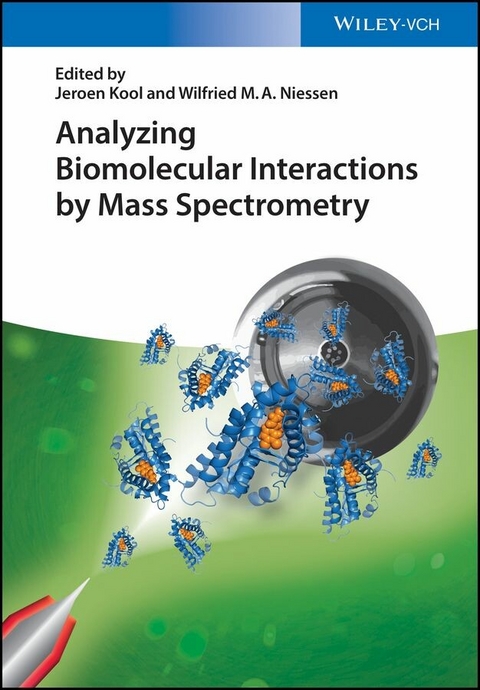
This monograph reviews all relevant technologies based on mass spectrometry that are used to study or screen biological interactions in general.
Arranged in three parts, the text begins by reviewing techniques nowadays almost considered classical, such as affinity chromatography and ultrafiltration, as well as the latest techniques. The second part focusses on all MS-based methods for the study of interactions of proteins with all classes of biomolecules. Besides pull down-based approaches, this section also emphasizes the use of ion mobility MS, capture-compound approaches, chemical proteomics and interactomics. The third and final part discusses other important technologies frequently employed in interaction studies, such as biosensors and microarrays.
For pharmaceutical, analytical, protein, environmental and biochemists, as well as those working in pharmaceutical and analytical laboratories.
Jeroen Kool focused on the integration of chemical and biochemical detection after separation methodologies during his PhD study at the VU University Amsterdam. Following his PhD, he was responsible for target evaluation, hit screening and identification, and lead optimization processes at Kiadis Pharma. He continued his academic career in 2005 as a postdoc in the Biomolecular Mass Spectrometry group in Utrecht working on proteomics and biomarker discovery. From 2007 to present, he is responsible for the research line Bioanalytical Screening Methodologies at the VU University Amsterdam with a particular focus on hyphenated analytical techniques combining mass spectrometry and chromatography with novel bioassay techniques for bioactive mixture analysis. He published over 50 peer reviewed articles and one book chapter.
Wilfried M.A. Niessen studied chemistry at the VU University Amsterdam. After his PhD, he worked for 9 years as an analytical chemist within the Leiden/ Amsterdam Center for Drug Research at Leiden University. After leaving the university in 1996, he started the company hyphen MassSpec, providing independent consultancy and training in the field of analytical mass spectrometry. In parallel to this, he was extraordinary professor in bioanalytical mass spectrometry at the Faculty of Science of the VU University Amsterdam between 2002 and 2014. There, he was involved in high-resolution screening and the role of MS therein. His main research interests involve principles, instrumentation and applications of liquid chromatography-mass spectrometry as well as interpretation of small-molecule MS-MS mass spectra. He is (co)author of more than 200 peer reviewed publications in the field of LC-MS and more than 40 book chapters. Wilfried Niessen authored and edited five books, and was guest editor on several special journal issues.
Jeroen Kool focused on the integration of chemical and biochemical detection after separation methodologies during his PhD study at the VU University Amsterdam. Following his PhD, he was responsible for target evaluation, hit screening and identification, and lead optimization processes at Kiadis Pharma. He continued his academic career in 2005 as a postdoc in the Biomolecular Mass Spectrometry group in Utrecht working on proteomics and biomarker discovery. From 2007 to present, he is responsible for the research line Bioanalytical Screening Methodologies at the VU University Amsterdam with a particular focus on hyphenated analytical techniques combining mass spectrometry and chromatography with novel bioassay techniques for bioactive mixture analysis. He published over 50 peer reviewed articles and one book chapter.
Wilfried M.A. Niessen studied chemistry at the VU University Amsterdam. After his PhD, he worked for 9 years as an analytical chemist within the Leiden/ Amsterdam Center for Drug Research at Leiden University. After leaving the university in 1996, he started the company hyphen MassSpec, providing independent consultancy and training in the field of analytical mass spectrometry. In parallel to this, he was extraordinary professor in bioanalytical mass spectrometry at the Faculty of Science of the VU University Amsterdam between 2002 and 2014. There, he was involved in high-resolution screening and the role of MS therein. His main research interests involve principles, instrumentation and applications of liquid chromatography-mass spectrometry as well as interpretation of small-molecule MS-MS mass spectra. He is (co)author of more than 200 peer reviewed publications in the field of LC-MS and more than 40 book chapters. Wilfried Niessen authored and edited five books, and was guest editor on several special journal issues.
Preface
INTRODUCTION TO MASS SPECTROMETRY, A TUTORIAL
Introduction
Figures of Merit
Analyte Ionization
Mass Analyzer Building Blocks
Tandem Mass Spectrometry
Data Interpretation and Analytical Strategies
Conclusion and Perspectives
PART I: Direct MS Based Affinity Techniques
STUDYING PROTEIN-PROTEIN INTERACTIONS BY COMBINING NATIVE MASS SPECTROMETRY AND CHEMICAL CROSS-LINKING
Introduction
Protein Analysis by Mass Spectrometry
Native MS
Chemical Cross-Linking MS
Value of Combining Native MS with Chemical Cross-Linking MS
Regulating the Giant
Capturing Transient Interactions
An Integrative Approach for Obtaining Low-Resolution Structures of Native Protein Complexes
Future Directions
NATIVE MASS SPECTROMETRY APPROACHES USING ION MOBILITY-MASS SPECTROMETRY
Introduction
Sample Preparation
Electrospray Ionization
Mass Analyzers and Tandem MS Approaches
Ion Mobility
Data Processing
Challenges and Future Perspectives
PART II: LC-MS Based with Indirect Assays
METHODOLOGIES FOR EFFECT-DIRECTED ANALYSIS: ENVIRONMENTAL APPLICATIONS, FOOD ANALYSIS, AND DRUG DISCOVERY
Introduction
Principle of Traditional Effect-Directed Analysis
Sample Preparation
Fractionation for Bioassay Testing
Miscellaneous Approaches
Identification of Confirmation Process
Conclusion and Perspectives
MS BINDING ASSAYS
Introduction
MS Binding Assays - Strategy
Application of MS Binding Assays
Summary and Perspectives
METABOLIC PROFILING APPROACHES FOR THE IDENTIFICATION OF BIOACTIVE METABOLITES IN PLANTS
Introduction to Plant Metabolic Profiling
Sample Collection and Processing
Hyphenated Techniques
Mass Spectrometry
Mass Spectrometric Imaging
Data Analysis
Future Perspectives
ANTIVENOMICS: A PROTEOMICS TOOL FOR STUDYING THE IMMUNOREACTIVITY OF ANTIVENOMS
Introduction
Challenge of Fighting Human Envenoming by Snakebites
Toolbox for Studying the Immunological Profile of Antivenoms
First-Generation Antivenomics
Snake Venomics
Second-Generation Antivenomics
Concluding Remarks
PART III: Direct Pre- and On-Column Coupled Techniques
FRONTAL AND ZONAL AFFINITY CHROMATOGRAPHY COUPLED TO MASS SPECTROMETRY
Introduction
Frontal Affinity Chromatography
Staircase Method
Simultaneous Frontal Analysis of a Complex Mixture
Multiprotein Stationary Phase
Zonal Chromatography
Nonlinear Chromatography
ONLINE AFFINITY ASSESSMENT AND IMMUNOAFFINITY SAMPLE PRETREATMENT IN CAPILLARY ELECTROPHORESIS-MASS SPECTROMETRY
Introduction
Capillary Electrophoresis
Affinity Capillary Electrophoresis
Immunoaffinity Capillary Electrophoresis
Capillary Electrophoresis-Mass Spectrometry
Application of ACE-MS
Applications of IA-CE-MS
Conclusions
LABEL-FREE BIOSENSOR AFFINITY ANALYSIS COUPLED TO MASS SPECTROMETRY
Introduction to MS-Coupled Biosensor Platforms
Strategies for Coupling Label-Free Analysis with Mass Spectrometry
New Sensor and MS Platforms, Opportunities for Integration
PART IV: Direct Post Column Coupled Affinity Techniques
HIGH-RESOLUTION SCREENING: POST-COLUMN CONTINUOUS-FLOW BIOASSAYS
Introduction
The High-Resolution Screening Platform
Data Analysis
Conclusions and Perspectives
CONCLUSIONS
Index
Abbreviations
| μ | Electrophoretic mobility |
| 2DE | Two-dimensional electrophoresis |
| 5-HT | 5-Hydroxytryptamine, serotonin |
| 5-HT2A | 5-Hydroxytryptamine (serotonin) receptor subtype 2A |
| ACE | Affinity capillary electrophoresis |
| ACE | Angiotensin converting enzyme |
| AChBP | Acetyl choline binding protein |
| Ag–Ab | Antigen–antibody complex |
| AhR | Aryl hydrocarbon receptor |
| AMAC | Accelerated membrane assisted clean-up |
| APCI | Atmospheric pressure chemical ionization |
| API | Atmospheric pressure ionization |
| AR-CALUX | Androgen chemically activated luciferase expression |
| BGE | Background electrolyte |
| BGF | Bioassay guided fractionation |
| BGT1 | Betaine-GABA transporter |
| BLAST | Basic local alignment search tool |
| BS2G | Bis(sulfosuccinimidyl)suberate |
| CCT | Chaperonin containing Tcp1 |
| CDER | Center for drug evaluation and research |
| CE | Capillary electrophoresis |
| CECs | Chemicals of emerging concern |
| CHCA | α-Cyano-4-hydroxy cinnamic acid |
| CID | Collision-induced dissociation |
| CID-MS/MS | Collision-induced dissociation tandem mass spectrometry |
| CRISPR | Clustered regularly interspaced short palindromic repeat |
| CZE | Capillary zone electrophoresis |
| D1–5 | Dopamine receptor subtypes D1 to D5 |
| DCC | Dynamic combinatorial chemistry |
| DCL | Dynamic combinatorial library |
| DDA | Data dependent acquisition |
| DVB/CAR/PDMS | Divinyl-benzene/carboxen/polydimethylsiloxane |
| EC | Electrochemical conversion |
| ECD | Electron-capture dissociation |
| EDA | Effect-directed analysis |
| EIC | Extracted ion chromatograms |
| EICs | Extracted ion currents |
| ELSD | Evaporative light scattering detection |
| EROD | Ethoxyresorufin-O-deethylase |
| ESI | Electron spray ionization |
| ESI | Electrospray ionization |
| ESI-MS | Electrospray-ionization mass spectrometry |
| ETD | Electron-transfer dissociation |
| Fab | Fragment antigen-binding |
| FACCE | Frontal analysis continuous capillary electrophoresis |
| FDA | US Food and Drug Administration |
| FIA | Flow-injection analysis |
| FLD | Fluorescence detection |
| FRAP | Ferric reducing antioxidant power |
| FRET | Fluorescence resonance energy transfer |
| FWHM | Full width at half maximum |
| GAT1–3 | GABA transporter subtypes 1–3 (according to HUGO) |
| GC–MS | Gas chromatography mass spectrometry |
| GC-O | Gas chromatography olfactometry |
| GCxGC | Comprehensive two dimensional gas chromatography |
| GPC | Gel permeation chromatography |
| GPCR | G protein-coupled receptor |
| GSI | Global snakebite initiative |
| GST | Glutathione-S-transferase |
| HBH | Histidine–biotin–histidine |
| HDX | Hydrogen–deuterium exchange |
| HEK | Human embryonic kidney cells |
| HPLC | High performance liquid chromatography |
| HRS | High-resolution screening |
| HTLC | High-temperature liquid chromatography |
| HTS | High throughput screening |
| IA-CE | Immunoaffinity capillary electrophoresis |
| IC50 | Half maximal inhibitory concentration |
| ICP | Inductively coupled plasma |
| ICP-MS | Inductively coupled plasma MS |
| IMS | Ion mobility spectrometry |
| IT-TOF | Tandem ion-trap – time-of-flight MS |
| Kd | Equilibrium dissociation constant |
| koff | Rate constant of complex dissociation |
| kon | Rate constant of complex formation |
| LC–MS | Liquid chromatography mass spectrometry |
| LC–MSE | Liquid chromatography mass spectrometry in an alternating energy mode |
| LIF | Laser induced fluorescence |
| LLE | Liquid liquid extraction |
| LLOQ | Lower limit of quantification |
| MALDI | Matrix assisted laser desorption ionization |
| MS | Mass spectrometry/mass spectrometer |
| MS/MS | Tandem mass spectrometry |
| MTS | 3-(4,5-Dimethylthiazol-2-yl)-5-(3-carboxymethoxyphenyl)-2-(4-sulfophenyl)-2H-tetrazolium |
| MTT | 3-(4,5-Dimethyldiazol-2-yl)-2,5 diphenyl tetrazolium bromid |
| nAChR | Nicotinic acetylcholine receptor |
| NECEEM | Non-equilibrium capillary electrophoresis of equilibrium mixtures |
| NMR | Nuclear magnetic resonance |
| NMR | Nuclear magnetic resonance spectrometry |
| np-HPLC | Normal phase high performance liquid chromatography |
| p38 | p38 mitogen-activated protein kinase |
| PAHs | Poly aromatic hydrocarbons |
| PEEK | Polyether ether ketone |
| PLE | Pressurized liquid extraction |
| POCIS | Polar organic chemical integrative sampler |
| PTFE | Polytetrafluoroethylene |
| QSAR | Quantitative structure–activity relationships |
| QTAX | Quantitative analysis of tandem affinity purified in vivo cross-linked protein complexes |
| Q-TOF | Quadrupole time-of-flight |
| q-TOF | Tandem quadropule – time-of-flight MS |
| rhSHBG | Recombinant human sex hormone binding... |
| Erscheint lt. Verlag |
9.2.2015
|
| Sprache |
englisch |
| Themenwelt
|
Naturwissenschaften ► Chemie |
| Technik |
| Schlagworte |
Analytische Chemie • Biopolymere • biopolymers • Biowissenschaften • Chemie • Chemistry • crosslinking ion-mobility affinity biosensors proteomics metabolomics • Genomforschung u. Proteomik • Genomics & Proteomics • Life Sciences • Massenspektrometrie • Mass Spectrometry • Pharmaceutical & Medicinal Chemistry • Pharmazeutische u. Medizinische Chemie • Polymer Science & Technology • Polymerwissenschaft u. -technologie |
| ISBN-10 |
3-527-67341-5 / 3527673415 |
| ISBN-13 |
978-3-527-67341-4 / 9783527673414 |
 EPUB (Adobe DRM)
Kopierschutz: Adobe-DRM
Adobe-DRM ist ein Kopierschutz, der das eBook vor Mißbrauch schützen soll. Dabei wird das eBook bereits beim Download auf Ihre persönliche Adobe-ID autorisiert. Lesen können Sie das eBook dann nur auf den Geräten, welche ebenfalls auf Ihre Adobe-ID registriert sind.
Details zum Adobe-DRM
Dateiformat: EPUB (Electronic Publication)
EPUB ist ein offener Standard für eBooks und eignet sich besonders zur Darstellung von Belletristik und Sachbüchern. Der Fließtext wird dynamisch an die Display- und Schriftgröße angepasst. Auch für mobile Lesegeräte ist EPUB daher gut geeignet.
Systemvoraussetzungen:
PC/Mac: Mit einem PC oder Mac können Sie dieses eBook lesen. Sie benötigen eine Adobe-ID und die Software Adobe Digital Editions (kostenlos). Von der Benutzung der OverDrive Media Console raten wir Ihnen ab. Erfahrungsgemäß treten hier gehäuft Probleme mit dem Adobe DRM auf.
eReader: Dieses eBook kann mit (fast) allen eBook-Readern gelesen werden. Mit dem amazon-Kindle ist es aber nicht kompatibel.
Smartphone/Tablet: Egal ob Apple oder Android, dieses eBook können Sie lesen. Sie benötigen eine Adobe-ID sowie eine kostenlose App.
Geräteliste und zusätzliche Hinweise
Buying eBooks from abroad
For tax law reasons we can sell eBooks just within Germany and Switzerland. Regrettably we cannot fulfill eBook-orders from other countries.