Introduction to Physical Polymer Science (eBook)
880 Seiten
John Wiley & Sons (Verlag)
978-1-119-10374-5 (ISBN)
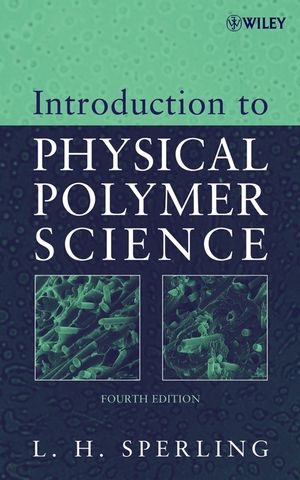
Polymers constitute the basis for the plastics, rubber, adhesives, fiber, and coating industries. The Fourth Edition of Introduction to Physical Polymer Science acknowledges the industrial success of polymers and the advancements made in the field while continuing to deliver the comprehensive introduction to polymer science that made its predecessors classic texts.
The Fourth Edition continues its coverage of amorphous and crystalline materials, glass transitions, rubber elasticity, and mechanical behavior, and offers updated discussions of polymer blends, composites, and interfaces, as well as such basics as molecular weight determination. Thus, interrelationships among molecular structure, morphology, and mechanical behavior of polymers continue to provide much of the value of the book.
Newly introduced topics include:
* Nanocomposites, including carbon nanotubes and exfoliated montmorillonite clays
* The structure, motions, and functions of DNA and proteins, as well as the interfaces of polymeric biomaterials with living organisms
* The glass transition behavior of nano-thin plastic films
In addition, new sections have been included on fire retardancy, friction and wear, optical tweezers, and more.
Introduction to Physical Polymer Science, Fourth Edition provides both an essential introduction to the field as well as an entry point to the latest research and developments in polymer science and engineering, making it an indispensable text for chemistry, chemical engineering, materials science and engineering, and polymer science and engineering students and professionals.
Trained as a chemist, L. H. SPERLING is Professor Emeritus of both Chemical Engineering and Materials Science and Engineering at Lehigh University in Bethlehem, Pennsylvania. He remains active in consulting, speaking, and writing.
"Anyone in need of a basic text on polymer science would find this to be a very good choice, and it is highly recommended." (IEEE Electrical Insulation Magazine, January/February 2007)
| Erscheint lt. Verlag | 2.2.2015 |
|---|---|
| Sprache | englisch |
| Themenwelt | Naturwissenschaften ► Chemie ► Organische Chemie |
| Naturwissenschaften ► Chemie ► Technische Chemie | |
| Technik ► Umwelttechnik / Biotechnologie | |
| Schlagworte | chemical engineering • Chemische Verfahrenstechnik • Physik • Polymere • Polymer Science & Technology • Polymerwissenschaft u. -technologie |
| ISBN-10 | 1-119-10374-6 / 1119103746 |
| ISBN-13 | 978-1-119-10374-5 / 9781119103745 |
| Informationen gemäß Produktsicherheitsverordnung (GPSR) | |
| Haben Sie eine Frage zum Produkt? |
 EPUB (Adobe DRM)
Kopierschutz: Adobe-DRM
Adobe-DRM ist ein Kopierschutz, der das eBook vor Mißbrauch schützen soll. Dabei wird das eBook bereits beim Download auf Ihre persönliche Adobe-ID autorisiert. Lesen können Sie das eBook dann nur auf den Geräten, welche ebenfalls auf Ihre Adobe-ID registriert sind.
Details zum Adobe-DRM
Dateiformat: EPUB (Electronic Publication)
EPUB ist ein offener Standard für eBooks und eignet sich besonders zur Darstellung von Belletristik und Sachbüchern. Der Fließtext wird dynamisch an die Display- und Schriftgröße angepasst. Auch für mobile Lesegeräte ist EPUB daher gut geeignet.
Systemvoraussetzungen:
PC/Mac: Mit einem PC oder Mac können Sie dieses eBook lesen. Sie benötigen eine
eReader: Dieses eBook kann mit (fast) allen eBook-Readern gelesen werden. Mit dem amazon-Kindle ist es aber nicht kompatibel.
Smartphone/Tablet: Egal ob Apple oder Android, dieses eBook können Sie lesen. Sie benötigen eine
Geräteliste und zusätzliche Hinweise
Buying eBooks from abroad
For tax law reasons we can sell eBooks just within Germany and Switzerland. Regrettably we cannot fulfill eBook-orders from other countries.
aus dem Bereich