Inner Ear (eBook)
434 Seiten
Elsevier Science (Verlag)
9781483222462 (ISBN)
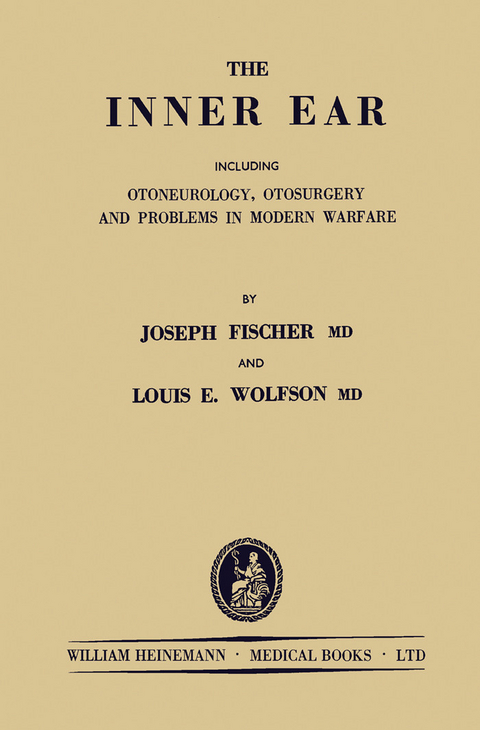
The Inner Ear: Including Otoneurology, Otosurgery, and Problems in Modern Warfare covers the anatomical, physiological and the central pathways of the inner ear. This book is composed of 15 chapters that particularly consider the pathologic anatomy of the various forms of labyrinthine diseases. The first three chapters deal with the clinical anatomy and physiological features of the inner ear. The next chapter examines certain conditions that can be observed during induced and abnormal excitability of the labyrinth. These topics are followed by considerable chapters on various forms of labyrinthine diseases, including otosclerosis, inflammatory diseases, intracranial complications, congenital diseases, neoplasms, facial palsy, vascular lesions, and war trauma. A chapter evaluates the potential use of sulfa drugs in chemotherapy for inner ear cases. Another chapter surveys the role of the inner ear in the aeronautics and the functional tests for aviation fitness. The last chapter discusses the effects of atmospheric pressure changes on the ear. This book will be of value to otologists, otoneurologists, and otosurgeons.
Front Cover 1
The Inner Ear: Including Otoneurology, Otosurgery, and Problems in Modern Warfare 4
Copyright Page 5
Table of Contents 6
Authors' Prefaces 12
Chapter I. Clinical Anatomy 14
1. NOMENCLATURE 14
2. TOPOGRAPHIC RELATIONS WITHIN THE PETROUS BONE 14
3. THE BONY INNER EAR 17
4. THE MEMBRANOUS INNER EAR 23
5. THE NERVOUS APPARATUS OF THE INNER EAR THE FACIAL NERVE 24
6. BLOOD SUPPLY OF THE INNER EAR 30
7. THE DURA MATER AND THE VENOUS SINUSES 31
REFERENCES 38
Chapter II. General Physiology 41
1. COMPARATIVE PHYSIOLOGY 41
2. PHYSIOLOGY OF THE HUMAN LABYRINTH 42
3. HISTOPHYSIOLOGIC FACTORS 43
4. FUNCTION OF THE CRISTAE 44
5. FUNCTION OF THE MACULAE (OTOLITHIC ORGAN) 47
6. LINEAR MOVEMENTS 49
7. FUNCTION OF THE SACCULE 50
8. SEPARATION OF MACULA AND CRISTA FUNCTIONS 51
9. INFLUENCE OF THE LABYRINTH ON THE STRIATED MUSCULATURE (TONUS) 52
10. INFLUENCE OF THE LABYRINTH ON THE AUTONOMOUS SYSTEM 52
11. KlNETOVISUAL FUNCTION 53
REFERENCES 54
Chapter III. Applied Physiology 58
1. VERTIGO 58
2. SPONTANEOUS DISTURBANCES OF EQUILIBRIUM AND COORDINATION COMPARATIVE PHYSIOLOGIC CONSIDERATIONS 61
3. SPONTANEOUS NYSTAGMUS PRINCIPLES AND DEFINITIONS 63
4. CONJUGATE PARESIS AND CONJUGATE DEVIATION 75
5. CONVERGENCE SPASM 77
6. LABYRINTHINE STRABISMUS 78
REFERENCES 79
INDUCED REACTIONS 82
1. OPTOKINETIC REACTION 82
2. CALORIC REACTION 84
3. BILATERAL CALORIZATION 91
4. TURNING REACTION 93
5. MECHANICAL REACTION (FISTULA SYMPTOM) 99
6. GALVANIC REACTION 100
7. TONIC REFLEXES AND REACTIONS 103
REFERENCES 109
Chapter IV. Functional Tests 113
1. VERTIGO 113
2. SPONTANEOUS DISTURBANCES OF EQUILIBRIUM AND COORDINATION 117
3. SPONTANEOUS NYSTAGMUS 122
4. CONJUGATE PARESIS AND CONJUGATE DEVIATION OF THE EYEBALLS 131
REFERENCES 133
INDUCED REACTIONS 134
1. OPTOKINETIC TESTS 135
2. CALORIC TESTS 137
3. BILATERAL CALORIZATION 144
4. TURNING TESTS 146
5. MECHANICAL TESTS (FISTULA SYMPTOM) 152
6. GALVANIC TEST 154
7. TONIC REFLEXES AND REACTIONS 157
REFERENCES 169
EVALUATION OF ABNORMAL REACTIONS 172
1. CHANGES IN RELATION TO CERTAIN STIMULI 172
2. CHANGES IN CERTAIN SEMICIRCULAR CANALS 173
3. VESTIBULAR DISHARMONY 174
4. HYPEREXCITABILITY 175
5. HYPO-EXCITABILITY 176
6. LOSS OF EXCITABILITY 177
7. QUALITATIVE CHANGES 177
Chapter V. Primary Diseases of the Labyrinthine Capsule: Otosclerosis 189
1. HISTORICAL VIEWPOINTS 189
2. PATHOLOGIC ANATOMY 190
3. ETIOLOGY 194
4. CLINICAL DIAGNOSIS 199
5. TREATMENT 200
REFERENCES 206
Chapter VI. Inflammatory Diseases of the Inner Ear 208
1. OTITIS INTERNA SEROSA 209
2. PARA-OTITIS INTERNA PURULENTA 212
3. PERI-OTITIS INTERNA PURULENTA 214
4. OTITIS INTERNA PURULENTA 219
5. OTITIS INTERNA PURULENTA COMPLICATA 228
6. OTITIS INTERNA TRAUMATICA 230
7. INDICATIONS FOR SURGERY 234
8. OPERATIVE TECHNIC 236
INFLAMMATION OF THE PETROUS PYRAMID 244
1. PATHWAYS OF INFECTION: PATHOLOGY 244
2. CLINICAL DIAGNOSIS 245
3. TREATMENT 246
REFERENCES 247
Chapter VII. Intracranial Labyrinthogenic Complications 251
1. VIEWPOINTS AND CLASSIFICATION 251
2. EXTRADURAL LESIONS (PACHYMENINGITIS EXTERNA) 253
3. INTRADURAL LESIONS 258
4. SUBDURAL LESIONS 265
5. CEREBELLAR ABSCESS 275
6. TEMPOROSPHENOIDAL ABSCESS 296
REFERENCES 300
Chapter VIII. Chemotherapy 305
1. CLASSIFICATION AND GENERAL USE OF THE SULFA DRUGS 305
2. USE OF SULFA DRUGS IN OTOLOGY 309
REFERENCES 313
Chapter IX. Facial Palsy 314
1. ANATOMIC AND PHYSIOLOGIC BASIS 314
2. CLASSIFICATION AND ETIOLOGY 316
3. CLINICAL SIGNS AND SYMPTOMS 319
4. TREATMENT 321
REFERENCES 325
Chapter X. Congenital Diseases 327
1. CHANGES OF THE BONY INNER EAR 327
2. CHANGES OF THE NERVE AND SENSORY APPARATUS 329
REFERENCES 332
Chapter XI. Neoplasms 333
1. NEOPLASMS OF THE INNER EAR 333
2. NEOPLASMS OF THE CEREBELLOPONTILE ANGLE 340
3. TUMORS OF THE ANTERIOR AND MIDDLE CRANIAL FOSSAE: CONGESTIVE INNER EAR 344
CONCLUSIONS 346
REFERENCES 346
Chapter XII. Vascular Lesions: Ménière's Syndrome 347
1. CLASSIFICATION 347
2. PATHOLOGIC ANATOMY 347
4. SYMPTOMATOLOGY 351
5. TREATMENT 353
REFERENCES 356
Chapter XIII. War Trauma 358
1. SKULL FRACTURES 358
2. CONCUSSION OF THE INNER EAR 368
3. TRAUMA DUE TO EXPLOSIONS 373
4. GUNSHOT INJURIES 379
REFERENCES 381
Chapter XIV. The Role of the Inner Ear in Aeronautics 384
I. PHYSIOLOGY OF THE COCHLEA AND LABYRINTH IN THE USUAL ENVIRONMENT 384
2. PHYSIOLOGY AND PATHOLOGY OF THE COCHLEA AND LABYRINTH IN THE UNUSUAL ENVIRONMENT (AIR) 389
3. FUNCTIONAL TESTS FOR AVIATION FITNESS 399
REFERENCES 403
Chapter XV. Effects of Atmospheric Pressure Changes on the Ear 405
1. EFFECTS OF INCREASED ATMOSPHERIC PRESSURE 406
2. EFFECTS OF DECREASED ATMOSPHERIC PRESSURE 407
3. EFFECTS OF SUDDEN CHANGES IN ATMOSPHERIC PRESSURE 410
4. REGULATIONS FOR EXAMINATION OF FLYERS 415
REFERENCES 416
Index 418
| Erscheint lt. Verlag | 20.4.2016 |
|---|---|
| Sprache | englisch |
| Themenwelt | Medizin / Pharmazie ► Medizinische Fachgebiete ► Chirurgie |
| Medizin / Pharmazie ► Medizinische Fachgebiete ► Neurologie | |
| Naturwissenschaften ► Biologie ► Humanbiologie | |
| Naturwissenschaften ► Biologie ► Zoologie | |
| ISBN-13 | 9781483222462 / 9781483222462 |
| Informationen gemäß Produktsicherheitsverordnung (GPSR) | |
| Haben Sie eine Frage zum Produkt? |
 PDF (Adobe DRM)
Kopierschutz: Adobe-DRM
Adobe-DRM ist ein Kopierschutz, der das eBook vor Mißbrauch schützen soll. Dabei wird das eBook bereits beim Download auf Ihre persönliche Adobe-ID autorisiert. Lesen können Sie das eBook dann nur auf den Geräten, welche ebenfalls auf Ihre Adobe-ID registriert sind.
Details zum Adobe-DRM
Dateiformat: PDF (Portable Document Format)
Mit einem festen Seitenlayout eignet sich die PDF besonders für Fachbücher mit Spalten, Tabellen und Abbildungen. Eine PDF kann auf fast allen Geräten angezeigt werden, ist aber für kleine Displays (Smartphone, eReader) nur eingeschränkt geeignet.
Systemvoraussetzungen:
PC/Mac: Mit einem PC oder Mac können Sie dieses eBook lesen. Sie benötigen eine
eReader: Dieses eBook kann mit (fast) allen eBook-Readern gelesen werden. Mit dem amazon-Kindle ist es aber nicht kompatibel.
Smartphone/Tablet: Egal ob Apple oder Android, dieses eBook können Sie lesen. Sie benötigen eine
Geräteliste und zusätzliche Hinweise
Buying eBooks from abroad
For tax law reasons we can sell eBooks just within Germany and Switzerland. Regrettably we cannot fulfill eBook-orders from other countries.
aus dem Bereich