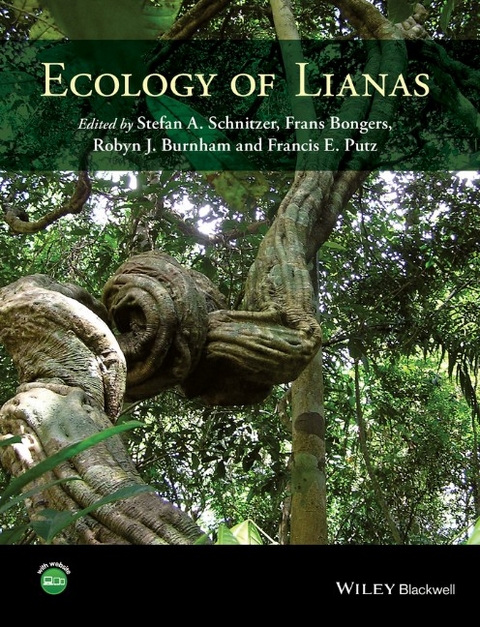
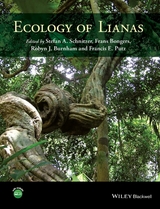
We propose an edited volume on the ecology of lianas comprised of chapters written by some of the foremost ecologists in the field. We have also identified a number of junior scientists who are beginning to make an impact on the field and could contribute new research and exciting results. Ultimately, we believe that this book will address issues of importance for all ecologists, temperate and tropical alike, and will be instrumental in stimulating further research in forest ecology in general, as well as on the ecology of lianas.
The main goal of this book is to present a volume on the current status of liana ecology in
tropical and temperate forests. In essence, we will use this book as a forum to summarize and synthesize the most recent research in liana ecology and to address how this research fits into the broader field of ecology. In the course of reviewing what is new and exciting, we will point out liana-related issues that deserve more attention from researchers.
The intended audience for this book includes advanced undergraduates, graduate students, and researchers in forest ecology at the population, community, and ecosystem levels. Ideally, each chapter will include a brief introduction of the relevant concept or theory, a review of the current state of liana-related research on this theory, including the author’s own contributions. Although this book will focus on current research in liana ecology, many of the proposed chapters will also cover theories that are applicable to all ecological systems not just tropical ones and not just focusing on lianas. Consequently, we believe that this book will target a broad audience of ecologists.
Each chapter will follow a similar format. The first part of the chapter will include a concise
history and review of the concept or theory at hand. The rest of the chapter will be devoted to the presentation and interpretation of empirical data addressing that concept or theory. The author of each chapter will have the leeway to use new or unpublished data or to synthesize and summarize his/her data or data of other authors. Although we believe that the way to make this book the best is as outlined above, authors will, of course, write the manuscripts in a way that reflects their approach and style.
Lianas are woody vines that were the focus of intense study by early ecologists, such as Darwin, who devoted an entire book to the natural history of climbing plants. Over the past quarter century, there has been a resurgence in the study of lianas, and liana are again recognized as important components of many forests, particularly in the tropics. The increasing amount of research on lianas has resulted in a fundamentally deeper understanding of liana ecology, evolution, and life-history, as well as the myriad roles lianas play in forest dynamics and functioning. This book provides insight into the ecology and evolution of lianas, their anatomy, physiology, and natural history, their global abundance and distribution, and their wide-ranging effects on the myriad organisms that inhabit tropical and temperate forests.
Dr Stefan A. Schnitzer has studied tropical forest ecology in Borneo, Costa Rica, Ecuador, French Guiana, and Panama. He is currently a Professor at the University of Wisconsin-Milwaukee, Wisconsin, USA, and a Research Associate with the Smithsonian Tropical Research Institute in the Republic of Panama. Frans Bongers has studied lianas for 20 years, analysing liana communities, populations and autecology, as well as liana use and management, mostly in the context of forest dynamics. He is Professor of Tropical Forest Ecology at Wageningen University and Research Centre, Wageningen, The Netherlands. Robyn J. Burnham is Associate Professor of Ecology and Evolutionary Biology at the University of Michigan and a Research Associate at Smithsonian Institution, Field Museum, and Missouri Botanical Garden. She has a dedicated focus on the species of climbing plants that dominate the Amazon Basin, from Ecuador, Peru, Bolivia, and all the way across Brazil, to the mouth of the Amazon river. Francis E. Putz started his research on liana ecology and management in the 1970s in Southeast Asia, but has since spent an equal amount of time in Latin America researching vines and forest conservation. He is a Professor at the University of Florida and a Senior Research Associate with the Center for International Forestry Research (CIFOR) in Indonesia.
Contributors
- LUCIANA F. ALVES, Instituto Ciências agrárias (IAC), Departamento de Botânica, Campinas, Brasil.
- ANA ANDRADE, Biological Dynamics of Forest Fragments Project—BDFFP, Instituto Nacional de Pesquisas da Amazônia—INPA, Manaus-AM 69080–971, Brazil.
- VERONICA ANGYALOSSY, Universidade de São Paulo, Instituto de Biociências, Departamento de Botânica. Rua do Matão 277, Cidade Universitária, 05508–090, São Paulo (SP), Brazil. [vangyalossy@usp.br]
- VÍCTOR ARROYO-RODRÍGUEZ, Centro de Investigaciones en Ecosistemas, Universidad Nacional Autónoma de México, Morelia, Michoacán, Mexico. [victorarroyo_rodriguez@hotmail.com]
- NORBERTO ASENSIO, Faculty of Environment and Resource Studies, Mahidol University, Nakorn Pathom, Thailand.
- GREGORY P. ASNER, Department of Global Ecology, Carnegie Institution for Science, 260 Panama Street, Stanford, CA 94305, USA. [gpa@stanford.edu]
- N. AYYAPPAN, French Institute of Pondicherry, Puducherry 605 001, India.
- FRANS BONGERS, Wageningen University and Research Centre, Centre of Ecosystem Studies, P.O. Box. 47, 6700 AA Wageningen, The Netherlands. [Frans.Bongers@wur.nl]
- ROBYN J. BURNHAM, Department of Ecology & Evolutionary Biology, University of Michigan, Ann Arbor, MI 48109–1048, USA. [rburnham@umich.edu]
- ZHIQUAN CAI, Xishuangbanna Tropical Botanical Garden, Chinese Academy of Sciences, Mengla 666303, China.
- JOSÉ LUÍS C. CAMARGO, Biological Dynamics of Forest Fragments Project—BDFFP, Instituto Nacional de Pesquisas da Amazônia—INPA, Manaus-AM 69011–970, Brazil.
- MASON CAMPBELL, Centre for Tropical Environmental and Sustainability Science (TESS) and School of Marine and Tropical Biology, James Cook University, Cairns, Queensland 4878, Australia. [mason.campbell@my.jcu.edu.au]
- PABLO CARRILLO-REYES, Centro de Investigaciones en Ecosistemas, Universidad Nacional Autónoma de México. Antigua Carretera a Pátzcuaro 8701. Col. Ex Hacienda de San José de La Huerta, C. P. 58190, Morelia, Michoacán, México.
- WALTER P. CARSON, Department of Biological Sciences, University of Pittsburgh, Pittsburgh, PA, USA.
- CAROLINA V. CASTILHO, Empresa Brasileira de Pesquisa Agropecuária—EMBRAPA, Centro de Pesquisa Agroflorestal de Roraima, Boa Vista-RR 69301–970, Brazil.
- JÉRÔME CHAVE, Laboratoire Evolution et Diversité Biologique, CNRS and Université Paul Sabatier, Toulouse, France.
- GEORGE CHUYONG, Department of Botany and Plant Physiology, University of Buea, Buea, Cameroon.
- GUADALUPE CORNEJO-TENORIO, Centro de Investigaciones en Ecosistemas, Universidad Nacional Autónoma de México. Antigua Carretera a Pátzcuaro 8701. Col. Ex Hacienda de San José de La Huerta, C. P. 58190, Morelia, Michoacán, México.
- FLAVIA R. C. COSTA, Coordenação de Pesquisas em Ecologia, Instituto Nacional de Pesquisas da Amazônia—INPA, Manaus-AM 69011–970, OG Brazil. [flaviacosta001@gmail.com]
- JURGI CRISTÓBAL-AZKARATE, Primate Immunogenetics and Molecular Ecology (PrIME) Research Group, Department of Biological Anthropology, University of Cambridge, Cambridge, UK.
- MARK E. DE GUZMAN, Department of Botany and Plant Sciences, University of California, 2150 Batchelor Hall, Riverside, CA 92521, USA.
- SAARA J. DEWALT, Department of Biological Sciences, Clemson University, Clemson, SC 29634, USA. [saarad@CLEMSON.EDU]
- JACOB C. DUNN, Primate Immunogenetics and Molecular Ecology (PrIME) Research Group, Department of Biological Anthropology, University of Cambridge, Cambridge, UK; Centro de Investigaciones Tropicales, Universidad Veracruzana, Xalapa, Veracruz, México.
- CORNEILLE E.N. EWANGO, Wildlife Conservation Society (WCS)-DR Congo and Centre de Formation et de Recherche en Conservation Forestiére (CEFRECOF); Reserve de Faune à Okapis, Ituri-Epulu-Aru Landscape, DR Congo.
- TAYLOR S. FEILD, School of Marine and Tropical Biology, James Cook University, Townsville, Queensland, Australia.
- RACHAEL V. GALLAGHER, Department of Biological Sciences, Macquarie University, North Ryde, Sydney 2109, Australia. [rachael.gallagher@mq.edu.au]
- JEFFREY J. GERWING, University Studies, Portland State University, Portland, Oregon 97207, USA.
- ERNESTO GIANOLI, Departamento de Biología, Universidad de La Serena, La Serena, Chile; Departamento de Botánica, Universidad de Concepción, Concepción, Chile. [egianoli@gmail.com]
- ARTURO GONZALEZ-ZAMORA, Instituto de Ecología A.C., Xalapa, Veracruz, Mexico; Instituto de Investigaciones Biológicas, Universidad Veracruzana, Xalapa, Veracruz, Mexico.
- ESTEBAN GORTAIRE AMEZCUA, Botanist and Consultant, Quito, Ecuador. [egortaire@yahoo.com]
- MICHAELA K. HALSEY, Department of Biology, Frostburg State University, Frostburg MD 21532, USA.
- TERESE HART, Wildlife Conservation Society, 16 Av. Basoko, Kinshasa Gombe, DR Congo.
- STEPHEN P. HUBBELL, Smithsonian Tropical Research Institute, Apartado 2072, Balboa, Republic of Panama; Department of Ecology and Evolutionary Biology, University of California Los Angeles, USA.
- GUILLERMO IBARRA-MANRÍQUEZ, Centro de Investigaciones en Ecosistemas, Universidad Nacional Autónoma de México. Antigua Carretera a Pátzcuaro 8701. Col. Ex Hacienda de San José de La Huerta, C. P. 58190, Morelia, Michoacán, México.
- KALAN ICKES. Department of Biological Sciences, Clemson University, Clemson, SC 29634, USA.
- SANDRINE ISNARD, IRD, UMR AMAP, Laboratoire de Botanique et d'Écologie Végétale Appliquées, BPA5, 98800, Nouméa, Nouvelle-Calédonie. [sandrine.isnard@ird.fr]
- MARIAN KAZDA, Institute of Systematic Botany and Ecology, Ulm University, Germany. [marian.kazda@uni-ulm.de]
- DAVID KENFACK, Center for Tropical Forest Science- Smithsonian Institution Global Earth Observatory, Smithsonian National Museum of Natural History, Washington, DC. USA.
- KRISTINA KROENING, University of Wisconsin-Milwaukee, PO Box 413, Milwaukee, WI 53201 USA.
- LAURA M. LADWIG, Department of Biology, University of New Mexico, Albuquerque, New Mexico, USA. [lladwig@unm.edu]
- THOMAS D. LAMBERT, Department of Biology, Frostburg State University, Frostburg MD 21532, USA. [tdlambert@frostburg.edu]
- WILLIAM F. LAURANCE, Centre for Tropical Environmental and Sustainability Science & School of Marine and Tropical Biology, James Cook University, Cairns, Queensland 4878, Austrália; Biological Dynamics of Forest Fragments Project—BDFFP, Instituto Nacional de Pesquisas da Amazônia—INPA, Manaus-AM, 69011–970, Brazil.
- STACEY A. LEICHT-YOUNG, The Arnold Arboretum of Harvard University, 1300 Centre St. Boston, MA, USA. [stacey.leicht@gmail.com]
- SUSAN G. LETCHER, Department of Environmental Studies, Purchase College (SUNY), 735 Anderson Hill Road, Purchase, NY 10577, USA. [susan.letcher@purchase.edu]
- ANDRÉ C. LIMA, Universidade de São Paulo, Instituto de Biociências, Departamento de Botânica. Rua do Matão 277, Cidade Universitária, 05508–090, São Paulo (SP), Brazil.
- MANUEL J. MACÍA, Universidad Autónoma de Madrid, Madrid, Spain.
- AINHOA MAGRACH, Centre for Tropical Environmental and Sustainability Science (TESS) and School of Marine and Tropical Biology, James Cook University, Cairns, Queensland 4878, Australia.
- JEAN-REMY MAKANA, Wildlife Conservation Society, 16 Av. Basoko, Kinshasa Gombe, DR Congo.
- AGUSTINA MALIZIA, National University of Tucuman, Instituto de Ecología Regional (IER), Tucumán, Argentina.
- SCOTT A. MANGAN, Department of Biological Sciences, Washington University, St. Louis, USA; Smithsonian Tropical Research Institute, Apartado 2072, Balboa, Republic of Panama.
- ROBERTA E. MARTIN, Department of Global Ecology, Carnegie Institution for Science, 260 Panama Street, Stanford, CA 94305, USA. [remartin@stanford.edu]
- MIGUEL MARTÍNEZ-RAMOS, Centro de Investigaciones en Ecosistemas, Universidad Nacional Autónoma de México, CP 58190 Morelia, Michoacán, México.
- JOSEPH MASCARO, American Association for the Advancement of Science, USA. [S1@uwm.edu]
- SCOTT J. MEINERS, Department of Biological Sciences, Eastern Illinois University, Carleston, IL, USA.
- NICOLE L. MICHEL, Department of Ecology, Evolutionary Biology, Tulane University, New Orleans, LA, USA. [nicole.l.michel1@gmail.com]
- CHELLAM MUTHUMPERUMAL, Department of Plant Sciences, School of Biological Sciences, Madurai Kamaraj University, Madurai 625 021, Tamil Nadu,...
| Erscheint lt. Verlag | 24.10.2014 |
|---|---|
| Sprache | englisch |
| Themenwelt | Naturwissenschaften ► Biologie ► Botanik |
| Naturwissenschaften ► Biologie ► Ökologie / Naturschutz | |
| Technik | |
| Schlagworte | Ãkologie / Pflanzen • Ãkologie / Populationen u. Lebensgemeinschaften • Ãkologie / Tropen • Biowissenschaften • Book • Century • deeper • ecologists • Ecology • entire • focus • forests • important components • intense • Liana • lianas • Life Sciences • many • Natural History • Ökologie / Pflanzen • Ökologie / Populationen u. Lebensgemeinschaften • Ökologie / Tropen • particularly • plant ecology • plants • Population & Community Ecology • quarter • recognized • Resurgence • Study • Tropical Ecology • tropics • Understanding • vines • Woody |
| ISBN-13 | 9781118392485 / 9781118392485 |
| Informationen gemäß Produktsicherheitsverordnung (GPSR) | |
| Haben Sie eine Frage zum Produkt? |
 EPUB (Adobe DRM)
Kopierschutz: Adobe-DRM
Adobe-DRM ist ein Kopierschutz, der das eBook vor Mißbrauch schützen soll. Dabei wird das eBook bereits beim Download auf Ihre persönliche Adobe-ID autorisiert. Lesen können Sie das eBook dann nur auf den Geräten, welche ebenfalls auf Ihre Adobe-ID registriert sind.
Details zum Adobe-DRM
Dateiformat: EPUB (Electronic Publication)
EPUB ist ein offener Standard für eBooks und eignet sich besonders zur Darstellung von Belletristik und Sachbüchern. Der Fließtext wird dynamisch an die Display- und Schriftgröße angepasst. Auch für mobile Lesegeräte ist EPUB daher gut geeignet.
Systemvoraussetzungen:
PC/Mac: Mit einem PC oder Mac können Sie dieses eBook lesen. Sie benötigen eine
eReader: Dieses eBook kann mit (fast) allen eBook-Readern gelesen werden. Mit dem amazon-Kindle ist es aber nicht kompatibel.
Smartphone/Tablet: Egal ob Apple oder Android, dieses eBook können Sie lesen. Sie benötigen eine
Geräteliste und zusätzliche Hinweise
Buying eBooks from abroad
For tax law reasons we can sell eBooks just within Germany and Switzerland. Regrettably we cannot fulfill eBook-orders from other countries.
aus dem Bereich