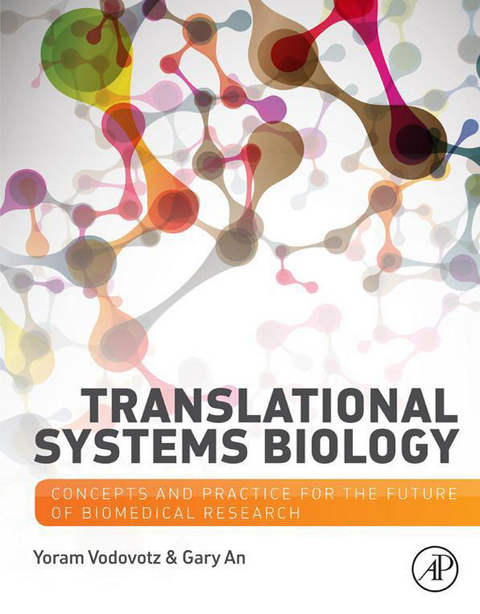
Translational Systems Biology (eBook)
178 Seiten
Elsevier Science (Verlag)
978-0-12-397890-5 (ISBN)
Yoram Vodovotz, Ph.D., is currently the President of the Society for Complexity in Acute Illness. His research interests include the biology of acute inflammation in shock states, chronic inflammatory diseases, wound healing, malaria, and restenosis. His work utilizes mathematical modeling to unify and gain insight into the biological interactions that characterize these inflammatory conditions. As the Director of the Center for Inflammation and Regenerative Modeling (CIRM) at the University of Pittsburgh's McGowan Institute for Regenerative Medicine, he has been involved in the mathematical modeling of acute inflammatory states (e.g. septic or hemorrhagic shock, wound healing), including cellular and physiological elements, as part of a large, interdisciplinary collaborative team. He is also a co-founder of Immunetrics, Inc., a company that is commercializing this mathematical modeling work.
Are we satisfied with the rate of drug development? Are we happy with the drugs that come to market? Are we getting our money's worth in spending for basic biomedical research?In Translational Systems Biology, Drs. Yoram Vodovotz and Gary An address these questions by providing a foundational description the barriers facing biomedical research today and the immediate future, and how these barriers could be overcome through the adoption of a robust and scalable approach that will form the underpinning of biomedical research for the future. By using a combination of essays providing the intellectual basis of the Translational Dilemma and reports of examples in the study of inflammation, the content of Translational Systems Biology will remain relevant as technology and knowledge advances bring broad translational applicability to other diseases. Translational systems biology is an integrated, multi-scale, evidence-based approach that combines laboratory, clinical and computational methods with an explicit goal of developing effective means of control of biological processes for improving human health and rapid clinical application. This comprehensive approach to date has been utilized for in silico studies of sepsis, trauma, hemorrhage, and traumatic brain injury, acute liver failure, wound healing, and inflammation. - Provides an explicit, reasoned, and systematic approach to dealing with the challenges of translational science across disciplines- Establishes the case for including computational modeling at all stages of biomedical research and healthcare delivery, from early pre-clinical studies to long-term care, by clearly delineating efficiency and costs saving important to business investment- Guides readers on how to communicate across domains and disciplines, particularly between biologists and computational researchers, to effectively develop multi- and trans-disciplinary research teams
Front Cover 1
Translational Systems Biology 4
Copyright Page 5
Dedication 6
Contents 8
Preface 12
Acknowledgments 16
I. Introduction and Overview 18
1.1 Interesting Times: The Translational Dilemma and the Need for Translational Systems Biology of Inflammation 20
Primary Goal: Facilitate the Translation of Basic Biomedical Research to the Implementation of Effective Clinical Therapeut ... 23
How to Approach This Book 24
References 25
II. The Current Landscape: Where It Came From, How We Got Here, and What Is Wrong 26
2.1 A Brief History of the Philosophical Basis of the Scientific Endeavor: How We Know What We Know, and How to Know More 28
Models in the Cave 29
Earth at the Center: A Reasonable Mistake, and an Unreasonable Perpetuation 30
The Scientific Method of Francis Bacon 30
Newton: The (Justifiable) Origins of Physics Envy 31
The Problem of Induction: Hume’s Empiricism 33
Logic and Its True/False Promise: Logical Positivism, Godel and Popper 33
Charles Peirce Suggests Taking a Guess: The Abductive Approach 34
The Mapping Problem: Back to Plato? 35
Suggested Additional Readings 36
2.2 A Brief History of Biomedical Research up to the Molecular Biology Revolution 38
Reference 42
Suggested Additional Readings 42
2.3 Biomedical Research Since the Molecular Revolution: An Embarrassment of Riches 44
References 50
2.4 Randomized Clinical Trials: A Bridge Too Far? 52
References 57
2.5 Complexity in Biomedical Research: Mysticism Versus Methods 58
References 61
Suggested Additional Readings 61
2.6 Human Nature, Politics, and Translational Inertia 62
Setting the Table with Bacon 63
An Embarrassment of Riches 66
Shibboleths in Science: The Problem with Pedigrees 67
Incentives and the Professionalization of Science 68
Deep Pockets, with Holes: The Pharma Conundrum 69
Reference 70
III. Translational Systems Biology: How We Propose to Fix the Problems of the Current Biomedical Research Landscape 72
3.1 Towards Translational Systems Biology of Inflammation 74
Primary Goal: Facilitate the Translation of Basic Biomedical Research to the Implementation of Effective Clinical Therapeut ... 75
References 78
3.2 Dynamic Knowledge Representation and the Power of Model Making 80
References 85
3.3 A Roadmap for a Rational Future: A Systematic Path for the Design and Implementation of New Therapeutics 86
Rational Evaluation of Drug Candidates: Knowing What Might Work, and More Importantly, What Won’t 86
In silico Clinical Trials: Crossing the “Bridge Too Far” 88
From Populations to Individuals: Personalizing Medical Care 93
References 95
IV. Tools and Implementation of Translational Systems Biology: This is How We Do It 96
4.1 From Data to Knowledge in Translational Systems Biology: An Overview of Computational Approaches Across the Scientific ... 98
Patterns in Physiology: Is There a “There” There? 101
Patterns of Molecules 101
References 103
4.2 Data-Driven and Statistical Models: Everything Old Is New Again 106
Traditional Statistical Approaches to Analyzing Data 107
Data-Driven Modeling in Systems and Computational Biology 108
Hierarchical Clustering: Sorting What Is Alike from What Is Different 108
Principal Component Analysis (PCA): The First Inklings of Mechanism from Data 109
Network Inference Algorithms 110
Statistical and Data-Driven Modeling: A Place for Big Data in Translational Systems Biology? 112
References 113
4.3 Mechanistic Modeling of Critical Illness Using Equations 116
Modeling Inflammation Using ODEs 116
The Tools of the Trade 116
Initial, Abstracted Models of Acute Inflammation 117
Models of Acute Inflammation Based on Data from Animals and Humans: Parameter Estimation and Model Ensembles 121
Equation-Based Modeling of Inflammation: What Is in Store? 124
References 125
4.4 Agent-Based Modeling and Translational Systems Biology: An Evolution in Parallel 128
Things Doing Things and the Wisdom of Crowds 128
Properties of Agent-based Models 130
Agent-Based Modeling of Inflammation and the Development of Translational Systems Biology 132
Initial Simulations of Clinical Populations and In Silico Clinical Trials 133
Providing New Perspectives on Clinical Conditions 134
Seeing the Whole Elephant: Agent-Based Modeling of Multiple Organ Systems 135
Characterizing the Continuums of Clinical Disease Space 136
Integration and Unification: Linking Disease Processes, Biological Knowledge and Clinical Phenotypes 138
Bringing Together Two Biggies: Inflammation and Cancer 138
A Virtual Biological Proxy Model: The Spatially Explicit General-Purpose Model of Enteric Tissue (SEGMEnT) 141
Capturing the Continuum from Injury to Repair: In Silico Trials of Wound Healing 143
Integration and Unification: Bringing Together Biomedical Knowledge by Putting Humpty Dumpty Together Again 145
Resources for Agent-Based Modeling and Suggested Reading 149
References 149
4.5 Getting Science to Scale: Accelerating the Development of Translational Computational Models 154
The Structure of the CMA 158
Knowledge Bases in the CMA 159
Rules for Mapping Biological Concepts into Modeling Methods 160
The Logic Inference Engine for the CMA 161
Model Management System 161
Fulfilling the Goals of Translational Systems Biology and the Democratization of Biomedical Science 161
References 162
V. A New Scientific Cycle for Translational Research and Health-Care Delivery 164
5.1 What Is Old Is New Again: The Scientific Cycle in the Twenty-First Century and Beyond 166
Everything Old is New Again 166
“Data” is not the Answer Knowledge is 167
High-Throughput Dynamic Knowledge Representation: A Community Effort 169
Success Through Failure 171
A Case for Disruption of the Fragmented Continuum 172
References 174
Index 176
Preface
The more pity that fools may not speak wisely what wise men do foolishly.
Touchstone, As You Like It, Act 1, Scene 2, Line 85
Truth’s a dog must to kennel; he must be whipp’d out…
The Fool, King Lear, Act 1, Scene 4, Lines 109–110
Foolery, sir, does walk about the orb, like the sun; it shines everywhere.
Feste, Twelfth Night, Act 3, Scene 1, Lines 37–38
The fool doth think he is wise, but the wise man knows himself to be a fool.
Touchstone, As You Like It, Act 5, Scene 1, Lines 31–32
Some of Shakespeare’s most memorable characters are Fools. Whether in Comedy or Tragedy, the Fools in Shakespeare’s plays serve an important role that mirrored their historical position. Whether by intellect, simplicity, or station, they embody the “other” in Shakespeare’s worlds, standing outside the primary context of the play and thereby serving to provide an “honest” commentary on the proceedings, stripped of the social niceties and motivations that temper the comments of the other characters. Their position as Fools to a great degree protects them from the consequences of their statements and actions. In the historical (?) eras of Absolutism, Fools often provided the only means of vocalizing critiques of rulers and their societies; many scholars interpret their role as a vital social mechanism for funneling and focusing dissent in a nondisruptive and nonthreatening way. A Fool might make the comments regarding a Royal personage’s peccadillos that are on the forefront of the court members’ minds but about which are unable to note or speak of for fear of repercussion; however, spouting forth from the mouth of the Fool these exact same thoughts can safely be greeted with laughter (albeit a bit ostentatiously nervous and not too long or loud…).
Fools are intrinsically paradoxical. They are able to express the most cutting of critiques, but in so doing reinforce the stability of the societies they critique. They are outsiders, but often with the most intimate of relationships with their masters (i.e., Lear and his Fool, Viola and Feste, Rosalind and Touchstone). This paradoxical duality is even manifest in the most recognizable guise of the Fool: the harlequin costume of opposing and alternating color blocks. In Shakespeare’s plays, his most notable Fools, such as Touchstone, Feste, and Lear’s Fool, are often seen as mouthpieces for the plays’ author. While this interpretation remains the subject of many an English Major’s thesis and open to scholarly debate, there is something intrinsically consistent with the paradoxical nature of Fools in the belief that the author, who cannot be more intimately related to the piece he is writing, places his own truest words in the mouth of the plays’ representative outsider. Regardless of whether they represent Shakespeare’s opinions and beliefs, certainly these three Fools appear to possess a perspective more encompassing than the other characters in the plays they inhabit. Touchstone is the voice of logical reasoning and objective assessment among the refugees in the Forest of Arden; Lear’s Fool provides the most comprehensive view and assessment of the madness and chaos following Lear’s fateful decision; and Feste appears at sometimes an omniscient observer regarding the machinations taking place in the Duchy of Illyria.
Perhaps, the lesson to be taken from Shakespeare’s Fools is that possession of the wider perspective, a grasping of the big picture, is what provides the most uncomfortable and disruptive conclusions, which, for the sake of the society, can only be spoken by Fools. It is truly ironic, then, that at the end of each of the plays noted above, there has been a dramatic disruption and reshuffling of the conditions at their respective beginnings, those same conditions that required the placement of disruptive comments in a Fool’s mouth in an attempt to forestall the paradigmatic shifts that eventually would come to pass. Perhaps, then, the Fool is not such a fool after all.
We contend that the biomedical research community could potentially benefit from listening to a pair of Fools. Today, in biomedical research, paradoxes abound. We know more about the generative processes and mechanisms of disease than at any other point in history. The rate of this data acquisition shows no signs of slowing down, yet the introduction of new and more effective therapeutics for the diseases that most trouble us has never been less efficient. Many of those diseases that most trouble us—cancer, sepsis, obesity, autoimmune disorders—represent the hijacking of otherwise beneficial biological processes: cancer of growth and healing, sepsis of inflammation, obesity of metabolism, and autoimmune disorders of immune protection. Even those therapeutics that have been life saving in the past (and still are in the present) have been revealed as producing a whole new set of problems that, in many ways, arise because of their initial success: antibiotics leading to increasingly lethal resistance, life support measures in the intensive care unit leading to the purgatory of chronic organ insufficiency and recurrent infections. Inside the biomedical community (for legitimate reasons we will discuss in this book), it is too easy to look only toward the patch of blue sky representing future technological and intellectual achievement. Yet, if one looks more widely (and not even much more widely, as the examples above can attest to) there are signs of the storm clouds building. This book is intended to help us turn around and look.
Contrary to genius, which is born, Fools might be made, through the correct and fortuitous mix of temperament, training, timing, and terrain. Two decades ago, the intellectual terrain of critical illness was ripe for disruption: clinical trials for the treatment of sepsis that, by all ostensible criteria for success, should have worked, did not. There was the beginning of an existential crisis in the biomedical research community that persists to this day in the Translational Dilemma. The traditional community would quickly retrench and retool, but for those with the right level of training (i.e., not too deeply embedded in the traditional academic paths) and the appropriate temperament (i.e., curious, contrarian, and stubborn about it), this was an opportune time to learn to become a Fool. About 15 years ago, working separately and initially without knowledge of each other’s work, two very different people with very different backgrounds and for very different reasons began to question the state of biomedicine in the context of critical illness. Gary, a trauma surgeon and intensive care physician, saw a clinical dilemma, and being outside the academic research structure, was unburdened by knowledge and possessing of procedural naiveté. As such, he started on his own, on the fringe, with the naïve concept that if he, as someone without formal research training, could apply these new techniques to the challenges facing the translation of basic research knowledge, then surely just that demonstration would be enough to lead to adoption (after all, what could possibly go wrong!). Yoram, a researcher, a biochemist and immunologist, had experienced the academic biomedical research community at near its highest level, but with enough insight and perspective to recognize both its best and worst characteristics. He, too, pursued an unorthodox path, forming part of the leadership of an interdisciplinary team before that description had become de riguer, and enlisting the potential of industry by helping to start a biosimulation company. This odd couple had absolutely no reason to ever meet, to find common ground, to have compatible personalities, much less to collaborate. But, in 2002, they, as they say, “met cute” by total coincidence at lunch at the 25th Annual Meeting of the Shock Society. Conversation ensued, connections and common interests were identified, and a collaboration was born. Time and terrain contributed to foster the conditions that would enhance this collaboration, as at that 2002 meeting, Gary and Yoram were invited, along with their collaborators, to a workshop in Germany on complex systems approaches to critical illness. This led to the formation of the Society for Complex Acute Illness, which has and continues to serve as the focal point for the most dynamic discussions and developments in this still-growing field.
The simple fact that pursuing this line of investigation required the formation of a new scientific society points to the “outsider” nature of the endeavor. Yet while they remained outsiders, they kept hearing from many people that they were on the right track (perhaps the surreptitious support of the members of court that have an inkling that these Fools spoke some truth?). Self and system analysis ensued, and the germ of an idea grew out many late night discussions: what was it that they were doing that resonated with individual people but was distrusted, misunderstood, or ignored by so many others primarily at an organizational level? Were the problems, deficiencies, successes, and failures they observed specific to critical illness or a more general phenomenon?
Translational Systems Biology was the product of these discussions, disseminated since through multiple manuscripts on the topic, but facing a fair amount of resistance and indifference (after all, how dare the Fools try to be members of the court!). Hence the paradox of being the Fool, able to speak certain truths, but only given the freedom to do so because their voices serve to...
| Erscheint lt. Verlag | 8.10.2014 |
|---|---|
| Sprache | englisch |
| Themenwelt | Medizin / Pharmazie ► Medizinische Fachgebiete |
| Medizin / Pharmazie ► Physiotherapie / Ergotherapie ► Orthopädie | |
| Naturwissenschaften ► Biologie | |
| Technik ► Medizintechnik | |
| ISBN-10 | 0-12-397890-4 / 0123978904 |
| ISBN-13 | 978-0-12-397890-5 / 9780123978905 |
| Informationen gemäß Produktsicherheitsverordnung (GPSR) | |
| Haben Sie eine Frage zum Produkt? |
 PDF (Adobe DRM)
Kopierschutz: Adobe-DRM
Adobe-DRM ist ein Kopierschutz, der das eBook vor Mißbrauch schützen soll. Dabei wird das eBook bereits beim Download auf Ihre persönliche Adobe-ID autorisiert. Lesen können Sie das eBook dann nur auf den Geräten, welche ebenfalls auf Ihre Adobe-ID registriert sind.
Details zum Adobe-DRM
Dateiformat: PDF (Portable Document Format)
Mit einem festen Seitenlayout eignet sich die PDF besonders für Fachbücher mit Spalten, Tabellen und Abbildungen. Eine PDF kann auf fast allen Geräten angezeigt werden, ist aber für kleine Displays (Smartphone, eReader) nur eingeschränkt geeignet.
Systemvoraussetzungen:
PC/Mac: Mit einem PC oder Mac können Sie dieses eBook lesen. Sie benötigen eine
eReader: Dieses eBook kann mit (fast) allen eBook-Readern gelesen werden. Mit dem amazon-Kindle ist es aber nicht kompatibel.
Smartphone/Tablet: Egal ob Apple oder Android, dieses eBook können Sie lesen. Sie benötigen eine
Geräteliste und zusätzliche Hinweise
Buying eBooks from abroad
For tax law reasons we can sell eBooks just within Germany and Switzerland. Regrettably we cannot fulfill eBook-orders from other countries.
aus dem Bereich