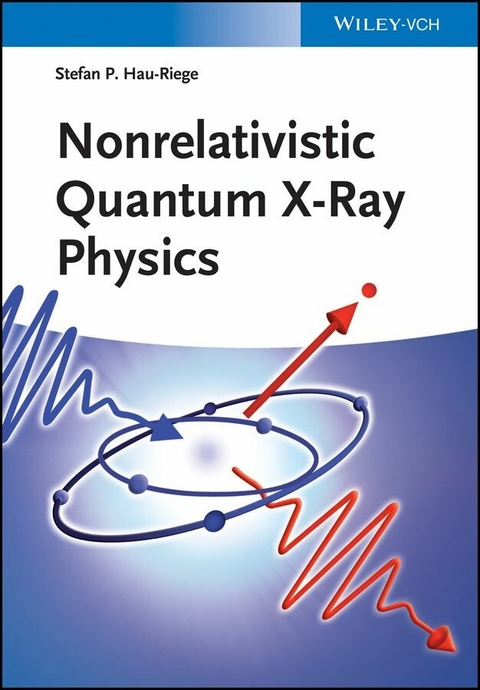
The text presupposes a basic (undergraduate-level) understanding of mechanics, electrodynamics, and quantum mechanics. However, more specialized concepts in these fields are introduced and the reader is directed to appropriate references. While primarily benefiting users of x-ray light-sources, the material is equally of relevance to researchers in various disciplines, such as life sciences, biology, materials science, physics, and chemistry that plan on applying these new facilities in their respective fields.
Stefan Hau-Riege is the X-ray Science and Technology Group Leader at the Lawrence Livermore National Laboratory (LLNL), where he works on x-ray free-electron-laser interactions with materials, x-ray instrumentation, and ultrafast imaging, drawing on computational and experimental physics. Previously, he worked on extreme-ultraviolet lithography and laser-assisted recrystallization. Dr. Hau-Riege received his Ph.D. in materials science from the MIT in 2000, and a M.S. in solid-state physics and applied mathematics from the University of Hamburg, Germany. He has authored and co-authored more than 100 scientific journal publications, and is co-inventor of more than 20 patents.
Stefan Hau-Riege is the X-ray Science and Technology Group Leader at the Lawrence Livermore National Laboratory (LLNL), where he works on x-ray free-electron-laser interactions with materials, x-ray instrumentation, and ultrafast imaging, drawing on computational and experimental physics. Previously, he worked on extreme-ultraviolet lithography and laser-assisted recrystallization. Dr. Hau-Riege received his Ph.D. in materials science from the MIT in 2000, and a M.S. in solid-state physics and applied mathematics from the University of Hamburg, Germany. He has authored and co-authored more than 100 scientific journal publications, and is co-inventor of more than 20 patents.
I. Introduction
1. Introduction
2. Review of Some Concepts in Quantum Mechanics
II. Quantization of the Free Electromagnetic Field
3. Classical Electromagnetic Fields
4. Harmonic Oscillator
5. Quantization of the Electromagnetic Field
6. Continuous Fock Space
7. Coherence
8. Examples for Electromagnetic States
III. Interaction of X-rays with Matter
9. Interaction of the Electromagnetic Field with Matter
10. Time-dependent Perturbation Theory
11. Application of Perturbation Theory to the Interaction of Electromagnetic Fields with Matter
IV. Applications of X-ray?Matter-Interaction Theory
12. X-ray Scattering by Free Electrons
13. Radiative Atomic Bound-bound Transitions
14. One-photon Photoionization
15. Bremsstrahlung
16. X-ray Scattering
17. Relaxation Processes
18. Multiphoton Photoionization
19. Threshold Phenomena
1
Introduction
1.1 Motivation
X-ray physics has been essential throughout the last century and continues to be so to this date. It has catalyzed and survived multiple revolutions in physics, and has undergone several renaissances, usually coupled with the advent of new generations of X-ray sources. A couple of events are particularly noteworthy: In 1900, Planck provided an explanation for the spectrum that is emitted by a thermal radiation source by assuming that the radiation is quantized into energy packets of magnitude per mode [1, 2]. In 1905, Einstein explained the photoelectric effect by assuming that electromagnetic radiation is corpuscular [3]. It has been shown since that a semiclassical theory, which treats the electromagnetic radiation classically and only the matter system quantum mechanically, is actually sufficient to explain this effect. Nevertheless, both Planck's and Einstein's observations suggested that classical electromagnetic field theory needs to be extended to include corpuscular and nondeterministic elements. By combining the special theory of relativity with quantum physics, scientist such as Dirac [4], Feynman [5], Schwinger [6], and Tomonaga [7] developed quantum electrodynamics (QED), the quantum theory of light, which is one of the crown jewels of modern physics. In this book, we develop and apply QED in its nonrelativistic limit, as it is sufficient for many current X-ray applications.
1.2 Comparing X-Rays with Optical Radiation
For optical radiation, the invention of the laser [8], an acronym for light amplification by stimulated emission of radiation, led to experiments that could only be understood with a quantum theory of radiation. It thereby greatly accelerated the development of the field of quantum optics in the 1960s. We build on the achievements made in that discipline and describe their extension to the X-ray regime.
X-ray and optical radiation fields are very similar in principle, but there are striking differences for practical applications. For example, unlike for optical radiation, X-ray wavelengths are comparable to atomic dimensions and interatomic distances, so they offer the potential to analyze structures with atomic resolution when we use techniques such as elastic X-ray scattering. The photon energy E is related to the wavelength and the light frequency through
Here, h is the Planck constant, is the reduced Planck constant, and c is the speed of light. Figure 1.1 shows the spatial extent of atoms measured by the radial expectation value as a function of the atomic charge number and for different atomic shells. It can be seen that is of the same order of magnitude as typical X-ray wavelengths.
Figure 1.1 Ionization energies , shown as black lines and related to the bottom axis, and the radial expectation values , shown as grey lines related to the top axis, of neutral atoms as a function of the atomic charge number Z. The top and the bottom axes are aligned so that an energy at the bottom, interpreted as an X-ray energy, corresponds to the wavelength shown at the top.
In the X-ray regime, inner-shell atomic processes tend to dominate. Excited atomic states decay quickly and exhibit an element-specific response associated with the emission of electrons or photons that are characteristic for the participating atomic shells. Also shown in Figure 1.1 are the ionization energies for different principal shells, corresponding to X-ray absorption edges. Both analyzing the relaxation products and tuning the X-ray energy to an atomic resonance and thereby identifying the atoms can be used for the analysis of materials. The details of these resonances depend also on the atomic environment, making it a useful tool to study nearest neighbor interactions. The interaction of X-rays with matter is generally relatively weak, as long as we stay away from atomic resonant energies, so that materials tend to be relatively transparent to X-rays.
1.3 Novel X-Ray Sources
Advances in the development of X-ray sources, such as synchrotrons and, more recently, X-ray free-electron lasers (FELs), continue to excite interest in the X-ray science community. We now discuss the major devices and techniques used to produce X-rays at such facilities, which are mostly based on utilizing the synchrotron radiation emitted by relativistic electron bunches in a magnetic field. If the Lorentz factor , where E is the kinetic energy of an electron and is its rest energy, is large, then the radiation is directed approximately tangentially to the electron orbit. The spectrum of the emitted radiation is continuous. This scenario is realized, for example, in bending magnets in a storage ring.
The characteristics of synchrotron radiation can be greatly enhanced by using insertion devices such as wigglers and undulators, leading to larger intensities and narrower spectral energy distributions of the radiation. These devices consist of periodically arranged, short dipole magnets of alternating polarity, through which electrons move in wavelike trajectories. This motion leads to the emission of nearly monochromatic radiation that is concentrated in a narrow angular cone with an opening angle of about . Calling the magnetic period in the lab frame , then, owing to relativistic contraction, the electron sees an undulator period of , so it oscillates at a higher frequency and emits dipole radiation accordingly. On Lorentz transformation of this radiation back into the lab frame, we obtain a wavelength . This wavelength can be adjusted by varying the kinetic energy E of the electrons. When all the electrons propagate independently, then the emitted radiation fields add incoherently, and the radiation power is proportional to number of electrons .
An FEL is essentially a very long undulator in which the electrons emit quasi-coherent, almost-monochromatic, and well-collimated radiation. Unlike in a laser, the roles of the active laser medium and of the energy pump are both taken over by the relativistic electron bunch. For visible and infrared FELs, optical resonators can be used, and the energy gain per passage of only a few percent is sufficient. These are called low-gain multi-pass FELs. For vacuum-ultraviolet and X-ray FELs, such optical resonators are not an option because sufficiently efficient mirrors are not available, so that large gains per single passage are required. The theory for these high-gain, single-pass FELs is covered in References [9–13].
Without a seed laser, the FEL principle is based on self-amplification of spontaneous emission (SASE) and starts from shot noise in the FEL beam which is related to the arrival time of each electron at the undulator. This leads to a statistically fluctuating output that exhibits spikes in the intensity . The width of the spikes is characterized by the coherencetime , where is the SASE gain bandwidth. The spectral intensity also exhibits spikes, and the width of the spectral spikes is proportional to , where is the electron bunch length. SASE FEL radiation statistics and coherence are discussed more in Section 7.2.3, where we present the general properties of chaotic light sources.
1.4 Unit Systems
In this book, we use the International System of Units, abbreviated SI units, which stands for Le Système international d'unités. The SI system is popular and often used in engineering because it connects seamlessly to the material learned in introductory physics classes and expressions can be readily evaluated. Further, it allows checking of formulas through dimensional analyses. We now discuss how to convert other unit systems, which are also often used in theoretical physics, from and to the SI system. The SI system uses the units meter for length, kilogram for mass, and second for time (MKS system), from which other mechanical units are derived. For instance, the “newton” (N) with 1 kg m s is the unit for mechanical force. In electromagnetism, the “ampere” for the electric current was introduced independently of the MKS system, and so an additional proportionality constant is necessary to relate electromagnetic units to kinematic units. This constant is taken as the vacuum permittivity . All other units are derived from these base units. The values of some important physical constants in the SI system are shown in Table 1.1.
Table 1.1 Physical constants in SI units
| Quantity | Symbol | Value | Unit |
| Speed of light in vacuum | c | m/s |
| Planck constant | h | J s |
| Reduced Planck constant | J s |
| Fundamental charge | e | C |
| Vacuum permittivity | F/m |
| Magnetic constant | N/A |
| Electron mass | kg |
| Proton mass | kg |
| Neutron mass | kg |
| Boltzmann constant | J/K |
| eV/K |
| Avogadro... |
| Erscheint lt. Verlag | 6.10.2014 |
|---|---|
| Sprache | englisch |
| Themenwelt | Naturwissenschaften ► Physik / Astronomie |
| Technik | |
| Schlagworte | atomic and molecular physics • Atom- u. Molekülphysik • Atom- u. Molekülphysik • Bound • Chemie • Chemistry • Concepts • Coulomb Potential • dipole approximation review • Functions • Introduction • Lagrangian • Laser • Mechanics • modified • operators • Optical • Overview • Part • Physics • Physik • Plasma physics • Plasmaphysik • Point particle • Potential • Quantenphysik • Quantenphysik u. Feldtheorie • quantum • Quantum Physics & Field Theory • radially • Radiation • Röntgenstrahlung • Röntgenstrahlung • spectroscopy • Spektroskopie • States • Symmetric • theoretical physics • Theoretische Physik • xrays |
| ISBN-10 | 3-527-66451-3 / 3527664513 |
| ISBN-13 | 978-3-527-66451-1 / 9783527664511 |
| Informationen gemäß Produktsicherheitsverordnung (GPSR) | |
| Haben Sie eine Frage zum Produkt? |
 EPUB (Adobe DRM)
Kopierschutz: Adobe-DRM
Adobe-DRM ist ein Kopierschutz, der das eBook vor Mißbrauch schützen soll. Dabei wird das eBook bereits beim Download auf Ihre persönliche Adobe-ID autorisiert. Lesen können Sie das eBook dann nur auf den Geräten, welche ebenfalls auf Ihre Adobe-ID registriert sind.
Details zum Adobe-DRM
Dateiformat: EPUB (Electronic Publication)
EPUB ist ein offener Standard für eBooks und eignet sich besonders zur Darstellung von Belletristik und Sachbüchern. Der Fließtext wird dynamisch an die Display- und Schriftgröße angepasst. Auch für mobile Lesegeräte ist EPUB daher gut geeignet.
Systemvoraussetzungen:
PC/Mac: Mit einem PC oder Mac können Sie dieses eBook lesen. Sie benötigen eine
eReader: Dieses eBook kann mit (fast) allen eBook-Readern gelesen werden. Mit dem amazon-Kindle ist es aber nicht kompatibel.
Smartphone/Tablet: Egal ob Apple oder Android, dieses eBook können Sie lesen. Sie benötigen eine
Geräteliste und zusätzliche Hinweise
Buying eBooks from abroad
For tax law reasons we can sell eBooks just within Germany and Switzerland. Regrettably we cannot fulfill eBook-orders from other countries.
aus dem Bereich