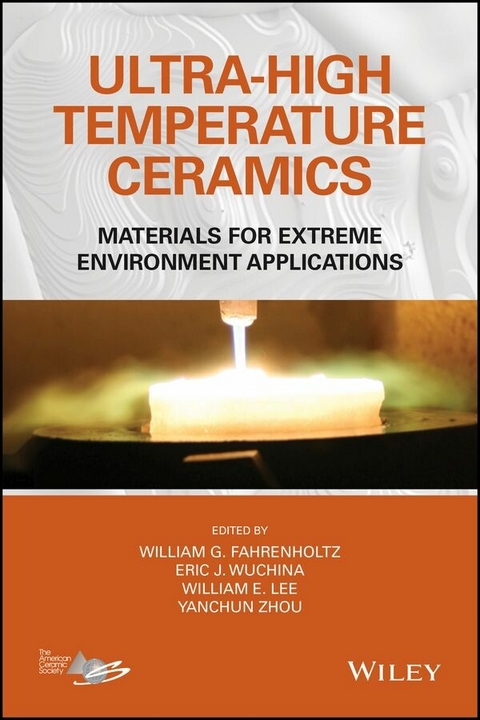
Ultra-High Temperature Ceramics (eBook)
John Wiley & Sons (Verlag)
978-1-118-92441-9 (ISBN)
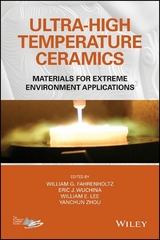
The first comprehensive book to focus on ultra-high temperature ceramic materials in more than 20 years
Ultra-High Temperature Ceramics are a family of compounds that display an unusual combination of properties, including extremely high melting temperatures (>3000°C), high hardness, and good chemical stability and strength at high temperatures. Typical UHTC materials are the carbides, nitrides, and borides of transition metals, but the Group IV compounds (Ti, Zr, Hf) plus TaC are generally considered to be the main focus of research due to the superior melting temperatures and stable high-melting temperature oxide that forms in situ. Rather than focusing on the latest scientific results, Ultra-High Temperature Ceramics: Materials for Extreme Environment Applications broadly and critically combines the historical aspects and the state-of-the-art on the processing, densification, properties, and performance of boride and carbide ceramics.
In reviewing the historic studies and recent progress in the field, Ultra-High Temperature Ceramics: Materials for Extreme Environment Applications provides:
- Original reviews of research conducted in the 1960s and 70s
- Content on electronic structure, synthesis, powder processing, densification, property measurement, and characterization of boride and carbide ceramics.
- Emphasis on materials for hypersonic aerospace applications such as wing leading edges and propulsion components for vehicles traveling faster than Mach 5
- Information on materials used in the extreme environments associated with high speed cutting tools and nuclear power generation
Contributions are based on presentations by leading research groups at the conference 'Ultra-High Temperature Ceramics: Materials for Extreme Environment Applications II' held May 13-19, 2012 in Hernstein, Austria. Bringing together disparate researchers from academia, government, and industry in a singular forum, the meeting cultivated didactic discussions and efforts between bench researchers, designers and engineers in assaying results in a broader context and moving the technology forward toward near- and long-term use. This book is useful for furnace manufacturers, aerospace manufacturers that may be pursuing hypersonic technology, researchers studying any aspect of boride and carbide ceramics, and practitioners of high-temperature structural ceramics.
William G. Fahrenholtz, PhD, is Professor of Ceramic Engineering in the Department of Materials Science and Engineering at the Missouri University of Science and Technology. He has authored or co-authored more than 100 publications in peer-reviewed journals and holds four U.S. patents.
Eric J. Wuchina, PhD, is currently a Senior Materials Research Engineer at the Naval Surface Warfare Center, Carderock Division and program officer in the Office of Naval Research with responsibility for ultra-high temperature materials. He has authored over 25 publications, 80 presentations (12 invited) and 4 patents.
Bill Lee, DPhil, is Professor of Ceramics, founding Director of the Centre for Advanced Structural Ceramics (CASC) and Director of the Centre for Nuclear Engineering at Imperial College London. He has over 350 publications, including 4 books for which he is lead or co-author, and has supervised 52 students to PhD completion.
Yanchun Zhou, PhD, is Deputy Director of advanced composite laboratory Aerospace Research Institute of Materials and Processing Technology. Dr. Zhou has authored or co-authored more than 300 publications in peer-reviewed journals, and holds 36 China patents.
William G. Fahrenholtz, PhD, is Professor of Ceramic Engineering in the Department of Materials Science and Engineering at the Missouri University of Science and Technology. He has authored or co-authored more than 100 publications in peer-reviewed journals and holds four U.S. patents. Eric J. Wuchina, PhD, is currently a Senior Materials Research Engineer at the Naval Surface Warfare Center, Carderock Division and program officer in the Office of Naval Research with responsibility for ultra-high temperature materials. He has authored over 25 publications, 80 presentations (12 invited) and 4 patents. Bill Lee, DPhil, is Professor of Ceramics, founding Director of the Centre for Advanced Structural Ceramics (CASC) and Director of the Centre for Nuclear Engineering at Imperial College London. He has over 350 publications, including 4 books for which he is lead or co-author, and has supervised 52 students to PhD completion. Yanchun Zhou, PhD, is Deputy Director of advanced composite laboratory Aerospace Research Institute of Materials and Processing Technology. Dr. Zhou has authored or co-authored more than 300 publications in peer-reviewed journals, and holds 36 China patents.
Acknowledgments ix
Contributors List xi
1 Introduction 1
William G. Fahrenholtz, Eric J. Wuchina, William E. Lee, and Yanchun Zhou
2 A Historical Perspective on Research Related to Ultra-High Temperature Ceramics 6
William G. Fahrenholtz
3 Reactive Processes for Diboride-Based Ultra-High Temperature Ceramics 33
Guo-Jun Zhang, Hai-Tao Liu, Wen-Wen Wu, Ji Zou, De-Wei Ni, Wei-Ming Guo, Ji-Xuan Liu, and Xin-Gang Wang
4 First-Principles Investigation on the Chemical Bonding and Intrinsic Elastic Properties of Transition Metal Diborides TMB2 (TM=Zr, Hf, Nb, Ta, and Y) 60
Yanchun Zhou, Jiemin Wang, Zhen Li, Xun Zhan, and Jingyang Wang
5 Near-Net-Shaping of Ultra-High Temperature Ceramics 83
Carolina Tallon and George V. Franks
6 Sintering and Densification MECHANISMS of Ultra-High Temperature Ceramics 112
Diletta Sciti, Laura Silvestroni, Valentina Medri, and Frédéric Monteverde
7 U HTC Composites for Hypersonic Applications 144
Anish Paul, Jon Binner, and Bala Vaidhyanathan
8 Mechanical Properties of Zirconium-Diboride Based UHTCs 167
Eric W. Neuman and Greg E. Hilmas
9 Thermal Conductivity of ZrB2 and HfB2 197
Gregory J. K. Harrington and Greg E. Hilmas
10 Deformation and Hardness of UHTCs as a Function of Temperature 236
J. Wang and L. J. Vandeperre
11 Modeling and Evaluating the Environmental Degradation of UHTCs under Hypersonic Flow 267
Triplicane A. Parthasarathy, Michael K. Cinibulk and Mark Opeka
12 Tantalum Carbides: Their Microstructures and Deformation Behavior 291
Gregory B. Thompson and Christopher R. Weinberger
13 Titanium Diboride 316
Brahma Raju Golla, Twisampati Bhandari, Amartya Mukhopadhyay, and Bikramjit Basu
14 Th e Group IV Carbides and Nitrides 361
Eric J. Wuchina and Mark Opeka
15 Nuclear Applications for Ultra-High Temperature Ceramics and MAX Phases 391
William E. Lee, Edoardo Giorgi, Robert Harrison, Alexandre Maître, and Olivier Rapaud
16 UHTC-Based Hot Structures: Characterization, Design, and On-Ground/In-Flight Testing 416
Davide Alfano, Roberto Gardi, Luigi Scatteia, and Antonio Del Vecchio
Index 437
1
Introduction
William G. Fahrenholtz1, Eric J. Wuchina2, William E. Lee3, and Yanchun Zhou4
1 Department of Materials Science and Engineering, Missouri University of Science and Technology, Rolla, MO, USA
2 Naval Surface Warfare Center, Carderock Division, West Bethesda, MD, USA
3 Centre for Advanced Structural Ceramics, Department of Materials, Imperial College London, London, UK
4 Science and Technology of Advanced Functional Composite Laboratory, Aerospace Research Institute of Materials and Processing Technology, Beijing, China
1.1 Background
The impetus for this book was the conference “Ultra-High Temperature Ceramics: Materials for Extreme Environment Applications II,” which was held on May 13–18, 2012, in Hernstein, Austria. As the title implies, this was the second conference on this topic that has been organized by Engineering Conferences International (ECI). The four editors served as the co-organizers of the conference. Both the U.S. Navy Office of Naval Research Global and the U.S. Air Force European Office of Aerospace Research and Development provided funding for the conference that helped support participation of invited speakers and students. The conference brought together about 60 researchers from around the world to discuss the latest research related to this remarkable class of materials. The first conference in the series was organized by Eric Wuchina and Alida Bellosi and was held in August 2008 at Lake Tahoe, California, United States. A third conference is planned for Australia in April 2015.
The book is our attempt to capture a snapshot of the current state of the art in ultra-high temperature ceramic (UHTC) materials. The chapters in this volume represent the key areas that were discussed in the meeting. The chapter authors are leaders in their fields from around the world, and all of the lead authors participated in the conference. Rather than a narrow focus on the latest scientific progress as would be expected in an article in a peer-reviewed journal, the chapters in this book provide a broader look at recent progress and information on the current understanding of this family of materials.
1.2 Ultra-High Temperature Ceramics
Recent interest in UHTCs has been motivated by the search for materials that can withstand extreme environments. The extremes can include, individually or in combination, the effects of temperature, chemical reactivity, mechanical stress, radiation, and wear. Some potential applications for this class of materials include microelectronics, molten metal containment, high-temperature electrodes, and wear-resistant surfaces. However, a majority of the research has been motivated by unmet material needs for hypersonic aviation. Specifically, improved materials are needed to withstand the conditions encountered by wing leading edges and propulsion system components in hypersonic aerospace vehicles as well as the extreme conditions associated with atmospheric reentry and rocket propulsion. The combination of extreme temperature, chemically aggressive environments, and rapid heating/cooling is beyond the capabilities of current engineering ceramics. Recent interest in UHTCs has been high as indicated by a number of special journal issues [1–3] and review articles [4–9] devoted to the topic. Despite this interest, no clear criteria have been established to differentiate UHTCs from other structural ceramics.
Broadly, ceramic materials can be defined as inorganic, nonmetallic solids [10]. This definition encompasses most materials that are typically considered to be ceramics such as clay-based traditional ceramics, alumina, piezoelectric materials, and silicon carbide. However, the definition still leaves some gray areas such as glass, carbon, and intermetallic compounds. In some cases, the definition is expanded to include other characteristics. For example, Barsoum defines ceramics as “solid compounds that are formed by the application of heat, and sometimes heat and pressure, comprising at least one metal and a non-metallic elemental solid, a combination of at least two nonmetallic elemental solids, or a combination of at least two nonmetallic elemental solids and a nonmetal” [11]. In other cases, the definition involves characteristics such as melting temperature, bonding type, or electrical properties [12]. Likewise, several different definitions have been espoused for UHTCs. The three main classifications are melting temperature, ultimate use temperature, and chemical composition.
The most common definition for a UHTC is a material that melts at a temperature of 3000°C or higher. As shown in Figure 1.1, very few materials meet this criterion. For example, only three elements have melting temperature above 3000°C, W, Re, and Ta, all of which are metals. Note that carbon was not included in this group because of the complexity of its behavior, which has been reviewed in detail elsewhere [13, 14]. Interestingly, ThO2 is the only oxide ceramic that has a melting temperature above 3000°C. Most of the materials that have melting temperatures above 3000°C are borides, carbides, and nitrides of early transition metals. Consequently, most studies on UHTCs focus on compounds such as ZrB2, HfB2, TaC, TaB2, ZrC, and HfC. While this definition is probably the most common, significant uncertainty exists in melting temperatures for these compounds. For example, ZrB2 is commonly reported to melt at 3250°C based on the phase diagrams reported by Rudy [15] and Portnoi et al. [16], but others report different melting temperatures including 3040°C by Glaser and Post [17] and 3517°C by Rogl and Potter [18] The discrepancies indicate that not only are temperatures difficult to measure precisely in the ultra-high temperature regime, but also that these compounds may decompose or dissociate before melting, which would also be difficult to detect in the experimental setups used for these studies. So, while melting temperature is a clearly defined metric, assessment includes uncertainty. Further, the selection of 3000°C as the criterion was arbitrary and could be set at other temperatures.
Figure 1.1. Materials with the highest reported melting temperature grouped by material family.
Reprinted with permission from Ref. [6].
A second method that can be used to define UHTCs is the highest temperature for use in air. This practical definition fits well with the nature of engineering materials, but introduces additional questions. As with melting temperature, the selection of a use temperature to define the ultra-high temperature regime is also somewhat arbitrary. At the time of publication of this chapter, a number of choices are available for use in air at temperatures up to about 1600 °C including alumina, magnesia, silicon carbide, and silicon nitride. Hence, the minimum use temperature for the ultra-high temperature regime should be above that level. Many hypersonic applications involve higher temperatures, so 2000 °C has been cited as the cutoff of the ultra-high temperature regime [5–19]. Despite a seemingly clear definition, both use temperature and duration blur the distinction. The application-driven criterion to define UHTCs has obvious attractions as a definition for engineering materials, but this metric also has some shortcomings.
The final method that can be used to define UHTCs is chemistry, which is the least quantitative, but probably most widely used. Most UHTC compounds are borides, carbides, or nitrides of early transition metals. Hence, any compound containing a transition metal such as Zr, Hf, Ta, W, or Nb along with B, C, or N has the potential to be a UHTC.
No one definition has emerged as the way to identify UHTCs. As an example of the shortcomings of all of the three definitions described earlier, consider one of the most commonly cited UHTC compositions, ZrB2–SiC. When compounds with melting temperatures above 3000 °C such as ZrB2 are combined intentionally with other phases (i.e., sintering aids, grain pinning additives, oxidation-enhancing additives, etc.) or when impurities are present, the temperature at which liquid forms or melting occurs can be below 3000°C. For ZrB2–SiC, the solidus temperature is about 2300°C due to a eutectic reaction [20]. Hence, one could argue that one of the most widely researched UHTC compositions does not meet any of the criteria defined earlier because: (i) liquid forms below 3000°C; (ii) one of the constituents (SiC) cannot be used for extended times above 1600°C; and (iii) SiC is not a boride, carbide, or nitride of an early transition metal.
Despite the uncertainty in the definition of UHTCs, a close-knit global community of researchers who focus on these materials has emerged over the past decade or so. Groups in the United States, Italy, China, Australia, Russia, and the United Kingdom, have worked competitively and collaboratively to advance our understanding of the fundamental behavior of materials that can be used in extreme environments. This book, in keeping with the spirit of the ECI conference series, takes a pragmatic approach in defining UHTCs and includes the community of researchers who focus on materials with the potential for use in extreme environments such as those associated with hypersonic flight, atmospheric reentry, and rocket propulsion. Since the first conference in the series in...
| Erscheint lt. Verlag | 10.10.2014 |
|---|---|
| Sprache | englisch |
| Themenwelt | Naturwissenschaften ► Chemie ► Technische Chemie |
| Technik ► Maschinenbau | |
| Schlagworte | Aerospace Applications • Ceramics • chemical engineering • Chemische Verfahrenstechnik • Composites • hypersonic technology • keramische Werkstoffe • Maschinenbau • Materials Science • Materialwissenschaften • mechanical engineering • Ultra-high temperature ceramics |
| ISBN-10 | 1-118-92441-X / 111892441X |
| ISBN-13 | 978-1-118-92441-9 / 9781118924419 |
| Informationen gemäß Produktsicherheitsverordnung (GPSR) | |
| Haben Sie eine Frage zum Produkt? |
 EPUB (Adobe DRM)
Kopierschutz: Adobe-DRM
Adobe-DRM ist ein Kopierschutz, der das eBook vor Mißbrauch schützen soll. Dabei wird das eBook bereits beim Download auf Ihre persönliche Adobe-ID autorisiert. Lesen können Sie das eBook dann nur auf den Geräten, welche ebenfalls auf Ihre Adobe-ID registriert sind.
Details zum Adobe-DRM
Dateiformat: EPUB (Electronic Publication)
EPUB ist ein offener Standard für eBooks und eignet sich besonders zur Darstellung von Belletristik und Sachbüchern. Der Fließtext wird dynamisch an die Display- und Schriftgröße angepasst. Auch für mobile Lesegeräte ist EPUB daher gut geeignet.
Systemvoraussetzungen:
PC/Mac: Mit einem PC oder Mac können Sie dieses eBook lesen. Sie benötigen eine
eReader: Dieses eBook kann mit (fast) allen eBook-Readern gelesen werden. Mit dem amazon-Kindle ist es aber nicht kompatibel.
Smartphone/Tablet: Egal ob Apple oder Android, dieses eBook können Sie lesen. Sie benötigen eine
Geräteliste und zusätzliche Hinweise
Buying eBooks from abroad
For tax law reasons we can sell eBooks just within Germany and Switzerland. Regrettably we cannot fulfill eBook-orders from other countries.
aus dem Bereich