Vaccine Development and Manufacturing (eBook)
John Wiley & Sons (Verlag)
978-1-118-87090-7 (ISBN)
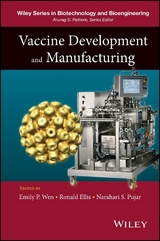
Vaccine Manufacturing and Production is an invaluable reference on how to produce a vaccine - from beginning to end - addressing all classes of vaccines from a processing, production, and regulatory viewpoint. It will provide comprehensive information on the various fields involved in the production of vaccines, from fermentation, purification, formulation, to regulatory filing and facility designs. In recent years, there have been tremendous advances in all aspects of vaccine manufacturing. Improved technology and growth media have been developed for the production of cell culture with high cell density or fermentation. Vaccine Manufacturing and Production will serve as a reference on all aspects of vaccine production by providing an in-depth description of the available technologies for making different types of vaccines and the current thinking in facility designs and supply issues. This book will provide insight to the issues scientists face when producing a vaccine, the steps that are involved, and will serve as a reference tool regarding state-of-the-art vaccine manufacturing technologies and facility set-up.
Highlights include:
- Comprehensive coverage of vaccine production : from a process point of view- fermentation to purification to formulation developments; from a production point of view - from facility design to manufacturing; and from a regulatory point of view - requirements from government agencies
- Authors from different major pharmaceutical and biotechnology companies
- Describes the challenges and issues involved in vaccine production and manufacturing of the different classes of vaccines, an area not covered by other books currently on the market
EMILY P. WEN, PhD, is currently a Research Fellow at the Merck Research Laboratory in the department of Vaccine Process Development. Dr. Wen has led process developments for several major vaccine products from Phase I to Phase III clinical trials, including vaccines against hepatitis B, Haemophilus influenzae type b, Pneumococcal, Meningococcal, and Group B Streptococcus.
RONALD ELLIS, PhD, is Chief Technology Officer at FutuRx Ltd in Israel. Dr. Ellis has more than 30 years of industry experience in line and senior management in many companies, including roles as project leader and champion of projects that resulted in five licensed vaccines which accrue 6;$4B in annual sales. He is the founding and incumbent Editor-in-Chief of the MedLine-/PubMed-indexed journal Human Vaccines & Immunotherapeutics.
NARAHARI S. PUJAR, PhD, MBA, is currently an Executive Director and Integrated Product Leader in the Vaccine Business Line at Merck & Co., Inc. Dr. Pujar has contributed to a variety of vaccines and biologics products and product candidates. He is an active member of the American Chemical Society and was the past chair of the Division of Biochemical Technology.
Vaccine Manufacturing and Production is an invaluable reference on how to produce a vaccine - from beginning to end - addressing all classes of vaccines from a processing, production, and regulatory viewpoint. It will provide comprehensive information on the various fields involved in the production of vaccines, from fermentation, purification, formulation, to regulatory filing and facility designs. In recent years, there have been tremendous advances in all aspects of vaccine manufacturing. Improved technology and growth media have been developed for the production of cell culture with high cell density or fermentation. Vaccine Manufacturing and Production will serve as a reference on all aspects of vaccine production by providing an in-depth description of the available technologies for making different types of vaccines and the current thinking in facility designs and supply issues. This book will provide insight to the issues scientists face when producing a vaccine, the steps that are involved, and will serve as a reference tool regarding state-of-the-art vaccine manufacturing technologies and facility set-up. Highlights include: Comprehensive coverage of vaccine production : from a process point of view- fermentation to purification to formulation developments; from a production point of view - from facility design to manufacturing; and from a regulatory point of view - requirements from government agencies Authors from different major pharmaceutical and biotechnology companies Describes the challenges and issues involved in vaccine production and manufacturing of the different classes of vaccines, an area not covered by other books currently on the market
EMILY P. WEN, PhD, is currently a Research Fellow at the Merck Research Laboratory in the department of Vaccine Process Development. Dr. Wen has led process developments for several major vaccine products from Phase I to Phase III clinical trials, including vaccines against hepatitis B, Haemophilus influenzae type b, Pneumococcal, Meningococcal, and Group B Streptococcus. RONALD ELLIS, PhD, is Chief Technology Officer at FutuRx Ltd in Israel. Dr. Ellis has more than 30 years of industry experience in line and senior management in many companies, including roles as project leader and champion of projects that resulted in five licensed vaccines which accrue ~$4B in annual sales. He is the founding and incumbent Editor-in-Chief of the MedLine-/PubMed-indexed journal Human Vaccines & Immunotherapeutics. NARAHARI S. PUJAR, PhD, MBA, is currently an Executive Director and Integrated Product Leader in the Vaccine Business Line at Merck & Co., Inc. Dr. Pujar has contributed to a variety of vaccines and biologics products and product candidates. He is an active member of the American Chemical Society and was the past chair of the Division of Biochemical Technology.
Acknowledgments vii
Preface ix
Contributors xi
1 History of Vaccine Process Development 1
Narahari S. Pujar, Sangeetha L. Sagar, and Ann L. Lee
2 The Production of Plasmid DNA Vaccine in Escherichia coli: A Novel Bacterial-Based Vaccine Production Platform 25
Michel Chartrain
3 Fungal Expression Systems for Vaccine Production 51
Karl Melber, Volker Jenzelewski, Roland Weyhenmeyer, and Zbigniew Janowicz
4 Novel Expression Systems for Vaccine Production 81
Shailaja Rabindran and Vidadi Yusibov
5 Viral Vaccines Purification 97
Bernd Kalbfuss-Zimmermann and Udo Reichl
6 Protein Subunit Vaccine Purification 181
Yan-ping Yang and Tony D'Amore
7 Conjugate Vaccine Production Technology 217
Sudha Chennasamudram and Willie F. Vann
8 Stabilization and Formulation of Vaccines 237
Timothy S. Priddy and C. Russell Middaugh
9 Lyophilization in Vaccine Processes 263
Alexis Wasserman, Ranjit Sarpal, and Bret R. Phillips
10 Strategies for Heat-Stable Vaccines 287
Satoshi Ohtake, David Lechuga-Ballesteros, Vu Truong-Le, and Eric J. Patzer
11 Production and Characterization of Aluminum-Containing Adjuvants 319
Stanley L. Hem and Cliff T. Johnston
12 The Biologics License Application (BLA) in Common Technical Document (CTD) Format 347
R.S. Robin Robinett
13 The Original New Drug Application (Investigational New Drug) 373
R.S. Robin Robinett
14 Facility Design for Vaccine Manufacturing--Regulatory, Business, and Technical Considerations and A Risk-Based Design Approach 393
Anand Ekambaram and Abraham Shamir
15 Vaccine Production Economics 413
Andrew Sinclair and Peter Latham
Index 437
Chapter 1
History of Vaccine Process Development
NARAHARI S. PUJAR AND SANGEETHA L. SAGAR
Merck & Co., Inc. West Point, PA, USA
ANN L. LEE*
Genentech, South San Francisco, CA, USA
1.1 Introduction
The goal of vaccine process development is to develop a manufacturing process that can consistently produce a vaccine that is safe and efficacious. During vaccine discovery, the etiologic agent is identified, the immunogen, adjuvant (if applicable), and administration regimens are developed in animal models such that the vaccine candidate produces a prophylactic immune response that is safe and effective. A requirement of the manufacturing process is to preserve the immunological properties innate to the molecular/biological architecture defined in vaccine discovery and enable production of the vaccine in increasingly larger quantities for use in human clinical studies and later commercial supplies. These activities of vaccine discovery and process development must be well integrated, require collaborative efforts and iterative refinements. The safety and efficacy of the vaccine gets proven though phases of clinical studies with increasing number of subjects. The final process developed and used to produce the vaccine for pivotal clinical trials becomes the manufacturing process which is licensed by regulatory authorities for full-scale production to supply the market.
Unlike for many other pharmaceutical drugs, the manufacturing process used to produce the vaccine is still frequently tied to the definition of the product. While many modern vaccines are highly purified biomolecules, others are complex preparations, such as live viral vaccines or multivalent conjugate vaccines, consisting of the antigen, trace levels of cellular and process residuals, excipients, as well as adjuvants. For some types of vaccines the “product-is-the-process” interdependence can be greatly alleviated by modern process and analytical technology. This approach is built upon much greater scientific understanding of the process and product characteristics which allows greater process control and performance.
Generally speaking, the immunogen is generated via a cultivation process (also referred to as the upstream process) and is characterized by an appropriate choice of cell substrate, growth media and a fermentation or cell culture conditions that reproducibly produce the antigen in large quantities (note that in the rest of the chapter, the word antigen is used as a synonym for immunogen). The vaccine purification process (also referred to as the downstream process) maybe designed to remove host cell impurities, as well as process additives and yields a bulk vaccine (drug substance). The bulk vaccine is converted into a final vaccine product (drug product) in the formulation, fill, and finish processes. Through this stage, the vaccine is formulated into a final composition that imparts long-term stability, whether in liquid or lyophilized form, and then presented in an appropriate final container, such as vials or prefilled syringes. An adjuvant may or may not be used as part of the drug product depending on the type of the vaccine.
This chapter outlines the history of vaccine manufacturing from a bioprocess development perspective. With the maturation of the biotechnology industry, vaccine manufacturing has evolved significantly over the years. An understanding of the evolution of vaccine manufacturing processes can be instructive in the development of future generations of vaccines. There have been previous reviews on various aspects of vaccine bioprocessing. An excellent review on viral vaccine production is presented by Aunins ((2000), 2009). Other viral vaccine production reviews have been written by Shevitz et al. (1990), Ellis (2001), Bailey (2007), and Genzel and Reichl ((2007a); (2007b)), which also include production of viral vectors. Bacterial vaccine production has been reviewed by Liljeqvist and Stahl ((1999a); (1999b)) and Ellis (2001). Broader reviews of vaccine bioprocessing include those by Aunins et al., (2010), Dekleva ((1999a); (1999b)), and Josefsberg and Buckland (2012). This chapter encompasses a broad range of vaccine bioprocesses including whole-viral and -bacterial vaccines, as well as subunit and conjugate vaccines. This chapter is focused on drug substance processes; the area of drug product manufacturing processes, including the topic of adjuvants, is quite rich in its own right, but is beyond the scope of this chapter.
1.2 Vaccines Bioprocess Evolution
Vaccines and vaccine candidates have been directed at infectious (bacteria, viruses, and fungi), parasitic, and non-infectious diseases, such as cancer and Alzheimer's disease. They can be largely classified as either live, attenuated, inactivated (or killed), or subunit. Production can be in the native organism or in a heterologous host. Recombinant vaccines have been in the form of protein subunit vaccines and modern live viral vaccines (Nkolola and Hanke, (2004); Polo and Dubensky, (2002); Ellis; (2003)). Genetic and peptide vaccines are some other categories, which could be considered subcategories of the aforementioned broad categories. Genetic vaccines are those where the immunogen is delivered in the form of a gene via a naked DNA or a viral vector. The evolution in vaccinology has taken vaccines from complex preparation of undefined contents to whole organisms to highly purified whole organisms and subunit components. This evolution of vaccines is directly related to the development of bioprocess technologies. At the outset, identification of the etiologic agent requires bioprocessing, albeit at a much smaller scale and without the worry of scalability or manufacturability. Although the long-held goal of vaccine innovation would not include any whole organisms (live, attenuated, or inactivated) it is not currently possible nor necessary, particularly in the case of some viral vaccines. Further simplification via reverse vaccinology (Hilleman, (2002); Rappuoli, 2007) leading to genetic or peptide-based vaccines is certainly an attractive goal from the bioprocess technology perspective. If these approaches can be established, they will represent a powerful step change not only in vaccinology, but also in the ease of vaccine bioprocessing because they can consistently be based on well-defined platform technologies.
Although contemporary vaccine history is known to start with Edward Jenner, who developed the small pox vaccine in 1796 using the pus of patients with cowpox with a predecessor, variolation, was known to have been practiced much earlier in China, India, Turkey, Persia, and Africa (Behbehani, (1893)). Nevertheless, Jenner is credited for initiating this safer approach in vaccine development, as well as coining the term vaccine from vacca (Latin for cow). This early history has been reviewed quite extensively (e.g., Galambos, (1999); Hilleman, (2000); Plotkin and Plotkin, (1999); Lederberg, (2000); Plotkin, (2009)). Since the days of Jenner, vaccinology has proven to be a tremendous benefit to all mankind. In particular, vaccines have had a significant impact on increasing life expectancy since dawn of the twentieth century. With modern molecular techniques, the molecular architecture of the etiologic agent and the antigen continues to be better defined, and consequently, vaccine manufacturing processes are more capable of producing better defined antigens, in many cases rivaling the production of therapeutic proteins where the concept of a “well-characterized” biologic is well established.
1.3 Live Attenuated and Inactivated Virus Vaccines
The earliest vaccines were live attenuated organisms – e.g. smallpox vaccine by Jenner and rabies vaccine by Pasteur. Live vaccines have complex upstream cultivation processes and undergo minimal downstream processing. Because they are live, the degree of attenuation and genetic stability is particularly important, as it relates to the reversal of virulence. Furthermore, the choice of the host can have an impact on vaccine safety and reactogenicity because of potential host cell residuals, growth media components, as well as the potential for adventitious agents. The production system, in the case of Jenner's smallpox vaccine was patients with cowpox. Pasteur used rabbits as the bioreactor to produce the immunogen for the rabies vaccine. This type of in vivo production is still in use for the production of a Japanese encephalitis (JE) vaccine. JE-VAX®, licensed in 1954 in Japan and in 1992 in the United States, was derived from mouse brain (in this case, the vaccine is administered as an inactivated virus) and was being supplied in the United States until it was discontinued in 2007. Other mouse-brain-derived JE vaccines are still being manufactured in South Korea, Taiwan, Thailand, and Vietnam but are slowly being replaced by cell-culture derived vaccines. (www.path.org, JE vaccines at a glance; Zanin et al., (2003)). In vivo production continues to be widely used in veterinary vaccines (Aunins, (2000)).
In 1931, Ernest Goodpasture discovered that a hen's egg was an ideal sterile production system for fowl pox virus, and a whole new, enduring bioreactor system was born (Woodruff and Goodpasture, (1931)). This led to the licensure of the first influenza vaccine in 1945 (Salk and Francis, (1946)). Also, in the 1930s, a yellow fever vaccine based on the 17D strain was developed (Vainio and Cutts, (1998)). In ovo production is still widely practiced today for the production of both of these vaccines. Scale-up of...
| Erscheint lt. Verlag | 6.10.2014 |
|---|---|
| Reihe/Serie | Wiley Series in Biotechnology and Bioengineering |
| Wiley Series on Biotechnology | Wiley Series on Biotechnology |
| Sprache | englisch |
| Themenwelt | Medizin / Pharmazie ► Gesundheitsfachberufe |
| Medizin / Pharmazie ► Medizinische Fachgebiete ► Pharmakologie / Pharmakotherapie | |
| Naturwissenschaften ► Biologie | |
| Naturwissenschaften ► Chemie ► Technische Chemie | |
| Technik ► Umwelttechnik / Biotechnologie | |
| Schlagworte | Biopharmaceuticals & Pharmaceutical Biotechnology • Biopharmazeutika u. Pharmazeutische Biotechnologie • Biotechnologie i. d. Chemie • Biotechnology • Chemie • Chemische Verfahrenstechnik • Chemistry • Fermentation • Immunologie • immunology • Impfstoff • Medical Chemistry • Medical Science • Medizin • Production • Purification • Technology • Vaccine manufacturing |
| ISBN-10 | 1-118-87090-5 / 1118870905 |
| ISBN-13 | 978-1-118-87090-7 / 9781118870907 |
| Informationen gemäß Produktsicherheitsverordnung (GPSR) | |
| Haben Sie eine Frage zum Produkt? |
 EPUB (Adobe DRM)
Kopierschutz: Adobe-DRM
Adobe-DRM ist ein Kopierschutz, der das eBook vor Mißbrauch schützen soll. Dabei wird das eBook bereits beim Download auf Ihre persönliche Adobe-ID autorisiert. Lesen können Sie das eBook dann nur auf den Geräten, welche ebenfalls auf Ihre Adobe-ID registriert sind.
Details zum Adobe-DRM
Dateiformat: EPUB (Electronic Publication)
EPUB ist ein offener Standard für eBooks und eignet sich besonders zur Darstellung von Belletristik und Sachbüchern. Der Fließtext wird dynamisch an die Display- und Schriftgröße angepasst. Auch für mobile Lesegeräte ist EPUB daher gut geeignet.
Systemvoraussetzungen:
PC/Mac: Mit einem PC oder Mac können Sie dieses eBook lesen. Sie benötigen eine
eReader: Dieses eBook kann mit (fast) allen eBook-Readern gelesen werden. Mit dem amazon-Kindle ist es aber nicht kompatibel.
Smartphone/Tablet: Egal ob Apple oder Android, dieses eBook können Sie lesen. Sie benötigen eine
Geräteliste und zusätzliche Hinweise
Buying eBooks from abroad
For tax law reasons we can sell eBooks just within Germany and Switzerland. Regrettably we cannot fulfill eBook-orders from other countries.
aus dem Bereich