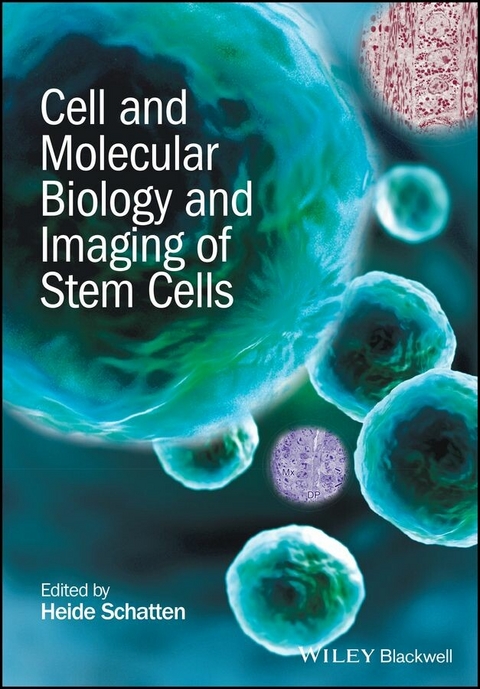
Cell and Molecular Biology and Imaging of Stem Cells (eBook)
John Wiley & Sons (Verlag)
978-1-118-28507-7 (ISBN)
Heide Schatten is Professor in the Department of Veterinary Pathobiology at the University of Missouri
Contributors vii
Preface xi
1 Cell and Molecular Biology and Imaging of Stem Cells: Stem Cells from the Amniotic Fluid and Placenta 1
Amritha Kidiyoor, Sean V. Murphy, and Anthony Atala
2 Biomaterials as Artificial Niches for Pluripotent Stem Cell Engineering 21
Kyung Min Park and Sharon Gerecht
3 Low-Intensity Ultrasound in Stem Cells and Tissue Engineering 45
Byung Hyune Choi, Kil Hwan Kim, Mrigendra Bir Karmacharya, Byoung-Hyun Min and So Ra Park
4 Mammalian Neo-Oogenesis from Ovarian Stem Cells In Vivo and In Vitro 67
Antonin Bukovsky and Michael R. Caudle
5 Oct4-EGFP Transgenic Pigs as a New Tool for Visualization of Pluripotent and Reprogrammed Cells 137
Monika Nowak-Imialek and Heiner Niemann
6 Regulation of Adult Intestinal Stem Cells through Thyroid Hormone-Induced Tissue Interactions during Amphibian Metamorphosis 153
Atsuko Ishizuya-Oka
7 Stem Cell Therapy for Veterinary Orthopedic Lesions 173
Anna Paula Balesdent Barreira and Ana Liz Garcia Alves
8 Sex Steroid Combinations in Regenerative Medicine for Brain and Heart Diseases: The Vascular Stem Cell Niche and a Clinical Proposal 193
Antonin Bukovsky and Michael R. Caudle
9 Hair Follicle Stem Cells 211
Hilda Amalia Pasolli
10 The Potential of Using Induced Pluripotent Stem Cells in Skin Diseases 223
Shigeki Ohta, Ophelia Veraitch, Hideyuki Okano, Manabu Ohyama, and Yutaka Kawakami
11 Mitochondrial Differentiation in Early Embryo Cells and Pluripotent Stem Cells 247
Heide Schatten, Qing-Yuan Sun, and Randall S. Prather
12 The Role of Centrosomes in Cancer Stem Cell Functions 259
Heide Schatten
Index 281
Chapter 1
Cell and Molecular Biology and Imaging of Stem Cells: Stem Cells from the Amniotic Fluid and Placenta
Amritha Kidiyoor, Sean V. Murphy, and Anthony Atala
Wake Forest Institute for Regenerative Medicine, Wake Forest University School of Medicine, North Carolina, USA
Introduction
The promise of stem cell technology has mainly focused on the potential of pluripotent or multipotent cells to differentiate into a variety of different cell types representative of all three germ layers (Dushnik-Levinson and Benvenisty, 1995). Embryonic stem cells (ESCs) were the first truly pluripotent stem cell type described and subsequent research has provided a wealth of knowledge relating to stem cell development and lineage commitment (Reubinoff et al., 2000; Brivanlou et al., 2003). The main disadvantages of using ESCs for cell therapy is the potential for immune rejection of the allogeneic source of cells and their potential to form tumors in vivo. In the past few years, researchers have described methods to induce somatic cells into pluripotent stem cells by a process known as reprogramming (Takahashi and Yamanaka, 2006; Takahashi et al., 2007; Wernig et al., 2007; Stadtfeld et al., 2008; Zhou et al., 2009). This involves introducing transcription factors, proteins or small molecules into terminally differentiated cells to induce reprogramming into a stem cell phenotype. These induced pluripotent stem cells (iPSCs) possess many of the same properties as ESCs in terms of self-renewal and pluripotency. The advantage of using iPSCs is that patient-specific cell lines can be generated for autologous cell therapies. However, like ESCs, iPSCs possess the potential to form tumors in vivo, so are likely to be most useful for in vitro applications.
Adult stem cells are stem cell populations that have been identified in organs and tissues of adults such as the bone marrow (Ballas et al., 2002), blood (Lewis and Trobaugh, 1964) brain (Taupin, 2006), lung (Giangreco et al., 2002), and heart (Kinder et al., 2001). Adult stem cells are tissue-specific progenitors and are mainly involved in repair of their corresponding organ. They possess the ability to self-renew like ESCs and are more appealing to use as a replacement therapy, as they circumvent ethical concerns. In addition, autologous transplantation is possible with adult stem cells. The main disadvantage is that adult stem cells often require invasive biopsies for cell isolation, and the resultant cell populations are generally restricted to generating cell lineages corresponding to their organ of origin (Weiner, 2008). An attractive alternative is stem cells that can be isolated from gestational tissue such as the placenta, amnion membrane, and the amniotic fluid (De Coppi et al., 2007; Troyer and Weiss, 2008; Serikov et al., 2009; Murphy et al., 2010; Galende et al., 2010). Gestational tissue is usually discarded after birth and usage of this tissue involves minimal ethical or legal concerns. Amniotic fluid is frequently obtained in the second trimester during amniocentesis to detect any chromosomal abnormalities, malformations, and also to determine the sex of the fetus (Joo, 2011). Gestational tissue such as the placenta, placental membranes, and amniotic fluid are untapped reserves of stem cells. In the past decade, research groups have isolated and characterized stem cell populations that are highly multipotent, with the ability to differentiate into hematopoietic, osteogenic, chondrogenic, adipogenic, endothelial, myogenic, neural, and lung cells, among other cell lineages (In ‘t Anker et al., 2003, Portmann-Lanz et al., 2006; De Coppi et al., 2007). These cells also possess potent immunomodulatory properties, such as production of anti-inflammatory factors as well as interacting with immune cells to modulate the immune response (Murphy et al., 2010, 2011). These properties make peri-natal stem cells an attractive alternative for cell therapy. Therefore, the use of peri-natal stem cells for regeneration or replacement of damaged or diseased tissue such as blood and immune system (Ottersbach and Dzierzak, 2005; Ditadi et al., 2009), bone defects (Fan et al., 2012), myocardial infarction (Zhao et al., 2005; Bollini et al., 2011), neural degeneration (Kakishita et al., 2003; De Coppi et al., 2007), lung disease (Carraro et al., 2008), and diabetes would be valuable (Wei et al., 2003; Chang et al, 2007).
Gestational Tissue Development
Fetal placental tissue is derived from the trophoblast layer of the blastocyst, and functions to provide nutrients, eliminate waste, and provide gas exchange via the mother’s blood supply. The placental membrane provides a protective sac for the embryo and its contents. The inner cell mass of the developing embryo forms the epiblast and hypoblast layers. The hypoblast gives rise to extraembryonic tissue, while the epiblast gives rise to the ectoderm, mesoderm and endoderm, germ cells and extraembryonic mesoderm of the yolk sac, amnion, and allantois (Gardner and Beddington, 1988; Loebel et al., 1988; Downs and Harmann, 1997; Downs et al., 2004). Cells of the epiblast collected before implantation are the source of ESCs and can generate the entire fetus (Benitah and Fyre, 2012). The allantois tissue forms the umbilical cord and the mesenchymal part of the mature placenta (Downs and Harmann, 1997; Moser et al., 2004).
Around day 8.5 of gestation the hypoblast and epiblast form a bilayered disc and separate the blastocyst into two chambers; the yolk sac and the fluid-filled amniotic sac (Parameswaran and Tam, 1995; Kinder et al., 1999) (Figure 1.1). The amniotic sac consists of a pair of thin membranes: the outer membrane, the chorion, which envelops the inner membrane and forms a part of the placenta; the inner membrane, the amnion, which envelops the developing fetus and amniotic fluid (Kinder et al., 1999; Robinson et al., 2002).
Figure 1.1. The initial stages in the development of an embryo. A single-celled zygote undergoes multiple cell divisions, at the eight-celled stage the cells undergo compaction and bind tightly to one another. Further cell divisions and cell differentiation lead to the formation of the morula (32-celled stage), followed by cavitation resulting in the development of a blastocyst. The zona pellucida disintegrates, followed by implantation. The trophoblast layer of the blastocyst gives rise to the fetal placenta. Further divisions and differentiation occurs giving rise to the primitive streak and hence the three layers of the embryo. The epiblast and hypoblast form a bilayered disc that leads to the formation of amnion and chorion membranes.
The amniotic fluid is initially an isotonic fluid consisting of nutrients promoting fetal growth: carbohydrates, proteins, lipids, phospholipids, urea, and electrolytes. As the fetus develops, urine is excreted, which changes the composition and volume of the amniotic fluid (Heidari et al., 1996; Srivastava et al., 1996; Sakuragawa et al., 1999; Bartha et al., 2000). Amniotic fluid ensures movement of the fetus and symmetrical structural fetal development and growth. Amniotic fluid is inhaled and swallowed by the fetus contributing to lung development and gastrointestinal tract development respectively. Amniotic fluid contains a variety of cell types present during development, such as cells sloughed off the developing fetus, the alimentary tract, respiratory tract, urogenital tract, fetal amnion membrane, and skin (Medina-Gómez and del Valle, 1988).
The mature human placenta has both a fetal as well as a maternal component. Much of the placenta originates from the inner cell mass of the morula (chorion, amnion, and mesenchymal core of the chorion), with the trophoblast layer contributing towards the outer layer of the placenta. As the origin of gestational tissue or extraembryonic tissue takes place during the very early stages of embryonic development, these cells possess multipotent differentiation potential and hence are a rich and valuable source of stem cells for cell therapy.
Isolation and Characterization of Peri-Natal Stem Cells
Gestational tissue is usually discarded after birth so obtaining tissue is non-invasive and resourceful. Multipotent cells can be isolated from gestational tissue: placenta (Steigman and Fauza, 2007), amnion membrane (Alviano et al., 2007), chorion membrane (Bailo et al., 2004), and amniotic fluid (Kaviani et al., 2001) (Figure 1.2 ). Mesenchymal stromal cells (MSCs) can be isolated from the placenta by mechanically separating the fetal placental specimen from the maternal decidua (Steigman and Fauza, 2007). The fetal placental tissue is minced and digested with a collagenase/dispase mixture, filtered, and plated on cover slips. Placental MSCs display a typical spindle-shaped fibroblastic morphology. Placental MSCs express the typical MSC markers (CD44, CD73, CD29, CD90 and CD105) and do not express hematopoietic markers such as CD14, CD34, and CD45, the stem-cell markers CD133, or the endothelial marker CD144 (C. D. Li et al., 2005; Kern et al., 2006). The cells also possess the ability to adhere to plastic and can be expanded ex vivo. On the other hand, placental MSCs expand quicker in vitro than adult MSCs and appear to be less immunogenic and more immunosuppressive than adult MSCs (C. D. Li et al., 2005; Kern et al., 2006). Although placental MSCs do not possess the pluripotent capacity of ESCs, they can give rise to multiple cell types representative of all three germ layers (Battula...
| Erscheint lt. Verlag | 4.8.2014 |
|---|---|
| Sprache | englisch |
| Themenwelt | Naturwissenschaften ► Biologie ► Genetik / Molekularbiologie |
| Naturwissenschaften ► Biologie ► Mikrobiologie / Immunologie | |
| Naturwissenschaften ► Biologie ► Zellbiologie | |
| Technik ► Umwelttechnik / Biotechnologie | |
| Schlagworte | and the role of centrosomes in stem cell division and differentiation • Bildgebende Verfahren i. d. Biomedizin • biomedical engineering • Biomedical Imaging • Biomedizintechnik • Biowissenschaften • Cell & Molecular Biology • Cell and Molecular Biology of Stem Cell Imaging • Cell Therapies & Tissue Engineering • embryoid bodies and the central nervous system • Heide Schatten • Life Sciences • Medical Science • Medizin • Molekularbiologie • neural stem cells in neurospheres • novel imaging with multiphoton flow cytometry • pluripotent stem cells and reprogrammed cells in farm animals • Stammzelle • totipotent ovarian stem cells • Zellbiologie • Zelltherapien u. Tissue Engineering • Zell- u. Molekularbiologie |
| ISBN-10 | 1-118-28507-7 / 1118285077 |
| ISBN-13 | 978-1-118-28507-7 / 9781118285077 |
| Informationen gemäß Produktsicherheitsverordnung (GPSR) | |
| Haben Sie eine Frage zum Produkt? |
 EPUB (Adobe DRM)
Kopierschutz: Adobe-DRM
Adobe-DRM ist ein Kopierschutz, der das eBook vor Mißbrauch schützen soll. Dabei wird das eBook bereits beim Download auf Ihre persönliche Adobe-ID autorisiert. Lesen können Sie das eBook dann nur auf den Geräten, welche ebenfalls auf Ihre Adobe-ID registriert sind.
Details zum Adobe-DRM
Dateiformat: EPUB (Electronic Publication)
EPUB ist ein offener Standard für eBooks und eignet sich besonders zur Darstellung von Belletristik und Sachbüchern. Der Fließtext wird dynamisch an die Display- und Schriftgröße angepasst. Auch für mobile Lesegeräte ist EPUB daher gut geeignet.
Systemvoraussetzungen:
PC/Mac: Mit einem PC oder Mac können Sie dieses eBook lesen. Sie benötigen eine
eReader: Dieses eBook kann mit (fast) allen eBook-Readern gelesen werden. Mit dem amazon-Kindle ist es aber nicht kompatibel.
Smartphone/Tablet: Egal ob Apple oder Android, dieses eBook können Sie lesen. Sie benötigen eine
Geräteliste und zusätzliche Hinweise
Buying eBooks from abroad
For tax law reasons we can sell eBooks just within Germany and Switzerland. Regrettably we cannot fulfill eBook-orders from other countries.
aus dem Bereich