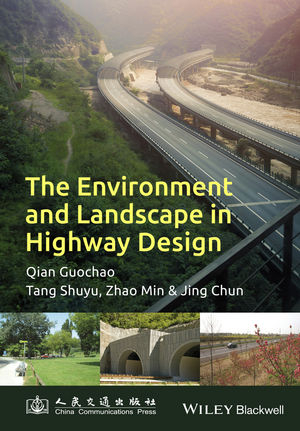
The Environment and Landscape in Motorway Design (eBook)
John Wiley & Sons (Verlag)
978-1-118-33295-5 (ISBN)
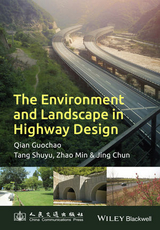
The construction and operation of highways has a significant impact on the environment. While such impact is impossible to avoid, modern highways are constructed and landscaped to minimise these impacts as far as possible. Good landscaping minimises the impact on those living or working close to the highway, while at the same time regenerating the natural landscape disturbed during construction.
Using as its background the successful landscape design of the Nanjing-Hangzhou Expressway in Jiangsu Province, China, which opened to traffic in 2007, Highway Landscape Design includes reference to all aspects of the landscaping of highways, including interchanges, embankments, central reservations, bridges, service and toll station areas, and drainage systems. Appropriate consideration is given to the negative impact on the surrounding environment during the process of construction and it discusses the ecological evaluation and conservation strategy for the highway route. China is in some respects at the forefront of highway landscape design as a result of rapid growth and development coupled with the financial resources to implement major infrastructure works, and the concepts, technologies and methods developed for this Expressway provide valuable experience for sustainable development strategies for such infrastructure.
Qian Guochao is a Senior Engineer and Deputy Director of the Jiangsu Provincial Department of Transportation.
Tang Shuyu is a Researcher in the Institute of Botany, Jiangsu Province and Chinese Academy of Sciences, and Chief Engineer of Nanjing Botanical Gardens.
Zhao Min is a Senior Engineer and Project Department Director in the Jiangsu Provincial Expressway Construction Headquarters.
Jing Chun is a Senior Engineer in the Jiangsu Provincial Expressway Construction Headquarters.
The construction and operation of highways has a significant impact on the environment. While such impact is impossible to avoid, modern highways are constructed and landscaped to minimise these impacts as far as possible. Good landscaping minimises the impact on those living or working close to the highway, while at the same time regenerating the natural landscape disturbed during construction. Using as its background the successful landscape design of the Nanjing-Hangzhou Expressway in Jiangsu Province, China, which opened to traffic in 2007, Highway Landscape Design includes reference to all aspects of the landscaping of highways, including interchanges, embankments, central reservations, bridges, service and toll station areas, and drainage systems. Appropriate consideration is given to the negative impact on the surrounding environment during the process of construction and it discusses the ecological evaluation and conservation strategy for the highway route. China is in some respects at the forefront of highway landscape design as a result of rapid growth and development coupled with the financial resources to implement major infrastructure works, and the concepts, technologies and methods developed for this Expressway provide valuable experience for sustainable development strategies for such infrastructure.
Qian Guochao is a Senior Engineer and Deputy Director of the Jiangsu Provincial Department of Transportation. Tang Shuyu is a Researcher in the Institute of Botany, Jiangsu Province and Chinese Academy of Sciences, and Chief Engineer of Nanjing Botanical Gardens. Zhao Min is a Senior Engineer and Project Department Director in the Jiangsu Provincial Expressway Construction Headquarters. Jing Chun is a Senior Engineer in the Jiangsu Provincial Expressway Construction Headquarters.
About the Authors vii
Introduction 1
1 Impact of Motorway Construction on the Environmental
Landscape and Protection Countermeasures 11
1.1 Impact on the natural environment 11
1.2 Impact on history, culture and scenery 18
1.3 Pollution of the surrounding environment 19
1.4 Impact on public activities and production 21
1.5 Landscape protection countermeasures and measures 22
2 Environmental Landscape Design of Filled and Excavated
Sections 32
2.1 Concept 32
2.2 Classification of the side slope 34
2.3 Functions of planting vegetation on the slope 34
2.4 Habitat conditions on the slope 40
2.5 Slope landscape design 40
2.6 Landscape design types 41
2.7 Selection of green plants for the slope 59
2.8 Remaking of the rocky cut slope 60
2.9 Slope greening and construction technologies 66
3 Interchange Environmental Landscape Design 82
3.1 Concept 82
3.2 Landscape design objectives 82
3.3 Creative landscape design 86
3.4 Main types of landscapes 87
3.5 Design features of interchanges on the Nanjing-Hangzhou
motorway 94
4 Environmental Landscape Design of the Central Reservation
121
4.1 Definition 121
4.2 Functions 121
4.3 Landscape design 126
4.4 Design pattern 141
4.5 Landscape design and analysis of the central reservation of
the Nanjing-Hangzhou motorway 149
5 Environmental Landscape Design of Service Areas and Toll
Stations 159
5.1 General 159
5.2 Building works and the 'Pearl Necklace' concept
of the Nanjing-Hangzhou motorway 163
6 Environmental Landscape Design of Bridges and Structures
191
6.1 Essential characteristics of bridges 191
6.2 Coordination between bridges and the environment 192
6.3 Analysis of examples of bridges along the Nanjing-Hangzhou
motorway 220
7 Environmental Landscape Design along the
Nanjing-HangzhouMotorway 236
7.1 Design techniques 236
7.2 Hotspot sections along the Nanjing-Hangzhou motorway 236
8 Environmental Landscape Design of Drainage Systems
245
8.1 General requirements of motorway drainage systems 245
8.2 Consistency of design concepts and drainage system 246
8.3 Innovation in the drainage system of the Nanjing-Hangzhou
motorway 246
9 Ecological Evaluation of Motorway Green Space Systems
264
9.1 Green space system of the Luojiabian Interchange Area
264
9.2 Analysis of characteristics of green plant communities on
typical sections 275
9.3 Green space system of slopes of typical sections 290
10 Vegetation Types and Available Plant Resources along the
Nanjing-HangzhouMotorway 297
10.1 Vegetation in Lishui and Nanjing 297
10.2 Vegetation in Liyang and Yixing 299
10.3 Exploitable plant resources 302
Appendix 10.A Plant Species Adapted to Motorways in Jiangsu
Province 321
11 Green Landscape Design of the Nanjing-HangzhouMotorway
(Phase II) 326
11.1 Project overview 326
11.2 Design principles 326
11.3 The details of green landscape design of the
Nanjing-Hangzhou motorway (phase II) 328
11.4 Conclusion 349
References 351
Further Reading 353
Index 361
Introduction
Since the world's first motorway was completed in Germany in 1932, more than 80 other countries have built motorways, with a total length of more than 220 000 km.
European countries started quite early in the construction of motorways and made rapid progress in connecting motorways between cities and countries into a complete network. A well-developed motorway network and a smooth and efficient driving environment facilitate convenient access to these countries.
For motorway construction, European countries have paid special attention to environmental design. Full consideration is given not only to the layout, but also to whether the motorways can be integrated into the natural environment and landscape. In addition, road alignment and the visual and psychological impact on drivers and passengers are also considered in design. At present, these countries have made great achievements in terms of ecological protection and the use of information resources when constructing motorways. The environmental landscape is also very picturesque.
Motorway landscape design began in the early 1920s. Specialized landscape design was emphasized in the construction of Parkway in the USA, mainly focusing on how the motorway alignment would fit into the natural landscape as well as the protection and utilization of scenery along the route. In the 1930s, Germany first adopted an alignment model to check and correct space alignment and came up with an integrated design taking into consideration horizontal and vertical factors, thereby achieving optimum motorway design. Further progress was later made in motorway landscape design, such as using a customized model and plastic foamboard to design a route model and making perspective drawings using the optical projection principle.
Since the 1960s, many developed countries have begun to consider landscape design in motorway construction while attaching importance to the improvement of existing motorway landscapes, and these countries have also developed appropriate specifications and regulations. For example, in 1965 the United States issued the Highway Beautification Act, and Development Guidelines of U.S. Interstate and Defense Highway Landscape and Guidelines for Highway Landscape; later, in 1970 they formulated Guidelines for Highway Landscape and Environmental Design and Practical Highway Aesthetics. All these specifications and regulations focus on visually attractive highways with basic functions which aim to be harmonious with the surroundings. They also published some basic principles, for example the diversity of the landscape along the route must be ensured in motorway design and the whole route should be scenic; the motorway must ‘adapt to the terrain’ without large-scale cutting and filling; harmony between the motorway and the surrounding landscape must be realized as far as possible; and the natural landscape must revert to its original state rapidly, or the natural appearance must be restored by appropriate planting and greening if damage to the natural landscape is inevitable in construction. Meanwhile, basic principles of landscape design have also been broadly adopted in the construction of motorways, trunk highways as well as scenic highways in other developed countries such as Germany, France, the UK and Japan. Regulations governing landscape design have been developed in relevant design specifications. In 1974, based on investigations of highway landscaping, the Ministry of Highway Engineering of the former Soviet Union developed and issued Instructions on Highway Architectural Art and Landscape Design. Landscape design has now become increasingly important in terms of highway design, and many countries have accordingly revised and issued relevant specifications and regulations.
European countries feature high forest coverage, good vegetation protection and appealing motorway landscaping. For the construction of the motorways, close attention has been paid to the protection of trees and restoration of vegetation on both sides of the motorway. For instance, the two directions of many motorways are separated so as to avoid damage to the hilltop, villages, woods, and rivers along the route (Figures 1 and 2). A service area near Stratford-upon-Avon in the UK is built on a hillside in order to preserve the existing landscape, and the parking area, petrol station, stores and restaurants are all constructed according to the terrain features, surrounded by the original trees and grass on the hillside. On the motorway from London to Edinburgh, trees were planted at the entrance to a tunnel and at the top of the tunnel upon completion, in order to fit with the surrounding natural vegetation and woods and create an illusion that the motorway is running through woodland and grassland. In the light of local conditions, greening of the central reservation is achieved by accentuating natural and diversified features without pruning weeds, therefore the motorway can be integrated into the natural landscape on both sides.
Figure 1 A motorway detours around a hill to protect the forest.
Figure 2 The two directions of the motorway are not at the same level in order to adapt to terrain features.
France attaches great importance to culture and history. As for leisure facilities along motorways, they integrate natural and cultural elements and pay special attention to local customs and practices as well as local landscape features. For instance, trees and flowers are planted in service areas, including tranquil tree-lined trails with an enchanting view; durable and solid facilities for relaxation and recreation such as tables and chairs also fit into the surrounding environment; most of the car parks are in an area covered by green shade, thus creating space for both parking and rest. In addition, travellers have the opportunity to communicate with local residents to understand local life (Figure 3, Figure 4 and Figure 5). In Germany there is a large amount of forest, and many motorways pass through forest for a long distance. Numerous signs are provided on both sides of the motorway to remind drivers of passing wildlife such as red deer and foxes. Rest places for travellers are mostly built in forests along the route, thereby integrating the motorways with the natural surroundings (Figure 6). Motorway design in Germany is characterized by smooth, rational and natural design and rarely involves large-scale cutting and filling. Built based on terrain features, these routes seamlessly blend into the natural scenery, crossing over valleys, mountains and hills along the way. Viewed from a distance, the motorways in this country look like ribbons winding through the green mountains and rivers. To avoid damage to the natural ecology of hilly sections, opposing lanes of traffic are separated; sections with picturesque scenery are generally left in their original state; planting and greening are generally carried out for filled hills, improving the landscape and reducing noise. Excavated sections generally have gentle side slopes with various local plants growing on the slope; masonry work is seldom performed to protect the subgrade.
Figure 3 A service area in a suburb of Paris, France.
Figure 4 A parking area on a motorway in a suburb of Paris, France seems to be set in a forest.
Figure 5 Picnic benches for resting travellers in a service area on a motorway in Paris, France.
Figure 6 Motorway landscape in Germany.
Motorway landscaping in, for example, Italy, Switzerland and Austria is also designed to be visually appealing, as shown in Figure 7, Figure 8, Figure 9 and Figure 10.
Figure 7 View from either side of a motorway in a suburb of Venice, Italy.
Figure 8 Scenery along a motorway in Zurich, Switzerland.
Figure 9 Corner of a parking area on a motorway near Vienna, Austria.
Figure 10 Recreational area on a motorway near Salzburg, Austria.
Compared with the good motorway network in European countries and the USA, Asian countries have a relatively weaker network. However, Asia has experienced rapid development in recent years. Despite a land area of only just over 370 000 square kilometres, Japan boasts a modernized motorway network with a total length of 11 520 km. Based on its development plan, Japan will expand its motorway network to a total length of 14 000 km by 2015.
Japan's motorways are designed in a rational manner concordant with the terrain features. Motorways are integrated with nature, reducing large-scale cutting and filling. Sometimes the two directions of the motorway are separated at varying heights, reducing excavation work without causing great damage or impact on the surroundings. In addition, Japan puts much emphasis on vegetation protection and restoration as well as natural landscaping in motorway construction. For example, biological protection techniques are adopted for filled, sloped and truncated sections. Trees, shrubs and herbs are all arranged in a natural and varied manner, and rubble masonry is seldom used. In recent years, Japan has adopted the following principles for the development of its motorway network: landscaping is incorporated into motorway construction and an appealing and convenient motorway network that is...
| Erscheint lt. Verlag | 11.6.2014 |
|---|---|
| Sprache | englisch |
| Themenwelt | Naturwissenschaften ► Geowissenschaften ► Geografie / Kartografie |
| Technik ► Bauwesen | |
| Schlagworte | Background • Bauingenieur- u. Bauwesen • Civil Engineering & Construction • Close • Design • Environment • Environmental Engineering • expressway • Highway • Highways • Impact • impacts • Impossible • Jiangsu • Landscape • Landscaping • minimises • Modern • nanjinghangzhou • NATURAL • Operation • possible • Province • significant • Successful • Time • Transportation Engineering • Umwelttechnik • Verkehrsbau |
| ISBN-10 | 1-118-33295-4 / 1118332954 |
| ISBN-13 | 978-1-118-33295-5 / 9781118332955 |
| Informationen gemäß Produktsicherheitsverordnung (GPSR) | |
| Haben Sie eine Frage zum Produkt? |
 EPUB (Adobe DRM)
Kopierschutz: Adobe-DRM
Adobe-DRM ist ein Kopierschutz, der das eBook vor Mißbrauch schützen soll. Dabei wird das eBook bereits beim Download auf Ihre persönliche Adobe-ID autorisiert. Lesen können Sie das eBook dann nur auf den Geräten, welche ebenfalls auf Ihre Adobe-ID registriert sind.
Details zum Adobe-DRM
Dateiformat: EPUB (Electronic Publication)
EPUB ist ein offener Standard für eBooks und eignet sich besonders zur Darstellung von Belletristik und Sachbüchern. Der Fließtext wird dynamisch an die Display- und Schriftgröße angepasst. Auch für mobile Lesegeräte ist EPUB daher gut geeignet.
Systemvoraussetzungen:
PC/Mac: Mit einem PC oder Mac können Sie dieses eBook lesen. Sie benötigen eine
eReader: Dieses eBook kann mit (fast) allen eBook-Readern gelesen werden. Mit dem amazon-Kindle ist es aber nicht kompatibel.
Smartphone/Tablet: Egal ob Apple oder Android, dieses eBook können Sie lesen. Sie benötigen eine
Geräteliste und zusätzliche Hinweise
Buying eBooks from abroad
For tax law reasons we can sell eBooks just within Germany and Switzerland. Regrettably we cannot fulfill eBook-orders from other countries.
aus dem Bereich