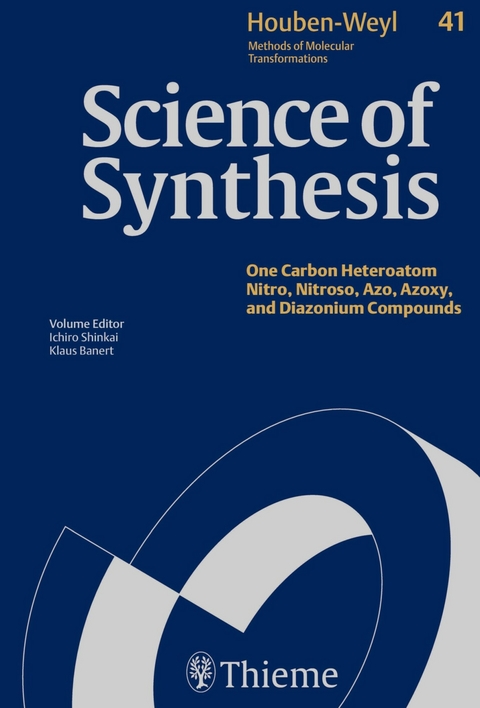
Science of Synthesis: Houben-Weyl Methods of Molecular Transformations Vol. 41 (eBook)
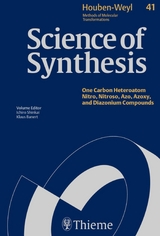
Science of Synthesis – Volume 41: Nitro, Nitroso, Azo, Azoxy, and Diazonium Compounds, Azides, Triazenes, and Tetrazenes 1
Title page 3
Imprint 5
Preface 6
Volume Editor’s Preface 8
Overview 10
Table of Contents 12
Introduction 32
41.1 Product Class 1: Nitroalkanes 40
41.1.1 Synthesis of Product Class 1 40
41.1.1.1 Synthesis by Substitution 40
41.1.1.1.1 Method 1: Substitution of Hydrogen Using Nitric Acid 40
41.1.1.1.1.1 Variation 1: Using Dilute Nitric Acid 40
41.1.1.1.1.2 Variation 2: Using Concentrated or Fuming Nitric Acid 41
41.1.1.1.1.3 Variation 3: Using Nitric Acid with Sulfuric Acid 43
41.1.1.1.1.4 Variation 4: Using Nitric Acid with Acetic Acid 44
41.1.1.1.1.5 Variation 5: Using Nitric Acid in Ionic Liquids 44
41.1.1.1.1.6 Variation 6: Using Nitric Acid in the Gas Phase 44
41.1.1.1.1.7 Variation 7: Using Nitric Acid with Oxygen and Halogens in the Gas Phase 45
41.1.1.1.2 Method 2: Substitution of Hydrogen Using Metal Nitrates 46
41.1.1.1.2.1 Variation 1: Using Copper(II) or Manganese(II) Nitrates 46
41.1.1.1.2.2 Variation 2: Using Aluminum Trinitrate 46
41.1.1.1.3 Method 3: Substitution of Hydrogen Using Sulfuric Acid and Ammonium Nitrate 46
41.1.1.1.4 Method 4: Substitution of Hydrogen Using Nitrogen Dioxide 46
41.1.1.1.4.1 Variation 1: Without Additional Reagents 46
41.1.1.1.4.2 Variation 2: With Oxygen 47
41.1.1.1.4.3 Variation 3: With Hydrogen Peroxide 48
41.1.1.1.5 Method 5: Substitution of Hydrogen Using Sodium Nitrite and Silver(I) Nitrate 48
41.1.1.1.6 Method 6: Substitution of Hydrogen Using Alkyl Nitrites 48
41.1.1.1.6.1 Variation 1: Without Additional Reagents 48
41.1.1.1.6.2 Variation 2: With 3-Methylbutyl Nitrite and Butyllithium 49
41.1.1.1.7 Method 7: Substitution of Hydrogen Using Alkyl Nitrates with a Base 49
41.1.1.1.8 Method 8: Substitution of Hydrogen Using 2,4,6-Trichloro-N-nitroaniline 51
41.1.1.1.9 Method 9: Substitution of Lithium 51
41.1.1.1.10 Method 10: Substitution of Potassium 51
41.1.1.1.11 Method 11: Substitution of Magnesium 51
41.1.1.1.12 Method 12: Substitution of Mercury 52
41.1.1.1.13 Method 13: Substitution of a Carboxy Group 52
41.1.1.1.14 Method 14: Substitution of a Cyano Group 53
41.1.1.1.15 Method 15: Substitution of Chlorine Using Sodium Nitrite 53
41.1.1.1.15.1 Variation 1: Without Additional Reagents 54
41.1.1.1.15.2 Variation 2: With Urea 54
41.1.1.1.15.3 Variation 3: With Benzene-1,3,5-triol 55
41.1.1.1.16 Method 16: Substitution of Chlorine Using Potassium Nitrite 55
41.1.1.1.16.1 Variation 1: In the Presence of a Base 55
41.1.1.1.16.2 Variation 2: With Crown Ethers 56
41.1.1.1.17 Method 17: Substitution of Chlorine Using Silver(I) Nitrite 56
41.1.1.1.17.1 Variation 1: Without Additional Reagents 56
41.1.1.1.17.2 Variation 2: With Urea 57
41.1.1.1.18 Method 18: Substitution of Chlorine Using Mercury(I) Nitrite 58
41.1.1.1.19 Method 19: Substitution of Chlorine Using Polymer-Supported Nitrite 58
41.1.1.1.20 Method 20: Substitution of Bromine Using Sodium Nitrite 58
41.1.1.1.20.1 Variation 1: Without Additional Reagents 58
41.1.1.1.20.2 Variation 2: With Benzene-1,2-diol 60
41.1.1.1.20.3 Variation 3: With Benzene-1,3,5-triol 60
41.1.1.1.20.4 Variation 4: With Urea 62
41.1.1.1.20.5 Variation 5: With Urea and Benzene-1,3,5-triol 63
41.1.1.1.20.6 Variation 6: With a Phase-Transfer Catalyst 65
41.1.1.1.20.7 Variation 7: With an Ionic Liquid 65
41.1.1.1.21 Method 21: Substitution of Bromine Using Potassium Nitrite 65
41.1.1.1.22 Method 22: Substitution of Bromine Using Silver(I) Nitrite 66
41.1.1.1.23 Method 23: Substitution of Bromine Using Ammonium Nitrites 69
41.1.1.1.24 Method 24: Substitution of Bromine Using Polymer-Supported Nitrite 70
41.1.1.1.25 Method 25: Substitution of Iodine Using Sodium Nitrite 70
41.1.1.1.25.1 Variation 1: Without Additional Reagents 71
41.1.1.1.25.2 Variation 2: With Benzene-1,3,5-triol 72
41.1.1.1.25.3 Variation 3: With Urea 72
41.1.1.1.25.4 Variation 4: With Urea and Benzene-1,3,5-triol 73
41.1.1.1.26 Method 26: Substitution of Iodine Using Silver(I) Nitrite 74
41.1.1.1.27 Method 27: Substitution of Iodine Using Ammonium Nitrites 77
41.1.1.1.28 Method 28: Substitution of Iodine Using Polymer-Supported Nitrite 77
41.1.1.1.29 Method 29: Substitution of Sulfates 77
41.1.1.1.30 Method 30: Substitution of Sulfonates 78
41.1.1.1.31 Method 31: Substitution of Oxonium Tetrafluoroborates 79
41.1.1.1.32 Method 32: Substitution of Nitrogen in Azo Compounds 79
41.1.1.2 Synthesis by Oxidation Reactions 80
41.1.1.2.1 Method 1: Oxidation of a Primary Amino Group Using Caro's Acid 80
41.1.1.2.2 Method 2: Oxidation of a Primary Amino Group Using Hypofluorous Acid 80
41.1.1.2.3 Method 3: Oxidation of a Primary Amino Group Using Organic Peroxides 81
41.1.1.2.3.1 Variation 1: Using Dimethyldioxirane 81
41.1.1.2.3.2 Variation 2: Using tert-Butyl Hydroperoxide and Chromium Silicalite 83
41.1.1.2.3.3 Variation 3: Using tert-Butyl Hydroperoxide and Zirconium(IV) tert-Butoxide 83
41.1.1.2.3.4 Variation 4: Using Oxaziridinium Salts 84
41.1.1.2.4 Method 4: Oxidation of a Primary Amino Group Using Organic Peroxy Acids 84
41.1.1.2.4.1 Variation 1: Using Peracetic Acid 84
41.1.1.2.4.2 Variation 2: Using 3-Chloroperoxybenzoic Acid 85
41.1.1.2.5 Method 5: Oxidation of a Primary Amino Group Using Ozone 86
41.1.1.2.6 Method 6: Oxidation of an Azido Group Using Hypofluorous Acid 87
41.1.1.2.7 Method 7: Oxidation of an Azido Group Using Ozone and a Phosphine 88
41.1.1.2.8 Method 8: Oxidation of a Hydroxyamino Group Using Nitric Acid 88
41.1.1.2.8.1 Variation 1: Without Additional Reagents 88
41.1.1.2.8.2 Variation 2: With Ammonium Nitrate 89
41.1.1.2.9 Method 9: Oxidation of a Hydroxyamino Group Using Potassium Permanganate in Sulfuric Acid 89
41.1.1.2.10 Method 10: Oxidation of a Nitroso Group Using Nitric Acid 90
41.1.1.2.10.1 Variation 1: With Ammonium Nitrate 90
41.1.1.2.10.2 Variation 2: With Acetic Acid 90
41.1.1.2.11 Method 11: Oxidation of a Nitroso Group Using Hydrogen Peroxide 90
41.1.1.2.11.1 Variation 1: Without Additional Reagents 90
41.1.1.2.11.2 Variation 2: With Sulfuric Acid 90
41.1.1.2.12 Method 12: Oxidation of a Nitroso Group Using Manganese(VII) 91
41.1.1.2.12.1 Variation 1: Using Potassium Permanganate in Acetone 91
41.1.1.2.12.2 Variation 2: Using Manganese(VII) Oxide 91
41.1.1.2.13 Method 13: Oxidation of a Nitroso Group Using Chromium(VI) 91
41.1.1.2.13.1 Variation 1: Using Chromium(VI) Oxide Alone 91
41.1.1.2.13.2 Variation 2: Using Chromium(VI) Oxide and Acetic Acid 91
41.1.1.2.13.3 Variation 3: Using Chromium(VI) Oxide with Acetic and Sulfuric Acids 92
41.1.1.2.14 Method 14: Oxidation of a Nitroso Group Using Lead(IV) Oxide 93
41.1.1.2.15 Method 15: Oxidation of a Nitroso Group Using Oxidizing Gases 93
41.1.1.2.15.1 Variation 1: Using Air 93
41.1.1.2.15.2 Variation 2: Using Oxygen 93
41.1.1.2.15.3 Variation 3: Using Nitrogen Dioxide/Dinitrogen Tetroxide 93
41.1.1.2.16 Method 16: Oxidation of a Nitroso Group Using Organic Peroxy Acids 94
41.1.1.2.16.1 Variation 1: Using Trifluoroperoxyacetic Acid 94
41.1.1.2.16.2 Variation 2: Using 3-Chloroperoxybenzoic Acid 94
41.1.1.2.17 Method 17: Photochemical Oxidation of a Nitroso Group 95
41.1.1.2.18 Method 18: Oxidation of a Nitroso Group Using Iodosylbenzene 95
41.1.1.2.19 Method 19: Oxidation of an Oxime Group Using Nitric Acid 95
41.1.1.2.19.1 Variation 1: Without Other Reagents 95
41.1.1.2.19.2 Variation 2: With Sulfuric Acid 95
41.1.1.2.20 Method 20: Oxidation of an Oxime Group Using Peroxysulfates 96
41.1.1.2.20.1 Variation 1: Using Caro's Acid 96
41.1.1.2.20.2 Variation 2: Using Oxone 96
41.1.1.2.21 Method 21: Oxidation of an Oxime Group Using Hydrogen Peroxide with Urea and Methyltrioxorhenium(VII) Catalyst 97
41.1.1.2.22 Method 22: Oxidation of an Oxime Group Using Lead(IV) Acetate 97
41.1.1.2.23 Method 23: Oxidation of an Oxime Group with Potassium Permanganate 97
41.1.1.2.24 Method 24: Oxidation of an Oxime Group with Sodium Perborate 98
41.1.1.2.25 Method 25: Oxidation of an Oxime Group Using Organic Peroxy Acids 98
41.1.1.2.25.1 Variation 1: Using Trifluoroperoxyacetic Acid 98
41.1.1.2.25.2 Variation 2: Using 3-Chloroperoxybenzoic Acid 101
41.1.1.2.26 Method 26: Oxidation of an Oxime Group Using Dinitrogen Tetroxide 102
41.1.1.2.27 Method 27: Enzymatic Oxidation of an Oxime Group 102
41.1.1.3 Synthesis by Addition Reactions 102
41.1.1.3.1 Method 1: Oxidative Nitrosation of an Oxime Group 103
41.1.1.3.2 Method 2: Oxidative Nitration of an Oxime Using Nitric Acid 103
41.1.1.3.2.1 Variation 1: Without Additional Reagents 103
41.1.1.3.2.2 Variation 2: Followed by Hydrogen Peroxide 104
41.1.1.3.2.3 Variation 3: With Acetic Acid, Followed by Hydrogen Peroxide 104
41.1.1.3.3 Method 3: Oxidative Nitration of an Oxime Using Nitrogen Oxides 105
41.1.1.3.3.1 Variation 1: Using Nitrogen Dioxide/Dinitrogen Tetroxide 105
41.1.1.3.3.2 Variation 2: Using Nitrogen Dioxide and Magnesium Sulfate 105
41.1.1.3.3.3 Variation 3: Using Dinitrogen Pentoxide 106
41.1.1.3.4 Method 4: Oxidative Chlorination of an Oxime Using Chlorine 107
41.1.1.3.4.1 Variation 1: Using Chlorine Followed by Ozone 107
41.1.1.3.4.2 Variation 2: Using Chlorine with Hydrochloric, Nitric, and Acetic Acids 108
41.1.1.3.5 Method 5: Oxidative Chlorination of an Oxime Using Sodium Hypochlorite 108
41.1.1.3.6 Method 6: Oxidative Chlorination of an Oxime Using Sodium Chloride, Oxone, and Alumina 108
41.1.1.3.7 Method 7: Oxidative Chlorination of an Oxime Using Hydrochloric Acid and Hydrogen Peroxide 109
41.1.1.3.8 Method 8: Oxidative Bromination of an Oxime Using Sodium Hypobromite Followed by Nitric Acid 109
41.1.1.3.9 Method 9: Oxidative Bromination of an Oxime Using N-Bromoacetamide 110
41.1.1.3.10 Method 10: Oxidative Bromination of an Oxime Using N-Bromosuccinimide and Potassium Carbonate 111
41.1.1.3.11 Method 11: Oxidative Bromination of an Oxime Using Sodium Bromide, Oxone, and Alumina 112
41.1.1.3.12 Method 12: Oxidative Acetoxylation of an Oxime Using Lead(IV) Acetate, Hydrogen Peroxide, and Sodium Nitrite 112
41.1.1.3.13 Method 13: Addition of Nitrous Acid to an Alkene 113
41.1.1.3.13.1 Variation 1: Using Sodium Nitrite and Acetic Acid 113
41.1.1.3.13.2 Variation 2: Using Sodium Nitrite and Hydrochloric Acid 113
41.1.1.3.14 Method 14: Addition of Tetranitromethane to an Alkene 114
41.1.1.3.15 Method 15: Nitrofluorination of an Alkene 115
41.1.1.3.15.1 Variation 1: Using Nitric and Hydrofluoric Acids 115
41.1.1.3.15.2 Variation 2: Using Nitryl Fluoride 116
41.1.1.3.15.3 Variation 3: Using Nitronium Tetrafluoroborate and Pyridinium Fluoride 116
41.1.1.3.16 Method 16: Nitrochlorination of an Alkene 117
41.1.1.3.16.1 Variation 1: Using Nitrosyl Chloride 117
41.1.1.3.16.2 Variation 2: Using Nitrosyl Chloride, Nitrogen Dioxide, and Oxygen 118
41.1.1.3.16.3 Variation 3: Using Nitryl Chloride 119
41.1.1.3.16.4 Variation 4: Using Nitrogen Dioxide and Boron Trifluoride 120
41.1.1.3.16.5 Variation 5: Using Nitrogen Dioxide and Chlorine 120
41.1.1.3.16.6 Variation 6: Using Nitrogen Dioxide, Phosphorus Trichloride, and Oxygen 121
41.1.1.3.17 Method 17: Nitrobromination of an Alkene 121
41.1.1.3.17.1 Variation 1: Using Sodium Nitrite, Mercury(II) Chloride, and Bromine 121
41.1.1.3.17.2 Variation 2: Using Nitrosyl Bromide 122
41.1.1.3.17.3 Variation 3: Using Nitrogen Dioxide and Bromine 123
41.1.1.3.17.4 Variation 4: Using Nitrogen Dioxide, Phosphorus Tribromide, and Oxygen 123
41.1.1.3.18 Method 18: Nitroiodination of an Alkene 123
41.1.1.3.18.1 Variation 1: Using Silver(I) Nitrite and Iodine 123
41.1.1.3.18.2 Variation 2: Using Nitrogen Dioxide and Iodine 124
41.1.1.3.19 Method 19: Nitroacetamidation of an Alkene 125
41.1.1.3.20 Method 20: Nitronitrosation of an Alkene (Synthesis of .-Nitrosites) 125
41.1.1.3.20.1 Variation 1: Using Sodium Nitrite and Sulfuric Acid 126
41.1.1.3.20.2 Variation 2: Using Sodium Nitrite and Hydrochloric Acid 127
41.1.1.3.20.3 Variation 3: Using Sodium Nitrite and Acetic Acid 127
41.1.1.3.20.4 Variation 4: Using Sodium Nitrite and Phosphoric Acid 128
41.1.1.3.20.5 Variation 5: Using Nitric Oxide with Catalysts 128
41.1.1.3.20.6 Variation 6: Using Nitric Oxide with Air 129
41.1.1.3.21 Method 21: 1,2-Dinitration of an Alkene 130
41.1.1.3.21.1 Variation 1: Using Pentyl Nitrite and Acetic Acid 130
41.1.1.3.21.2 Variation 2: Using Nitrogen Dioxide 130
41.1.1.3.21.3 Variation 3: Using Nitrogen Dioxide and Oxygen 132
41.1.1.3.22 Method 22: Nitrohydroxylation of an Alkene 132
41.1.1.3.22.1 Variation 1: Using Nitric Acid 132
41.1.1.3.22.2 Variation 2: Using Nitric and Sulfuric Acids 133
41.1.1.3.22.3 Variation 3: Using Sodium Nitrite and Ammonium Cerium(IV) Nitrate 133
41.1.1.3.22.4 Variation 4: Using Dinitrogen Trioxide 134
41.1.1.3.22.5 Variation 5: Using Nitrogen Dioxide 134
41.1.1.3.22.6 Variation 6: Using Organic Nitrating Agents 135
41.1.1.3.23 Method 23: Nitromethoxylation of an Alkene Using Tetranitromethane and Methanol 136
41.1.1.3.24 Method 24: Addition of a Nitro Group and a Nitrate Group to an Alkene 136
41.1.1.3.24.1 Variation 1: Using Nitric Acid 136
41.1.1.3.24.2 Variation 2: Using Nitrogen Dioxide and Oxygen 136
41.1.1.3.24.3 Variation 3: Using Dinitrogen Pentoxide 137
41.1.1.3.25 Method 25: Nitroacetoxylation of an Alkene 139
41.1.1.3.25.1 Variation 1: Using Acetyl Nitrate 139
41.1.1.3.25.2 Variation 2: Using Nitric and Sulfuric Acids Followed by Acetic Anhydride 140
41.1.1.3.26 Method 26: Addition of a Nitro Group and a Perchlorate Group to an Alkene 140
41.1.1.3.27 Method 27: Addition of a Nitro Group and an Ethyl Sulfate Group to an Alkene 141
41.1.1.3.28 Method 28: Conversion of Alkenes into a-Nitro Ketones 141
41.1.1.3.28.1 Variation 1: Using Nitrogen Dioxide and Oxygen in Dimethyl Sulfoxide 141
41.1.1.3.28.2 Variation 2: Using Chlorotrimethylsilane, Silver(I) Nitrate, and Chromium(VI) Oxide 142
41.1.1.3.28.3 Variation 3: Using Chlorotrimethylsilane, Silver(I) Nitrate, and Dimethyl Sulfoxide 143
41.1.1.3.29 Method 29: Nitration of Silyl Enol Ethers 143
41.1.1.3.29.1 Variation 1: Using Tetranitromethane 143
41.1.1.3.29.2 Variation 2: Using Nitronium Ethyl Sulfate 144
41.1.1.3.30 Method 30: Destructive Nitration 144
41.1.1.4 Synthesis by Rearrangement or Disproportionation 146
41.1.1.4.1 Method 1: Rearrangement of Alkyl Nitrates 146
41.1.1.4.2 Method 2: Disproportionation Reactions 147
41.1.1.5 Synthesis with Retention of the Nitro Group 147
41.1.1.5.1 Method 1: Alkylation of Nitroalkanes with Alkyl Halides 148
41.1.1.5.1.1 Variation 1: With Fluoroalkanes 148
41.1.1.5.1.2 Variation 2: With Chloroalkanes 148
41.1.1.5.1.3 Variation 3: With Bromoalkanes 150
41.1.1.5.1.4 Variation 4: With Iodoalkanes 152
41.1.1.5.2 Method 2: Alkylation of Nitroalkanes with Alkylammonium Salts 153
41.1.1.5.3 Method 3: Alkylation of Nitroalkanes with Alkyl(phenyl)iodonium Reagents 153
41.1.1.5.4 Method 4: Alkylation of Nitroalkanes with Alkyl Arenesulfonates 154
41.1.1.5.5 Method 5: Alkylation of Nitroalkanes with Alkyl Aryl Sulfones 155
41.1.1.5.6 Method 6: Alkylation of Nitroalkanes with Hydrates or Hemiacetals of Aldehydes 156
41.1.1.5.7 Method 7: Alkylation of Nitroalkanes with Alkyl Azides 157
41.1.1.5.8 Method 8: Alkylation of Nitroalkanes with an Alkyl Difluoromethyl Nitrite 157
41.1.1.5.9 Method 9: Vinylation of Nitroalkanes 157
41.1.1.5.10 Method 10: Arylation of Nitroalkanes 158
41.1.1.5.11 Method 11: Allylation of Nitroalkanes 160
41.1.1.5.11.1 Variation 1: Nucleophilic Substitution 160
41.1.1.5.11.2 Variation 2: Palladium-Catalyzed Allylation 162
41.1.1.5.12 Method 12: Reaction of Nitroalkyl Anions with Aldehydes and Ketones (Henry Reaction) 164
41.1.1.5.13 Method 13: Aza-Henry Reaction 168
41.1.1.5.14 Method 14: Reaction of Nitroalkyl Anions with Carboxylic and Carbonic Acid Derivatives 170
41.1.1.5.14.1 Variation 1: With Acid Halides 170
41.1.1.5.14.2 Variation 2: With Esters 171
41.1.1.5.14.3 Variation 3: With Anhydrides 171
41.1.1.5.14.4 Variation 4: With Carbonates 172
41.1.1.5.14.5 Variation 5: With Carbamoyl Chlorides 172
41.1.1.5.14.6 Variation 6: With Isatoic Anhydride 173
41.1.1.5.14.7 Variation 7: With Benzotriazole Derivatives 173
41.1.1.5.15 Method 15: Reaction of Nitroalkyl Anions with Reactive Alkenes Not Conjugated to a Carbonyl Group 174
41.1.1.5.16 Method 16: Reaction of Nitroalkyl Anions with Alkylmercury Compounds 175
41.1.1.5.17 Method 17: Substitution of Chlorine in a-Chloronitroalkanes by a Carbanion Prepared from a Ketone 175
41.1.1.5.18 Method 18: Substitution of Chlorine in a-Chloronitroalkanes by a Carbanion Prepared from a Nitroalkane 176
41.1.1.5.19 Method 19: Substitution of Chlorine in a-Chloronitroalkanes by a Carbanion Prepared from a Malonate 177
41.1.1.5.20 Method 20: Substitution of Chlorine in a-Chloronitroalkanes by a Carbanion Prepared from a 3-Oxo Ester 178
41.1.1.5.21 Method 21: Substitution of Chlorine in a-Chloronitroalkanes by a Carbanion Prepared from a 1,3-Diketone 179
41.1.1.5.22 Method 22: Substitution of Chlorine in a-Chloronitroalkanes by a Carbanion Prepared from a Nitrile 180
41.1.1.5.23 Method 23: Substitution of Chlorine in a-Chloronitroalkanes by a Carbanion Prepared from an (Alkoxycarbonyl)methyl Aryl Sulfone 180
41.1.1.5.24 Method 24: Substitution of Chlorine in a-Chloronitroalkanes by an Alkynyllithium Reagent 180
41.1.1.5.25 Method 25: Substitution of Chlorine in a-Chloronitroalkanes by an Organotin(IV) Reagent 181
41.1.1.5.26 Method 26: Substitution of Bromine in a-Bromonitroalkanes by a Carbanion Prepared from a Nitroalkane 181
41.1.1.5.27 Method 27: Substitution of Bromine in a-Bromonitroalkanes by a Carbanion Prepared from a Malonate 182
41.1.1.5.28 Method 28: Substitution of Bromine in a-Bromonitroalkanes by a Carbanion Prepared from a Nitrile 182
41.1.1.5.29 Method 29: Substitution of Bromine in a-Bromonitroalkanes by a Carbanion Prepared from a 3-Oxo Nitrile 183
41.1.1.5.30 Method 30: Substitution of Bromine in a-Bromonitroalkanes by a Carbanion Prepared from a 2-Cyano Ester 183
41.1.1.5.31 Method 31: Substitution of Bromine in a-Bromonitroalkanes by a Carbanion Prepared from an a-Cyanoalkyl Sulfone 184
41.1.1.5.32 Method 32: Substitution of Bromine in a-Bromonitroalkanes by a Carbanion Prepared from a Malononitrile 184
41.1.1.5.33 Method 33: Substitution of Bromine in a-Bromonitroalkanes by an Organotin(IV) Reagent 184
41.1.1.5.34 Method 34: Substitution of Iodine in a-Iodonitroalkanes by a Carbanion Prepared from a Nitroalkane 185
41.1.1.5.35 Method 35: Substitution of an Arylsulfonyl Group or Arylsulfanyl Group in Nitroalkanes by Carbon Nucleophiles 185
41.1.1.5.36 Method 36: Substitution of a Nitro Group in Geminal Dinitroalkanes by Carbon Nucleophiles 186
41.1.1.5.37 Method 37: Dimerization of Nitroalkanes 188
41.1.1.5.37.1 Variation 1: Starting from Nitroalkanes 188
41.1.1.5.37.2 Variation 2: Starting from Halonitroalkanes 189
41.1.1.5.38 Method 38: Decarboxylation of 2-Nitro Acids 191
41.1.1.5.39 Method 39: Dehalogenation of a-Halonitroalkanes 192
41.1.1.5.39.1 Variation 1: Using Potassium Hydroxide 192
41.1.1.5.39.2 Variation 2: Using Sodium Borohydride 193
41.1.1.5.39.3 Variation 3: Using Catalytic Hydrogenation 193
41.1.1.5.39.4 Variation 4: Using Tributyltin Hydride 194
41.1.1.5.40 Method 40: Desulfonylation of Nitro Sulfones 195
41.1.1.5.41 Method 41: Catalytic Reduction of Nitroalkenes 195
41.1.1.5.42 Method 42: Borohydride Reduction of Nitroalkenes 197
41.1.1.5.42.1 Variation 1: Using Sodium Borohydride 197
41.1.1.5.42.2 Variation 2: Using Lithium Borohydride 198
41.1.1.5.42.3 Variation 3: Using Zinc Borohydride 198
41.1.1.5.42.4 Variation 4: Using Sodium Trimethoxyborohydride 199
41.1.1.5.43 Method 43: Reduction of Nitroalkenes with Lithium Aluminum Hydride 199
41.1.1.5.44 Method 44: Enantioselective Reduction of Nitroalkenes with Silanes 200
41.1.1.5.45 Method 45: Reduction of Nitroalkenes Using Biological and Biomimetic Reducing Agents 200
41.1.1.5.46 Method 46: Hydrocyanation of a Nitroalkene Using Hydrogen Cyanide 201
41.1.1.5.47 Method 47: Hydrocyanation of a Nitroalkene Using Potassium Cyanide 202
41.1.1.5.48 Method 48: Addition to a Nitroalkene by Electrophilic Aromatic Substitution 203
41.1.1.5.49 Method 49: Addition to a Nitroalkene Using a Carbanion Prepared from an Aldehyde 205
41.1.1.5.50 Method 50: Addition to a Nitroalkene Using a Carbanion Prepared from a Ketone 207
41.1.1.5.51 Method 51: Addition to a Nitroalkene Using a Carbanion Prepared from an Ester 210
41.1.1.5.52 Method 52: Addition to a Nitroalkene Using a Carbanion Prepared from a Nitrile 212
41.1.1.5.53 Method 53: Addition to a Nitroalkene Using a Carbanion Prepared from an Amide 213
41.1.1.5.54 Method 54: Addition to a Nitroalkene Using a Carbanion Prepared from a 1,3-Diester 215
41.1.1.5.55 Method 55: Addition to a Nitroalkene Using a Carbanion Prepared from a 1,3-Diketone 220
41.1.1.5.56 Method 56: Addition to a Nitroalkene Using a Carbanion Prepared from a 3-Oxo Ester 222
41.1.1.5.57 Method 57: Addition to a Nitroalkene Using a Carbanion Prepared from a 2-Cyano Ester 225
41.1.1.5.58 Method 58: Addition to a Nitroalkene Using a Carbanion Prepared from a Dinitrile 226
41.1.1.5.59 Method 59: Addition to a Nitroalkene Using a Carbanion Prepared from a Thioester 226
41.1.1.5.60 Method 60: Addition to a Nitroalkene Using a Carbanion Prepared from a (2,2,6,6-Tetramethylpiperidin-1-yloxycarbonyl)alkane 227
41.1.1.5.61 Method 61: Addition to a Nitroalkene Using a Carbanion Prepared from a 1,3-Oxazine 227
41.1.1.5.62 Method 62: Addition to a Nitroalkene Using a Silyl Enol Ether 228
41.1.1.5.63 Method 63: Addition to a Nitroalkene Using Enamino Compounds 230
41.1.1.5.63.1 Variation 1: Using Enamines 230
41.1.1.5.63.2 Variation 2: Using Enamino Esters 232
41.1.1.5.63.3 Variation 3: Using Enamino Ketones 233
41.1.1.5.63.4 Variation 4: Using Enaminonitriles 234
41.1.1.5.64 Method 64: Addition to a Nitroalkene Using Organosulfur Reagents 234
41.1.1.5.64.1 Variation 1: Using Sulfones 234
41.1.1.5.64.2 Variation 2: Using 1,3-Dithianes 235
41.1.1.5.64.3 Variation 3: Using Sulfur Ylides 236
41.1.1.5.65 Method 65: Addition to a Nitroalkene Using a Carbanion Prepared from an Isocyanide 236
41.1.1.5.66 Method 66: Addition to a Nitroalkene Using a Carbanion Prepared from a Nitroalkane 237
41.1.1.5.67 Method 67: Addition to a Nitroalkene Using a Carbanion Prepared from a 2-Nitro Ester 238
41.1.1.5.68 Method 68: Addition to a Nitroalkene Using a Carbanion Prepared from an a-Cyano-a-nitro Ester 239
41.1.1.5.69 Method 69: Addition to a Nitroalkene Using Organophosphorus Reagents 239
41.1.1.5.69.1 Variation 1: Using Phosphonoacetate Esters 239
41.1.1.5.69.2 Variation 2: Using Phosphorus Ylides 240
41.1.1.5.70 Method 70: Addition to a Nitroalkene Using an Organolithium Reagent 241
41.1.1.5.71 Method 71: Addition to a Nitroalkene Using an Organomagnesium Reagent 242
41.1.1.5.71.1 Variation 1: Using Alkylmagnesium Chlorides 242
41.1.1.5.71.2 Variation 2: Using Alkylmagnesium Bromides 243
41.1.1.5.71.3 Variation 3: Using Alkylmagnesium Iodides 244
41.1.1.5.72 Method 72: Addition to a Nitroalkene Using an Alkylsamarium(II) Bromide 245
41.1.1.5.73 Method 73: Addition to a Nitroalkene Using an Alkylmanganese(II) Chloride 245
41.1.1.5.74 Method 74: Addition to a Nitroalkene Using an Alkylcopper Reagent 246
41.1.1.5.74.1 Variation 1: Using Alkylcoppers 246
41.1.1.5.74.2 Variation 2: Using Halozinc Alkylcyanocuprates 246
41.1.1.5.74.3 Variation 3: Using Alkylzinc Alkylcyanocuprates 247
41.1.1.5.75 Method 75: Addition to a Nitroalkene Using an Organozinc Reagent 248
41.1.1.5.75.1 Variation 1: Using Alkylzinc Chlorides 248
41.1.1.5.75.2 Variation 2: Using Alkylzinc Bromides 249
41.1.1.5.75.3 Variation 3: Using Dialkylzincs 249
41.1.1.5.76 Method 76: Addition to a Nitroalkene Using an Arylboronic Acid 252
41.1.1.5.77 Method 77: Addition to a Nitroalkene Using an Alkylaluminum Reagent 253
41.1.1.5.77.1 Variation 1: Using Trialkylaluminums 253
41.1.1.5.77.2 Variation 2: Using Tetraalkylaluminates 255
41.1.1.5.78 Method 78: Addition to a Nitroalkene Using a Lithium Tetraalkylgallate 256
41.1.1.5.79 Method 79: Addition to a Nitroalkene Using Triethoxy(phenyl)silane 256
41.1.1.5.80 Method 80: Addition to a Nitroalkene Using a Tetraalkylstannane 257
41.1.1.5.81 Method 81: Addition to a Nitroalkene Using Dialkyl Phosphites 257
41.1.1.5.82 Method 82: [2 + 2]-Cycloaddition Reactions of Nitroalkenes 258
41.1.1.5.82.1 Variation 1: With Another Nitroalkene 258
41.1.1.5.82.2 Variation 2: With Enamines 259
41.1.1.5.82.3 Variation 3: With Tetramethoxyethene 260
41.1.1.5.83 Method 83: [3 + 2]-Cycloaddition Reactions of Nitroalkenes 260
41.1.1.5.83.1 Variation 1: With Diazo Compounds 260
41.1.1.5.83.2 Variation 2: With Methylenecyclopropanes 261
41.1.1.5.83.3 Variation 3: With Azides 262
41.1.1.5.83.4 Variation 4: With Azomethine Ylides 262
41.1.1.5.83.5 Variation 5: With Enamino Ketones 262
41.1.1.5.83.6 Variation 6: With Nitrones 263
41.1.1.5.84 Method 84: [2 + 4]-Cycloaddition Reactions of Nitroalkenes with Dienes 263
41.1.1.5.85 Method 85: Rearrangements in the Synthesis of Nitroalkanes from Other Nitro Compounds 269
41.1.1.5.85.1 Variation 1: Baylis--Hillman Reaction 269
41.1.1.5.85.2 Variation 2: Disproportionation 269
41.1.1.5.85.3 Variation 3: Thio-Claisen Rearrangement 270
41.1.1.5.85.4 Variation 4: Cope Rearrangement 270
41.2 Product Class 2: Nitrosoalkanes and Nitroso Acetals (N,N-Dialkoxyamines) 290
41.2.1 Synthesis of Product Class 2 290
41.2.1.1 Method 1: Substitution Reactions 290
41.2.1.1.1 Variation 1: Substitution of a Hydrogen Atom in Nonactivated Compounds 291
41.2.1.1.2 Variation 2: Substitution of a Hydrogen Atom in Halogenated Compounds 291
41.2.1.1.3 Variation 3: Substitution of a Hydrogen Atom in Acceptor-Substituted Compounds 292
41.2.1.1.4 Variation 4: Substitution of Other Functional Groups 294
41.2.1.1.5 Variation 5: Substitution of Metals 295
41.2.1.2 Method 2: Addition Reactions 296
41.2.1.2.1 Variation 1: Addition to Alkenes 296
41.2.1.2.2 Variation 2: Addition to Electron-Rich Aromatic Compounds 300
41.2.1.3 Method 3: Elimination Reactions and Pyrolysis 300
41.2.1.4 Method 4: Oxidation Reactions 303
41.2.1.4.1 Variation 1: Oxidation of Amines 303
41.2.1.4.2 Variation 2: Oxidation of Hydroxylamines 306
41.2.1.4.3 Variation 3: Oxidation of Cyclic Nitrogen Compounds 307
41.2.1.5 Method 5: Reduction of Nitroalkanes 311
41.2.1.6 Method 6: Photochemical Reactions 311
41.2.1.7 Method 7: Rearrangements 315
41.2.1.8 Method 8: Conversions of Oximes 316
41.2.1.9 Method 9: Derivatization of Stable Nitrosoalkanes 327
41.2.1.10 Method 10: Synthesis of Metal-Coordinated Nitrosoalkanes 330
41.2.1.11 Method 11: Synthesis of Nitroso Acetals 333
41.2.2 Applications of Product Class 2 in Organic Synthesis 339
41.2.2.1 Method 1: Oxidation to Nitroalkanes 339
41.2.2.2 Method 2: Reduction to Amines 342
41.2.2.3 Method 3: Formation of Oximes and Derivatives 347
41.2.2.3.1 Variation 1: Formation of Oximes 347
41.2.2.3.2 Variation 2: Formation of Oxime Ethers and Phosphates 354
41.2.2.3.3 Variation 3: Formation of Hydroxamic Acid Derivatives 356
41.2.2.4 Method 4: Synthesis of Compounds with an N==X Functionality (X = C, N, P) 358
41.2.2.4.1 Variation 1: Synthesis of Nitrones 358
41.2.2.4.2 Variation 2: Synthesis of Azoxy Compounds 358
41.2.2.4.3 Variation 3: Synthesis of Other N==X Compounds (Imines and Azo Compounds) 360
41.2.2.4.4 Variation 4: Synthesis of N==P Compounds 361
41.2.2.5 Method 5: Conversion into Nitrosoalkenes 362
41.2.2.6 Method 6: Synthesis of Heterocycles 363
41.2.2.6.1 Variation 1: Synthesis of Four-Membered Heterocycles 363
41.2.2.6.2 Variation 2: Synthesis of Five-Membered Heterocycles 365
41.2.2.6.3 Variation 3: Synthesis of Six-Membered Heterocycles 369
41.2.2.7 Method 7: Synthesis of a-Carbonyl Hydroxylamines and N-Allyl Hydroxylamines 378
41.2.2.8 Method 8: Reactions of Nitroso Acetals 383
41.3Product Class 3: N-Nitroamines 402
41.3.1 Product Subclass 1: N-Alkyl-N-nitroamines 404
41.3.1.1 Synthesis of Product Subclass 1 404
41.3.1.1.1 Method 1: Nitration of Amines with Cyanohydrin Nitrates 404
41.3.1.1.2 Method 2: Nitration of Lithium Amides 405
41.3.1.1.3 Method 3: Deacylation of N-Acyl-N-nitroamines and Related Reactions 405
41.3.1.1.3.1 Variation 1: Of N-Nitrocarbamates 405
41.3.1.1.3.2 Variation 2: Of N-Nitroureas 408
41.3.1.1.3.3 Variation 3: Of N-Nitroguanidines 410
41.3.1.1.3.4 Variation 4: Of N-Nitro Amides 412
41.3.1.1.3.5 Variation 5: Of N-Nitro Sulfonamides 413
41.3.1.1.4 Method 4: Substitution of N,N-Dichloroamines 414
41.3.1.1.5 Method 5: Reduction of N-Nitroimines 415
41.3.1.1.6 Method 6: Cleavage of Alkyl Groups in N,N-Dialkyl-N-nitroamines 417
41.3.2 Product Subclass 2: N-Aryl-N-nitroamines 418
41.3.2.1 Synthesis of Product Subclass 2 419
41.3.2.1.1 Method 1: Nitration of Anilines 419
41.3.2.1.2 Method 2: Nitration of Metal Anilides 426
41.3.2.1.3 Method 3: Deacylation of N-Acyl-N-nitroanilines 426
41.3.2.1.4 Method 4: Oxidation of (E)-Diazenolates 427
41.3.3 Product Subclass 3: N-Nitro-N-vinylamines 428
41.3.3.1 Synthesis of Product Subclass 3 428
41.3.3.1.1 Method 1: Isomerization of N-Nitroimines 428
41.3.4 Product Subclass 4: N,N-Dialkyl-N-nitroamines 430
41.3.4.1 Synthesis of Product Subclass 4 430
41.3.4.1.1 Method 1: Nitration of Amines 430
41.3.4.1.1.1 Variation 1: Using Nitric Acid 430
41.3.4.1.1.2 Variation 2: Using Dinitrogen Pentoxide or Dinitrogen Tetroxide 434
41.3.4.1.1.3 Variation 3: Using Cyanohydrin Nitrates 435
41.3.4.1.1.4 Variation 4: Using Mesitylcarbonyl Nitrate 436
41.3.4.1.1.5 Variation 5: Using Nitronium Salts 436
41.3.4.1.1.6 Variation 6: Using N-Methyl-N,N-dinitroamine 437
41.3.4.1.2 Method 2: Nitrolysis of Amides 437
41.3.4.1.2.1 Variation 1: Using Nitric Acid 437
41.3.4.1.2.2 Variation 2: Using Dinitrogen Pentoxide 439
41.3.4.1.2.3 Variation 3: Using Nitronium Salts 439
41.3.4.1.3 Method 3: Nitration of Sulfamates 440
41.3.4.1.4 Method 4: Substitution of tert-Butylamines 440
41.3.4.1.5 Method 5: Nitroso Group Exchange by Nitration 441
41.3.4.1.6 Method 6: Alkylation of N-Alkyl-N-nitroamines 442
41.3.4.1.6.1 Variation 1: Using Alkyl, Allyl, and Benzyl Halides, Dimethyl Sulfate, Activated Alcohols, or Activated Amines 442
41.3.4.1.6.2 Variation 2: Using Diazoalkanes 446
41.3.4.1.7 Method 7: Radical Cyclizations of N-Alkyl-N-nitroamines 447
41.3.5 Product Subclass 5: N-Alkyl-N-aryl-N-nitroamines 448
41.3.5.1 Synthesis of Product Subclass 5 448
41.3.5.1.1 Method 1: Nitration of N-Alkylanilines 448
41.3.5.1.2 Method 2: Nitration of N,N-Dialkylanilines 453
41.4 Product Class 4: N-Nitrosoamines 468
41.4.1 Synthesis of Product Class 4 469
41.4.1.1 Formation of the N--N Bond 469
41.4.1.1.1 Method 1: Nitrosation with Sodium Nitrite and Acids 469
41.4.1.1.1.1 Variation 1: Nitrosation with Sodium Nitrite and Aqueous Acids 469
41.4.1.1.1.2 Variation 2: Nitrosation with Sodium Nitrite and Solid Acids 470
41.4.1.1.2 Method 2: Nitrosation with Nitrogen Oxides 470
41.4.1.1.3 Method 3: Nitrosation with Nitrosyl Chloride 471
41.4.1.1.4 Method 4: Nitrosation with Nitrosonium Tetrafluoroborate 472
41.4.1.1.5 Method 5: Nitrosation with Alkyl Nitrites 473
41.4.1.1.6 Method 6: Dealkylating Nitrosation of Tertiary Amines 474
41.4.1.2 Formation of C--C Bonds 474
41.4.1.2.1 Method 1: a-Alkylation of N-Nitrosoamines 474
41.4.1.2.2 Method 2: Alkylation of Diazenolates 476
41.4.1.3 Formation and Cleavage of N--O Bonds 477
41.4.1.3.1 Method 1: Reduction of N-Nitroamines 477
41.4.1.3.2 Method 2: Oxidation of 1,1-Disubstituted Hydrazines 477
41.5 Product Class 5: Aliphatic Azoxy Compounds (Aliphatic Diazene Oxides) 480
41.5.1 Synthesis of Product Class 5 481
41.5.1.1 Formation or Cleavage of N--O Bonds 481
41.5.1.1.1 Method 1: Oxidation of Diazenes 481
41.5.1.1.2 Method 2: Oxidation of Hydrazones 482
41.5.1.1.3 Method 3: Oxidation of Hydrazines 483
41.5.1.1.4 Method 4: Reduction of Dimeric Nitroso Compounds 483
41.5.1.2 Formation of the N==N Bond 483
41.5.1.2.1 Method 1: Condensation of Hydroxylamines with Dimeric Nitroso Compounds 483
41.5.1.2.2 Method 2: Condensation of N,N-Dihaloamines with Nitroso Compounds 485
41.5.1.2.3 Method 3: Oxidation of Hydroxylamines 486
41.5.1.3 Formation of the C--N Bond 486
41.5.1.3.1 Method 1: Alkylation of Diazenolates 486
41.6 Product Class 6: Aliphatic Azo Compounds 490
41.6.1 Synthesis by Formation of the N==N Bond 491
41.6.1.1 Method 1: Oxidative Coupling of Primary Amines 491
41.6.1.2 Method 2: Condensation of Nitrosoalkanes with Alkylamines 493
41.6.1.3 Method 3: Rearrangement of N,N'-Dialkylsulfamides 495
41.6.1.3.1 Variation 1: Rearrangement of N,N'-Dialkylureas 499
41.6.2 Synthesis from Compounds Containing an N--N Bond 500
41.6.2.1 Method 1: Oxidation of 1,2-Dialkylhydrazines 500
41.6.2.1.1 Variation 1: From Corresponding Ketazines 508
41.6.2.2 Method 2: 1,4-Elimination of a-Substituted Alkylhydrazones 509
41.6.2.3 Method 3: Reduction of Azoxy Compounds 512
41.6.2.4 Method 4: Oxidation of Alkylhydrazones 514
41.6.2.4.1 Variation 1: Oxidation with Lead(IV) Acetate 514
41.6.2.4.2 Variation 2: Oxidation with Peracetic Acid 515
41.6.2.4.3 Variation 3: Oxidation with (Diacetoxyiodo)benzene 516
41.6.2.4.4 Variation 4: Oxidation of Ketazines with Lead(IV) Acetate 517
41.6.2.5 Method 5: Alkylation of Alkylhydrazones 518
41.6.2.6 Method 6: Isomerization of Alkylhydrazones 522
41.6.2.7 Method 7: Hydrogenation of Ketazines 523
41.6.2.8 Method 8: Chlorination of Ketazines 523
41.6.2.9 Method 9: Ring Opening of Heterocycles 528
41.6.2.10 Method 10: [2,3]-Sigmatropic Rearrangement of 1-Alkyl-1-allyldiazenes and 1-Alkyl-1-propargyldiazenes 531
41.6.2.11 Method 11: Reactions of 2-Diazo 1,3-Diketones with CH-Acidic Compounds 532
41.6.3 Synthesis by Other Methods 533
41.7 Product Class 7: Diazonium Compounds 538
41.7.1 Product Subclass 1: Alkanediazonium Compounds 538
41.7.1.1 Synthesis of Product Subclass 1 540
41.7.1.1.1 Method 1: Synthesis from Primary Amines 540
41.7.1.1.1.1 Variation 1: With Nitrous Acid 540
41.7.1.1.1.2 Variation 2: With Disodium Pentacyanonitrosylferrate(III) 541
41.7.1.1.1.3 Variation 3: With Alkyl Nitrites 541
41.7.1.1.1.4 Variation 4: With Nitrosyl Chloride 542
41.7.1.1.1.5 Variation 5: With Dinitrogen Tetroxide 542
41.7.1.1.2 Method 2: Synthesis from Triazenes 542
41.7.1.1.3 Method 3: Synthesis from N-Nitrosoamides 543
41.7.1.1.3.1 Variation 1: By Thermolysis 543
41.7.1.1.3.2 Variation 2: By Alkali Cleavage 544
41.7.1.1.4 Method 4: Synthesis from Diazoalkanes 545
41.7.1.1.5 Method 5: Miscellaneous Methods 545
41.7.2 Product Subclass 2: Alkenediazonium Compounds 545
41.7.2.1 Synthesis of Product Subclass 2 548
41.7.2.1.1 Method 1: Synthesis from Diazoalkanes 548
41.7.2.1.2 Method 2: Synthesis from 2-Diazocarbonyl Compounds 548
41.7.2.1.2.1 Variation 1: By O-Alkylation 549
41.7.2.1.2.2 Variation 2: By O-Sulfonylation or O-Benzoylation 551
41.7.2.1.3 Method 3: Synthesis from Hydrazones 552
41.7.2.1.3.1 Variation 1: From Aldehyde Hydrazones 553
41.7.2.1.3.2 Variation 2: From Ketone Hydrazones 555
41.7.2.1.4 Method 4: Synthesis from Alk-1-enyl Derivatives 556
41.7.2.1.4.1 Variation 1: From Enamines 556
41.7.2.1.4.2 Variation 2: From Alk-1-enyl Isocyanates 558
41.7.2.1.4.3 Variation 3: From Alk-1-enyltriazenes 559
41.7.2.1.4.4 Variation 4: From 1-(Tosylazo)alk-1-enes 560
41.7.2.1.5 Method 5: Synthesis from N-Nitrosooxazolidin-2-ones 560
41.7.2.1.6 Method 6: Synthesis from Other Alkenediazonium Compounds 562
41.7.2.2 Applications of Product Subclass 2 in Organic Synthesis 565
41.7.2.2.1 Method 1: Synthesis of Pyrazoles 565
41.7.2.2.2 Method 2: Synthesis of 1H-1,2,3-Triazoles 566
41.7.2.2.3 Method 3: Synthesis of 6H-1,3,4-Oxadiazines and 1,3,4-Oxadiazoles 567
41.7.2.2.4 Method 4: Synthesis of 2-Diazoimines 567
41.8 Product Class 8: Azidoalkanes 574
41.8.1 Synthesis of Product Class 8 574
41.8.1.1 Method 1: Synthesis from Benzyl Ethers or Related Compounds by Radical Substitution (C--H Activation) 574
41.8.1.2 Method 2: Synthesis from Carboxylic Acids by Azidative Decarboxylation 575
41.8.1.3 Method 3: Synthesis from Alkyl Halides by Radical Substitution 576
41.8.1.4 Method 4: Synthesis by Nucleophilic Substitution of Alkyl Halides 576
41.8.1.4.1 Variation 1: Classical Synthesis 576
41.8.1.4.2 Variation 2: Asymmetric Synthesis 579
41.8.1.4.3 Variation 3: 1,3-Substitution in Allyl Halides 581
41.8.1.5 Method 5: Synthesis by Nucleophilic Substitution of Alkyl Esters and Related Compounds 582
41.8.1.5.1 Variation 1: Classical Synthesis 582
41.8.1.5.2 Variation 2: Asymmetric Synthesis 585
41.8.1.6 Method 6: Synthesis by Nucleophilic Substitution of Alkanols and Related Compounds 587
41.8.1.6.1 Variation 1: Classical Synthesis 587
41.8.1.6.2 Variation 2: Asymmetric Synthesis 591
41.8.1.7 Method 7: Synthesis from Acetals 597
41.8.1.8 Method 8: Synthesis by Ring Opening of Epoxides, Aziridines, and Related Compounds 598
41.8.1.8.1 Variation 1: Classical Synthesis 598
41.8.1.8.2 Variation 2: Asymmetric Synthesis 608
41.8.1.9 Method 9: Electrophilic Azidation 609
41.8.1.10 Method 10: Synthesis by Addition to C==C Bonds 611
41.8.1.10.1 Variation 1: Nucleophilic Hydroazidation of C==C Bonds 611
41.8.1.10.2 Variation 2: Electrophilic Hydroazidation of C==C Bonds 612
41.8.1.10.3 Variation 3: Radical Hydroazidation of C==C Bonds 615
41.8.1.10.4 Variation 4: Carboazidation of C==C Bonds 616
41.8.1.10.5 Variation 5: Haloazidation of C==C Bonds 616
41.8.1.10.6 Variation 6: Azidoselanylation of C==C Bonds 621
41.8.1.11 Method 11: Synthesis by Addition to C==X Bonds 621
41.8.1.12 Method 12: Synthesis from Amines by Nitrogen Transfer 621
41.8.1.13 Method 13: Synthesis with Retention of Azide Functionality 622
41.8.2 Applications of Product Class 8 in Organic Synthesis 625
41.8.2.1 Method 1: Reactions with All-Carbon Functional Groups 625
41.8.2.1.1 Variation 1: [3 + 2]-Cycloaddition Reactions 625
41.8.2.2 Method 2: Hydrogenation and Reactions with Heteroatom-Containing Groups 626
41.8.2.2.1 Variation 1: Reduction to Amines 626
41.8.2.2.2 Variation 2: Schmidt and Boyer Reactions 629
41.8.2.2.3 Variation 3: Staudinger Reductions 631
41.8.2.2.4 Variation 4: Staudinger Ligations 633
41.8.2.2.5 Variation 5: Aza-Wittig Reactions 634
41.8.2.2.6 Variation 6: Miscellaneous Reactions 636
41.9 Product Class 9: Alkyltriazenes 644
41.9.1 Synthesis of Product Class 9 645
41.9.1.1 Method 1: Alkylation of Alkyl Azides 645
41.9.1.1.1 Variation 1: By Grignard Reagents 645
41.9.1.1.2 Variation 2: By Lithium Reagents 646
41.9.1.2 Method 2: Alkylation or Acylation of Aryl- or Alkyltriazenes 647
41.9.1.2.1 Variation 1: Alkylation 647
41.9.1.2.2 Variation 2: Acylation 647
41.9.1.3 Method 3: Reaction of Arenediazonium Salts with Primary Amines 648
41.9.1.4 Method 4: Reaction of Diazonium Salts with Secondary Amines 650
41.9.1.4.1 Variation 1: Diazotization of Arylamines and Reaction with Secondary Amines 650
41.9.1.4.2 Variation 2: Preparation of Bistriazenes of Secondary Amines 654
41.9.1.4.3 Variation 3: Formation on Solid Supports 655
41.9.1.4.4 Variation 4: Preparation of Imidazolyltriazenes 656
41.9.1.4.5 Variation 5: Preparation of Indol-3-yltriazenes 656
41.9.1.4.6 Variation 6: Preparation of Pyrrol-3-yltriazenes 657
41.9.1.4.7 Variation 7: Preparation of Pyridyltriazenes 658
41.9.1.4.8 Variation 8: Preparation of Pyrazolyltriazenes/Indazolyltriazenes 658
41.9.1.4.9 Variation 9: Preparation of Acyl(alkyl)triazenes 659
41.9.1.5 Method 5: Synthesis from N'-Alkyl-N-aryl-N-nitrosoureas 660
41.9.1.5.1 Variation 1: With Primary Amines/Secondary Amines 660
41.9.1.5.2 Variation 2: By Decomposition 660
41.9.1.6 Method 6: Synthesis from Nitroso-Containing Compounds with Alkylhydrazines 661
41.9.1.7 Method 7: Reaction of Arenediazonium Salts with Primary Amines and Formaldehyde 662
41.9.1.8 Method 8: Reaction of Arenediazonium Salts with Diamines and Formaldehyde 663
41.9.1.9 Method 9: Synthesis by Ring Opening of Cyclic Compounds 664
41.9.1.9.1 Variation 1: Ring Opening of Triaziridines 664
41.9.1.9.2 Variation 2: Ring Opening to 3-Alkyl-1-aryltriazenes 664
41.9.1.9.3 Variation 3: Ring Opening of Spirocyclic Triazoles 665
41.9.1.9.4 Variation 4: Ring Opening of Benzotriazoles 665
41.9.2 Applications of Product Class 9 in Organic Synthesis 666
41.10 Product Class 10: Alkyltetrazenes 672
41.10.1 Product Subclass 1: Tetraz-1-enes 672
41.10.1.1 Synthesis of Product Subclass 1 672
41.10.1.1.1 Method 1: Reaction of 1,1-Dialkylhydrazines with Diazonium Chlorides 672
41.10.2 Product Subclass 2: Tetraz-2-enes 673
41.10.2.1 Synthesis of Product Subclass 2 673
41.10.2.1.1 Method 1: Symmetrical Oxidative Dimerization of Hydrazines 673
41.10.2.1.2 Method 2: Tetrazenes from N-Nitrosoamines 676
41.10.2.1.3 Method 3: Dimerization of Diazenes Generated from Amines 676
41.10.2.1.4 Method 4: Dimerization of Diazenes Generated from Hydrazones 677
41.10.2.1.5 Method 5: Synthesis of Unsymmetrical Tetrazenes 677
41.10.2.1.6 Method 6: Synthesis of Tetrazenes from Cyclic Precursors 678
41.10.2.1.7 Method 7: Synthesis of Vinyltetrazenes 679
41.11 Product Class 11: N,N-Dihaloamines 682
41.11.1 Product Subclass 1: N,N-Difluoroamines 682
41.11.1.1 Synthesis of Product Subclass 1 684
41.11.1.1.1 Method 1: Direct Fluorination of Amines and Related Reactions 684
41.11.1.1.2 Method 2: Difluoroamination of Carbon Skeletons 686
41.11.1.1.2.1 Variation 1: With Tetrafluorohydrazine 686
41.11.1.1.2.2 Variation 2: With Difluoroamine and Related Reagents 690
41.11.1.1.3 Method 3: Other Methods 693
41.11.2 Product Subclass 2: N,N-Dichloroamines 694
41.11.2.1 Synthesis of Product Subclass 2 696
41.11.2.1.1 Method 1: Direct Chlorination of Amines 696
41.11.2.1.2 Method 2: Chlorination of Nitriles and Related Reactions 697
41.11.2.1.3 Method 3: Dichloroamination of Carbon Skeletons 699
41.11.2.1.4 Method 4: Other Methods 700
41.11.3 Product Subclass 3: N,N-Dibromoamines 700
41.11.3.1 Synthesis of Product Subclass 3 701
41.11.3.1.1 Method 1: Direct Bromination of Amines 701
41.11.3.1.2 Method 2: Halide Metathesis of N,N-Dichloroamines 701
41.11.3.1.3 Method 3: Other Methods 703
41.11.4 Product Subclass 4: N,N-Diiodoamines 703
41.11.4.1 Synthesis of Product Subclass 4 703
41.11.5 Product Subclass 5: N-Chloro-N-fluoroamines 704
41.11.5.1 Synthesis of Product Subclass 5 704
41.11.5.1.1 Method 1: Chlorofluorination of Nitriles 704
41.11.5.1.2 Method 2: Chlorofluorination of N-Fluoroimines 705
41.11.5.1.3 Method 3: Fluorination of N-Chloroaziridines 706
41.11.6 Product Subclass 6: N-Bromo-N-fluoroamines 706
41.11.6.1 Synthesis of Product Subclass 6 706
41.11.7 Product Subclass 7: N-Bromo-N-chloroamines 706
41.11.7.1 Synthesis of Product Subclass 7 707
Keyword Index 712
Author Index 752
Abbreviations 796
| Erscheint lt. Verlag | 14.5.2014 |
|---|---|
| Reihe/Serie | Science of Synthesis | Science of Synthesis |
| Verlagsort | Stuttgart |
| Sprache | englisch |
| Themenwelt | Naturwissenschaften ► Chemie ► Organische Chemie |
| Technik | |
| Schlagworte | acyl • amines • ammonium salts • aryl • Azides • azo • azoxy • Chemie • Chemische Synthese • chemistry of organic compound • chemistry organic reaction • chemistry reference work • C HEMISTRY REFERENCE WORK • chemistry synthetic methods • compound functional group • compound organic synthesis • diazonium compounds • Haloamines • Hydrazines • HYDRAZ INES • Hydroxylamines • Mechanism • methods in organic synthesis • methods peptide synthesis • nitro • nitroso • NITR OSO • one saturated carbon-heteroatom bond • Organic Chemistry • organic chemistry functional groups • organic chemistry reactions • organic chemistry review • organic chemistry synthesis • ORGANIC CHEM ISTRY SYNTHESIS • organic method • organic reaction • organic reaction mechanism • ORGANI C REACTION MECHANISM • Organic Syntheses • organic synthesis • organic synthesis reference work • Organisch-chemische Synthese • Organische Chemie • Peptide synthesis • Practical • practical organic chemistry • Reactions • reference work • Review • review organic synthesis • review synthetic methods • REVIEW SYNTHE TIC METHODS • Synthese • Synthetic chemistry • Synthetic Methods • Synthetic Organic Chemistry • synthetic transformation • tetrazanes • tetrazenes • triazanes • Triazenes • Vinyl |
| ISBN-13 | 9783131721914 / 9783131721914 |
| Informationen gemäß Produktsicherheitsverordnung (GPSR) | |
| Haben Sie eine Frage zum Produkt? |
 PDF (Wasserzeichen)
DRM: Digitales Wasserzeichen
Dieses eBook enthält ein digitales Wasserzeichen und ist damit für Sie personalisiert. Bei einer missbräuchlichen Weitergabe des eBooks an Dritte ist eine Rückverfolgung an die Quelle möglich.
Dateiformat: PDF (Portable Document Format)
Mit einem festen Seitenlayout eignet sich die PDF besonders für Fachbücher mit Spalten, Tabellen und Abbildungen. Eine PDF kann auf fast allen Geräten angezeigt werden, ist aber für kleine Displays (Smartphone, eReader) nur eingeschränkt geeignet.
Systemvoraussetzungen:
PC/Mac: Mit einem PC oder Mac können Sie dieses eBook lesen. Sie benötigen dafür einen PDF-Viewer - z.B. den Adobe Reader oder Adobe Digital Editions.
eReader: Dieses eBook kann mit (fast) allen eBook-Readern gelesen werden. Mit dem amazon-Kindle ist es aber nicht kompatibel.
Smartphone/Tablet: Egal ob Apple oder Android, dieses eBook können Sie lesen. Sie benötigen dafür einen PDF-Viewer - z.B. die kostenlose Adobe Digital Editions-App.
Buying eBooks from abroad
For tax law reasons we can sell eBooks just within Germany and Switzerland. Regrettably we cannot fulfill eBook-orders from other countries.
aus dem Bereich