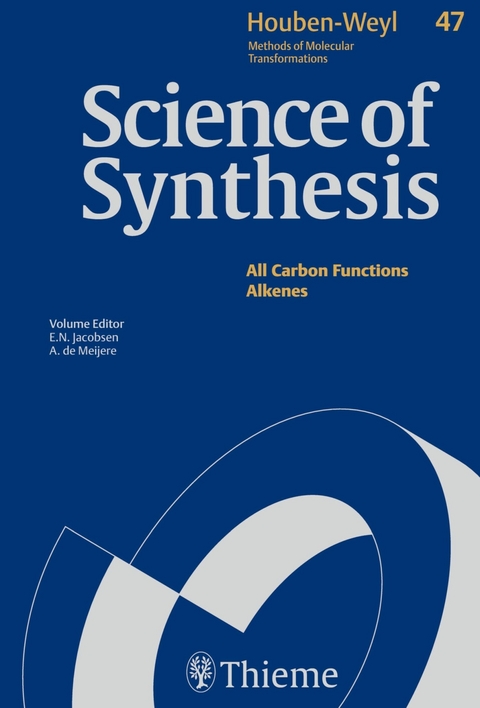
Science of Synthesis: Houben-Weyl Methods of Molecular Transformations Vol. 47a (eBook)
653 Seiten
Georg Thieme Verlag KG
9783131722713 (ISBN)
Science of Synthesis – Volume 47a: Alkenes 1
Title page 3
Imprint 5
Preface 6
Volume Editor’s Preface 8
Overview 10
Table of Contents 12
Introduction 22
47.1 Product Class 1: Alkenes 30
47.1.1 Synthesis by Alkenation Reactions 30
47.1.1.1 Wittig and Related Phosphorus-Based Alkenations 30
47.1.1.1.1 Monosubstituted Alkenes 31
47.1.1.1.1.1 Method 1: Synthesis from Aldehydes and Methylenetriphenylphosphorane 31
47.1.1.1.1.1.1 Variation 1: Wittig Alkenation with Methylenetriphenylphosphorane Generated In Situ 33
47.1.1.1.1.1.2 Variation 2: Wittig Alkenation with Methylenetriphenylphosphorane and Aldehyde Generated In Situ 36
47.1.1.1.1.1.3 Variation 3: Wittig Alkenation under Phase-Transfer Conditions 38
47.1.1.1.1.1.4 Variation 4: Synthesis of 13C- and 2H-Labeled Terminal Alkenes from Labeled Methyltriphenylphosphonium Halides 39
47.1.1.1.1.2 Method 2: Synthesis from Formaldehyde and Alkylidenetriphenylphosphoranes 41
47.1.1.1.2 1,1-Disubstituted Alkenes 43
47.1.1.1.2.1 Method 1: Synthesis from Ketones and Methylenetriphenylphosphorane 43
47.1.1.1.2.2 Method 2: Synthesis from Formaldehyde and Alkylidenetriphenylphosphoranes 47
47.1.1.1.2.2.1 Variation 1: Wittig Alkenation with Preformed Ylides and Formaldehyde in Aqueous Solution 47
47.1.1.1.2.2.2 Variation 2: Wittig Alkenation with Paraformaldehyde and Ylides Formed In Situ 48
47.1.1.1.3 Z-1,2-Disubstituted Alkenes 48
47.1.1.1.3.1 Method 1: Wittig Alkenation of Preformed Stable Aldehydes 49
47.1.1.1.3.1.1 Variation 1: Reaction under Homogeneous Conditions 49
47.1.1.1.3.1.2 Variation 2: Reaction with Immobilized Ylides 51
47.1.1.1.3.1.3 Variation 3: Reaction under Phase-Transfer Conditions 53
47.1.1.1.3.2 Method 2: Wittig Alkenation of Aldehydes Prepared In Situ 54
47.1.1.1.3.2.1 Variation 1: Alkenation of Aldehydes Prepared In Situ by Oxidation of Alcohols 54
47.1.1.1.3.2.2 Variation 2: Alkenation of Aldehydes Prepared In Situ by Reduction 58
47.1.1.1.3.2.3 Variation 3: Alkenation of Aldehydes Prepared by Oxidation of Ylides or Alkenes 61
47.1.1.1.3.2.4 Variation 4: Alkenation of Masked Aldehydes 62
47.1.1.1.3.3 Method 3: Alkenation with (Triphenylphosphoranylidene)alkanoates and -alkoxides 64
47.1.1.1.3.3.1 Variation 1: Ylide Generation with an Excess of Base 64
47.1.1.1.3.3.2 Variation 2: Alkenation with In Situ Silylated Alkoxide Ylides 66
47.1.1.1.3.4 Method 4: Z-Selective Wittig--Horner Alkenation 67
47.1.1.1.4 E-1,2-Disubstituted Alkenes 70
47.1.1.1.4.1 Method 1: The Schlosser Modification of the Wittig Alkenation 70
47.1.1.1.4.2 Method 2: E-Selective Wittig--Horner Alkenation 71
47.1.1.1.4.3 Method 3: E-Selective Alkenation with Ylides Bearing Substitutents Other Than Triphenylphosphine 73
47.1.1.1.5 Tri- and Tetrasubstituted Alkenes 75
47.1.1.1.5.1 Method 1: Non-Stereocontrolled Wittig Alkenations 75
47.1.1.1.5.1.1 Variation 1: Synthesis with Symmetrical Phosphoranes or Ketones 75
47.1.1.1.5.1.2 Variation 2: Synthesis with (Cycloalkylidene)triphenylphosphoranes 77
47.1.1.1.5.1.3 Variation 3: Synthesis with Unsymmetrical Phosphorus Ylides and Unsymmetrical Ketones 79
47.1.1.1.5.2 Method 2: Stereocontrolled Alkenations 82
47.1.1.1.5.2.1 Variation 1: The SCOOPY Procedure 82
47.1.1.1.5.2.2 Variation 2: With Phosphole-Derived Ylides 83
47.1.1.1.5.2.3 Variation 3: Horner--Emmons and Wittig--Horner Alkenations with Phosphonates and Phosphine Oxides 85
47.1.1.1.5.2.4 Variation 4: Indirect Routes Based upon Stork--Zhao and Still--Gennari Modifications 89
47.1.1.1.6 Cycloalkenes 90
47.1.1.1.6.1 Method 1: Synthesis by Reaction of .-Carbonyl-Substituted Phosphonium Salts 90
47.1.1.1.6.2 Method 2: Synthesis by Reaction of Vinylphosphonium Salts and .-Carbonylated Enolates 91
47.1.1.1.6.3 Method 3: Synthesis by Partial Oxidation of Bis(alkylidenetriphenylphosphoranes) 92
47.1.1.1.6.4 Method 4: Synthesis by Reaction of Bis(alkylidenetriphenylphosphoranes) with Bisaldehydes 94
47.1.1.2 Peterson Alkenation 106
47.1.1.2.1 Alkenation by Addition of a-Silyl Carbanions to Carbonyl Compounds 106
47.1.1.2.1.1 Method 1: Generation of a-Silyl Carbanions by Direct Deprotonation of Silanes 108
47.1.1.2.1.2 Method 2: Generation of a-Silyl Carbanions from (Halomethyl)silanes 109
47.1.1.2.1.2.1 Variation 1: Halogen--Lithium Exchange 109
47.1.1.2.1.2.2 Variation 2: Formation of a Grignard Reagent 110
47.1.1.2.1.2.3 Variation 3: Formation of an Organocerium Compound 111
47.1.1.2.1.2.4 Variation 4: Formation of an Organosamarium Compound 113
47.1.1.2.1.3 Method 3: Generation of a-Silyl Carbanions by Transmetalation 113
47.1.1.2.1.3.1 Variation 1: Displacement of a Phenylsulfanyl Group with a Lithium Naphthalenide Species 113
47.1.1.2.1.3.2 Variation 2: Displacement of an Organoselanyl Group 115
47.1.1.2.1.3.3 Variation 3: Displacement of a Trialkylstannyl Group 115
47.1.1.2.1.3.4 Variation 4: Displacement of a Trialkylsilyl Group 116
47.1.1.2.1.4 Method 4: Generation of a-Silyl Carbanions by Addition of Alkyllithium Species to Vinylsilanes 116
47.1.1.2.2 Alkenation by Reduction of a-Silyl Carbonyl Compounds 117
47.1.1.2.2.1 Method 1: Addition of Metal Hydride Reagents 117
47.1.1.2.2.2 Method 2: Addition of Organometallic Reagents 118
47.1.1.2.2.2.1 Variation 1: Addition to a-Silyl Aldehydes 119
47.1.1.2.2.2.2 Variation 2: Addition to a-Silyl Ketones 119
47.1.1.2.2.2.3 Variation 3: Addition to a-Silyl Esters 121
47.1.1.2.3 Alkenation Based on Epoxide Ring Opening 121
47.1.1.2.3.1 Method 1: Addition of Silylmetal Species to Epoxides 121
47.1.1.2.3.2 Method 2: Addition to Silylated Epoxides 122
47.1.1.3 Julia, Julia--Kocienski, and Related Sulfur-Based Alkenations 126
47.1.1.3.1 Julia Alkenation 126
47.1.1.3.1.1 Coupling Reaction 127
47.1.1.3.1.1.1 Method 1: Reaction of a-Sulfonyl Anions with Aldehydes and Ketones 128
47.1.1.3.1.1.1.1 Variation 1: Route toward Terminal Alkenes 128
47.1.1.3.1.1.1.2 Variation 2: Route toward 1,2-Disubstituted Alkenes 130
47.1.1.3.1.1.1.3 Variation 3: Route toward Trisubstituted Alkenes 134
47.1.1.3.1.1.1.4 Variation 4: Route toward Tetrasubstituted Alkenes 135
47.1.1.3.1.1.1.5 Variation 5: Special Cases 136
47.1.1.3.1.1.2 Method 2: Reaction of a-Sulfonyl Anions with Esters 141
47.1.1.3.1.1.3 Method 3: Reaction of a-Sulfonyl Anions with a-Haloorganometal Electrophiles 142
47.1.1.3.1.1.4 Method 4: Reaction of a-Sulfoxide Anions with Aldehydes and Ketones 144
47.1.1.3.1.1.5 Method 5: Reaction of Bis-sulfones with Aldehydes and Ketones 145
47.1.1.3.1.1.6 Method 6: Reaction of Sulfoximides with Aldehydes and Ketones 146
47.1.1.3.1.2 Reductive Elimination 147
47.1.1.3.1.2.1 Method 1: Reaction of ß-Hydroxy Sulfones 148
47.1.1.3.1.2.2 Method 2: Reaction of Sulfones Bearing a ß-Leaving Group 153
47.1.1.3.1.2.2.1 Variation 1: By Cleavage of the C--S Bond Followed by the C--O Bond 153
47.1.1.3.1.2.2.2 Variation 2: By Cleavage of the C--O Bond Followed by the C--S Bond 156
47.1.1.3.1.2.3 Method 3: Reaction of ß-Mesyloxy and ß-Acetoxy Sulfoxides 159
47.1.1.3.1.2.4 Method 4: Reaction of ß-Benzoyloxy Sulfoxides 161
47.1.1.3.1.2.5 Method 5: Reaction of ß-Hydroxy Sulfoximides 163
47.1.1.3.2 Julia--Kocienski and S. Julia Alkenation 164
47.1.1.3.2.1 Method 1: Addition to Carbonyl Compounds 173
47.1.1.3.2.1.1 Variation 1: 1,2-Disubstituted Alkenes 173
47.1.1.3.2.1.2 Variation 2: Trisubstituted Alkenes 176
47.1.1.3.2.2 Method 2: Addition to Lactones 177
47.1.1.4 Alkenation with Metal Carbenes and Related Reactions 182
47.1.1.4.1 Method 1: Synthesis by Methylenation with (µ-Chloro)bis-(.5-cyclopentadienyl)(dimethylaluminum)-(µ-methylene)titanium (The Tebbe Reagent) 183
47.1.1.4.1.1 Variation 1: Methylenation of Aldehydes 187
47.1.1.4.1.2 Variation 2: Methylenation of Ketones 189
47.1.1.4.1.3 Variation 3: Methylenation of Esters 192
47.1.1.4.1.4 Variation 4: Methylenation of Lactones 195
47.1.1.4.1.5 Variation 5: Methylenation of Miscellaneous Carbonyl Compounds 196
47.1.1.4.2 Method 2: Synthesis by Methylenation with Titanacyclobutanes 197
47.1.1.4.3 Method 3: Synthesis by Methylenation with Bis(.5-cyclopentadienyl)dimethyltitanium(IV) (The Petasis Reagent) 198
47.1.1.4.3.1 Variation 1: Methylenation of Aldehydes 202
47.1.1.4.3.2 Variation 2: Methylenation of Ketones 204
47.1.1.4.3.3 Variation 3: Methylenation of Esters 206
47.1.1.4.3.4 Variation 4: Methylenation of Lactones 209
47.1.1.4.3.5 Variation 5: Methylenation of 1,3-Dioxolan-4-ones and 1,3-Dioxan-4-ones 216
47.1.1.4.3.6 Variation 6: Methylenation of Carbonates 220
47.1.1.4.3.7 Variation 7: Methylenation of Amides and Lactams 221
47.1.1.4.3.8 Variation 8: Methylenation of Miscellaneous Carbonyl Compounds 223
47.1.1.4.4 Method 4: Synthesis by Methylenation with gem-Dimetallic Reagents 225
47.1.1.4.4.1 Variation 1: Methylenation with the Nysted Reagent 228
47.1.1.4.4.2 Variation 2: Methylenation with Dibromomethane--Zinc--Titanium(IV) Chloride Reagents 229
47.1.1.4.4.3 Variation 3: Methylenation with Diiodomethane--Zinc Reagents 233
47.1.1.4.4.4 Variation 4: Methylenation with Dihalomethane--Magnesium Reagents 235
47.1.1.4.5 Method 5: Synthesis by Methylenation with Molybdenum and Tungsten Carbenes 237
47.1.1.4.6 Method 6: Synthesis by Methylenation with Diazo Compounds under Metal Catalysis 239
47.1.1.4.7 Method 7: Synthesis by Alkylidenation with Dialkylbis-(.5-cyclopentadienyl)titanium(IV) Reagents (Petasis Alkenation) 241
47.1.1.4.7.1 Variation 1: Using Dibenzylbis(.5-cyclopentadienyl)titanium(IV) Reagents 244
47.1.1.4.7.2 Variation 2: Using Bis(.5-cyclopentadienyl)dicyclopropyltitanium(IV) 245
47.1.1.4.7.3 Variation 3: Using .5-Cyclopentadienyl[(trimethylsilyl)methyl]-titanium(IV) Reagents 246
47.1.1.4.8 Method 8: Synthesis by Alkylidenation with Low-Valent Titanium Reagents (Takeda Alkenation) 248
47.1.1.4.8.1 Variation 1: Using Alkyl Halides 249
47.1.1.4.8.2 Variation 2: Using gem-Dihalides 250
47.1.1.4.8.3 Variation 3: Using Dithioacetals 251
47.1.1.4.8.4 Variation 4: Intramolecular Carbonyl Alkylidenation 252
47.1.1.4.9 Method 9: Synthesis by Alkylidenation with gem-Dimetallic Reagents 253
47.1.1.4.10 Method 10: Synthesis by Halomethylenation 255
47.1.1.4.10.1 Variation 1: Using Chromium Reagents (Takai Alkenation) 256
47.1.1.4.10.2 Variation 2: Using Titanium Reagents 257
47.1.1.4.11 Method 11: Synthesis by Allenation with Titanium Carbenes 257
47.1.1.4.11.1 Variation 1: Using Titanacyclobutanes 258
47.1.1.4.11.2 Variation 2: Using Alkenylbis(.5-cyclopentadienyl)titanium(IV) Reagents 259
47.1.1.4.11.3 Variation 3: Using 1,1-Dichloroalkenes 261
47.1.1.5 McMurry Coupling and Related Reductive Dimerization Reactions 268
47.1.1.5.1 Method 1: Self-Coupling Reactions 268
47.1.1.5.1.1 Variation 1: Of Aldehydes 268
47.1.1.5.1.2 Variation 2: Of Ketones 279
47.1.1.5.2 Method 2: Mixed Coupling Reactions 294
47.1.1.5.2.1 Variation 1: Of Aldehydes 295
47.1.1.5.2.2 Variation 2: Of Ketones 296
47.1.1.5.2.3 Variation 3: Of Aldehydes and Ketones 299
47.1.1.5.2.4 Variation 4: Sequential Cyclization Reactions of Dicarbonyl Compounds 301
47.1.1.5.3 Method 3: Intramolecular Coupling Reactions 309
47.1.1.5.3.1 Variation 1: Cyclization of Aliphatic Dialdehydes, Diketones, and Oxoaldehydes 309
47.1.1.5.3.2 Variation 2: Synthesis of [2.n]Cyclophan-1-enes by Cyclization of Two Aromatic Carbonyl Moieties Tethered by an Aliphatic Chain 316
47.1.1.5.3.3 Variation 3: Synthesis of [2.n]Cyclophan-1-enes by Cyclization of Bis(aromatic aldehydes and ketones) with Tethers Containing Aromatic Rings 319
47.1.1.5.3.4 Variation 4: Synthesis of Ethene-1,2-diyl-Bridged Calix[4]arenes by Intramolecular Cyclization of Formyl-Substituted Calixarenes 322
47.1.1.5.3.5 Variation 5: Synthesis of Cyclic Phenylenevinylenes and Related Polyaromatics by Intramolecular Coupling of Conjugated Diformyl Compounds Linked with Phenylene and/or Vinylene Moieties 324
47.1.1.5.3.6 Variation 6: Synthesis of Tetrapyrrolic Macrocycles by Intramolecular Coupling of Formyl Groups at the Ends of Acyclic Tetrapyrroles 327
47.1.1.5.3.7 Variation 7: Synthesis of Ferrocenophanes by Intramolecular Coupling of Ferrocene-Derived Bis(aldehydes) 327
47.1.1.5.3.8 Variation 8: Synthesis of Condensed Polyaromatics by Intramolecular Coupling of 2,2'-Diformylbiaryls and Related Compounds 329
47.1.1.5.3.9 Variation 9: Synthesis of Heterocycles by Intramolecular Cyclization of Bis(aldehydes) and Bis(ketones) with a Heteroatom-Containing Tether 332
47.1.1.5.3.10 Variation 10: Synthesis of Annulenes by Intramolecular Coupling of Conjugated Polyene Dialdehydes and Ketones 335
47.1.1.5.3.11 Variation 11: Miscellaneous Reactions 338
47.1.1.5.4 Method 4: Coupling in Polymer Synthesis 339
47.1.1.6 Alkene Metathesis 348
47.1.1.6.1 Method 1: Cross Metathesis of a Reactive Alkene 353
47.1.1.6.1.1 Variation 1: Reaction with a Fast Homodimerizing Metathesis Partner 354
47.1.1.6.1.2 Variation 2: Reaction with a Very Slow Homodimerizing Metathesis Partner 361
47.1.1.6.1.3 Variation 3: Reaction with a Very Slow Homodimerizing Metathesis Partner or a Spectator 375
47.1.1.6.2 Method 2: Ring-Closing Metathesis 385
47.1.1.6.2.1 Variation 1: Synthesis of Cycloalkenes with Disubstituted Double Bonds 385
47.1.1.6.2.2 Variation 2: Synthesis of Cycloalkenes with Trisubstituted Double Bonds 401
47.1.1.6.2.3 Variation 3: Synthesis of Cycloalkenes with Tetrasubstituted Double Bonds 407
47.1.1.6.3 Method 3: Ene--Yne Metathesis 412
47.1.1.6.3.1 Variation 1: Cross Ene--Yne Metathesis 413
47.1.1.6.3.2 Variation 2: Ring-Closing Ene--Yne Metathesis 423
47.1.1.6.4 Method 4: Acyclic Diene Metathesis Polymerization 436
47.1.1.6.5 Method 5: Ring-Opening Metathesis 440
47.1.1.6.5.1 Variation 1: Ethenolysis 440
47.1.1.6.5.2 Variation 2: Ring-Opening with Concomitant Cross Metathesis 441
47.1.1.6.5.3 Variation 3: Ring-Opening with Concomitant Ring-Closing Metathesis 446
47.1.1.6.6 Method 6: Ring-Opening Metathesis Polymerization 449
47.1.2 Synthesis by Metal-Mediated Coupling Reactions 460
47.1.2.1 Cross-Coupling and Heck Reactions 460
47.1.2.1.1 Palladium-Catalyzed C--C Coupling Reactions 461
47.1.2.1.1.1 Method 1: Synthesis by the Mizoroki--Heck Reaction 461
47.1.2.1.1.2 Method 2: Synthesis by Suzuki--Miyaura Coupling 463
47.1.2.1.1.2.1 Variation 1: Reaction of B-Alkenyl Compounds with Alkyl Electrophiles 463
47.1.2.1.1.2.2 Variation 2: Reaction of B-Alkyl Compounds with Alkenyl Electrophiles 464
47.1.2.1.1.3 Method 3: Synthesis by Kosugi--Migita--Stille Coupling 468
47.1.2.1.1.3.1 Variation 1: Reaction of Alkenylstannanes with Alkyl Electrophiles 468
47.1.2.1.1.3.2 Variation 2: Reaction of Alkylstannanes with Alkenyl Electrophiles 470
47.1.2.1.1.4 Method 4: Synthesis by Corriu--Kumada--Tamao Coupling 471
47.1.2.1.1.4.1 Variation 1: Reaction of Alkyl Grignard Compounds with Alk-1-enyl Halides 472
47.1.2.1.1.4.2 Variation 2: Reaction of Grignard Reagents with Allyl Electrophiles 473
47.1.2.1.1.5 Method 5: Synthesis by Negishi Coupling 474
47.1.2.1.1.5.1 Variation 1: Reaction of Alkylzinc Compounds with Alkenyl Electrophiles 474
47.1.2.1.1.5.2 Variation 2: Reaction of Alkenylzinc Reagents with Alkyl Electrophiles 476
47.1.2.1.1.5.3 Variation 3: Reaction of Alkenylzirconium Compounds with Alkyl Electrophiles 478
47.1.2.1.1.5.4 Variation 4: Reaction of Alkenylaluminum Compounds with Alkyl Electrophiles 479
47.1.2.1.1.6 Method 6: Synthesis by Organoindium Cross-Coupling Reactions 479
47.1.2.1.2 Nickel-Catalyzed C--C Coupling Reactions 481
47.1.2.1.2.1 Method 1: Synthesis by Suzuki--Miyaura Coupling 481
47.1.2.1.2.2 Method 2: Synthesis by Negishi Coupling 482
47.1.2.1.2.3 Method 3: Synthesis by Corriu--Kumada--Tamao Coupling 484
47.1.2.1.2.3.1 Variation 1: Reaction of Alkyl Grignard Reagents with Alkenyl Electrophiles 484
47.1.2.1.2.3.2 Variation 2: Reaction of Grignard Reagents with Dithioacetals 485
47.1.2.1.3 Iron-Catalyzed C--C Coupling Reactions 486
47.1.2.1.3.1 Method 1: Synthesis by Desulfinylative Mizoroki--Heck-Type Reaction 487
47.1.2.1.3.1.1 Variation 1: Reaction of Alkenyl Grignard Reagents with Alkanesulfonyl Chlorides 487
47.1.2.1.3.2 Method 2: Synthesis by Corriu--Kumada--Tamao Coupling 488
47.1.2.1.3.2.1 Variation 1: Reaction of Alkyl Grignard Reagents with Alkenyl Electrophiles 488
47.1.2.1.3.2.2 Variation 2: Reaction of Alkenyl Grignard Compounds with Alkyl Electrophiles 489
47.1.2.1.3.2.3 Variation 3: Reaction of Grignard Reagents with Allyl Electrophiles 490
47.1.2.1.4 Cobalt-Catalyzed C--C Coupling Reactions 491
47.1.2.1.4.1 Method 1: Synthesis by Corriu--Kumada--Tamao Coupling 491
47.1.2.1.4.1.1 Variation 1: Reaction of Alkyl Grignard Reagents with Alkenyl Electrophiles 491
47.1.2.1.4.1.2 Variation 2: Reaction of Allyl Grignard Reagents with Alkyl Electrophiles 492
47.1.2.1.4.2 Method 2: Synthesis by Negishi Coupling 493
47.1.2.1.4.2.1 Variation 1: Coupling of Alkylzinc Compounds with Alkenyl Electrophiles 493
47.1.2.1.4.2.2 Variation 2: Coupling of Alkylzinc Compounds with Allyl Electrophiles 494
47.1.2.1.4.2.3 Variation 3: Reaction of Arylzinc Compounds with Allyl Electrophiles 494
47.1.2.2 SN' Allylations 502
47.1.2.2.1 Method 1: Synthesis of Alkenes Using Grignard Reagents 502
47.1.2.2.1.1 Variation 1: Catalyzed Reactions with Achiral Catalysts 503
47.1.2.2.1.2 Variation 2: Catalyzed Reactions with Chiral Catalysts 511
47.1.2.2.2 Method 2: Synthesis of Alkenes Using Organocopper Reagents 515
47.1.2.2.3 Method 3: Synthesis of Alkenes Using Lithium Organocuprate Reagents 517
47.1.2.2.3.1 Variation 1: Using Lower-Order Lithium Organocuprate Reagents 517
47.1.2.2.3.2 Variation 2: Using Lithium Heteroorganocuprate Reagents 520
47.1.2.2.3.3 Variation 3: Using Higher-Order Lithium Organocuprate Reagents 522
47.1.2.2.4 Method 4: Synthesis of Alkenes Using Organozinc Reagents 525
47.1.2.2.4.1 Variation 1: Using Zinc Organocuprate Reagents 525
47.1.2.2.4.2 Variation 2: Using Diorganozinc Reagents 530
47.1.2.2.5 Method 5: Synthesis of Alkenes Using Organoaluminum Reagents 533
47.1.2.3 p-Allyl Substitution 538
47.1.2.3.1 Palladium-Catalyzed Reactions 538
47.1.2.3.1.1 Method 1: Synthesis of Alkenes Using Carbon Nucleophiles 538
47.1.2.3.1.1.1 Variation 1: Using Nonstabilized or Stabilized Enolates 538
47.1.2.3.1.1.2 Variation 2: Using Miscellaneous Nucleophiles 541
47.1.2.3.1.2 Method 2: Synthesis of Alkenes Using Nitrogen, Oxygen, or Sulfur Nucleophiles 549
47.1.2.3.2 Other Metal-Catalyzed Reactions 553
47.1.2.3.2.1 Method 1: Synthesis of Alkenes Using Iron Catalysts 553
47.1.2.3.2.2 Method 2: Synthesis of Alkenes Using Ruthenium Catalysts 555
47.1.2.3.2.3 Method 3: Synthesis of Alkenes Using Miscellaneous Metal Catalysts 560
47.1.2.4 Oligomerization of Alkenes to Higher Alkenes 570
47.1.2.4.1 Method 1: Oligomerization of Ethene 570
47.1.2.4.1.1 Variation 1: Using Metallocenes and Related Complexes 570
47.1.2.4.1.2 Variation 2: Using Tridentate Bis(imino)pyridine Complexes of Transition Metals 572
47.1.2.4.1.3 Variation 3: Using SHOP-Type and Related Complexes 574
47.1.2.4.2 Method 2: Oligomerization of Propene 575
47.1.2.4.3 Method 3: Oligomerization of Higher Alk-1-enes 577
Keyword Index 582
Author Index 616
Abbreviations 648
| Erscheint lt. Verlag | 14.5.2014 |
|---|---|
| Reihe/Serie | Science of Synthesis | Science of Synthesis |
| Verlagsort | Stuttgart |
| Sprache | englisch |
| Themenwelt | Naturwissenschaften ► Chemie ► Organische Chemie |
| Technik | |
| Schlagworte | Alkenes • Chemie • Chemische Synthese • chemistry of organic compound • chemistry organic reaction • chemistry reference work • C HEMISTRY REFERENCE WORK • chemistry synthetic methods • compound functional group • compound organic synthesis • compounds with all-carbon functions • cycloalkenes • ethene • ETH ENE • hydrocarbon alkenes • isomeric butenes • Mechanism • methods in organic synthesis • methods peptide synthesis • Organic Chemistry • organic chemistry functional groups • organic chemistry reactions • organic chemistry review • organic chemistry synthesis • ORGANIC CHEM ISTRY SYNTHESIS • organic method • organic reaction • organic reaction mechanism • ORGANI C REACTION MECHANISM • Organic Syntheses • organic synthesis • organic synthesis reference work • Organisch-chemische Synthese • Organische Chemie • Peptide synthesis • Practical • practical organic chemistry • propene • Reactions • reference work • Review • review organic synthesis • review synthetic methods • REVIEW SYNTHE TIC METHODS • Synthese • Synthetic chemistry • Synthetic Methods • Synthetic Organic Chemistry • synthetic transformation |
| ISBN-13 | 9783131722713 / 9783131722713 |
| Informationen gemäß Produktsicherheitsverordnung (GPSR) | |
| Haben Sie eine Frage zum Produkt? |
 PDF (Wasserzeichen)
DRM: Digitales Wasserzeichen
Dieses eBook enthält ein digitales Wasserzeichen und ist damit für Sie personalisiert. Bei einer missbräuchlichen Weitergabe des eBooks an Dritte ist eine Rückverfolgung an die Quelle möglich.
Dateiformat: PDF (Portable Document Format)
Mit einem festen Seitenlayout eignet sich die PDF besonders für Fachbücher mit Spalten, Tabellen und Abbildungen. Eine PDF kann auf fast allen Geräten angezeigt werden, ist aber für kleine Displays (Smartphone, eReader) nur eingeschränkt geeignet.
Systemvoraussetzungen:
PC/Mac: Mit einem PC oder Mac können Sie dieses eBook lesen. Sie benötigen dafür einen PDF-Viewer - z.B. den Adobe Reader oder Adobe Digital Editions.
eReader: Dieses eBook kann mit (fast) allen eBook-Readern gelesen werden. Mit dem amazon-Kindle ist es aber nicht kompatibel.
Smartphone/Tablet: Egal ob Apple oder Android, dieses eBook können Sie lesen. Sie benötigen dafür einen PDF-Viewer - z.B. die kostenlose Adobe Digital Editions-App.
Buying eBooks from abroad
For tax law reasons we can sell eBooks just within Germany and Switzerland. Regrettably we cannot fulfill eBook-orders from other countries.
aus dem Bereich