


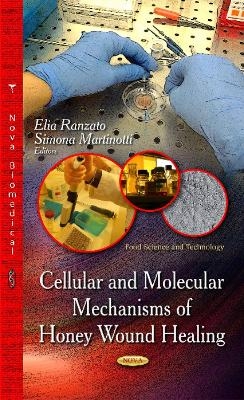
Cellular & Molecular Mechanisms of Honey Wound Healing
Seiten
2014
Nova Science Publishers Inc (Verlag)
978-1-63117-251-9 (ISBN)
Nova Science Publishers Inc (Verlag)
978-1-63117-251-9 (ISBN)
Honey has a long and interesting history. Since Biblical times and before, it has been known to have beneficial health effects, and it is still widely used in folk medicine'. Recently, the therapeutic virtues of honey have been rediscovered by the medical profession and are gaining acceptance for treating ulcers, wounds and other surface infections. Wound healing is of great relevance for skin medicine and a particular focus is set on natural compounds. Literature reports show that honey has been successfully used on infections that were unresponsive to standard antiseptic and antibiotic therapy. Honey has been renowned since ancient times for skin care, dermatologic, and wound-healing properties. Its physicochemical properties make it perfect for wound dressing, providing moisture, contrasting infections, reducing inflammation, oedema, and exudation, and preventing bandages from sticking to wounds. Honey is increasingly used as a wound dressing in clinical settings, but the relationships between its healing properties and the wound repair mechanism are still largely unexplored. In spite of a vast amount of literature about the clinical uses of honey, the subjacent mechanisms of action are still largely obscure. In a number of cases, beneficial effects have been ascribed to antiseptic properties, but accumulating data suggests the involvement of other specific physiological mechanisms that this book explores.
Preface; Honeys Healing History; The Clinical Application of Medical Honey in an Everchanging World; Wound Contraction Effect & Antimicrobial Properties of Honey on Burn Wounds; Efficacy of Natural Honey in the Management of Diabetic Foot Ulcers; The Present & the Potential of Manuka Honey in Dermal Regenerative Medicine; Manuka Honey: Its Role in Second Intention Wound Healing in Horses; Analgesic & Anti-Inflammatory Effects of Honey: The Role of Adenosine Receptors; Index.
| Verlagsort | New York |
|---|---|
| Sprache | englisch |
| Maße | 155 x 230 mm |
| Gewicht | 366 g |
| Themenwelt | Naturwissenschaften ► Biologie ► Humanbiologie |
| Technik ► Lebensmitteltechnologie | |
| ISBN-10 | 1-63117-251-4 / 1631172514 |
| ISBN-13 | 978-1-63117-251-9 / 9781631172519 |
| Zustand | Neuware |
| Informationen gemäß Produktsicherheitsverordnung (GPSR) | |
| Haben Sie eine Frage zum Produkt? |
Mehr entdecken
aus dem Bereich



aus dem Bereich
die Geschichte der Menschheit in 15 Porträts
Buch | Hardcover (2025)
DVA (Verlag)
CHF 39,20
produktiv sein ohne Stress – und mehr vom Leben haben
Buch | Softcover (2023)
dtv Verlagsgesellschaft
CHF 25,20
Veränderungen gehirngerecht gestalten
Buch | Softcover (2024)
Haufe (Verlag)
CHF 76,95


