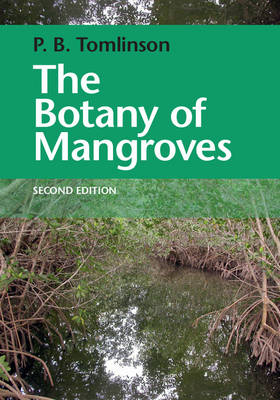
The Botany of Mangroves
Cambridge University Press (Verlag)
978-1-107-08067-6 (ISBN)
Mangroves are distinctive tropical plant communities that occupy the intertidal zone between sea and land. They are of major ecological importance, have economic value as a source of food and raw materials, and serve as a buffer from flooding and climate change-induced sea level rise. Mangroves are under threat from pollution, clearance and over-exploitation, and increasing concern has driven demand for an improved understanding of mangrove species. This book provides an introduction to mangroves, including their taxonomy, habitat-specific features, reproduction and socio-economic value. Fully updated to reflect the last two decades of research, this new edition of a key text includes newly documented taxa, new understandings of vivipary and the evolution of mangrove species, and a rich set of colour illustrations. It will appeal to researchers and students across a range of disciplines, including botany, ecology and zoology.
P. Barry Tomlinson is Professor Emeritus of Botany at Harvard University, Massachusetts; Crum Professor of Tropical Botany at the National Tropical Botanical Garden, Hawaii; and Research Associate of the Montgomery Botanical Center, Coral Gables, Florida. He is a leading scholar on the botany of tropical plants, and has published widely on plant anatomy and morphology across a diverse range of communities and species, including palms, aborescent monocotyledons, seagrasses, gymnosperms and mangroves.
Part I. General Account: 1. Historical prelude; 2. Ecology; 3. Floristics; 4. Biogeography; 5. Shoots and leaf systems; 6. Structural biology; 7. Root systems; 8. Water relations and salt balance; 9. Flowering; 10. Seedlings and seeds; 11. Mangroves and people; Part II. Detailed Description of Families: Acanthaceae; Anacardiaceae; Apocynaceae; Arecaceae (Palmae); Asteraceae (Compositae); Avicenniaceae (Acanthaceae); Bataceae (Batidaceae); Bignoniaceae; Bombacaceae (Malvaceae: Bombacoideae); Celastraceae; Clusiaceae (Calophyllaceae); Combretaceae; Ebenaceae; Euphorbiaceae; Fabaceae (Leguminosae); Flacourtiaceae; Goodeniaceae; Lecythidaceae; Lythraceae; Malvaceae (Malvoideae); Melastomataceae; Meliaceae; Myristicaceae; Pellicieraceae; Plumbaginaceae; Primulaceae (Myrsinaceae: Myrsinoideae); Pteridaceae; Rhizophoraceae; Rubiaceae; Rutaceae; Sapindaceae; Sapotaceae; Sonneratiaceae (Lythraceae); Sterculiaceae (Malvaceae: Sterculioideae); Tiliaceae (Malvaceae: Brownlowioideae).
| Erscheint lt. Verlag | 27.10.2016 |
|---|---|
| Zusatzinfo | 13 Tables, black and white; 24 Plates, color; 128 Halftones, black and white |
| Verlagsort | Cambridge |
| Sprache | englisch |
| Maße | 182 x 253 mm |
| Gewicht | 1050 g |
| Themenwelt | Naturwissenschaften ► Biologie ► Botanik |
| ISBN-10 | 1-107-08067-3 / 1107080673 |
| ISBN-13 | 978-1-107-08067-6 / 9781107080676 |
| Zustand | Neuware |
| Informationen gemäß Produktsicherheitsverordnung (GPSR) | |
| Haben Sie eine Frage zum Produkt? |
aus dem Bereich