Ecosystem Dynamics (eBook)
335 Seiten
Wiley-Blackwell (Verlag)
9781118525197 (ISBN)

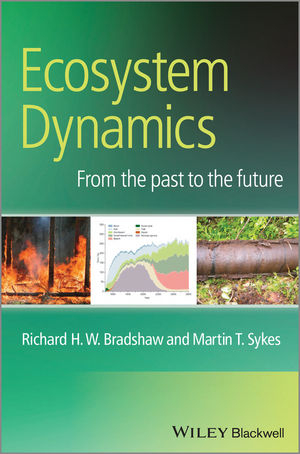
Ecosystem Dynamics focuses on long-term terrestrial ecosystems and their changing relationships with human societies. The unique aspect of this text is the long-time scale under consideration as data and insights from the last 10,000 years are used to place present-day ecosystem status into a temporal perspective and to test models that generate forecasts of future conditions. Descriptions and assessments of some of the current modelling tools that are used, along with their uncertainties and assumptions, are an important feature of this book. An overarching theme explores the dynamic interactions between human societies and ecosystem functioning and services. |
Richard H.W. Bradshaw School of Environmental Sciences, University of Liverpool, Liverpool, UK Martin T. Sykes Physical Geography and Ecosystem Science, Lund University, Sweden
Cover 1
Title Page 5
Copyright 6
Contents 7
Acknowledgements 11
About the companion website 13
Chapter 1 Where Are We and How Did We Arrive Here? 15
1.1 Why this book? 15
1.2 Ecosystems in crisis 16
1.3 Relevance of the past 19
1.4 Forecasting the future 21
1.5 Chapter details and logic 23
1.6 For whom is the book intended? 26
1.7 Four key questions and the links to policy 27
Chapter 2 Modelling 29
2.1 Introduction 29
2.1.1 How did these models develop? 30
2.1.2 Climate data, climate and earth system models 30
2.2 Background ecosystem, vegetation and species models 32
2.2.1 Vegetation models 32
2.2.2 Species-level modelling 39
2.2.3 Equilibrium physiologically-based modelling of species 41
2.2.4 Statistical equilibrium modelling of species 44
2.2.5 Some uncertainties and assumptions that apply generally to bioclimatic models 45
2.2.6 Models of intermediate complexity 46
2.2.7 Biogeochemistry integrated into equilibrium biome models 47
2.2.8 Integrating biome and NPP models 49
2.3 Dynamic modelling 50
2.3.1 Local to landscape scales: forest gap modelling 50
2.3.2 Regional to global scales: dynamic global vegetation modelling 52
2.4 Integrating models 58
2.4.1 Earth system models 58
2.4.2 Integrated assessment models 59
2.4.3 Agent-based models 62
2.5 Further reading 62
Chapter 3 Data 63
3.1 Introduction 63
3.2 Which data are relevant? 64
3.3 Ecosystem dynamics: direct observation 65
3.3.1 Phenology 65
3.3.2 Biological monitoring 67
3.4 Ecosystem dynamics: indirect measurement or proxy data 70
3.4.1 Historical ecology 71
3.4.2 Palaeoecology 72
3.4.3 Pollen analysis 74
3.4.4 Charcoal and fire scars 77
3.5 Drivers of ecosystem dynamics 81
3.5.1 Palaeoclimates and greenhouse gases 81
3.5.2 Human impact on ecosystem dynamics 83
3.6 Databases 84
3.7 Gaps in available data and approaches 84
Chapter 4 Climate Change and Millennial Ecosystem Dynamics: A Complex Relationship 87
4.1 Introduction 87
4.2 Reconstructing climate from biological data 88
4.3 The very long records of vegetation dynamics 92
4.4 Holocene records 95
4.5 Modelling of Holocene vegetation dynamics to help understand pollen data 97
4.5.1 Climate or people? The Tilia-Fagus transition in Draved Forest, Denmark 100
4.5.2 Climate or migration biology? The late-Holocene spread of Picea into southern Fennoscandia 101
4.5.3 Fagus in Europe 105
4.6 Simulating Fennoscandian Holocene forest dynamics 108
4.6.1 Holocene dynamics of the Sahara 112
4.7 Climate and megafaunal extinction 115
4.7.1 Recent range shifts 117
4.8 So how important is climate change for future millennial ecosystem dynamics? 117
Chapter 5 The Role of Episodic Events in Millennial Ecosystem Dynamics: Where the Wild Strawberries Grow 123
5.1 Introduction 123
5.2 Fire 129
5.2.1 Past to present fire 130
5.2.2 Present to future fire 135
5.2.3 Modelling fire 135
5.2.4 Modelling ignition 136
5.2.5 Modelling fire spread 138
5.2.6 Data-model comparison 142
5.3 Forest pathogens during the Holocene 145
5.4 Hurricanes and wind damage 149
5.5 Conclusion 153
Chapter 6 The Impact of Past and Future Human Exploitation on Terrestrial Ecosystem Dynamics 155
6.1 Introduction 155
6.2 Denmark: case study of human impact during the Holocene 160
6.3 Islands: sensitive indicators of human impact 166
6.4 Human influence on Mediterranean, temperate and boreal forests 171
6.5 The tropics 177
6.6 Spatial upscaling of the timing and ecosystem consequences of human impact 178
Chapter 7 Millennial Ecosystem Dynamics and Their Relationship to Ecosystem Services: Past and Future 187
7.1 Introduction 187
7.2 MEA classification 190
7.2.1 Provisioning services 190
7.2.2 Regulating services 191
7.2.3 Cultural services 191
7.2.4 Supporting services 191
7.3 The current crisis in ecosystem services 193
7.3.1 How did we get here? A palaeo perspective 195
7.3.2 Provisioning services in the past 196
7.3.3 Regulating services in the past 199
7.3.4 Cultural services in the past 203
7.3.5 Supporting services in the past 204
7.4 Ecosystem services and the future 207
7.5 Relating the maintenance of biodiversity to ecosystem service provision 211
7.6 Scenarios of possible futures: some different approaches 211
7.6.1 IPCC Special report on emission scenarios 213
7.6.2 MEA scenarios 215
7.6.3 ALARM scenarios 217
7.7 So what do scenarios say about the possible futures for ecosystem services? 218
7.7.1 MEA scenarios 218
7.7.2 SRES scenarios 219
7.7.3 ALARM scenarios 221
Chapter 8 Cultural Ecosystem Services 225
8.1 Introduction 225
8.2 Sacred sites and species 226
8.2.1 Some examples from around the globe 228
8.3 Cultural landscapes: biodiverse relicts of former land use systems 233
8.4 Hunting as a cultural ecosystem service 235
Chapter 9 Conservation 239
9.1 Conservation as we know it 239
9.2 Knowledge of the past: relevance for conservation 242
9.2.1 Fire history, conservation and ecosystem restoration 243
9.2.2 Ecosystem restoration 248
9.2.3 The wood pasture debate 249
9.2.4 Reference states or baselines? 251
9.3 Conservation in practice: protected areas (Natura 2000) 256
9.4 Conservation and alien or invasive species 258
9.4.1 Alien species, climate change and conservation 262
9.5 Global change, biodiversity and conservation in the future 267
9.5.1 The Convention on biological diversity 268
9.5.2 Atlas of biodiversity risk 269
9.6 Conclusion 271
Chapter 10 Where Are We Headed? 273
10.1 Introduction 273
10.2 Emergent themes and important underlying concepts 276
10.2.1 How have ecosystems changed in the past? 276
10.2.2 How much of this change is attributable to human activities? 277
10.2.3 How much change is anticipated for the future? 278
10.2.4 What are the appropriate ecosystem management measures by which to prepare for the future? 279
References 285
Glossary 311
Index 325
"Personal anecdotes enliven the writing and add a human touch; for graduate students, these will serve as important reminders that there is much to learn outside the laboratory." (Choice, 1 February 2015)
| Erscheint lt. Verlag | 21.3.2014 |
|---|---|
| Sprache | englisch |
| Themenwelt | Naturwissenschaften ► Biologie ► Ökologie / Naturschutz |
| Naturwissenschaften ► Geowissenschaften | |
| Technik ► Umwelttechnik / Biotechnologie | |
| Schlagworte | Angewandte Ãkologie • Angewandte Ökologie • Applied Ecology • Biowissenschaften • Conservation Science • Environmental Science • Environmental Studies • Life Sciences • Millennial Ecosystem Dynamics, Long-Term Terrestrial Ecosystems, Present-Day Ecosystems, Ecosystem Services, Ecosystem Sustainable Management, Ecosystem Models, Bioclimatic Models, Palaeoecological Data, Ecological Processes, Biodiversity, Land Management • Naturschutzbiologie • Umweltforschung • Umweltwissenschaften |
| ISBN-13 | 9781118525197 / 9781118525197 |
| Informationen gemäß Produktsicherheitsverordnung (GPSR) | |
| Haben Sie eine Frage zum Produkt? |
 PDF (Adobe DRM)
Größe: 24,8 MB
Kopierschutz: Adobe-DRM
Adobe-DRM ist ein Kopierschutz, der das eBook vor Mißbrauch schützen soll. Dabei wird das eBook bereits beim Download auf Ihre persönliche Adobe-ID autorisiert. Lesen können Sie das eBook dann nur auf den Geräten, welche ebenfalls auf Ihre Adobe-ID registriert sind.
Details zum Adobe-DRM
Dateiformat: PDF (Portable Document Format)
Mit einem festen Seitenlayout eignet sich die PDF besonders für Fachbücher mit Spalten, Tabellen und Abbildungen. Eine PDF kann auf fast allen Geräten angezeigt werden, ist aber für kleine Displays (Smartphone, eReader) nur eingeschränkt geeignet.
Systemvoraussetzungen:
PC/Mac: Mit einem PC oder Mac können Sie dieses eBook lesen. Sie benötigen eine
eReader: Dieses eBook kann mit (fast) allen eBook-Readern gelesen werden. Mit dem amazon-Kindle ist es aber nicht kompatibel.
Smartphone/Tablet: Egal ob Apple oder Android, dieses eBook können Sie lesen. Sie benötigen eine
Geräteliste und zusätzliche Hinweise
Zusätzliches Feature: Online Lesen
Dieses eBook können Sie zusätzlich zum Download auch online im Webbrowser lesen.
Buying eBooks from abroad
For tax law reasons we can sell eBooks just within Germany and Switzerland. Regrettably we cannot fulfill eBook-orders from other countries.
 EPUB (Adobe DRM)
Kopierschutz: Adobe-DRM
Adobe-DRM ist ein Kopierschutz, der das eBook vor Mißbrauch schützen soll. Dabei wird das eBook bereits beim Download auf Ihre persönliche Adobe-ID autorisiert. Lesen können Sie das eBook dann nur auf den Geräten, welche ebenfalls auf Ihre Adobe-ID registriert sind.
Details zum Adobe-DRM
Dateiformat: EPUB (Electronic Publication)
EPUB ist ein offener Standard für eBooks und eignet sich besonders zur Darstellung von Belletristik und Sachbüchern. Der Fließtext wird dynamisch an die Display- und Schriftgröße angepasst. Auch für mobile Lesegeräte ist EPUB daher gut geeignet.
Systemvoraussetzungen:
PC/Mac: Mit einem PC oder Mac können Sie dieses eBook lesen. Sie benötigen eine
eReader: Dieses eBook kann mit (fast) allen eBook-Readern gelesen werden. Mit dem amazon-Kindle ist es aber nicht kompatibel.
Smartphone/Tablet: Egal ob Apple oder Android, dieses eBook können Sie lesen. Sie benötigen eine
Geräteliste und zusätzliche Hinweise
Buying eBooks from abroad
For tax law reasons we can sell eBooks just within Germany and Switzerland. Regrettably we cannot fulfill eBook-orders from other countries.
aus dem Bereich