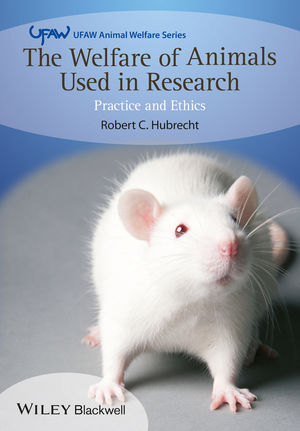
The Welfare of Animals Used in Research (eBook)
John Wiley & Sons (Verlag)
978-1-118-78304-7 (ISBN)
The Welfare of Animals used in Research: Practice and Ethics gives a complete and balanced overview of the issues surrounding the use of animals in scientific research. The focus of the book is on the animal welfare implications and ethics of animals in research. It covers the topics with sufficient depth to show a real understanding of varied and complex subjects, but conveys the information in a beautifully reader-friendly manner.
Key features:
- Provides those who are not working in the field with a reasonable understanding as to why and how animals are used in research.
- Gives an introduction to the ethical issues involved in using animals, and explains how these are addressed in practice.
- Details the advances in animal welfare and the use and development of the 3Rs principles, and how these have become fundamental to the everyday use and regulation of animals used in research.
- The focus is on principles making it suitable for an international audience.
This book is a useful introduction to the issues involved in laboratory animal welfare for those who intend to work in research involving animals. It is also useful to prospective animal care staff and animal welfare scientists, and to those involved in ethical review. It will help inform debate amongst those who are not involved in experimentation but who are interested in the issues.
Published as a part of the prestigious Wiley-Blackwell – UFAW Animal Welfare series. UFAW, founded 1926, is an internationally recognised, independent, scientific and educational animal welfare charity.
For full details of all titles available in the series, please visit the UFAW Animal Welfare series website.
Robert Hubrecht OBE BSc PhD FSB is Deputy Scientific Director of the Universities Federation for Animal Welfare (UFAW) and is an acclaimed scholar in this area. He is a zoologist who has specialised in ethology and applied ethology and has studied the behaviour and physiology of animals both in the wild and in the laboratory. He is co-editor of The UFAW Handbook on the Care and Management of Laboratory and Other Research Animals.
The Welfare of Animals used in Research: Practice and Ethics gives a complete and balanced overview of the issues surrounding the use of animals in scientific research. The focus of the book is on the animal welfare implications and ethics of animals in research. It covers the topics with sufficient depth to show a real understanding of varied and complex subjects, but conveys the information in a beautifully reader-friendly manner. Key features: Provides those who are not working in the field with a reasonable understanding as to why and how animals are used in research. Gives an introduction to the ethical issues involved in using animals, and explains how these are addressed in practice. Details the advances in animal welfare and the use and development of the 3Rs principles, and how these have become fundamental to the everyday use and regulation of animals used in research. The focus is on principles making it suitable for an international audience. This book is a useful introduction to the issues involved in laboratory animal welfare for those who intend to work in research involving animals. It is also useful to prospective animal care staff and animal welfare scientists, and to those involved in ethical review. It will help inform debate amongst those who are not involved in experimentation but who are interested in the issues. Published as a part of the prestigious Wiley-Blackwell UFAW Animal Welfare series. UFAW, founded 1926, is an internationally recognised, independent, scientific and educational animal welfare charity. For full details of all titles available in the series, please visit the UFAW Animal Welfare series website.
Robert Hubrecht OBE BSc PhD FSB is Deputy Scientific Director of the Universities Federation for Animal Welfare (UFAW) and is an acclaimed scholar in this area. He is a zoologist who has specialised in ethology and applied ethology and has studied the behaviour and physiology of animals both in the wild and in the laboratory. He is co-editor of The UFAW Handbook on the Care and Management of Laboratory and Other Research Animals.
Foreword vii
Preface ix
Dedication and Acknowledgements xi
1 Introduction 1
1.1 Reasons for Using Animals in Research 1
1.2 Where Animal Research is Carried Out 3
1.3 Numbers of Animals Used 4
1.4 Harmful and Harmless Research 6
1.5 How Much Suffering is Caused by Research? 7
1.6 Attitudes to Animal Experimentation 9
1.7 The Moral Imperative 18
1.8 Trust in the System 22
2 The Use of Legislative and Other Controls on Animal
Research to Meet Public Expectations and Improve Animal Welfare
26
2.1 Introduction 26
2.2 Levels of Control 29
2.3 Scope of Controls 37
2.4 Systems for Ethical Review and Authorisation 42
2.5 Performance and Engineering Standards 45
2.6 Roles and Responsibility 50
2.7 Legislation and Licences 51
2.8 Enforcement and Failure to Comply 52
3 Animal Rights and Animal Welfare: Philosophy and Science
58
3.1 Introduction 58
3.2 Animal Rights and Animal Welfare: Making a Distinction
59
3.3 Animal Welfare Science 63
3.4 Funding and Promoting Animal Welfare Research 85
3.5 The Benefits of Animal Welfare Science 86
4 Species Choice and Animal Welfare 88
4.1 Introduction 88
4.2 Consciousness/Sentience: Evidence for Protecting Particular
Taxa 89
4.3 Are Some Species Capable of Suffering More Than Others?
Neurological Complexity and Capacity to Suffer 104
4.4 Beastly Bias in Practice 108
4.5 An Evolutionary Approach to Assessing Suffering 120
5 The Harm-Benefit Judgement 123
5.1 Introduction 123
5.2 Who Should Be Involved? 126
5.3 Factors To Be Considered in Harm-Benefit Decisions
129
5.4 Decision Tools 154
5.5 The Requirement for Ethical Review 157
6 Improving the Welfare of Animals Used in Research: The 3Rs
159
6.1 Introduction: The Origins of the 3Rs 159
6.2 Replacement 163
6.3 Reduction 169
6.4 Refinement 175
6.5 Conflicts Between the 3Rs 201
6.6 Training 202
6.7 Sources of Information on the 3Rs 203
7 Science and Animal Welfare: A Partnership 205
7.1 Replacement Methods: Scientific and Other Advantages 205
7.2 Reduction: Scientific and Other Advantages 209
7.3 Refinement: Scientific and Other Advantages 210
7.4 Changes in Laboratory Animal Science and Challenges for the
Future? 219
7.5 Maintaining the Momentum 223
7.6 Conclusion 224
References 226
Glossary 259
Index 262
"To me, overall this is a very good book that provides a balanced view of the issues around animal welfare. It is a good read." (Laboratory Animal Practitioner, 1 May 2015)
"This book is geared toward members of institutional animal care and use committees, researchers, and veterinarians and is a practical guide for discussions pertaining to the welfare of animals used in research." (JAVMA, 15 December 2014)
"To me, overall this is a very good book that provides a balanced view of the issues around animal welfare. It is a good read." (Laboratory Animal Practitioner, 1 October 2014)
"Overall, the factual description of how animals are used in research balanced by the author's personal experiences and perspective makes this book highly readable. 'The Welfare of Animals used in Research' is a great addition, which will be essential reading for those working with laboratory animals and of general interest to those new to the field." (Veterinary Record, 12 July 2014)
"Overall, this book is a welcome arrival to a debate that is too often split between misrepresentative arguments recycled from activist websites on one side and defensive responses dumbing down the complexity of scientific discovery on the other. I recommend it to anyone who believes the debate over animal research is of sufficient importance to be worth being well-informed." (Australian Veterinary Journal, 7 July 2016)
"The author has produced a wide-ranging and up-to-date overview of
how and why animals are used in research, and the ethical and
welfare issues that this raises. Our current state of knowledge is
clearly explained, together with some excellent examples of the
application of the 3Rs to animal research. The author has dealt
with a difficult and controversial topic in a balanced manner that
will encourage informed debate. This book should be read by all
those involved in the use of animals in research and by anyone who
has interests or concerns as to how this type of research is
conducted."
--Professor Paul Flecknell, University of Newcastle,
UK
2
The Use of Legislative and Other Controls on Animal Research to Meet Public Expectations and Improve Animal Welfare
It is generally accepted that there should be controls on how research on animals is carried out in order to limit harm caused to them. In this chapter I describe various ways in which controls at various levels (e.g. super-national, national, local) can be used to enforce or ensure minimum standards of animal welfare.
2.1 Introduction
Legislative controls are an obvious and attractive option when considering how to best protect the welfare of animals used in research. Legislative controls aimed at minimising harm to animals during their breeding, transport and use in research provide a clear and strong message to those involved of the concern that society has about the practice. Legislation provides a means of monitoring and controlling the activity, and if research is not carried out properly so as to minimise harm, there is the ultimate recourse of penalties and other sanctions. So it is surprising that, in many parts of the world, legislative controls on animal experimentation have been a long time coming. The first law regulating experiments using animals was passed by the UK in 1876; in Australia, Victoria introduced legislation in 1883, but other Australian states did not follow suit until considerably later. Denmark passed animal welfare legislation in 1891, Germany in 1933 and Sweden in 19441, but the legislation of many other countries is much more recent.
To provide just a few examples: in the USA, the Laboratory Animal Welfare Act was first passed in 1966, with important additions being made in 19872; Brazil passed the Arouca law in 2008; Chile passed the Animal Protection Law in 2009, although at the time of writing in 2012 it was still not yet properly implemented with respect to animal procedures as the National Bioethics Committee had not been constituted3; in Japan, despite the large number of animals used in research, there is no specific legislation to protect animals, although the government has produced guidelines; and a proposal for animal welfare legislation in China was produced in 2009 but as yet there is no law. While many countries do now have legal controls, there are significant national differences in both the regulations and their implementation4. In some countries, for example, legislation has been specifically enacted to address the issue of the use of animals in research, while in others research is covered as part of more general animal welfare legislation.
Legislation, however, is not a panacea for solving animal welfare and other ethical issues involved in research. By their nature, legislative provisions enforce minimum standards rather than current best practice. Higher standards are often possible, and the decision as to whether to adopt higher standards lies with the researchers, and the institutions in which research is carried out. So, paradoxically, those who carry out research on animals are often in the best position to have a positive impact on the animals’ welfare. Researchers in particular are key. They are the ones who make the initial choice to use animals and decide on the types of technique or procedure used on the animals. It follows that they are well placed to take available steps to avoid or reduce animal use, or to minimise or ameliorate any distress, pain or suffering that may result from their research. And researchers often do succeed in making such improvements. There are plenty of examples of animal users who, by developing replacements to animal use or better methods that result in less suffering, have improved the welfare, not just of their own animals, but also of those used by other researchers5.
However, it is obvious that responsibility for minimising suffering and ensuring good welfare should not lie just with the researcher. Most researchers want to carry out high-quality science while minimising any suffering that may occur, but animal welfare may not be their speciality and they are not disinterested parties. Financial and other constraints can also conspire against the best interests of the animals. External controls, particularly legal controls, can provide animal care staff with persuasive arguments to convince higher management that certain actions are necessary. I once carried out a mini-survey on managers of facilities that bred or carried out research on marmoset monkeys, asking what their priorities were when planning new housing (Table 2.1). The respondents were asked to rank the choices but, as is common with surveys, ignored the instructions and ticked the categories instead. Moreover, all but one ticked two of the categories. While this survey was carried out some considerable time ago now, and undoubtedly could have been done better, it appeared that legislation was a powerful driver of decisions, far outranking the respondents’ own views as to what might be in the best interests of the animals in their care.
Table 2.1 Priorities of respondents when asked what factors affected their choice of marmoset caging.
Source: Hubrecht (1997).
Finally, as discussed in Chapter 1, one very important function of legislative controls is to provide reassurance to the public that research is being carried out with proper checks and balances. These need to be comprehensive, as illustrated in an Australian senate committee report which suggested that if public confidence and support for the use of animals in research was to be maintained, it was essential that the animals’ welfare was protected and promoted, that there was transparency of process, public participation in ethical decision-making and that there were mechanisms for accountability6.
So, legislative controls on the breeding, supply and use of animals in research are useful and arguably essential, but care has to be taken to find a balance between the sometimes conflicting needs of the various parties involved, namely the researchers, the animals used in the research, and any of the general public who have concerns about the research. To achieve this balance, legislation must ensure minimum standards of good welfare and must provide reassurance to the public that things are being done properly, but should not be overly restrictive or bureaucratic.
Other authors have described and contrasted the many different ways that legislation has been used to control animal research in different jurisdictions7. Moreover, legal controls are not the only way of ensuring animal welfare and developing higher standards. Codes of practice and non-statutory recommendations have also played a part and deserve to be discussed alongside legal controls. So, in this chapter I will concentrate on the principles of control and oversight of research, looking at what can be controlled and the different means by which it can be achieved, using examples predominantly from the USA and Europe.
2.2 Levels of Control
Controls on animal experimentation can be, and are, applied at a number of different points in the process of planning, carrying out, and reporting of animal experimentation. National or in some cases international controls and regulation can be applied through the legal system. However, other bodies can also play a role in regulating animal research. Funding bodies, regulatory agencies, research institutions, sectors of industry and professional associations can all set their own controls, publishing expectations and requirements on minimum standards, or through systems of accreditation.
2.2.1 Local controls
The ultimate responsibility for the animals used in the research, and thus the first level of local control, lies with the researcher who devises the study. Researchers, like any other group of people, vary in both what they think is ethical and in what they are personally prepared to do. So while the researcher’s decisions on the nature of their research are important, many establishments have also developed controls at an institutional, corporate, or group of institutions level, limiting what can be done and specifying how it should be done. Local controls can cover almost any aspect of animal use, from controlling how specific procedures should be carried out to establishing institutional standards on issues such as animal husbandry (i.e. enclosure dimensions and enrichment provision) or staff training.
One might ask why local controls are necessary if the research is carried out in a jurisdiction where there are legislative controls that set minimum standards. In some cases local controls may be required by legislation, but whether they are mandated or voluntary, their importance lies in the fact that they allow establishments to set their own limits as to what is acceptable in their institution. For example, some institutions might decide not to carry out primate research, or perhaps only allow research that causes no more than moderate suffering. It might seem odd that institutions should wish to limit their operations in this way, but there are various reasons why it might be beneficial for them. A desire to operate, and to be seen to operate, ethically is one. An example of a sector where there is a particular need to keep a close eye on public profile vis-à-vis the use of animals is the pet food industry. Pet food manufacturers need to research into and test various aspects of the diets they produce to ensure that they are safe and meet the animals’ needs, but for commercial as well as ethical reasons might well wish to limit the types of animal research they do. Similarly, charitable organisations researching cures for human disease depend on public support and thus might wish to keep an eye on the public...
| Erscheint lt. Verlag | 5.2.2014 |
|---|---|
| Reihe/Serie | UFAW Animal Welfare |
| UFAW Animal Welfare | UFAW Animal Welfare |
| Sprache | englisch |
| Themenwelt | Medizin / Pharmazie |
| Naturwissenschaften ► Biologie ► Zoologie | |
| Sozialwissenschaften ► Soziologie | |
| Veterinärmedizin | |
| Schlagworte | animal • animals • Animal Welfare, Ethics & Law • beautifully • Book • Field • focus • Information • Introduction • Issues • Laboratory Animal Medicine • Labormedizin • Overview • Practice • readerfriendly manner • Real • reasonable • Research • subjects • sufficient • surrounding • Tierschutz, Ethik u. Recht • Tierversuch • Topics • Understanding • Veterinär-Labormedizin • Veterinärmedizin • Veterinär-Labormedizin • Veterinärmedizin • Veterinary Medicine |
| ISBN-10 | 1-118-78304-2 / 1118783042 |
| ISBN-13 | 978-1-118-78304-7 / 9781118783047 |
| Informationen gemäß Produktsicherheitsverordnung (GPSR) | |
| Haben Sie eine Frage zum Produkt? |
 EPUB (Adobe DRM)
Kopierschutz: Adobe-DRM
Adobe-DRM ist ein Kopierschutz, der das eBook vor Mißbrauch schützen soll. Dabei wird das eBook bereits beim Download auf Ihre persönliche Adobe-ID autorisiert. Lesen können Sie das eBook dann nur auf den Geräten, welche ebenfalls auf Ihre Adobe-ID registriert sind.
Details zum Adobe-DRM
Dateiformat: EPUB (Electronic Publication)
EPUB ist ein offener Standard für eBooks und eignet sich besonders zur Darstellung von Belletristik und Sachbüchern. Der Fließtext wird dynamisch an die Display- und Schriftgröße angepasst. Auch für mobile Lesegeräte ist EPUB daher gut geeignet.
Systemvoraussetzungen:
PC/Mac: Mit einem PC oder Mac können Sie dieses eBook lesen. Sie benötigen eine
eReader: Dieses eBook kann mit (fast) allen eBook-Readern gelesen werden. Mit dem amazon-Kindle ist es aber nicht kompatibel.
Smartphone/Tablet: Egal ob Apple oder Android, dieses eBook können Sie lesen. Sie benötigen eine
Geräteliste und zusätzliche Hinweise
Buying eBooks from abroad
For tax law reasons we can sell eBooks just within Germany and Switzerland. Regrettably we cannot fulfill eBook-orders from other countries.
aus dem Bereich