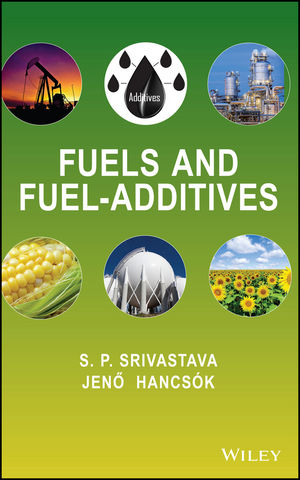
Fuels and Fuel-Additives (eBook)
376 Seiten
John Wiley & Sons (Verlag)
978-1-118-79641-2 (ISBN)
finished products
Exploring chemical structures and properties, this book sheds
new light on the current science and technology of producing energy
efficient and environmentally friendly fuels. Moreover, it explains
the role of fuel-additives in the production cycle. This expertly
written and organized guide to fuels and fuel-additives also
presents requirements, rules and regulations, including US and EU
standards governing automotive emissions, fuel quality and
specifications, alternate fuels, biofuels, antioxidants, deposit
control detergents/dispersants, stabilizers, corrosion inhibitors,
and polymeric fuel-additives.
Fuels and Fuel-Additives covers all stages and facets of
the production of engine fuels as well as heating and fuel oils.
The book begins with a quick portrait of the future of fuels and
fuel production. Then, it sets forth the regulations controlling
exhaust gas emissions and fuel quality from around the world. Next,
the book covers:
* Processing of engine fuels derived from crude oil, including
the production of blending components
* Production of alternative fuels
* Fuel-additives for automotive engines
* Blending of fuels
* Key properties of motor fuels and their effects on engines and
the environment
* Aviation fuels
The final chapter of the book deals with fuel oils and marine
fuels. Each chapter is extensively referenced, providing a gateway
to the primary and secondary literature in the field. At the end of
the book, a convenient glossary defines all the key terms used in
the book.
Examining the full production cycle from feedstocks to final
products, Fuels and Fuel-Additives is recommended for
students, engineers, and scientists working in fuels and energy
production.
SOM PRAKASH SRIVASTAVA, MSc, DPhil, has forty-five years of research experience in the field of fuels, lubricants, and additives. He is a former executive director of the R&D center of Indian Oil Corporation (a global Fortune 500 company), and Director of Indian Oil Blending Ltd and Iftex Oils & Chemicals Ltd. Dr. Srivastava has been responsible for developing an entire range of fuels and lubricants for the Indian Oil Corporation. The author and coauthor of 200 research papers, thirty patents, and four books, Dr. Srivastava is currently an independent consultant on fuels and lubricants. JENO HANCSÓK, MSc, Doctor of Hungarian Academy of Sciences, is head of the MOL Department of Hydrocarbon and Coal Processing at the University of Pannonia and a consultant of the international oil and gas company, MOL Plc. He is the author or coauthor of more than 700 papers and presentations, and holds fourteen patents that are applied in the chemical industry. Dr. Hancsók devotes his research to the study and development of engine fuels, engine oils, and their additives, working with both fossil and renewable energy sources.
1. FUEL SCENARIO
2. EMISSION REGULATION OF AUTOMOTIVE VEHICLES AND QUALITY OF AUTOMOTIVE FUELS
2.1 Direct Regulation of Emission
3. FUELS FROM CRUDE OIL (PETROLEUM)
3.1 Crude oil
3.2. Crude oil refining
4. ALTERNATIVE FUEL
4.1. Light (gaseous) hydrocarbons
4.2. Propane-butane (LPG)
4.3. Mixtures of synthetic liquid hyrocarbons
5. FUEL ADDITIVES FOR AUTOMOTIVE ENGINE
5.1. Engine deposits and their control
6. BLENDING OF FUELS
6.1. Blending of gasolines
6.2. Blending of diesel gas oils
7. MAIN PROPERTIES OF THE MOTOR FUELS AND THEIR EFFECTS ON ENGINE AND ENVIRONMENT
7.1. The effects of the properties of gasolines on the engine and the environment
7.2. THE EFECTS OF IMPORTANT PROPERTIES OF DIESEL GAS OILS ON THE ENGINE AND THE ENVIRONMENT
8. AVIATION FUELS
8.1 Aviation gasolines
8.2. Jet Fuels
9. FUEL OILS AND MARINE FUELS
9.1. Classifications of fuel oils
9.2. Production of fuel oils
9.3. Fuel oil stability and compatabiltity
9.4. Additives for residual fuel
11. DEFINITIONS
"The extensive and varied list of references will be of value to those working in the field even though some of the material listed appears to be from rather inaccessible sources." (Energy Technology, 1 October 2014)
| Erscheint lt. Verlag | 21.1.2014 |
|---|---|
| Sprache | englisch |
| Themenwelt | Naturwissenschaften ► Chemie ► Technische Chemie |
| Technik ► Elektrotechnik / Energietechnik | |
| Technik ► Umwelttechnik / Biotechnologie | |
| Schlagworte | chemical engineering • Chemie • Chemische Verfahrenstechnik • Chemistry • Maschinenbau • mechanical engineering • Petrochemie / Brennstoffindustrie • Petrochemistry / Fuel |
| ISBN-10 | 1-118-79641-1 / 1118796411 |
| ISBN-13 | 978-1-118-79641-2 / 9781118796412 |
| Informationen gemäß Produktsicherheitsverordnung (GPSR) | |
| Haben Sie eine Frage zum Produkt? |
 PDF (Adobe DRM)
Kopierschutz: Adobe-DRM
Adobe-DRM ist ein Kopierschutz, der das eBook vor Mißbrauch schützen soll. Dabei wird das eBook bereits beim Download auf Ihre persönliche Adobe-ID autorisiert. Lesen können Sie das eBook dann nur auf den Geräten, welche ebenfalls auf Ihre Adobe-ID registriert sind.
Details zum Adobe-DRM
Dateiformat: PDF (Portable Document Format)
Mit einem festen Seitenlayout eignet sich die PDF besonders für Fachbücher mit Spalten, Tabellen und Abbildungen. Eine PDF kann auf fast allen Geräten angezeigt werden, ist aber für kleine Displays (Smartphone, eReader) nur eingeschränkt geeignet.
Systemvoraussetzungen:
PC/Mac: Mit einem PC oder Mac können Sie dieses eBook lesen. Sie benötigen eine
eReader: Dieses eBook kann mit (fast) allen eBook-Readern gelesen werden. Mit dem amazon-Kindle ist es aber nicht kompatibel.
Smartphone/Tablet: Egal ob Apple oder Android, dieses eBook können Sie lesen. Sie benötigen eine
Geräteliste und zusätzliche Hinweise
Buying eBooks from abroad
For tax law reasons we can sell eBooks just within Germany and Switzerland. Regrettably we cannot fulfill eBook-orders from other countries.
aus dem Bereich