Solid State Chemistry and its Applications (eBook)
John Wiley & Sons (Verlag)
978-1-118-67625-7 (ISBN)
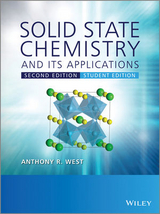
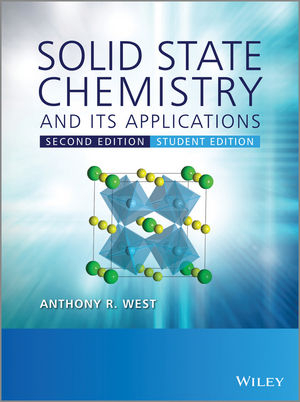
Solid State Chemistry and its Applications, 2nd Edition: Student Edition is an extensive update and sequel to the bestselling textbook Basic Solid State Chemistry, the classic text for undergraduate teaching in solid state chemistry worldwide.
Solid state chemistry lies at the heart of many significant scientific advances from recent decades, including the discovery of high-temperature superconductors, new forms of carbon and countless other developments in the synthesis, characterisation and applications of inorganic materials. Looking forward, solid state chemistry will be crucial for the development of new functional materials in areas such as energy, catalysis and electronic materials.
This revised edition of Basic Solid State Chemistry has been completely rewritten and expanded to present an up-to-date account of the essential topics and recent developments in this exciting field of inorganic chemistry. Each section commences with a gentle introduction, covering basic principles, progressing seamlessly to a more advanced level in order to present a comprehensive overview of the subject.
This new Student Edition includes the following updates and new features:
- Expanded coverage of bonding in solids, including a new section on covalent bonding and more extensive treatment of metallic bonding.
- Synthetic methods are covered extensively and new topics include microwave synthesis, combinatorial synthesis, mechano-synthesis, atomic layer deposition and spray pyrolysis.
- Revised coverage of electrical, magnetic and optical properties, with additional material on semiconductors, giant and colossal magnetoresistance, multiferroics, LEDs, fibre optics and solar cells, lasers, graphene and quasicrystals.
- Extended chapters on crystal defects and characterisation techniques.
- Published in full colour to aid comprehension.
- Extensive coverage of crystal structures for important families of inorganic solids is complemented by access to CrystalMaker® visualization software, allowing readers to view and rotate over 100 crystal structures in three dimensions.
- Solutions to exercises and supplementary lecture material are available online.
Solid State Chemistry and its Applications, 2nd Edition: Student Edition is a must-have textbook for any undergraduate or new research worker studying solid state chemistry.
Anthony West is Professor of Electroceramics and Solid State Chemistry in the Department of Materials Science & Engineering at Sheffield University. Having spent most of his academic career at the University of Aberdeen, where he developed a lifetime interest in the then-emerging field of solid state chemistry with special interest in synthesis of new oxide materials, their crystal structures and electrical properties, Professor West moved to Sheffield University in 1999 as Head of Department, a post he held until 2007. In addition to writing several bestselling books on Solid State Chemistry, Tony was founding editor of the Journal of Materials Chemistry and founding Chairman of the Materials Chemistry Forum of the Royal Society of Chemistry. He is a former President of the Inorganic Chemistry Division of IUPAC.
Professor West is a Fellow of the RSC, the Institute of Physics, the Institute of Materials, Mineral and Mining, and the Royal Society of Edinburgh. He previously received an Industrial Award in Solid State Chemistry from the RSC, 1996, the Griffiths Medal and Prize from the IOM3, 2008, the Epsilon de Oro Award from the Spanish Society of Glass and Ceramics, 2007, and the Chemical Record Lectureship from the Chemical Societies of Japan, 2009. He has been awarded the 2013 RSC John B. Goodenough Award in Materials Chemistry, a lifelong recognition award for his contributions to the field.
Solid State Chemistry and its Applications, 2nd Edition: Student Edition is an extensive update and sequel to the bestselling textbook Basic Solid State Chemistry, the classic text for undergraduate teaching in solid state chemistry worldwide. Solid state chemistry lies at the heart of many significant scientific advances from recent decades, including the discovery of high-temperature superconductors, new forms of carbon and countless other developments in the synthesis, characterisation and applications of inorganic materials. Looking forward, solid state chemistry will be crucial for the development of new functional materials in areas such as energy, catalysis and electronic materials. This revised edition of Basic Solid State Chemistry has been completely rewritten and expanded to present an up-to-date account of the essential topics and recent developments in this exciting field of inorganic chemistry. Each section commences with a gentle introduction, covering basic principles, progressing seamlessly to a more advanced level in order to present a comprehensive overview of the subject. This new Student Edition includes the following updates and new features: Expanded coverage of bonding in solids, including a new section on covalent bonding and more extensive treatment of metallic bonding. Synthetic methods are covered extensively and new topics include microwave synthesis, combinatorial synthesis, mechano-synthesis, atomic layer deposition and spray pyrolysis. Revised coverage of electrical, magnetic and optical properties, with additional material on semiconductors, giant and colossal magnetoresistance, multiferroics, LEDs, fibre optics and solar cells, lasers, graphene and quasicrystals. Extended chapters on crystal defects and characterisation techniques. Published in full colour to aid comprehension. Extensive coverage of crystal structures for important families of inorganic solids is complemented by access to CrystalMaker visualization software, allowing readers to view and rotate over 100 crystal structures in three dimensions. Solutions to exercises and supplementary lecture material are available online. Solid State Chemistry and its Applications, 2nd Edition: Student Edition is a must-have textbook for any undergraduate or new research worker studying solid state chemistry.
Anthony West is Professor of Electroceramics and Solid State Chemistry in the Department of Materials Science & Engineering at Sheffield University. Having spent most of his academic career at the University of Aberdeen, where he developed a lifetime interest in the then-emerging field of solid state chemistry with special interest in synthesis of new oxide materials, their crystal structures and electrical properties, Professor West moved to Sheffield University in 1999 as Head of Department, a post he held until 2007. In addition to writing several bestselling books on Solid State Chemistry, Tony was founding editor of the Journal of Materials Chemistry and founding Chairman of the Materials Chemistry Forum of the Royal Society of Chemistry. He is a former President of the Inorganic Chemistry Division of IUPAC. Professor West is a Fellow of the RSC, the Institute of Physics, the Institute of Materials, Mineral and Mining, and the Royal Society of Edinburgh. He previously received an Industrial Award in Solid State Chemistry from the RSC, 1996, the Griffiths Medal and Prize from the IOM3, 2008, the Epsilon de Oro Award from the Spanish Society of Glass and Ceramics, 2007, and the Chemical Record Lectureship from the Chemical Societies of Japan, 2009. He has been awarded the 2013 RSC John B. Goodenough Award in Materials Chemistry, a lifelong recognition award for his contributions to the field.
Chemistry – Solid State Chemistry – Materials Chemistry – Materials Science and Engineering
Chemistry is an evolving subject! Traditionally, there have been three branches of chemistry: organic, physical and inorganic, with some arguments in favour of including analytical as a fourth branch. An alternative, fairly new classification (favoured by the author!) divides chemistry into two broad areas: molecular (which includes liquids and gases) and non-molecular (or solid state). The ways in which we think about, make, analyse and use molecular and non-molecular substances are completely different, as shown by a comparison of one ‘simple’ substance in each category, toluene and aluminium oxide:
Comparison of the chemistries of molecular and non-molecular materials
| Characteristic | Toluene | Aluminium oxide |
| Formula | Fixed, C6H5CH3 | Usually fixed, Al2O3, but for other oxides may be variable, e.g. Fe1-xO |
| Are defects present? | Not allowed: missing or mis-placed atoms give rise to different molecules | Unavoidable: small concentration of vacancies, interstitials and dislocations are always present |
| Doping possibilities | Not possible without producing a different molecule | Doping or solid solution formation allows control and optimisation of properties, e.g. ruby is Cr-doped Al2O3 |
| Structure and its determination | Molecular structure can be determined spectroscopically: NMR/Mass Spec/IR. Determine packing arrangement, bond lengths and angles, by single crystal X-ray diffraction. Usually, structural information is then complete. | Full characterisation of a solid requires structural and compositional information across the length scales from local, to unit cell, nano and microscales. Many diffraction, spectroscopic and microscopic techniques are needed for full characterisation. |
| Properties and applications | Controlled by molecular formula and configuration; cannot be modified by doping. Some properties (e.g. pharmaceutical activity) may depend on molecular packing arrangements in crystals. | Properties/applications depend on crystal structure, defects, dopants, surface structure, particle size and whether the material is a powder, single crystal, film, etc. Consider the diverse applications of Al2O3: films and ceramics used as insulators; powders used as abrasive; with Cr3+ dopants, ruby is used for lasers; porous solids used as catalyst supports. |
Thus, for toluene, once its formula and molecular structure had been determined there were few remaining issues to be resolved other than, perhaps, the detailed packing arrangement of molecules in crystalline toluene at low temperatures or the possible discovery and evaluation, even today, of as-yet unknown chemical, biological or pharmaceutical properties of pure toluene.
Alumina, by contrast, is a highly complex material; its properties, and therefore potential applications, depend on different aspects of its structure (bulk, defect, surface, nano), the methods needed to fabricate it in different forms and shapes, the possibility of doping to modify its properties and the characterisation or determination of its structure (and its composition, whether homogeneous or heterogeneous, if doped) across all length scales. This is solid state chemistry!
The biggest contrast between molecular and non-molecular materials is that the latter can be doped, allowing modification and control of properties such as magnetism, superconductivity and colour/optical band gap. By contrast, attempts to dope molecules are inevitably frustrated since replacing one atom in the molecule by another, or creating defects such as missing atoms, lead to entirely different molecules.
In recent decades, materials chemistry has emerged as a distinct branch of chemistry which covers both non-molecular, solid state materials (oxides, halides, etc.) and many molecular materials (especially, functional polymers and organic solids with potentially useful physical properties). Materials chemistry cuts across the traditional disciplines of chemistry but also includes something extra which is an interest in the physical properties of compounds and materials. In the past, solid state physics and materials science have been the usual ‘home’ for physical properties; but now, they are an intrinsic part of solid state and materials chemistry.
The distinction between materials chemistry and materials science is often unclear but can be summarised broadly as follows:
Materials chemistry
Synthesis – structure determination – physical properties – new materials
Materials science
Processing and fabrication – characterisation – optimisation of properties and testing – improved/new materials for engineering applications in products or devices.
Materials science focuses on materials that are already known to be useful or have the potential to be developed for applications, either by compositional control to optimise properties or by fabrication into desired forms, shapes or products. Materials science therefore includes whatever aspects of chemistry, physics and engineering that are necessary to achieve the desired aims.
Materials chemistry is much more than just a subset of materials science, however, since it is freed from the constraint of a focus on specific applications; materials chemists love to synthesise new materials and measure their properties, some of which may turn out to be useful and contribute to the development of new industries, but they do this within an overarching interest in new chemistry, new structures and improved understanding of structure – composition – property relationships.
A curious fact is that, in the early days of chemistry, inorganic chemistry had as its main focus, the elements of the periodic table and their naturally occurring or easy-to-make compounds such as oxides and halides. Inorganic chemistry subsequently diversified to include organometallic chemistry and coordination chemistry but interestingly, many traditional inorganic materials have returned to centre-stage and are now at the heart of solid state materials science. Examples include: Cr-doped Al2O3 for lasers; doped Si semiconductors for microelectronics; doped ZrO2 as the solid electrolyte in solid oxide fuel cells; BaTiO3 as the basis of the capacitor industry with a total annual production worldwide exceeding 1012 units; copper oxide-based materials for superconductor applications; and many, many more. The scope for developing new solid state materials/applications is infinite, judging by the ‘simple’ example of Al2O3 described above. Most such materials tend not to suffer from problems such as volatilisation, degradation and atmospheric attack, which are often a drawback of molecular materials, and can be used safely in the environment.
It is important to recognise also that physical properties of inorganic solids often depend on structure at different length scales, as shown by the following examples:
Thus in the case of ruby, which is a natural gemstone and was the first material in which LASER action – light amplification by stimulated emission of radiation – was demonstrated, two structural aspects are important. One is the host crystal structure of corundum, α-Al2O3 and the other is the Cr3+ dopant which substitutes at random for about 1% of the Al3+ ions in the corundum lattice: the Cr-O bond lengths and the octahedral site symmetry are controlled by the host structure; the two together combine to give the red ruby colour by means of d–d transitions within the Cr chromophore and the possibility of accessing the long-lived excited states that are necessary for LASER action.
A remarkable example of the effect of crystal structure details at the unit cell scale on properties is shown by dicalcium silicate, Ca2SiO4 which is readily prepared in two polymorphic forms at room temperature. One, the β-polymorph, reacts with water to give a semicrystalline calcium silicate hydrate which sets rock-solid and is a main constituent of concrete; the other polymorph, γ-Ca2SiO4, does not react with water. Just think, the entire construction industry rests on the detailed polymorphism of dicalcium silicate! It is not sufficient that one of the key components of cement has the right composition, Ca2SiO4; in addition, the precise manner in which ions are packed together in the solid state is critical to its hydration properties and whether or not it turns into concrete.
At the nanoscale, crystalline particles may contain many hundreds of unit cells but often their properties are different from powders, ceramics or single crystals of the same material with larger-sized grains simply because of the influence of surface energies. In small nanoparticles, surface free energies and structures increasingly dominate the total free energy of a material, as shown by the colour, and associated band gap, of CdS nanoparticles (or colloids in older...
| Erscheint lt. Verlag | 8.1.2014 |
|---|---|
| Sprache | englisch |
| Themenwelt | Naturwissenschaften ► Chemie ► Physikalische Chemie |
| Naturwissenschaften ► Chemie ► Technische Chemie | |
| Technik | |
| Schlagworte | Advances • Anorganische Chemie • Applications • BASIC • bestselling • Chemie • Chemistry • chemistry worldwide • Classic • Edition • extensive • Festkörperchemie • Festkörperchemie • heart • Inorganic Chemistry • Lies • many • Materialeigenschaften • Materials Science • Materialwissenschaften • properties of materials • recent decades • Scientific • significant • solid • solid state chemistry • State • Student • Textbook • undergraduate |
| ISBN-10 | 1-118-67625-4 / 1118676254 |
| ISBN-13 | 978-1-118-67625-7 / 9781118676257 |
| Informationen gemäß Produktsicherheitsverordnung (GPSR) | |
| Haben Sie eine Frage zum Produkt? |
 EPUB (Adobe DRM)
Kopierschutz: Adobe-DRM
Adobe-DRM ist ein Kopierschutz, der das eBook vor Mißbrauch schützen soll. Dabei wird das eBook bereits beim Download auf Ihre persönliche Adobe-ID autorisiert. Lesen können Sie das eBook dann nur auf den Geräten, welche ebenfalls auf Ihre Adobe-ID registriert sind.
Details zum Adobe-DRM
Dateiformat: EPUB (Electronic Publication)
EPUB ist ein offener Standard für eBooks und eignet sich besonders zur Darstellung von Belletristik und Sachbüchern. Der Fließtext wird dynamisch an die Display- und Schriftgröße angepasst. Auch für mobile Lesegeräte ist EPUB daher gut geeignet.
Systemvoraussetzungen:
PC/Mac: Mit einem PC oder Mac können Sie dieses eBook lesen. Sie benötigen eine
eReader: Dieses eBook kann mit (fast) allen eBook-Readern gelesen werden. Mit dem amazon-Kindle ist es aber nicht kompatibel.
Smartphone/Tablet: Egal ob Apple oder Android, dieses eBook können Sie lesen. Sie benötigen eine
Geräteliste und zusätzliche Hinweise
Buying eBooks from abroad
For tax law reasons we can sell eBooks just within Germany and Switzerland. Regrettably we cannot fulfill eBook-orders from other countries.
aus dem Bereich