


Mathematical Techniques in GIS
Seiten
2014
|
2nd edition
Crc Press Inc (Verlag)
978-1-4665-9554-5 (ISBN)
Crc Press Inc (Verlag)
978-1-4665-9554-5 (ISBN)
- Lieferbar
- Versandkostenfrei
- Auch auf Rechnung
- Artikel merken
Zu diesem Artikel existiert eine Nachauflage
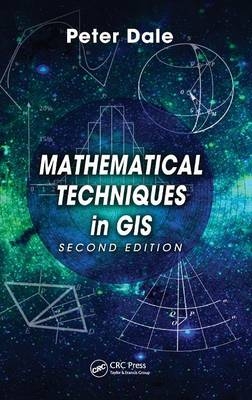
The second edition of a bestseller, Mathematical Techniques in GIS demystifies the mathematics used in the manipulation of spatially related data. The author takes a step-by-step approach through the basics of arithmetic, algebra, geometry, trigonometry and calculus that underpin the management of such data. He then explores the use of matrices, determinants and vectors in the handling of geographic information so that the data may be analyzed and displayed in two-dimensional form either in the visualization of the terrain or as map projections.
See What’s New in the Second Edition:
Summaries at the end of each chapter
Worked examples of techniques described
Additional material on matrices and vectors
Further material on map projections
New material on spatial correlation
A new section on global positioning systems
Written for those who need to make use geographic information systems but have a limited mathematical background, this book introduces the basic statistical techniques commonly used in geographic information systems and explains best-fit solutions and the mathematics behind satellite positioning. By understanding the mathematics behind the gathering, processing, and display of information, you can better advise others on the integrity of results, the quality of the information, and the safety of using it.
See What’s New in the Second Edition:
Summaries at the end of each chapter
Worked examples of techniques described
Additional material on matrices and vectors
Further material on map projections
New material on spatial correlation
A new section on global positioning systems
Written for those who need to make use geographic information systems but have a limited mathematical background, this book introduces the basic statistical techniques commonly used in geographic information systems and explains best-fit solutions and the mathematics behind satellite positioning. By understanding the mathematics behind the gathering, processing, and display of information, you can better advise others on the integrity of results, the quality of the information, and the safety of using it.
Peter Dale is a professor in land information management at the University College London.
Characteristics of Geographic Information. Numbers and Numerical Analysis. Algebra - Treating Numbers as Symbols. The Geometry of Common Shapes. Plane and Spherical Trigonometry. Differential and Integral Calculus. Matrices and Determinants. Vectors. Curves and Surfaces. Transformations. Map Projections. Basic Statistics. Correlation and Regression. Best-fit Solutions.
| Zusatzinfo | 20 Tables, black and white; 142 Illustrations, black and white |
|---|---|
| Verlagsort | Bosa Roca |
| Sprache | englisch |
| Maße | 156 x 234 mm |
| Gewicht | 657 g |
| Themenwelt | Mathematik / Informatik ► Mathematik |
| Naturwissenschaften ► Geowissenschaften ► Geografie / Kartografie | |
| Technik ► Umwelttechnik / Biotechnologie | |
| ISBN-10 | 1-4665-9554-X / 146659554X |
| ISBN-13 | 978-1-4665-9554-5 / 9781466595545 |
| Zustand | Neuware |
| Informationen gemäß Produktsicherheitsverordnung (GPSR) | |
| Haben Sie eine Frage zum Produkt? |
Mehr entdecken
aus dem Bereich


aus dem Bereich
Buch | Hardcover (2024)
Schweizerbart'sche, E. (Verlag)
CHF 33,55
über eine faszinierende Welt zwischen Wasser und Land und warum sie …
Buch | Hardcover (2023)
dtv (Verlag)
CHF 33,55


