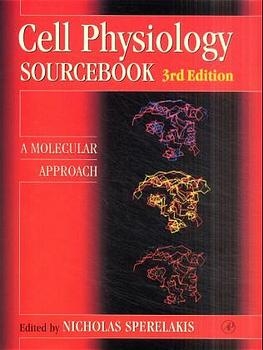
Cell Physiology Source Book
Academic Press Inc (Verlag)
978-0-12-656977-3 (ISBN)
- Titel erscheint in neuer Auflage
- Artikel merken
This authoritative book gathers together a broad range of ideas and topics that define the field. It provides clear, concise, and comprehensive coverage of all aspects of cellular physiology from fundamental concepts to more advanced topics. The Third Edition contains substantial new material. Most chapters have been thoroughly reworked. The book includes chapters on important topics such as sensory transduction, the physiology of protozoa and bacteria, the regulation of cell division, and programmed cell death.
Professor Sperelakis currently is Professor and Chairman Emeritus of Physiology and Biophysics at the College of Medicine at the University of Cincinnati. He is a cell physiologist specializing in cellular electrophysiology. Dr Sperelakis received a B.S. in Chemistry, M.S. in Physiology in 1955, and a Ph.D. in Physiology in 1957, all from the University of Illinois, Urbana. He was also trained in electronics, receiving a certificate from the U.S. Navy & Marine Corps Electronics School in Treasure Island, San Francisco. He served in the U.S. Marine Corps during the Korean War. Dr. Sperelakis is the author/co-author of over 550 scientific articles in journals and books. He has lectured at numerous universities worldwide and at international conferences/symposia. He has also trained many postdoctoral fellows and graduate students, and has been a visiting professor at several foreign universities. Professor Sperelakis has served on a number of journal editorial boards. He is a member of numerous professional societies and has served on the Council for several of them. He has served on the science program advisory committees for various international conferences and has organized several conferences. Dr. Sperelakis was an Established Investigator of the American Heart Association (AHA), Fellow at the Marine Biological Laboratory (Woods Hole), and elected Fellow of the American College of Cardiology (FACC). He received Awards for research excellence from Ohio AHA in 1995 and SW Ohio in 1996. His listings include Who's Who in the World, in America, in Science and Engineering, in Medicine and Healthcare, and in American Education.
Section I Biophysical Chemistry, Metabolism, Second
1. Biophysical Chemistry of Physiological Solutions
2. Physiological Structure and Function of Proteins
3. Structural Organization and Properties of Appendix: Exponential Time Course Membrane Lipids
4. Cell Membranes and Model Membranes
5. Lipid Domains and Biological Membrane Function
6. Ultrastructure of Cells
7. Energy Production and Metabolism
8. Physiology of Mitochondria
9. Signal Transduction
10. Calcium as an Intracellular Second Messenger: Mediation by Calcium-Binding Proteins
11. Regulation of Cellular Functions by Extracellular Calcium
12. Cellular Responses to Hormones
Section II Membrane Potential, Transport Physiology, Pumps, and Exchangers
13. Diffusion and Permeability
14. Origin of Resting Membrane Potentials
15. Gibbs-Donnan Equilibrium Potentials
16. Mechanisms of Carrier-Mediated Transport: Facilitated Diffusion, Cotransport, and Countertransport
17. Sodium Pump Function
18. Ca2 +-ATPases
19. Na+-Ca2+ Exchange Currents
20. Intracellular Chloride Regulation
21. Osmosis and Regulation of Cell Volume
22. Intracellular pH Regulation
23. Membrane Transport in Red Blood Cells
Section III Membrane Excitability and Ion Channels
24. Cable Properties and Propagation of Action Potentials
25. Electrogenesis of Membrane Excitability
26. Patch-Clamp Techniques and Analysis
27. Structure and Mechanism of Voltage-Gated Ion Channels
28. Biology of Neurons
29. Ion Channels in Nonexcitable Cells
30. Ion Channels in Sperm
31. Biology of Gap Junctions
32. Biophysics of the Nuclear Envelope
33. Regulation of Ion Channels by Phosphorylation
34. Direct Regulation of Ion Channels by G Proteins
35. Developmental Changes in Ion Channels
36. Regulation of Ion Channels by Membrane Proteins and Cytoskeleton
Section IV Ion Channels as Targets for Toxins, Drugs, and Genetic Diseases
37. Ion Channels as Targets for Toxins
38. Ion Channels as Targets for Drugs
39. Ion Channels as Targets for Disease
Section V Synaptic Transmission and Sensory Transduction
40. Ligand-Gated Ion Channels
41. Synaptic Transmission
42. Excitation-Secretion Coupling
43. Stimulus-Response Coupling in Metabolic Sensor Cells
44. Mechanosensitive Ion Channels in Eukaryotic Cells
45. Sensory Receptors and Mechanotransduction
46. Acoustic Transduction
Appendix: Self-Referencing Electrodes for the Measurement of Extracellular Potential and Chemical Gradients
47. Cyclic Nucleotide-Gated Ion Channels
48. Visual Transduction
49. Gustatory and Olfactory Sensory Transduction
50. Electroreceptors and Magnetoreceptors
Section VI Muscle and Other Contractile Systems
51. Skeletal Muscle Action Potentials
52. Cardiac Action Potentials
53. Smooth Muscle Action Potentials and Electrical Profiles
54. Excitation-Contraction Coupling in Skeletal Muscle
55. Ca2+ Release from Sarcoplasmic Reticulum in Muscle
56. Contraction of Muscles
57. Amoeboid Movement, Cilia, and Flagella
58. Centrin-Based Contraction and Bacterial Flagella
59. Effects of High Pressure on Cellular Processes
60. Electrocytes of Electric Fish
Section VII Protozoa and Bacteria
61. Physiological Adaptations of Protists
61. Physiology of Prokaryotic Cells
Section VIII Plant Cells, Photosynthesis, and Bioluminescence
63. Plant Cell Physiology
64. Photosynthesis
65. Bioluminescence
Section IX Cell Division and Programmed Cell Death
66. Regulation of Cell Division in Higher Eukaryotes
67. Cancer Cell Properties
68. Apoptosis
69. Effects of Ionizing Radiation on Cells
70. Review of Electricity and Cable Properties
| Erscheint lt. Verlag | 14.8.2001 |
|---|---|
| Verlagsort | San Diego |
| Sprache | englisch |
| Maße | 216 x 279 mm |
| Gewicht | 2890 g |
| Themenwelt | Naturwissenschaften ► Biologie ► Zellbiologie |
| ISBN-10 | 0-12-656977-0 / 0126569770 |
| ISBN-13 | 978-0-12-656977-3 / 9780126569773 |
| Zustand | Neuware |
| Informationen gemäß Produktsicherheitsverordnung (GPSR) | |
| Haben Sie eine Frage zum Produkt? |
aus dem Bereich