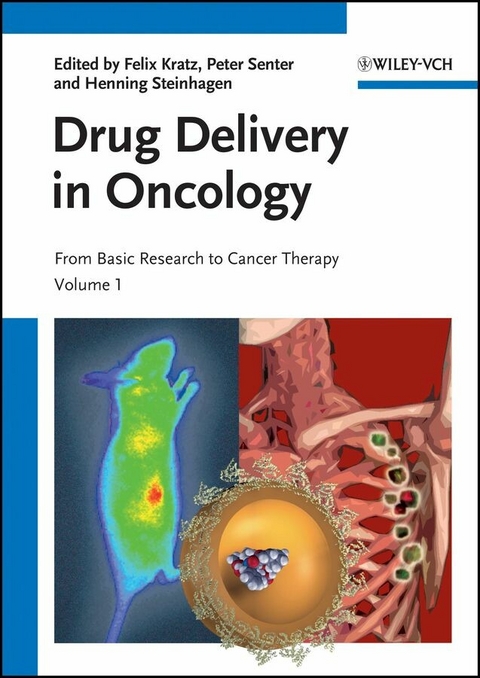
The authors summarize knowledge gained over the past decade, from basic concepts to successful applications in the clinic, covering active and passive targeting strategies as well as tissue-specific approaches. All current and future targeted delivery systems are discussed, from ligand-based to antibody-based polymer-based systems, right up to micro- and nanoparticulate systems. A special section covers the delivery of nucleic acid therapeutics, such as siRNA, miRNA and antisense nucleotides. In each case, a description of the basic technique is followed by a discussion of the latest preclinical and clinical developments in the field.
By virtue of its clear and didactic structure, rich illustrative material and summary chapters, this handbook and ready reference enables the efficient transfer of knowledge between different disciplines, from basic research to the clinician and vice versa. It is equally well suited for professionals, researchers and students in medical oncology and cancer biology, and is also excellent for teaching medical students the foundations of 21st century cancer chemotherapy.
Felix Kratz graduated in Chemistry from the University of Heidelberg in 1991. He then carried out postdoctoral research at the Bioinorganic Institute of the University of Florence and developed tumor-specifi c carrier systems with ruthenium(III) complexes. Since 1994 he has been Head of Macromolecular Prodrugs at the Tumor Biology Center in Freiburg, Germany, where he is now in charge of organizing and managing translational research from the laboratory to the clinic. His research areas are drug targeting, drug-delivery systems in oncology, prodrugs, receptor targeting, bioconjugate chemistry, and nanocarriers.
Peter Senter earned his PhD in Chemistry from the University of Illinois in Urbana, and then carried out postdoctoral research at the Max Planck Institute in Gottingen, Germany. After various positions at the Dana Farber Cancer Institute, Bristol-Myers Squibb, and Cytokine Networks, he joined Seattle Genetics in 1998, and initiated research programs that led to the technology used for SGN-35 and other promising antibody drug conjugates.
Henning Steinhagen graduated in Organic Chemistry from the University of Heidelberg, Germany in 1998. He then joined the group of Prof. E.J. Corey at Harvard University, Cambridge, USA as postdoctoral fellow. After that he continued his career, working in Discovery Research in Medicinal Chemistry at Bayer, Wuppertal and at Aventis, Frankfurt. In 2009, he joined Grunenthal in Aachen, Germany where he currently acts as Vice President and Global Head of Drug Discovery.
Felix Kratz graduated in Chemistry from the University of Heidelberg in 1991. He then carried out postdoctoral research at the Bioinorganic Institute of the University of Florence and developed tumor-specifi c carrier systems with ruthenium(III) complexes. Since 1994 he has been Head of Macromolecular Prodrugs at the Tumor Biology Center in Freiburg, Germany, where he is now in charge of organizing and managing translational research from the laboratory to the clinic. His research areas are drug targeting, drug-delivery systems in oncology, prodrugs, receptor targeting, bioconjugate chemistry, and nanocarriers. Peter Senter earned his PhD in Chemistry from the University of Illinois in Urbana, and then carried out postdoctoral research at the Max Planck Institute in Göttingen, Germany. After various positions at the Dana Farber Cancer Institute, Bristol-Myers Squibb, and Cytokine Networks, he joined Seattle Genetics in 1998, and initiated research programs that led to the technology used for SGN-35 and other promising antibody drug conjugates. Henning Steinhagen graduated in Organic Chemistry from the University of Heidelberg, Germany in 1998. He then joined the group of Prof. E.J. Corey at Harvard University, Cambridge, USA as postdoctoral fellow. After that he continued his career, working in Discovery Research in Medicinal Chemistry at Bayer, Wuppertal and at Aventis, Frankfurt. In 2009, he joined Grünenthal in Aachen, Germany where he currently acts as Vice President and Global Head of Drug Discovery.
Volume 1:
PRINCIPLES OF TUMOR TARGETING
Limits of Conventional Cancer Chemotherapy
Pathophysiological and Vascular Characteristics of Tumors in Relation to Drug Delivery
Enhanced Permeability and Retention Effect in Relation to Tumor Targeting
Pharmacokinetics of Immunoglobulin G and Serum Albumin: Impact of the Neonatal Fc Receptor on Drug Design
Development of Cancer-Targeting Ligands and Ligand-Drug Conjugates
Antibody-Directed Enzyme Prodrug Therapy (ADEPT) - Basic Principles and its Practice So Far
TUMOR IMAGING
Imaging Techniques in Drug Development and Clinical Practice
Magnetic Nanoparticles in Magnetic Resonance Imaging and Drug Delivery
Preclinical and Clinical Tumor Imaging with SPECT/CT and PET/CT
Volume 2:
MACROMOLECULAR DRUG DELIVERY SYSTEMS
Antibody-Based Systems
Empowered Antibodies for Cancer Therapy
Mapping Accessible Vascular Targeting to Penetrate Organs and Solid Tumors
Considerations of Linker Technologies
Antibody-Maytansinoid Conjugates: From the Bench to the Clinic
Calicheamicin Antibody-Drug Conjugates and Beyond
Antibodies for the Delivery of Radionuclides
Bispecific Antibodies and Immune Therapy Targeting
POLYMER-BASED SYSTEMS
Design of Polymer-Drug Conjugates
Dendritic Polymers in Oncology: Facts, Features, and Applications
Site-Specific Prodrug Activation and the Concept of Self-Immolation
Ligand-Assisted Vascular Targeting of Polymer Therapeutics
Drug Conjugates with Poly(Ethylene)Glycole
Thermo-Responsive Polymers
Polysaccharide-Based Drug Conjugates for Tumor Targeting
Serum Proteins as Drug Carriers of Anticancer Agents
Future Trends, Challenges, and Opportunities with Polymer-Based Combination Therapy in Cancer
Clinical Experience with Drug-Polymer Conjugates
NANO- AND MICROPARTICULATE DRUG DELIVERY SYSTEMS - LIPID-BASED SYSTEMS
Overview on Nanocarriers as Delivery Systems
Development of PEGylated Liposomes
Immunoliposomes
Responsive Liposomes (for Solid Tumor Therapy)
Nanoscale Delivery Systems for Combination Chemotherapy
NANO- AND MICROPARTICULATE DRUG DELIVERY SYSTEMS - POLYMER-BASED SYSTEMS
Micellar Strcutures as Drug Delivery Systems
Tailor-Made Hydrogels for Tumor Delivery
pH-Triggered Micelles for Tumor Delivery
Albumin-Drug Nanoparticles
Carbon Nanotubes
Volume 3:
LIGAND-BASED DRUG DELIVERY SYSTEMS
Cell-Penetrating Peptides in Cancer Targeting
Targeting to Peptide Receptors
Aptamer Conjugates: Emerging Delivery Platforms for Targeted Cancer Therapy
Design and Synthesis of Drug Conjugates of Vitamins and Growth Factors
Drug Conjugates with Polyunsaturated Fatty Acids
SPECIAL TOPICS
RNA Drug Delivery Approaches
Local Gene Delivery for Therapy of Solid Tumors
Viral Vectors for RNA Interference Applications in Cancer Research and Therapy
Design of Targeted Protein Toxins
Drug Targeting to the Central Nervous System
Liver Tumor Targeting
Photodynamic Therapy: Photosensitizers Targeting and Delivery
Tumor-Targeting Strategies with Anticancer Platinum Complexes
List of Contributors
Khalid Abu Ajaj received his BSc from Yarmouk University (Jordan, 1991), his MSc from the University of Jordan (Jordan, 1995), and his PhD in Chemistry from the University of Leipzig (Germany, 2002). He then carried out a Postdoctoral Fellowship in the research groups of Professor Dr. A. Zychlinsky (Max Planck Institute for Infection Biology, Berlin) and Professor Dr. M. Bienert (Institute of Molecular Pharmacology, Berlin), developing bacterial lipopeptides to investigate the mechanisms of activation of Toll-like receptors. He joined the Macromolecular Prodrug Research Group of Dr. Felix Kratz at the Tumor Biology Center in Freiburg in 2006. His research in the group is focused on developing dual-acting prodrugs for circumventing multidrug resistance.
Stephen C. Alley received his PhD in Organic Chemistry from the University of Washington and completed a Postdoctoral Fellowship in Chemistry at Pennsylvania State University. He joined the Research Biology Department at Pathogenesis Corp. and then came to Seattle Genetics in 2003. His research has surrounded conjugation technologies and determination of the mechanisms by which antibody– drug conjugates work.
Jan Terje Andersen graduated in Molecular Immunology at the Department of Molecular Biosciences, University of Oslo, Norway in 2008. He has a postdoctoral position at the Department of Molecular Biosciences, University of Oslo, and the Center for Immune Regulation at the Institute for Immunology, Norway. His research areas are molecular biology and immunology, with a current focus on receptor interactions and receptor targeting. Specifically, the interactions of antibodies of the IgG class with the Fcγ receptors as well as the interactions of IgG and albumin with the neonatal Fc receptor. He has authored approximately 15 scientific publications, including book chapters and patent applications.
Christopher Bachran studied Biochemistry at the Freie Universität Berlin, Germany. He joined the laboratory of Hendrik Fuchs at the Charité– Universitätsmedizin Berlin as a PhD student to study targeted protein toxins for targeted tumor therapy in 2002 and obtained his PhD from the Freie Universität Berlin in 2006. He stayed in Hendrik Fuchs' group as postdoc to investigate the efficacy of saporin-based targeted toxins in mouse models and to analyze the impact of saponins for drastically improved drug delivery in tumor mouse models. During this time he co-organized with Hendrik Fuchs the 2nd and 4th Fabisch-Symposium for Cancer Research and Molecular Cell Biology on the topic of targeted tumor therapies in 2006 and 2009. In 2009, he joined the laboratory of Stephen Leppla at the National Institute of Allergy and Infectious Diseases, National Institutes of Health, in order to develop sophisticated anthrax toxin-based targeted tumor therapy approaches.
You Han Bae received his PhD degree in Pharmaceutics from the University of Utah in 1988, and has held a Full Professorship at the Department of Pharmaceutics and Pharmaceutical Chemistry of University of Utah since 2002. His research interests include self-assembled superintelligent nanoparticulates for multidrug-resistant tumors, acidic solid tumor targeting, protein drug stabilization and controlled release, polymeric vector design for genetic materials, and polymeric systems for rechargeable cell delivery. He has authored over 210 peer-reviewed scientific publications, book chapters, and US patents.
Kenneth D. Bagshawe is Emeritus Professor of Medical Oncology at Imperial College London. After service in the Royal Navy, he studied medicine at St. Mary's Hospital Medical School in London. He was a Research Fellow at Johns Hopkins Hospital Baltimore. He reported first use of combination chemotherapy resulting in cure of metastatic cancer. He established the first radioimmunoassay for human chorionic gonadotropin. He set up a national-scale registration scheme for patients with hydatidiform mole in 1973. He was Chairman of the Scientific Committee of the Cancer Research Campaign. He proposed ADEPT in 1987 and 1990 and carried out the first clinical trial of ADEPT. He is a Fellow of the Royal Society.
Ambros Beer studied Medicine at the Ludwig-Maximilians-Universiät in Munich, Germany. After his final exam in 1999, he performed his training in Radiology at the Department of Radiology at the Klinikum rechts der Isar of the Technical University in Munich (Professor Dr. E.J. Rummeny). Afterwards he performed his training in Nuclear Medicine at the Department of Nuclear Medicine at the Klinikum rechts der Isar of the Technical University in Munich (Professor Dr. M. Schwaiger). Currently he is working as Attending and Assistant professor at the Department of Nuclear Medicine at the Klinikum rechts der Isar of the Technical University in Munich. His main research interest is translational molecular imaging, with a focus on assessment of angiogenesis using targeted tracers, like αvβ3-specific tracers. Moreover, he is interested in multimodality molecular imaging, combining, for example, magnetic resonance imaging and positron emission tomography.
Elvin Blanco received his BS in Biomedical Engineering from Case Western Reserve University in Cleveland, OH. He received his PhD in Biomedical Engineering under the mentorship of Dr. Jinming Gao at the University of Texas Southwestern Medical Center at Dallas in 2008. In 2009, he began his postdoctoral training under the mentorship of Dr. Mauro Ferrari at the University of Texas Health Science Center at Houston. He is currently a Research Associate at the Methodist Hospital Research Institute in Houston under the mentorship of Dr. Mauro Ferrari.
Andreas K. Buck graduated in Medicine at the University of Ulm, Germany in 1996. From 1997 to 2003 he worked as a Resident and from 2003 to 2006 as a Senior Physician at the Department of Nuclear Medicine at the University of Ulm. From 2006 to 2010 he worked as Associate Professor at the Department of Nuclear Medicine at the Technical University in Munich, Germany. Since 2011 he has been Director of the Department of Nuclear Medicine at the University of Wuerzburg, Germany. His research is focused on hemato- oncology and cancer treatment with radiopharmaceuticals.
Horacio Cabral received his PhD under the supervision of Professor K. Kataoka in Materials Engineering from the University of Tokyo in 2007. He worked as an Assistant Professor at the Division of Clinical Biotechnology, Graduate School of Medicine, University of Tokyo until 2009. From 2010, he has been a Lecturer at the Bioengineering Department, University of Tokyo. His main research interests relate to smart nanodevices for the diagnosis and therapy of cancer.
Marcelo Calderón received his PhD in Organic Chemistry in 2007 from the National University of Córdoba, Argentina, under the supervision of Professor Miriam Strumia. In the following years, he joined the Research Group of Professor Rainer Haag at the Free University of Berlin as a Postdoctoral Fellow. He is currently working as an Associate Researcher at the same University, with a research interest in the development of nanotransporters based on dendritic polyglycerol for intelligent delivery of drugs, gene, and imaging probes.
John C. Chang MD, PhD graduated from the University of Illinois at Urbana-Champaign with an MD and an Electrical Engineering PhD degree in 2004. During his graduate training, he has authored and coauthored five refereed articles focused on neural engineering. During his radiology residency at Stanford University, he pursued research in nanoparticle application in optical and magnetic resonance imaging with ultimate application in understanding cancer biology and novel therapy. He currently serves as a Clinical Instructor in Radiology at Stanford University.
Coralie Deladriere studied Chemistry at the University Paris Sud (France) and obtained her Master's degree in Analytical Chemistry in 2006. She then joined the Polymer Therapeutics Laboratory headed by Dr. Vicent at the Centro de Investigación Príncipe Felipe, Valencia (Spain) as a PhD Student. Her PhD work is focused on the development of polymer– drug conjugates as a platform for combination therapy in the treatment of hormone-dependent breast cancer.
Neil Desai is currently Senior Vice President of Global Research and Development at Abraxis BioScience in Los Angeles, CA, where he is responsible for the development of the company's growing product pipeline and the development of the company's intellectual property portfolio. He is an inventor of ABI's nanotechnology and nanoparticle-albumin bound (nab™) drug delivery platform, and was primarily responsible for the development of its nanotechnology drug nab-paclitaxel and the discovery of the novel targeted biological pathway utilized by nab-drugs. Prior to joining ABI, he was Senior Director of Biopolymer Research at VivoRx Inc., where he developed novel encapsulation systems for living cells and was part of the team that performed the world's first successful encapsulated islet cell transplant in a diabetic patient. With more than 20 years of experience in the research and development of novel drug delivery systems and biocompatible polymers, he holds over 100 issued patents and peer-reviewed publications, has made over 150 presentations at scientific meetings, and has organized and chaired symposia in the areas of biocompatible polymers and nanotechnology-based delivery systems. He is a reviewer for several scientific journals, and an active participant in...
| Erscheint lt. Verlag | 30.9.2013 |
|---|---|
| Sprache | englisch |
| Themenwelt | Medizin / Pharmazie ► Medizinische Fachgebiete ► Onkologie |
| Naturwissenschaften ► Chemie | |
| Schlagworte | antibody based drug delivery • antisense nucleotides • Arzneimittelentwicklung • Biotechnologie • Biotechnologie i. d. Biowissenschaften • Biotechnology • Biowissenschaften • Cancer Biology • Chemie • Chemistry • controlled-release polymers • Drug Formulation & Delivery • Krebs (Medizin) • Life Sciences • ligand based drug delivery • Liposomes • Medical oncology • Medical Science • Medizin • medizinische Onkologie • microparticulate based drug delivery • miRNA therapies • nanoparticles • nanoparticulate based drug delivery • Onkologie • polymer based drug delivery • siRNA therapies • Wirkstoffformulierung, Wirkstofftransport • Wirkstoffforschung |
| ISBN-10 | 3-527-64775-9 / 3527647759 |
| ISBN-13 | 978-3-527-64775-0 / 9783527647750 |
| Informationen gemäß Produktsicherheitsverordnung (GPSR) | |
| Haben Sie eine Frage zum Produkt? |
 EPUB (Adobe DRM)
Kopierschutz: Adobe-DRM
Adobe-DRM ist ein Kopierschutz, der das eBook vor Mißbrauch schützen soll. Dabei wird das eBook bereits beim Download auf Ihre persönliche Adobe-ID autorisiert. Lesen können Sie das eBook dann nur auf den Geräten, welche ebenfalls auf Ihre Adobe-ID registriert sind.
Details zum Adobe-DRM
Dateiformat: EPUB (Electronic Publication)
EPUB ist ein offener Standard für eBooks und eignet sich besonders zur Darstellung von Belletristik und Sachbüchern. Der Fließtext wird dynamisch an die Display- und Schriftgröße angepasst. Auch für mobile Lesegeräte ist EPUB daher gut geeignet.
Systemvoraussetzungen:
PC/Mac: Mit einem PC oder Mac können Sie dieses eBook lesen. Sie benötigen eine
eReader: Dieses eBook kann mit (fast) allen eBook-Readern gelesen werden. Mit dem amazon-Kindle ist es aber nicht kompatibel.
Smartphone/Tablet: Egal ob Apple oder Android, dieses eBook können Sie lesen. Sie benötigen eine
Geräteliste und zusätzliche Hinweise
Buying eBooks from abroad
For tax law reasons we can sell eBooks just within Germany and Switzerland. Regrettably we cannot fulfill eBook-orders from other countries.
aus dem Bereich