


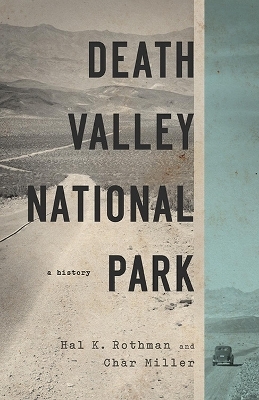
Death Valley National Park
A History
Seiten
2013
University of Nevada Press (Verlag)
978-0-87417-925-5 (ISBN)
University of Nevada Press (Verlag)
978-0-87417-925-5 (ISBN)
- Titel z.Zt. nicht lieferbar
- Portofrei ab CHF 40
- Auch auf Rechnung
- Artikel merken
The first comprehensive study of the park, past and present, Death Valley National Park probes the environmental and human history of this most astonishing desert. Established as a national monument in 1933, Death Valley was an anomaly within the national park system. Though many who knew this landscape were convinced that its stark beauty should be preserved, to do so required a reconceptualisation of what a park consists of, grassroots and national support for its creation, and a long and difficult political struggle to secure congressional sanction. This history begins with a discussion of the physical setting, its geography and geology, and descriptions of the Timbisha, the first peoples to inhabit this tough and dangerous landscape. In the nineteenth and early twentieth centuries, new arrivals came to exploit the mineral resources in the region and develop permanent agricultural and resort settlements.
Although Death Valley was established as a national monument in 1933, fear of the harsh desert precluded widespread acceptance by both the visiting public and its own administrative agency. As a result, Death Valley lacked both support and resources. This volume details the many debates over the park’s size; conflicts between miners, farmers, the military, and wilderness advocates; the treatment of the Timbisha; and the impact of tourists on its cultural and natural resources. In time, Death Valley came to be seen as one of the great natural wonders of the United States and was elevated to full national park status in 1994. The history of Death Valley National Park embodies the many tensions confronting American environmentalism.
Although Death Valley was established as a national monument in 1933, fear of the harsh desert precluded widespread acceptance by both the visiting public and its own administrative agency. As a result, Death Valley lacked both support and resources. This volume details the many debates over the park’s size; conflicts between miners, farmers, the military, and wilderness advocates; the treatment of the Timbisha; and the impact of tourists on its cultural and natural resources. In time, Death Valley came to be seen as one of the great natural wonders of the United States and was elevated to full national park status in 1994. The history of Death Valley National Park embodies the many tensions confronting American environmentalism.
The late Hal K. Rothman (1958–2007) was Distinguished Professor of History at the University of Nevada, Las Vegas, USA. Char Miller is W. M. Keck Professor of Environmental Analysis at Pomona College, USA.
| Erscheint lt. Verlag | 30.10.2013 |
|---|---|
| Zusatzinfo | 13 black & white photographs, 2 maps |
| Verlagsort | Reno |
| Sprache | englisch |
| Maße | 152 x 231 mm |
| Gewicht | 312 g |
| Themenwelt | Reiseführer ► Nord- / Mittelamerika ► USA |
| Geisteswissenschaften ► Geschichte ► Regional- / Ländergeschichte | |
| Naturwissenschaften ► Geowissenschaften ► Geografie / Kartografie | |
| ISBN-10 | 0-87417-925-4 / 0874179254 |
| ISBN-13 | 978-0-87417-925-5 / 9780874179255 |
| Zustand | Neuware |
| Informationen gemäß Produktsicherheitsverordnung (GPSR) | |
| Haben Sie eine Frage zum Produkt? |
Mehr entdecken
aus dem Bereich


aus dem Bereich
mit ganz Kalifornien
Buch | Softcover (2025)
Reise Know-How Verlag Dr. Hans-R. Grundmann GmbH
CHF 41,90
mit Brooklyn, Queens, Bronx & Staten Island
Buch | Softcover (2025)
Reise Know-How (Verlag)
CHF 34,90


