M. R. Bennett is Professor of Neuroscience, University Chair and Scientific Director of the Brain and Mind Research Institute at the University of Sydney. He is the author of many papers and books on neuroscience as well as the history and philosophy of neuroscience, including The Idea of Consciousness (1997) and A History of the Synapse (2001). He is past President of the International Society for Autonomic Neuroscience, past President of the Australian Neuroscience Society, as well as the recipient of numerous awards for his research, including the Neuroscience Medal, the Ramaciotti Medal, the Macfarlane Burnet Medal and the Order of Australia.
P. M. S. Hacker is an Emeritus Research Fellow of St John's College, Oxford, UK. He is the author of numerous books and articles on philosophy of the mind and philosophy of language, and is the leading authority on the philosophy of Wittgenstein. Among his many publications is the four-volume Analytical Commentary on Wittgenstein's Philosophical Investigations, and its epilogue, Wittgenstein's Place in Twentieth Century Analytic Philosophy. His most recent work is Human Nature: The Categorial Framework, the first volume of a trilogy on human nature.
Together, M. R. Bennet and P. M. S. Hacker have authored the acclaimed Philosophical Foundations of Neuroscience (Blackwell, 2003).
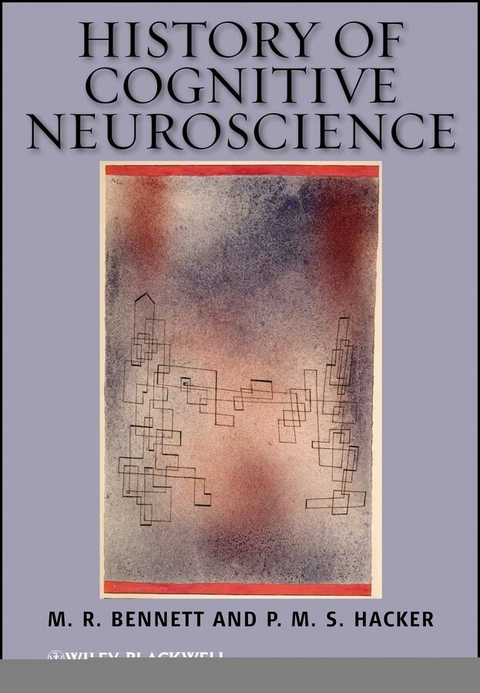
History of Cognitive Neuroscience documents the major neuroscientific experiments and theories over the last century and a half in the domain of cognitive neuroscience, and evaluates the cogency of the conclusions that have been drawn from them. Provides a companion work to the highly acclaimed Philosophical Foundations of Neuroscience - combining scientific detail with philosophical insights Views the evolution of brain science through the lens of its principal figures and experiments Addresses philosophical criticism of Bennett and Hacker's previous book Accompanied by more than 100 illustrations
M. R. Bennett is Professor of Neuroscience, University Chair and Scientific Director of the Brain and Mind Research Institute at the University of Sydney. He is the author of many papers and books on neuroscience as well as the history and philosophy of neuroscience, including The Idea of Consciousness (1997) and A History of the Synapse (2001). He is past President of the International Society for Autonomic Neuroscience, past President of the Australian Neuroscience Society, as well as the recipient of numerous awards for his research, including the Neuroscience Medal, the Ramaciotti Medal, the Macfarlane Burnet Medal and the Order of Australia. P. M. S. Hacker is an Emeritus Research Fellow of St John's College, Oxford, UK. He is the author of numerous books and articles on philosophy of the mind and philosophy of language, and is the leading authority on the philosophy of Wittgenstein. Among his many publications is the four-volume Analytical Commentary on Wittgenstein's Philosophical Investigations, and its epilogue, Wittgenstein's Place in Twentieth Century Analytic Philosophy. His most recent work is Human Nature: The Categorial Framework, the first volume of a trilogy on human nature. Together, M. R. Bennet and P. M. S. Hacker have authored the acclaimed Philosophical Foundations of Neuroscience (Blackwell, 2003).
The authors are experts in cognitive neuroscience and discuss
the landmark experiments which have significantly influenced the
field... it is a veritable treasure trove of knowledge.
(Doody's)
2
Attention, Awareness and Cortical Function: Helmholtz to Raichle
2.1 The Concept of Attention
The concept of attention is closely connected with the concepts of awareness, concentration, consciousness and noticing. It is also linked with taking an interest in something, with enjoying and thinking about something. Lack of attention is correspondingly linked not only with unawareness of, failure to concentrate on, or to notice, something, but also with carelessness, inadvertence and absent-mindedness.1
The various forms of attention all require an object – one cannot attend without attending to something or other. Similarly, one cannot describe the paying of attention to something without referring to the object, since the characterization depends upon what one is attending to. The surgeon’s attention to the operation is altogether unlike the student’s attention to the lecture or the bird-watcher’s to the birds. Being informed that someone is paying attention or is concentrating no more tells one what he is doing than being informed that he is rehearsing, repeating, working, practising or obeying. For, like the latter verbs, attention verbs are polymorphous – what counts as V-ing on one occasion or in one circumstance may not count as V-ing on another occasion or in another circumstance. A person attends, just as he rehearses, practises or works, by doing something else, such as looking, listening, writing, drawing, driving, etc. What he does in attending to what he is looking at may not differ at all from what he does in looking at the same thing without attention – although what he consequently may be able to do may differ greatly.
What a person attends to is what he pays attention to; what he is interested in is what he is prone to pay attention to. A person notices what captures his attention, and he is conscious of what holds his attention. He takes care when paying attention to the risks involved in his own activities, so care has a much more restrictive range than attention. Similarly, enjoyment typically involves attention, but is limited to what affects oneself. Attention concepts may qualify many different aspects of what a person or an animal does. For the qualifying description may signify attention or inattention to the doing, action or activity itself (if, for example, done inadvertently), or to the manner of doing it (if done mechanically or inattentively), or to its effects (if done carelessly) or to its circumstances (if done regardless of them).
Attending, although not an activity, has affinities with activity concepts. It applies to what we do or are engaged in doing. Like activities, it takes time, can be intermittent or continuous, may be interrupted and later resumed. It has a manner (e.g. reluctant, eager, careful, conscientious). Unlike noticing, it is something that can be done willingly or unwillingly, and on purpose. One can order someone to pay attention, decide, promise, or refuse to pay attention. Because it can be voluntary, it can also be the object of praise or blame.
We pay attention in doing something else, such as looking or listening, walking or climbing, reading or writing. What makes what we do a case of attending in one or other of its various forms is that when we do it, something is made the centre, object or topic of whatever it is we are doing. So we attend to audibilia or their features by listening, to visibilia by looking (observing, watching, scrutinizing) and to intelligibilia by thinking (reasoning, calculating). Among possible objects of attention are one’s own acts and activities. These one may attend to either qua observer – as when one ‘watches oneself’, as it were, while one is doing whatever one is doing – or qua agent – as when one does what one does attentively or carefully.
Noticing is a form of attention, and its objects are generally things to which attention may be paid. Unlike attention, however, noticing lacks affinity with activities. For one cannot be engaged in noticing something, or be interrupted in the middle of noticing it. One cannot notice something intermittently or continuously, and there are no methods or manners of noticing things. One does not notice things voluntarily, willingly or unwillingly, and one cannot decide, agree or refuse to notice something as one can decide, agree or refuse to attend to something. One cannot order another to notice, only to attend and to try to spot something.2 Some things – for example, saliencies – we cannot help noticing, whereas others are easy to overlook.
Noticing has an affinity with achievements, like arriving, finding, discovering, discerning, detecting, winning, but ‘to notice’ is not an achievement verb.3 Like ‘to discover’ and ‘to detect’, ‘to notice’ is factive and signifies not an activity but a result or upshot. Its factivity is patent in that, unlike believing, one cannot notice something that is not the case, and unlike looking for, one cannot notice something that does not exist. ‘To notice’, like ‘to detect’, signifies the acquisition of correct information. Unlike arriving, discovering or winning, but like realizing, becoming conscious or aware of something, noticing is a form of cognitive receptivity. Reception concepts, unlike achievement concepts, do not signify something brought about or brought off, gained or produced; they signify various forms of receiving, as opposed to achieving, knowledge and information. When we notice something, we are struck by it, it makes an impression on us, attracts our attention. One may be skilled at spotting or detecting something, but not at noticing something. There are methods for spotting or detecting things one wants to spot or detect, but there are no methods for noticing things. What is noticed is what is given or received, not what is attained or achieved.
Neuroscientists have concentrated upon visual and auditory attention, and have, on the whole, paid little attention to other forms of receptivity such as noticing, becoming conscious or being aware of something, concentrating on or being conscious of something.
2.2 The Psychophysics of Attention
Psychophysics, the psychological study of the relationship between physical stimuli and the effects they produce in humans, was first applied to the subject of attention by Hermann von Helmholtz in his great work Handbuch der physiologischen Optik of 1894. His research had a profound effect on ideas concerned with selective attention in vision. He comments as follows:
I refer now to the experiments … with a momentary illumination of a previously completely darkened field on which was spread a page with large printed letters. Prior to the electric discharge the observer saw nothing but a slightly illuminated pinhole in the paper. He fixed his gaze rigidly upon it, and it served for an appropriate orientation of directions in the dark field. The electric discharge illuminated the printed page for an indivisible instant during which its image became visible and remained for a very short while as a positive after-image. Thus, the duration of the perceptibility of the picture was limited to the duration of the after-image. Eye movements of a measurable magnitude could not be executed within the duration of the spark, and movements during the brief duration of the after-image could no longer change its position on the retina. Regardless of this I found it possible to decide in advance which part of the dark field surrounding the continuously fixed pinhole of light I wanted to perceive, and then actually recognized upon the electric illumination single groups of letters in that region of the field, though usually with intervening gaps that remained empty. After strong flashes, as a rule, I read more letters than with weak ones. On the other hand, the letters of by far the largest part of the field were not perceived, not even in the vicinity of the fixation point. With a subsequent electric discharge I could direct my perception to another section of the field, while always fixating on the pinhole, and then read a group of letters there.
These observations demonstrated, so it seems to me, that by a voluntary kind of intention, even without eye movements, and without changes of accommodation, one can concentrate attention on the sensation from a particular part of our peripheral nervous system and at the same time exclude attention from all other-parts. (Helmholtz, 1894b, pp. 258–9)
It is perhaps noteworthy that Helmholtz’s conclusion confuses sensations with perceptions and having sensations with perceiving. What he had found was that he could concentrate on (intentionally direct his attention to) what was perceptible at the periphery of his visual field, not on ‘a sensation from a particular part of his peripheral nervous system’.
To Helmholtz (1871, 1894b) these experiments indicated that there ‘is a change in our nervous system, independent of the motions of the external movable parts of the body, whereby the excited state of certain fibres is preferentially transmitted to consciousness’ (1894b, p. 263). This was a misdescription of the phenomena. It was not the ‘excited state of neural fibres’ that was ‘transmitted to consciousness’. It was rather that as a result of the excited state of certain neural fibres, he became conscious of certain features at the periphery of his visual field. ‘In this respect,’ he continued, ‘our...
| Erscheint lt. Verlag | 15.8.2012 |
|---|---|
| Sprache | englisch |
| Themenwelt | Geisteswissenschaften ► Philosophie ► Allgemeines / Lexika |
| Geisteswissenschaften ► Psychologie ► Allgemeine Psychologie | |
| Geisteswissenschaften ► Psychologie ► Biopsychologie / Neurowissenschaften | |
| Geisteswissenschaften ► Psychologie ► Verhaltenstherapie | |
| Medizin / Pharmazie ► Medizinische Fachgebiete ► Neurologie | |
| Naturwissenschaften ► Biologie ► Humanbiologie | |
| Naturwissenschaften ► Biologie ► Zoologie | |
| Schlagworte | Biowissenschaften • Cognitive Neuropsychology & Cognitive Neuroscience • Cognitive Neuroscience, philosophy, neuroanatomy, perception, language, Wernicke • Geistesphilosophie • Kognitive Neuropsychologie u. Neurowissenschaft • Kognitive Psychologie • Life Sciences • Neuropsychologie • Neuroscience • Neurowissenschaften • Philosophie • Philosophy • Philosophy of mind • Psychologie • Psychology |
| ISBN-13 | 9781118394298 / 9781118394298 |
| Informationen gemäß Produktsicherheitsverordnung (GPSR) | |
| Haben Sie eine Frage zum Produkt? |
 EPUB (Adobe DRM)
Kopierschutz: Adobe-DRM
Adobe-DRM ist ein Kopierschutz, der das eBook vor Mißbrauch schützen soll. Dabei wird das eBook bereits beim Download auf Ihre persönliche Adobe-ID autorisiert. Lesen können Sie das eBook dann nur auf den Geräten, welche ebenfalls auf Ihre Adobe-ID registriert sind.
Details zum Adobe-DRM
Dateiformat: EPUB (Electronic Publication)
EPUB ist ein offener Standard für eBooks und eignet sich besonders zur Darstellung von Belletristik und Sachbüchern. Der Fließtext wird dynamisch an die Display- und Schriftgröße angepasst. Auch für mobile Lesegeräte ist EPUB daher gut geeignet.
Systemvoraussetzungen:
PC/Mac: Mit einem PC oder Mac können Sie dieses eBook lesen. Sie benötigen eine
eReader: Dieses eBook kann mit (fast) allen eBook-Readern gelesen werden. Mit dem amazon-Kindle ist es aber nicht kompatibel.
Smartphone/Tablet: Egal ob Apple oder Android, dieses eBook können Sie lesen. Sie benötigen eine
Geräteliste und zusätzliche Hinweise
Buying eBooks from abroad
For tax law reasons we can sell eBooks just within Germany and Switzerland. Regrettably we cannot fulfill eBook-orders from other countries.
aus dem Bereich