Miniemulsion Polymerization Technology (eBook)
John Wiley & Sons (Verlag)
978-0-470-92234-7 (ISBN)
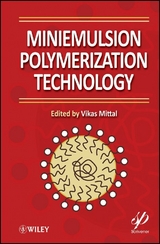
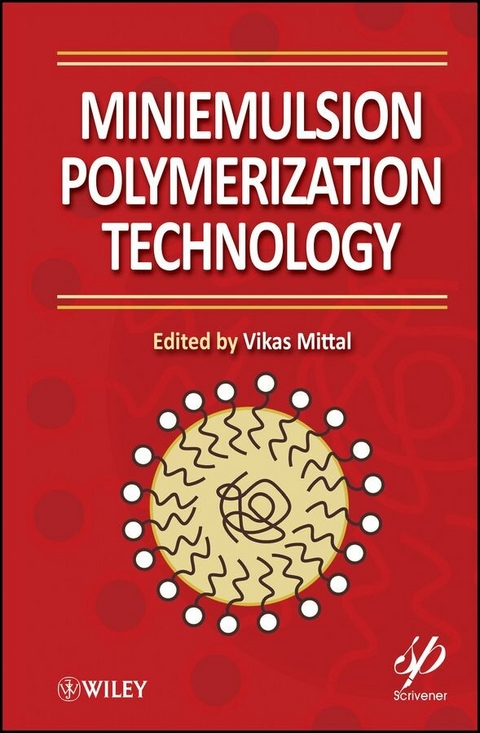
Miniemulsion Polymerization Technology comprises 10 papers by many of the world's experts on the subject. It summarizes the recent advances in miniemulsion polymerization technology including the advances on the selection of surfactants and co-surfactants, the expansion of miniemulsion technology in various polymers and co-polymer systems, and the use of miniemulsion polymerization for the synthesis of advanced polymer particle morphologies.
There have been a large number of texts on emulsion and other forms of polymerization methods, but miniemulsion polymerization, though it provides unique routes for polymer particle synthesis, has been neglected.
This edited volume:
- Details the use of miniemulsion polymerization in encapsulation, core shell functional particles, nitroxide mediated polymerization, atom transfer radical polymerization or radical addition fragmentation chain transfer polymerization, to generate advanced polymer nanoparticles or organic-inorganic composite particles
- Examines the wide spectrum of commercial possibilities of miniemulsion polymerization
- Provides both introductory material as well as deep insights into the synthesis of polymer particles
Vikas Mittal is a Polymer Engineer at BASF Polymer Research in Ludwigshafen, Germany. He obtained his Ph.D. in 2006 in Polymer and Materials Engineering from the Swiss Federal Institute of Technology in Zurich, Switzerland. He then worked as a materials scientist in the Active and Intelligent Coatings section of Sun Chemical in London, UK. His research interests include polymer nanocomposites, novel filler surface modifications, thermal stability enhancements, and polymer latexes with functionalized surfaces. He has authored more than 30 scientific publications, book chapters and patents.
Explains miniemulsion technology and techniques and why they have many distinct advantages over the conventional emulsion polymerization technology Miniemulsion Polymerization Technology comprises 10 papers by many of the world's experts on the subject. It summarizes the recent advances in miniemulsion polymerization technology including the advances on the selection of surfactants and co-surfactants, the expansion of miniemulsion technology in various polymers and co-polymer systems, and the use of miniemulsion polymerization for the synthesis of advanced polymer particle morphologies. There have been a large number of texts on emulsion and other forms of polymerization methods, but miniemulsion polymerization, though it provides unique routes for polymer particle synthesis, has been neglected. This edited volume: Details the use of miniemulsion polymerization in encapsulation, core shell functional particles, nitroxide mediated polymerization, atom transfer radical polymerization or radical addition fragmentation chain transfer polymerization, to generate advanced polymer nanoparticles or organic-inorganic composite particles Examines the wide spectrum of commercial possibilities of miniemulsion polymerization Provides both introductory material as well as deep insights into the synthesis of polymer particles
Vikas Mittal is a Polymer Engineer at BASF Polymer Research in Ludwigshafen, Germany. He obtained his Ph.D. in 2006 in Polymer and Materials Engineering from the Swiss Federal Institute of Technology in Zurich, Switzerland. He then worked as a materials scientist in the Active and Intelligent Coatings section of Sun Chemical in London, UK. His research interests include polymer nanocomposites, novel filler surface modifications, thermal stability enhancements, and polymer latexes with functionalized surfaces. He has authored more than 30 scientific publications, book chapters and patents.
| Erscheint lt. Verlag | 25.1.2011 |
|---|---|
| Reihe/Serie | Wiley-Scrivener |
| Wiley-Scrivener | Wiley-Scrivener |
| Sprache | englisch |
| Themenwelt | Naturwissenschaften ► Chemie ► Organische Chemie |
| Naturwissenschaften ► Chemie ► Technische Chemie | |
| Technik ► Maschinenbau | |
| Technik ► Umwelttechnik / Biotechnologie | |
| Schlagworte | alain • Chemie • Chemistry • droplets • Durand • initial • Introduction • Miniemulsion • Monomer • multifunctional • Nanomaterialien • nanomaterials • Nanotechnologie • nanotechnology • Organic Chemistry • Organische Chemie • overview v • particles • Polymerization • Polymer Science & Technology • Polymerwissenschaft u. -technologie • Properties • stability • stabilizers • techniques |
| ISBN-10 | 0-470-92234-6 / 0470922346 |
| ISBN-13 | 978-0-470-92234-7 / 9780470922347 |
| Informationen gemäß Produktsicherheitsverordnung (GPSR) | |
| Haben Sie eine Frage zum Produkt? |
 EPUB (Adobe DRM)
Größe: 6,6 MB
Kopierschutz: Adobe-DRM
Adobe-DRM ist ein Kopierschutz, der das eBook vor Mißbrauch schützen soll. Dabei wird das eBook bereits beim Download auf Ihre persönliche Adobe-ID autorisiert. Lesen können Sie das eBook dann nur auf den Geräten, welche ebenfalls auf Ihre Adobe-ID registriert sind.
Details zum Adobe-DRM
Dateiformat: EPUB (Electronic Publication)
EPUB ist ein offener Standard für eBooks und eignet sich besonders zur Darstellung von Belletristik und Sachbüchern. Der Fließtext wird dynamisch an die Display- und Schriftgröße angepasst. Auch für mobile Lesegeräte ist EPUB daher gut geeignet.
Systemvoraussetzungen:
PC/Mac: Mit einem PC oder Mac können Sie dieses eBook lesen. Sie benötigen eine
eReader: Dieses eBook kann mit (fast) allen eBook-Readern gelesen werden. Mit dem amazon-Kindle ist es aber nicht kompatibel.
Smartphone/Tablet: Egal ob Apple oder Android, dieses eBook können Sie lesen. Sie benötigen eine
Geräteliste und zusätzliche Hinweise
Buying eBooks from abroad
For tax law reasons we can sell eBooks just within Germany and Switzerland. Regrettably we cannot fulfill eBook-orders from other countries.
 PDF (Adobe DRM)
Kopierschutz: Adobe-DRM
Adobe-DRM ist ein Kopierschutz, der das eBook vor Mißbrauch schützen soll. Dabei wird das eBook bereits beim Download auf Ihre persönliche Adobe-ID autorisiert. Lesen können Sie das eBook dann nur auf den Geräten, welche ebenfalls auf Ihre Adobe-ID registriert sind.
Details zum Adobe-DRM
Dateiformat: PDF (Portable Document Format)
Mit einem festen Seitenlayout eignet sich die PDF besonders für Fachbücher mit Spalten, Tabellen und Abbildungen. Eine PDF kann auf fast allen Geräten angezeigt werden, ist aber für kleine Displays (Smartphone, eReader) nur eingeschränkt geeignet.
Systemvoraussetzungen:
PC/Mac: Mit einem PC oder Mac können Sie dieses eBook lesen. Sie benötigen eine
eReader: Dieses eBook kann mit (fast) allen eBook-Readern gelesen werden. Mit dem amazon-Kindle ist es aber nicht kompatibel.
Smartphone/Tablet: Egal ob Apple oder Android, dieses eBook können Sie lesen. Sie benötigen eine
Geräteliste und zusätzliche Hinweise
Buying eBooks from abroad
For tax law reasons we can sell eBooks just within Germany and Switzerland. Regrettably we cannot fulfill eBook-orders from other countries.
aus dem Bereich