Zum Hauptinhalt springen
Nicht aus der Schweiz? Besuchen Sie lehmanns.de
Case for Mental Imagery -  Giorgio Ganis,  Stephen M. Kosslyn,  William L. Thompson

Case for Mental Imagery (eBook)

eBook Download: PDF
2006
260 Seiten
Oxford University Press (Verlag)
978-0-19-972757-5 (ISBN)
Systemvoraussetzungen
25,62 inkl. MwSt
(CHF 24,95)
Der eBook-Verkauf erfolgt durch die Lehmanns Media GmbH (Berlin) zum Preis in Euro inkl. MwSt.
  • Download sofort lieferbar
  • Zahlungsarten anzeigen
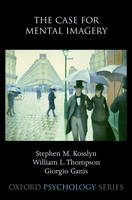
When we try to remember whether we left a window open or closed, do we actually see the window in our mind? If we do, does this mental image play a role in how we think? For almost a century, scientists have debated whether mental images play a functional role in cognition. In The Case for Mental Imagery, Stephen Kosslyn, William Thompson, and Giorgio Ganis present a complete and unified argument that mental images do depict information, and that these depictions do play a functional role in human cognition. They outline a specific theory of how depictive representations are used in information processing, and show how these representations arise from neural processes. To support this theory, they seamlessly weave together conceptual analyses and the many varied empirical findings from cognitive psychology and neuroscience. In doing so, they present the conceptual grounds for positing this type of internal representation and summarize and refute arguments to the contrary. Their argument also serves as a historical review of the imagery debate from its earliest inception to its most recent phases, and provides ample evidence that significant progress has been made in our understanding of mental imagery. In illustrating how scientists think about one of the most difficult problems in psychology and neuroscience, this book goes beyond the debate to explore the nature of cognition and to draw out implications for the study of consciousness. Student and professional researchers in vision science, cognitive psychology, philosophy, and neuroscience will find The Case for Mental Imagery to be an invaluable resource for understanding not only the imagery debate, but also and more broadly, the nature of thought, and how theory and research shape the evolution of scientific debates.
PDFPDF (Adobe DRM)

Kopierschutz: Adobe-DRM
Adobe-DRM ist ein Kopierschutz, der das eBook vor Mißbrauch schützen soll. Dabei wird das eBook bereits beim Download auf Ihre persönliche Adobe-ID autorisiert. Lesen können Sie das eBook dann nur auf den Geräten, welche ebenfalls auf Ihre Adobe-ID registriert sind.
Details zum Adobe-DRM

Dateiformat: PDF (Portable Document Format)
Mit einem festen Seiten­layout eignet sich die PDF besonders für Fach­bücher mit Spalten, Tabellen und Abbild­ungen. Eine PDF kann auf fast allen Geräten ange­zeigt werden, ist aber für kleine Displays (Smart­phone, eReader) nur einge­schränkt geeignet.

Systemvoraussetzungen:
PC/Mac: Mit einem PC oder Mac können Sie dieses eBook lesen. Sie benötigen eine Adobe-ID und die Software Adobe Digital Editions (kostenlos). Von der Benutzung der OverDrive Media Console raten wir Ihnen ab. Erfahrungsgemäß treten hier gehäuft Probleme mit dem Adobe DRM auf.
eReader: Dieses eBook kann mit (fast) allen eBook-Readern gelesen werden. Mit dem amazon-Kindle ist es aber nicht kompatibel.
Smartphone/Tablet: Egal ob Apple oder Android, dieses eBook können Sie lesen. Sie benötigen eine Adobe-ID sowie eine kostenlose App.
Geräteliste und zusätzliche Hinweise

Buying eBooks from abroad
For tax law reasons we can sell eBooks just within Germany and Switzerland. Regrettably we cannot fulfill eBook-orders from other countries.

Mehr entdecken
aus dem Bereich