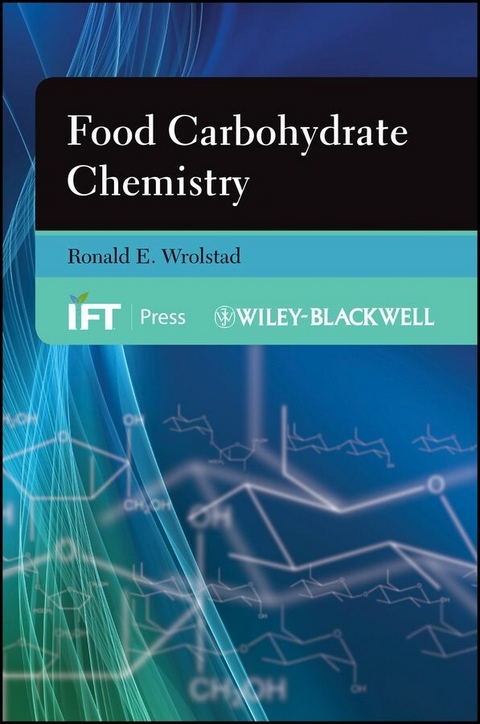
Food Carbohydrate Chemistry (eBook)
240 Seiten
John Wiley & Sons (Verlag)
978-1-119-94914-5 (ISBN)
text clearly presented and applied basic carbohydrate chemistry to
the quality attributes and functional properties of foods. Now in
Food Carbohydrate Chemistry, author Wrolstad emphasizes the
application of carbohydrate chemistry to understanding the
chemistry, physical and functional properties of food
carbohydrates. Structure and nomenclature of sugars and sugar
derivatives are covered, focusing on those derivatives that exist
naturally in foods or are used as food additives. Chemical
reactions emphasize those that have an impact on food quality and
occur under processing and storage conditions. Coverage includes:
how chemical and physical properties of sugars and polysaccharides
affect the functional properties of foods; taste properties and
non-enzymic browning reactions; the nutritional roles of
carbohydrates from a food chemist's perspective; basic principles,
advantages, and limitations of selected carbohydrate analytical
methods. An appendix includes descriptions of proven laboratory
exercises and demonstrations. Applications are emphasized, and
anecdotal examples and case studies are presented. Laboratory
units, homework exercises, and lecture demonstrations are included
in the appendix. In addition to a complete list of cited
references, a listing of key references is included with brief
annotations describing their important features.
Students and professionals alike will benefit from this latest
addition to the IFT Press book series. In Food
Carbohydrate Chemistry, upper undergraduate and graduate
students will find a clear explanation of how basic principles of
carbohydrate chemistry can account for and predict functional
properties such as sweetness, browning potential, and solubility
properties. Professionals working in product development and
technical sales will value Food Carbohydrate Chemistry as a
needed resource to help them understand the functionality of
carbohydrate ingredients. And persons in research and quality
assurance will rely upon Food Carbohydrate Chemistry for
understanding the principles of carbohydrate analytical methods and
the physical and chemical properties of sugars and
polysaccharides.
RONALD E. WROLSTAD, Ph.D. is Distinguished Professor of Food Science & Technology, Emeritus in the Department of Food Science & Technology, Oregon State University, Corvallis, OR. Dr. Wrolstad has authored over 150 professional publications, including 115 papers in refereed journals and 17 books or book chapters. He has served on the editorial boards of numerous scientific journals including Food Chemistry, Journal of Food Processing and Preservation, and Journal of Food Science Education, and has served as chair of the Food Chemistry Division and Fruit & Vegetable Division of the Institute of Food Technologists.
1. Structure and nomenclature of sugars and sugar derivatives.
2. Sugar Composition.
3. Reactions of sugars.
4. Functional properties of sugars.
5. Sugar analytical methods.
6. Non-enzymic browning reactions.
7. Starch.
8. Cell-wall polysaccharides.
9. Nutritional roles of carbohydrates
Appendix - lab exercises and demonstrations.
· Recognition of hemiacetals, hemiketals, acetals and ketals.
· Making molecular models of sugars with molecular model kits.
· Calculation and specification of multiple chirality of sugar pyranoid ring structures.
· Plane-polarized light & optical activity.
· Sugar polarimetry & sucrose inversion.
· The Fehlings test for reducing and non-reducing sugars.
· Student-designed non-enzymic browning experiments.
· Microscopic examination of starch.
· The qualitative iodine test for starch
| Erscheint lt. Verlag | 19.10.2011 |
|---|---|
| Reihe/Serie | Institute of Food Technologists Series | Institute of Food Technologists Series |
| Sprache | englisch |
| Themenwelt | Naturwissenschaften ► Chemie |
| Technik ► Lebensmitteltechnologie | |
| Weitere Fachgebiete ► Land- / Forstwirtschaft / Fischerei | |
| Schlagworte | Backwaren, Getreideerzeugnisse • Bakery & Cereals • Food chemistry • Food Science & Technology • Lebensmittelchemie • Lebensmittelforschung u. -technologie |
| ISBN-10 | 1-119-94914-9 / 1119949149 |
| ISBN-13 | 978-1-119-94914-5 / 9781119949145 |
| Informationen gemäß Produktsicherheitsverordnung (GPSR) | |
| Haben Sie eine Frage zum Produkt? |
 PDF (Adobe DRM)
Kopierschutz: Adobe-DRM
Adobe-DRM ist ein Kopierschutz, der das eBook vor Mißbrauch schützen soll. Dabei wird das eBook bereits beim Download auf Ihre persönliche Adobe-ID autorisiert. Lesen können Sie das eBook dann nur auf den Geräten, welche ebenfalls auf Ihre Adobe-ID registriert sind.
Details zum Adobe-DRM
Dateiformat: PDF (Portable Document Format)
Mit einem festen Seitenlayout eignet sich die PDF besonders für Fachbücher mit Spalten, Tabellen und Abbildungen. Eine PDF kann auf fast allen Geräten angezeigt werden, ist aber für kleine Displays (Smartphone, eReader) nur eingeschränkt geeignet.
Systemvoraussetzungen:
PC/Mac: Mit einem PC oder Mac können Sie dieses eBook lesen. Sie benötigen eine
eReader: Dieses eBook kann mit (fast) allen eBook-Readern gelesen werden. Mit dem amazon-Kindle ist es aber nicht kompatibel.
Smartphone/Tablet: Egal ob Apple oder Android, dieses eBook können Sie lesen. Sie benötigen eine
Geräteliste und zusätzliche Hinweise
Buying eBooks from abroad
For tax law reasons we can sell eBooks just within Germany and Switzerland. Regrettably we cannot fulfill eBook-orders from other countries.
aus dem Bereich