Commencing with chapters covering genetic variation and how it can be measured, the authors then look at genetic structure in natural populations, followed by a new chapter covering genetics in relation to population size and conservation issues. Genetic variation of traits and triploids and the manipulation of ploidy are fully covered, and another new chapter is included, entitled 'From Genetics to Genomics'. The book concludes with a chapter covering the impact of genetic engineering in aquaculture.
With the inclusion of a wealth of up-to-date information, new text and figures and the inclusion of a third author, Pierre Boudry, the second edition of Biotechnology and Genetics in Fisheries and Aquaculture provides an excellent text and reference of great value and use to upper level students and professionals working across fish biology, aquatic sciences, fisheries, aquaculture, genetics and biotechnology. Libraries in all universities and research establishments where biological sciences, fisheries and aquaculture are studied and taught should have several copies of this excellent new edition on their shelves.
- Completely updated, revised and expanded new edition
- Subject area of ever increasing importance
- Expanded authorship
- Commercially useful information for fish breeders
Andy Beaumont is based at the School of Ocean Sciences, Unioversity of Bangor, Menai, Wales, UK
Pierre Boudry, based at IFREMER, France
Kate Hoare, based at the School of Ocean Sciences, Menai Bridge, University of Bangor, Wales, UK
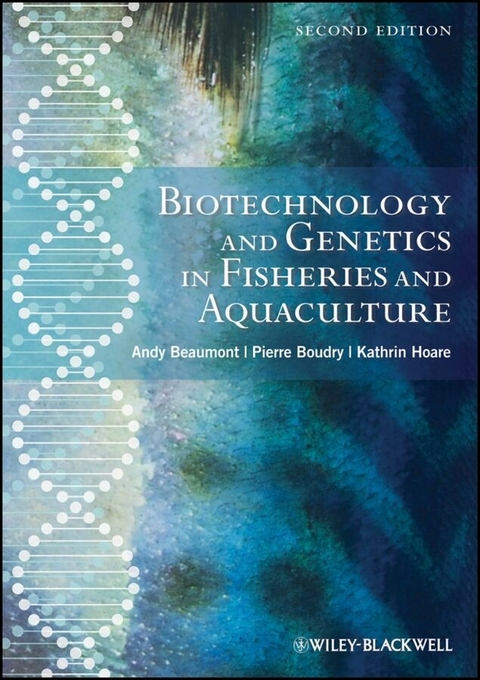
Following the extremely well-received structure of the first edition, this carefully revised and updated new edition now includes much new information of vital importance to those working and researching in the fisheries and aquaculture industries. Commencing with chapters covering genetic variation and how it can be measured, the authors then look at genetic structure in natural populations, followed by a new chapter covering genetics in relation to population size and conservation issues. Genetic variation of traits and triploids and the manipulation of ploidy are fully covered, and another new chapter is included, entitled 'From Genetics to Genomics'. The book concludes with a chapter covering the impact of genetic engineering in aquaculture. With the inclusion of a wealth of up-to-date information, new text and figures and the inclusion of a third author, Pierre Boudry, the second edition of Biotechnology and Genetics in Fisheries and Aquaculture provides an excellent text and reference of great value and use to upper level students and professionals working across fish biology, aquatic sciences, fisheries, aquaculture, genetics and biotechnology. Libraries in all universities and research establishments where biological sciences, fisheries and aquaculture are studied and taught should have several copies of this excellent new edition on their shelves. Completely updated, revised and expanded new edition Subject area of ever increasing importance Expanded authorship Commercially useful information for fish breeders
Andy Beaumont is based at the School of Ocean Sciences, Unioversity of Bangor, Menai, Wales, UK Pierre Boudry, based at IFREMER, France Kate Hoare, based at the School of Ocean Sciences, Menai Bridge, University of Bangor, Wales, UK
Preface to the second edition ix
Acknowledgements xi
Chapter 1 What is genetic variation? 1
Deoxyribose nucleic acid 1
Ribose nucleic acid 5
What is the genetic code? 7
Protein structure 7
So what about chromosomes? 9
How does sexual reproduction produce variation? 11
Mitochondrial and chloroplast DNA 16
Chapter 2 How can genetic variation be measured? 19
DNA sequence variation 19
DNA fragment size variation 36
Protein variation 44
Phenotypic variation 47
Chapter 3 Genetic structure in natural populations 49
What is a population? 49
How are allele frequencies estimated? 51
What is the relationship between alleles and genotypes? 51
How do allele frequencies change over time? 53
How does population structure arise? 54
How are genetic markers used to study population structure? 55
Levels of genetic differentiation in aquatic organisms 60
Potential problems with allozymes and coding markers 61
mtDNA variation 63
Microsatellite variation 66
Population structure in the flat oyster 68
Mixed stock analysis (MSA) 73
Chapter 4 Genetics of population size in conservation and aquaculture 77
Genetics of small population size in the wild 78
Genetic markers in conservation 82
Genetics of small population size in the hatchery 85
Is there evidence of loss of genetic variation in the hatchery? 87
How does hatchery propagation affect heterozygosity? 89
Genetic markers for identification of hatchery product 93
Genetic markers for pathogen identification 94
Chapter 5 Genetic variation of traits 99
Qualitative traits 99
Quantitative traits 105
What kinds of traits are important? 106
Variation of a quantitative trait 106
How can we estimate narrow-sense heritability? 109
Realised heritability 115
Correlated traits 118
What types of artificial selections are there? 118
Setting up a breeding programme 122
Inbreeding, cross-breeding and hybridisation 123
Current status of selective breeding programmes in aquaculture 126
Chapter 6 From genetics to genomics 129
What is the genome? 129
Genome mapping 130
Whole genome sequencing: the 'big picture' 137
QTL mapping 137
Application of QTLs in aquaculture and fisheries management 138
Marker-assisted selection (MAS): from QTLs to genomic selection 139
Transcriptomics 139
Chapter 7 Triploids and beyond: why manipulate ploidy? 145
How is it done? 146
Production of gynogens and androgens 148
Identification of ploidy change 149
Value of Triploids 151
Tetraploids 155
Gynogens and androgens 157
Chapter 8 Genetic engineering in aquaculture 161
The DNA construct 162
Transgene delivery 164
Transgene integration 168
Detecting integration and expression of the transgene 169
Results of transgenesis efforts in fish 171
So much for transgenics - what about cloning? 176
Genethics 176
Glossary 181
Index 193
Colour plates appear between pages 52 and 53
| Erscheint lt. Verlag | 21.1.2010 |
|---|---|
| Sprache | englisch |
| Themenwelt | Naturwissenschaften ► Biologie |
| Technik | |
| Weitere Fachgebiete ► Land- / Forstwirtschaft / Fischerei | |
| Schlagworte | Aquaculture • Aquaculture, Fisheries & Fish Science • Aquakultur • Aquakultur, Fischereiwesen u. Fischforschung • biotechnological • edition includes • emerging • Fields • First • fisheries • Genetic • genomics • importance • Inclusion • Information • major areas • New • Publication • Structure • Successful • techniques • use • Vital |
| ISBN-13 | 9781444318807 / 9781444318807 |
| Informationen gemäß Produktsicherheitsverordnung (GPSR) | |
| Haben Sie eine Frage zum Produkt? |
 PDF (Adobe DRM)
Kopierschutz: Adobe-DRM
Adobe-DRM ist ein Kopierschutz, der das eBook vor Mißbrauch schützen soll. Dabei wird das eBook bereits beim Download auf Ihre persönliche Adobe-ID autorisiert. Lesen können Sie das eBook dann nur auf den Geräten, welche ebenfalls auf Ihre Adobe-ID registriert sind.
Details zum Adobe-DRM
Dateiformat: PDF (Portable Document Format)
Mit einem festen Seitenlayout eignet sich die PDF besonders für Fachbücher mit Spalten, Tabellen und Abbildungen. Eine PDF kann auf fast allen Geräten angezeigt werden, ist aber für kleine Displays (Smartphone, eReader) nur eingeschränkt geeignet.
Systemvoraussetzungen:
PC/Mac: Mit einem PC oder Mac können Sie dieses eBook lesen. Sie benötigen eine
eReader: Dieses eBook kann mit (fast) allen eBook-Readern gelesen werden. Mit dem amazon-Kindle ist es aber nicht kompatibel.
Smartphone/Tablet: Egal ob Apple oder Android, dieses eBook können Sie lesen. Sie benötigen eine
Geräteliste und zusätzliche Hinweise
Buying eBooks from abroad
For tax law reasons we can sell eBooks just within Germany and Switzerland. Regrettably we cannot fulfill eBook-orders from other countries.
aus dem Bereich