


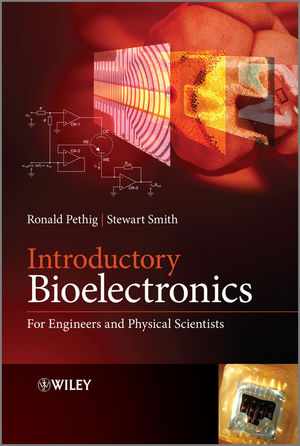
Introductory Bioelectronics (eBook)
John Wiley & Sons (Verlag)
978-1-118-44328-6 (ISBN)
Bioelectronics is a rich field of research involving the application of electronics engineering principles to biology, medicine, and the health sciences. With its interdisciplinary nature, bioelectronics spans state-of-the-art research at the interface between the life sciences, engineering and physical sciences.
Introductory Bioelectronics offers a concise overview of the field and teaches the fundamentals of biochemical, biophysical, electrical, and physiological concepts relevant to bioelectronics. It is the first book to bring together these various topics, and to explain the basic theory and practical applications at an introductory level.
The authors describe and contextualise the science by examining recent research and commercial applications. They also cover the design methods and forms of instrumentation that are required in the application of bioelectronics technology. The result is a unique book with the following key features:
- an interdisciplinary approach, which develops theory through practical examples and clinical applications, and delivers the necessary biological knowledge from an electronic engineer's perspective
- a problem section in each chapter that readers can use for self-assessment, with model answers given at the end of the book along with references to key scientific publications
- discussions of new developments in the bioelectronics and biosensors fields, such as microfluidic devices and nanotechnology
Supplying the tools to succeed, this text is the best resource for engineering and physical sciences students in bioelectronics, biomedical engineering and micro/nano-engineering. Not only that, it is also a resource for researchers without formal training in biology, who are entering PhD programmes or working on industrial projects in these areas.
Professor Ronald Pethig, Bioelectronics, School of Engineering, University of Edinburgh He has PhD degrees in electrical engineering and physical chemistry, and a D.Sc degree for work in the field of biomolecular electronics. He is author of one book (Dielectric and Electronic Properties of Biological Materials, Wiley) and more than 200 scientific papers in the field of biomolecular electronics and dielectrophoresis. He has received several awards, including in 2001 being the first recipient of the Herman P Schwan Award for work in biodielectrics. He serves on the editorial boards of several scientific journals, including acting as editor-in-chief of the IET journal Nanobiotechnology.
Stewart Smith, RCUK Academic Fellow, School of Engineering, University of Edinburgh He has a PhD in microelectronics and has authored over 60 scientific papers on subjects ranging from implantable drug delivery systems to test structures for the characterisation of MEMS processes. He is based at the Scottish Microelectronics Centre in Edinburgh where he works on the development of biomedical microsystems. He is a member of the technical committee for the IEEE International Conference on Microelectronic Test Structures.
Bioelectronics is a rich field of research involving the application of electronics engineering principles to biology, medicine, and the health sciences. With its interdisciplinary nature, bioelectronics spans state-of-the-art research at the interface between the life sciences, engineering and physical sciences. Introductory Bioelectronics offers a concise overview of the field and teaches the fundamentals of biochemical, biophysical, electrical, and physiological concepts relevant to bioelectronics. It is the first book to bring together these various topics, and to explain the basic theory and practical applications at an introductory level. The authors describe and contextualise the science by examining recent research and commercial applications. They also cover the design methods and forms of instrumentation that are required in the application of bioelectronics technology. The result is a unique book with the following key features: an interdisciplinary approach, which develops theory through practical examples and clinical applications, and delivers the necessary biological knowledge from an electronic engineer s perspective a problem section in each chapter that readers can use for self-assessment, with model answers given at the end of the book along with references to key scientific publications discussions of new developments in the bioelectronics and biosensors fields, such as microfluidic devices and nanotechnology Supplying the tools to succeed, this text is the best resource for engineering and physical sciences students in bioelectronics, biomedical engineering and micro/nano-engineering. Not only that, it is also a resource for researchers without formal training in biology, who are entering PhD programmes or working on industrial projects in these areas.
Professor Ronald Pethig, Bioelectronics, School of Engineering, University of Edinburgh He has PhD degrees in electrical engineering and physical chemistry, and a D.Sc degree for work in the field of biomolecular electronics. He is author of one book (Dielectric and Electronic Properties of Biological Materials, Wiley) and more than 200 scientific papers in the field of biomolecular electronics and dielectrophoresis. He has received several awards, including in 2001 being the first recipient of the Herman P Schwan Award for work in biodielectrics. He serves on the editorial boards of several scientific journals, including acting as editor-in-chief of the IET journal Nanobiotechnology. Stewart Smith, RCUK Academic Fellow, School of Engineering, University of Edinburgh He has a PhD in microelectronics and has authored over 60 scientific papers on subjects ranging from implantable drug delivery systems to test structures for the characterisation of MEMS processes. He is based at the Scottish Microelectronics Centre in Edinburgh where he works on the development of biomedical microsystems. He is a member of the technical committee for the IEEE International Conference on Microelectronic Test Structures.
Chapter 2
Cells and their Basic Building Blocks
2.1 Chapter Overview
The chemical composition of a typical bacterium and animal (mammalian) cell is shown in Table 2.1.
Table 2.1 Approximate chemical composition of a typical bacterium and mammalian cell. (Adapted from Alberts et al. [1])
| Chemical component | Percentage of total cell weight |
| Bacterium | Animal cell |
| Water | 70 | 70 |
| Inorganic ions (e.g. Na+, K+, Mg2+, Ca2+, Cl2−) | 1 | 1 |
| Amino acids, nucleotides, and other small molecules | 1 | 1 |
| Metabolites (e.g. glucose, fatty acids) | 2 | 2 |
| Macromolecules (proteins, nucleic acids, polysaccharides) | 24 | 21 |
| Lipids | 2 | 5 |
Leaving aside the water content of a cell, macromolecules such as proteins, nucleic acids (DNA, RNA), and polysaccharides make up a large percentage of a cell's mass. The building blocks for these macromolecules are small organic molecules, namely fatty acids, sugars, amino acids and nucleotides. This chapter describes the chemical structures and functions of these molecular building blocks, and the biological importance of the macromolecules and macrostructures they combine to form. A summary description is then given of how these macromolecules and microstructures interact and function in different types of cell.
After reading this chapter a basic understanding should be obtained of:
2.2 Lipids and Biomembranes
Cells of higher organisms are separated, but not isolated, from their surroundings by their cytoplasmic membrane, which also serves to act as anchors for proteins that transport or pump specific chemicals into or out of a cell. Membranes also define the boundaries of intracellular organelles and the nucleus in eukaryotic cells. The main structural components of biological membranes are lipids, which exist as derivatives of fatty acids. The term ‘lipid’ covers a wide range of molecules, including oils, waxes, sterols, certain (fat-soluble) vitamins and fats. The one property they all share in common is that they are hydrophobic. When placed in water individual lipid molecules will adopt a configuration that leads to minimum contact with water molecules, and will cluster into a group with other lipid molecules. This is exemplified by the formation of oil droplets in water, and how lipids in an aqueous medium segregate into a separate nonaqueous phase.
2.2.1 Fatty Acids
Fatty acid molecules contain a hydrocarbon chain, commonly consisting of 16 or 18 carbon atoms. An acidic carboxyl group (COOH) is attached to one end of this chain. Stearic acid CH3(CH2)16COOH and arachidic acid CH3(CH2)18COOH are examples, whose general chemical structure is shown below:
Stearic (n = 16) and arachidic (n = 18) acid are examples of fatty acids with no double (C=C) bonds in their hydrocarbon chain, and are termed as being saturated. If the hydrocarbon chain contains one or more double C=C bonds the fatty acid is termed unsaturated – an example of which is oleic acid CH3(CH2)7CH(CH2)7COOH:
The two hydrogen atoms attached to the carbons in the C=C double bond of oleic acid lie on the same side of the bond, and this configuration is known as the cis form. This cis configuration introduces a bend in the hydrocarbon chain. The other possible configuration, known as the trans form in which the two hydrogen atoms are situated on opposite sides of the C=C double bond, does not result in a bent hydrocarbon chain. The reason why butter and lard are solid at room temperature is because they are composed of saturated fatty acids whose straight hydrocarbon chains can pack closely together. Easily spreadable butter substitutes (e.g. margarine) contain unsaturated fatty acids that are unable to pack closely together because of the ‘kinks’ in their hydrocarbon chains, and have a softer form than butter at room temperature. Plant oils contain polyunsaturated fatty acids (with multiple C=C double bonds) and are liquid at room temperature.
A fatty acid molecule thus has two chemically distinct parts – a long hydrophobic chain that is not very reactive chemically, and a carboxyl group (COOH) which when ionised as COO− is chemically active and hydrophilic. Molecules such as these, which contain both hydrophobic and hydrophilic regions, are termed amphipathic. Fatty acids by themselves will not form a membrane that is capable of acting as a boundary between an aqueous medium and the aqueous cytoplasm of a cell. In aqueous media fatty acids will tend to form clusters, with the hydrocarbon chains packed together inside and the carboxylic acid groups directed outwards towards the surrounding water molecules. To form biomembranes fatty acids need to be converted into a structure that readily form sheets of lipid bilayers. The most common ones adopted in nature are phospholipids composed of two fatty acid side chains attached to a negatively charged (and hence hydrophilic) phosphate group via a glycerol molecule. The two fatty acid ‘tails’ may both be saturated, unsaturated, or adopt one of each form. As shown in Figure 2.1, in some phospholipids the ‘head’ of the molecule may be increased in size with the addition of an amine which can ionise to the hydrophilic form NH3+.
Figure 2.1 The chemical structure of a typical phospholipid (in this case phosphatidylethanolamine) to show its hydrophobic tail and hydrophilic head group.
Phospholipids can spontaneously form sheets of bilayers, two molecules thick, in an aqueous environment. As depicted in Figure 2.2, the hydrocarbon tails keep away from the water by aligning themselves in the middle of the bilayer structure. The close packing of the hydrocarbon tails is stabilised by van der Waals interactions, and the fluidity of the bilayer interior is influenced by the number of C=C double bonds in the hydrocarbon structures of the tails. The polar head groups are stabilised through hydrogen bonding to water molecules, as well as by electrostatic interactions between the phosphate and amine groups. As shown schematically in Figure 2.3 for a fat cell, the outer membrane of a cell is formed by a spherical lipid bilayer structure that encloses the cytoplasm and internal cell structures.
Figure 2.2 Schematic representation of a phospholipid bilayer. The small spheres represent the hydrophilic heads groups, and the lines are the hydrophobic hydrocarbon tails of individual phospholipid molecules.
Figure 2.3 Schematic representation of a fat cell (adipocyte).
Apart from their importance as precursors to phospholipids, fatty acids are used as a source of energy by tissues. Fat cells, known as adipocytes, contain one large droplet of lipid (see Figure 2.3). When triggered by hormones such as adrenaline these cells release fatty acids into their surrounding environment (normally blood), which are then broken down into smaller molecules identical to those derived from the breakdown of glucose.
2.3 Carbohydrates and Sugars
Carbohydrates are composed of carbon atoms and the atoms that form water molecules, namely hydrogen and oxygen. Simple carbohydrates, called mono-saccharides, have the chemical structure (CH2O)n and are often referred to as simple sugars. The number ‘n’ of carbon atoms ranges from 3 to 7 and the corresponding sugar molecules are called trioses, tetroses, pentoses, hexoses and heptoses. We will learn later in this chapter that two pentose sugars (ribose and deoxyribose) are essential components of DNA and RNA. An important hexose is glucose (C6H12O6) because when it is broken down in cells of higher organisms it releases free energy. As shown in Figure 2.4 the linear structure of glucose can form a ring structure arising from the reaction of the aldehyde at the 1 carbon with the hydroxyl group on the 5 carbon, to form glucopyranose. A less common ring structure (glucofuranose) is formed by the reaction of the 1 carbon aldehyde with the hydroxyl on the 4 carbon. The chemical formula of a monosaccharide does not therefore fully describe the molecule. For example, a different sugar is formed if the hydrogen and hydroxyl groups attached to the 2 carbon of the D-glucose molecule switch places. This sugar (mannose) cannot be converted to glucose without breaking and making the relevant covalent bonds. Each of the sugars can also exist in either of two forms that are mirror images of each other, called the D-form...
| Erscheint lt. Verlag | 22.8.2012 |
|---|---|
| Sprache | englisch |
| Themenwelt | Medizin / Pharmazie ► Gesundheitsfachberufe |
| Medizin / Pharmazie ► Medizinische Fachgebiete | |
| Naturwissenschaften ► Physik / Astronomie ► Angewandte Physik | |
| Technik ► Umwelttechnik / Biotechnologie | |
| Schlagworte | Apparatetechnik u. Biosensoren • application • Bioelectronics • Bioinstrumentation & Biosensors • biomedical engineering • Biomedizintechnik • concise • Electrical & Electronics Engineering • Electronics • Elektrotechnik u. Elektronik • Engineering • Field • fundamentals • Halbleiter • Interdisciplinary • Interface • introductory • Life Sciences • Overview • Principles • Research • Rich • semiconductors • Sensoren, Instrumente u. Messung • Sensors, Instrumentation & Measurement • spans • stateoftheart research |
| ISBN-10 | 1-118-44328-4 / 1118443284 |
| ISBN-13 | 978-1-118-44328-6 / 9781118443286 |
| Informationen gemäß Produktsicherheitsverordnung (GPSR) | |
| Haben Sie eine Frage zum Produkt? |
 EPUB (Adobe DRM)
Kopierschutz: Adobe-DRM
Adobe-DRM ist ein Kopierschutz, der das eBook vor Mißbrauch schützen soll. Dabei wird das eBook bereits beim Download auf Ihre persönliche Adobe-ID autorisiert. Lesen können Sie das eBook dann nur auf den Geräten, welche ebenfalls auf Ihre Adobe-ID registriert sind.
Details zum Adobe-DRM
Dateiformat: EPUB (Electronic Publication)
EPUB ist ein offener Standard für eBooks und eignet sich besonders zur Darstellung von Belletristik und Sachbüchern. Der Fließtext wird dynamisch an die Display- und Schriftgröße angepasst. Auch für mobile Lesegeräte ist EPUB daher gut geeignet.
Systemvoraussetzungen:
PC/Mac: Mit einem PC oder Mac können Sie dieses eBook lesen. Sie benötigen eine
eReader: Dieses eBook kann mit (fast) allen eBook-Readern gelesen werden. Mit dem amazon-Kindle ist es aber nicht kompatibel.
Smartphone/Tablet: Egal ob Apple oder Android, dieses eBook können Sie lesen. Sie benötigen eine
Geräteliste und zusätzliche Hinweise
Buying eBooks from abroad
For tax law reasons we can sell eBooks just within Germany and Switzerland. Regrettably we cannot fulfill eBook-orders from other countries.


