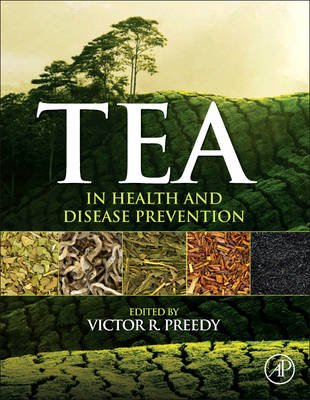
Tea in Health and Disease Prevention
Academic Press Inc (Verlag)
978-0-12-384937-3 (ISBN)
- Titel erscheint in neuer Auflage
- Artikel merken
While there have been many claims of the benefits of teas through the years, and while there is nearly universal agreement that drinking tea can benefit health, there is still a concern over whether the lab-generated results are representative of real-life benefit, what the risk of toxicity might be, and what the effective-level thresholds are for various purposes. Clearly there are still questions about the efficacy and use of tea for health benefit.
This book presents a comprehensive look at the compounds in black, green, and white teas, their reported benefits (or toxicity risks) and also explores them on a health-condition specific level, providing researchers and academics with a single-volume resource to help in identifying potential treatment uses. No other book on the market considers all the varieties of teas in one volume, or takes the disease-focused approach that will assist in directing further research and studies.
Victor R. Preedy BSc, PhD, DSc, FRSB, FRSPH, FRSC, FRCPath graduated with an Honours Degree in Biology and Physiology with Pharmacology. After gaining his University of London PhD, he received his Membership of the Royal College of Pathologists. He was later awarded his second doctorate (DSc), for his contribution to protein metabolism in health and disease. He is Professor of Clinical Biochemistry (Hon) at King’s College Hospital and Emeritus Professor of Nutritional Biochemistry at King’s College London. He has Honorary Professorships at the University of Hull, and the University of Suffolk. Professor Preedy was the Founding Director and then long-term Director of the Genomics Centre at King’s College London from 2006 to 2020. Professor Preedy has been awarded fellowships of the Royal Society of Biology, the Royal College of Pathologists, the Royal Society for the Promotion of Health, the Royal Institute of Public Health, the Royal Society for Public Health, the Royal Society of Chemistry and the Royal Society of Medicine. He carried out research when attached to the National Heart Hospital (part of Imperial College London), The School of Pharmacy (now part of University College London) and the MRC Centre at Northwick Park Hospital. He has collaborated with international research groups in Finland, Japan, Australia, USA, and Germany. To his credit, Professor Preedy has published over 750 articles, which includes peer-reviewed manuscripts based on original research, abstracts and symposium presentations, reviews and edited books.
Preface
Section 1: Tea, Tea Drinking and Varieties
1. The tea plants: botanical aspects
2. Black tea: manufacture and composition
3. Green tea: plants, artisanal knowledge, processing, manufacturing and production
4. White tea: the plants, processing, manufacturing and production
5. Pu-erh Tea: Botany, Ethnobotany, Production, and Chemistry
6. Mate-tea: manufacture and composition
7. Kombucha type fermented teas
8. Oolong tea : the plants, processing, manufacturing and production
9. Herbal teas
Section 2: Production, Processing and Preparation
10. Advances in processing of tea extracts: emerging sustainable technologies
11. The effect of tea brewing time on chemical content and biological activity
12. Tea processing and impact on catechins, theaflavin and thearubigin formation
Section 3: Compositional and Nutritional Aspects
13. Compounds found in tea, their concentrations, and methods of analysis
14. Infusion times and temperature on the composition of tea beverages
15. Adulterants in tea
16. How the health-benefit components of tea vary depending on the cultivar and season: The example of Darjeeling tea
17. FLUORIDE AND TEAS CONSUMPTION: A Balanced Synopsis
18. Trace elements and nutritional aspects of tea (copper, iron and zinc)
19. Heavy metals in teas and their health implications
20. Tea as a dietary antioxidant: contribution to total antioxidant capacity
21. Tea and food antioxidant interactions: investigating antagonism and synergism
22. Matcha tea: and its antioxidant profile and effects
23. Tea, energy metabolism and the satiety responses
Section 4: General Aspects of the Effects of Tea
a. Body, organs, and tissues
24. Tea consumption and body fat distribution
25. Revising the potential role of black tea to alleviate metabolic syndrome
26. Kombucha tea and liver protection
27. Tea and the gut microbiota
28. Evaluation of anti-osteoporosis effects of Camellia sinensis (tea), its extracts and major compounds
29. Potential clinical application of green tea therapy to ocular protection
30. Tea and the diabetic heart: clinical aspects, bioactives, markers and outcomes of cardiovascular disease in diabetes
31. Linking exercise and green tea consumption as an antioxidant strategy
32. Bioinformatics applications for evaluating health and pharmacological properties of tea: use of computer-assisted drug discovery tools
b. Celular and non organ effects
33. Sunscreens from green tea
34. Tea and kidney stone formation
35. Tea and cancer risk
36. Molecular aspects of the effects of green tea extracts in cancer studies
37. Epigenetic factors of green tea consumption in cancer prevention
38. The potential for black tea in combating arsenic toxicity
39. Tea extract and usage against multidrug-resistant bacteria
40. Tea and its antibacterial effects compared to other plants
Section 5: Focused Areas, Specific Tea Components and Effects on Tissue and Organ Systems
41. Epigallocatechin-3-gallate and effects on leukemia cells
42. Tea epigallocatechin gallate and impact on life span
43. Epigallocatechingallate and its antifungal profiles
44. Unravelling molecular and cellular mechanisms underlying the beneficial effects of epigallocatechin-3-gallate by proteomic investigations
45. Autophagy and green tea epigallocatechin-3-gallate: applications to female reproductive cancers
46. Green tea epigallocatechin gallate and its impact on heart health
47. Epigallocatechin gallate (EGCG): in silico and molecular docking properties
48. Molecular effects of green tea epigallocatechin gallate on the microRNA-143/MAPK7 and microRNA-let-7a/HMGA2 pathways
49. Pharmacology of caffeine: Implications for tea drinking
50. Caffeine and potential use in Parkinson's Disease
51. Catechin: features and linking effects on caffeine and mast cells
I52. Green Tea Catechins and Physical Activity: Exploring their Role in Prostate Cancer Studies
53. Candida glabrata: protection with tea derived rutin and coumaroylquinic acid
54. Theaflavins in tea: features and effects
55. Theaflavin enriched black tea: uses and applications
56. Theanine (L-glutamylethylamide) in tea, and protection of bladder function
57. Tea catechins and theaflavins, and molecular docking studies for drug targets
58. Oolonghomobisflavans in oolong tea and lifespan effects
Section 6: Behavior, Brain, and Neurological Systems
59. Tea consumption and depression
60. Tea drinking and reduction of anxiety
61. Theanine and amelioration of brain stress
62. Theanine (L-gamma-glutamylethylamide) in green tea, and its use in cognition
63. Theanine (L-gamma- glutamylethylamide) in tea: effects on attention and underlying neurophysiology
64. Green Tea Prevents Apoptosis in Stroke
65. Caffeine and beneficial cognitive effects
66. Tea catechin and visual motion processing
67. Green tea and health outcomes including cardiovascular disease, cancer, and dementia
Section 7: Adverse Effects and Contaminants of Tea and Tea-Related Products
68. Toxicity of tea polyphenols
69. Arsenic and chromium in teas: assessing their nutritional and health implications
70. Anthraquinone in tea and implications for toxicology
71. Clinical evidence of tea–drug interactions
72. Glyphosate in tea as a potentially toxic compound
73. Microplastic Pollution in Tea: What Do We Know?
Section 8: Applications of byproducts, Selective Methods and Resources
74. Usage of spent tea leaves: a new narrative
75. Uses and profiles of spent black tea: Micro encapsulation and antioxidant activity
76. Advanced analytical techniques for bioactive compounds in tea
77. Catechins in tea and methods for their detection
78. Methods and Technologies for the analysis of caffeine in tea
79. Pesticides in teas: methods of analysis
80. Carotenoids in Tea
81. Contamination level of Polycyclic Aromatic Hydrocarbons in tea and tea infusion: analytical methods and risk assessment
82. Resources
| Erscheint lt. Verlag | 5.12.2012 |
|---|---|
| Verlagsort | San Diego |
| Sprache | englisch |
| Maße | 216 x 276 mm |
| Gewicht | 3530 g |
| Themenwelt | Medizin / Pharmazie ► Gesundheitsfachberufe ► Diätassistenz / Ernährungsberatung |
| Naturwissenschaften ► Biologie | |
| ISBN-10 | 0-12-384937-3 / 0123849373 |
| ISBN-13 | 978-0-12-384937-3 / 9780123849373 |
| Zustand | Neuware |
| Informationen gemäß Produktsicherheitsverordnung (GPSR) | |
| Haben Sie eine Frage zum Produkt? |
aus dem Bereich