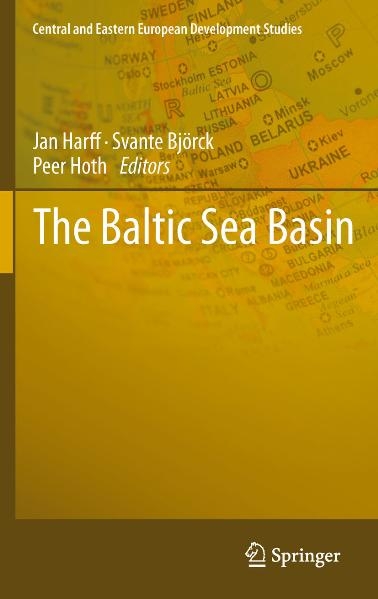
The Baltic Sea Basin (eBook)
XIII, 449 Seiten
Springer Berlin (Verlag)
978-3-642-17220-5 (ISBN)
This book reports about the results of a Special Symposium 'The Baltic Sea Basin', held on August 11, 2008, within the frame of the 33rd IGC at Oslo, Norway in order to foster the understanding of the Baltic Basin as a unit in terms of genesis, structure, ongoing processes and utilization. It is the first time that in a joint publication, scientists from different disciplines give a comprehensive overview about the Baltic Sea basin in such a general sense. The book will be used not only by students and scientist but also by engineers and decision makers from industry and politics. Summarizing the state of the art in the investigation of the Baltic Sea Basin, but also in the resource utilisation of the basin the book will enhance the development of new monitoring strategies and technical device design including satellite observation methods, the establishment of international research laboratories, innovative topics for interdisciplinary research projects, etc.
Jan Harff is a geologists and Professor emeritus for Marine Geology at the Leibniz-Institute for Baltic Sea Research, Warnemünde, Germany. Currently, he serves as Humboldt Honorary Research Fellow at the University of Szczecin, Poland, and as adjunct Professor at two research institutes of the Academica sinica. He is a elected Foreign Member of the Lithuanian Academy of Sciences and the Russian Academy of Natural Sciences. His main fields of interest are marine geology, sedimentology, paleoceanography and mathematical geology.
Svante Björck is Professor and head of Quaternary Sciences at the GeoBiosphere Science Centre in Lund. His main research interests concern paleoclimate and paleoenvironments, including sea levels, of the last 150.000 years. He is an elected member of the Swedish Royal Academy of Sciences, of the Royal Fysiographic Society. He was internationally evaluated 2006 by VR as 'Outstanding Swedish Quaternary Geologist', chosen as the 'Geologist of the Year' (Årets Geolog) in 2006 by Sveriges Naturvetarförbund.
Peer Hoth is a geologist with a Ph.D. from the Technical University in Berlin. He works now since two years for the energy department of the German Ministry of Economics and Technology. Before, he served as a research scientist for different research institutions mainly in the field of energy. His main field of interest are basin analysis, sedimentology, oil and gas exploration and geothermal energy.
Jan Harff is a geologists and Professor emeritus for Marine Geology at the Leibniz-Institute for Baltic Sea Research, Warnemünde, Germany. Currently, he serves as Humboldt Honorary Research Fellow at the University of Szczecin, Poland, and as adjunct Professor at two research institutes of the Academica sinica. He is a elected Foreign Member of the Lithuanian Academy of Sciences and the Russian Academy of Natural Sciences. His main fields of interest are marine geology, sedimentology, paleoceanography and mathematical geology. Svante Björck is Professor and head of Quaternary Sciences at the GeoBiosphere Science Centre in Lund. His main research interests concern paleoclimate and paleoenvironments, including sea levels, of the last 150.000 years. He is an elected member of the Swedish Royal Academy of Sciences, of the Royal Fysiographic Society. He was internationally evaluated 2006 by VR as ‘Outstanding Swedish Quaternary Geologist’, chosen as the “Geologist of the Year” (Årets Geolog) in 2006 by Sveriges Naturvetarförbund. Peer Hoth is a geologist with a Ph.D. from the Technical University in Berlin. He works now since two years for the energy department of the German Ministry of Economics and Technology. Before, he served as a research scientist for different research institutions mainly in the field of energy. His main field of interest are basin analysis, sedimentology, oil and gas exploration and geothermal energy.
Contents 5
Contributors 8
Part I Introduction 13
1 The Baltic Sea Basin: Introduction 14
Part II Geological and Tectonical Evolution 21
2 Geological Evolution and Resources of the Baltic Sea Area from the Precambrian to the Quaternary 22
2.1 Introduction 23
2.2 Geological Framework and History of Sedimentation 23
2.2.1 The Baltic Basin 23
2.2.2 The Southwestern Basin Rim 29
2.3 Basin Subsidence and Geodynamic Evolution 32
2.3.1 Failed Rift Stage 33
2.3.2 Passive Continental Margin Stage 34
2.3.3 Foreland Stage 35
2.3.4 Intracratonic Basin Stage 36
2.3.5 Thermal Doming and Thermal Sag Stage 36
2.4 Major Tectonic Phases and Basin Structures 37
2.4.1 Early Ediacaran Tectonic--Igneous Phase 39
2.4.2 Late Silurian--Early Devonian Phase 40
2.4.3 Permocarboniferous Phase 41
2.4.4 Late Cretaceous Inversion Phase 43
2.5 Tectonic Evolution of the Southwestern Basin Rim During the Early Palaeozoic 43
2.6 Present Morphology of the Baltic Sea Depression 44
2.7 Geological Resources 46
2.7.1 Hydrocarbon Fields 46
2.7.2 Major Reservoirs 47
2.7.3 Source Rocks 48
2.7.4 Oil and Gas Generation 50
2.8 Discussion and Conclusions 52
References 54
3 Glacial Erosion/Sedimentation of the Baltic Region and the Effect on the Postglacial Uplift 61
3.1 Introduction 61
3.2 Glacial Erosion and Sedimentation 63
3.3 Methods 65
3.4 Results and Discussion 71
3.4.1 Sediment accumulation and mass balance 74
3.5 Conclusions 76
References 77
Part III The Basin Fill as a Climate and Sea Level Record 80
4 The Development of the Baltic Sea Basin During the Last 130ka 81
4.1 Introduction 81
4.2 History of the Baltic Sea Prior to the Last Glacial Maximum (LGM) 83
4.2.1 130--70 ka BP 83
4.3 Late and Postglacial History of the Baltic Sea 88
4.3.1 16,00--11,7 ka BP 88
4.3.2 11.7--10.7 ka BP 90
4.3.3 10.7--9.8 ka BP 92
4.3.4 9.8--8.5 (8) ka BP 94
4.3.5 8.5 (8) ka BP--Present 95
4.3.6 Salinity 96
4.3.7 Nutrient Conditions and Hypoxia 97
References 98
5 Late Quaternary Climate Variations Reflected in Baltic Sea Sediments 104
5.1 Introduction 105
5.2 The Area of Investigation and the Geological Development as a Response to Climate Variability 105
5.3 Methodology 109
5.4 Data 111
5.4.1 Seismoacoustic Survey 111
5.4.2 Sampling and Sediment Data 111
5.4.3 Physical Properties 113
5.4.4 Geochemical Data 116
5.4.5 Diatomological Data 116
5.5 Results 117
5.5.1 Zonation of Basin Sediments 117
5.5.2 Spatial Correlation of Late Pleistocene to Holocene Sediments 118
5.5.3 Thickness Analysis 119
5.5.4 Downhole Facies Variation at the Central Eastern Gotland Basin as Indicator for Holocene Environmental Change 121
5.5.4.0 Zone A (520--417 cm) 124
5.5.4.0 Zone B1 (417--354 cm) 125
5.5.4.0 Zone B2 (354--333 cm) 125
5.5.4.0 Zone B3 (333--250 cm) 125
5.5.4.0 Zone B4 (250--94 cm) 125
5.5.4.0 Zone B5 (94--48 cm) 126
5.5.4.0 Zone B6 (48--20 cm) 126
5.5.5 Periodicity (Frequency) Analysis 126
5.6 Discussion 128
5.7 Summary 132
References 133
6 Geological Structure of the Quaternary Sedimentary Sequence in the Klaipda Strait, Southeastern Baltic 138
6.1 Introduction 139
6.2 Geological Setting 141
6.3 Methods 142
6.3.1 Sampling 142
6.3.2 IR-OSL Measurements 144
6.3.3 Other Investigations 146
6.4 Results 146
6.5 Discussion 147
6.6 Conclusions 149
References 150
Part IV Coastline Changes 152
7 Coastlines of the Baltic Sea -- Zones of Competition Between Geological Processes and a Changing Climate: Examples from the Southern Baltic 153
7.1 Introduction 154
7.2 Area of Investigation 155
7.3 Regional Transgression/Regression Model 157
7.4 Sea Level Change and Palaeogeographic Scenarios 158
7.5 Vertical Displacement of the Earth's Crust 161
7.6 Extreme Sea Level Scenarios (Future Projections) 162
7.7 Conclusion 165
References 166
8 Palaeogeographic Model for the SW Estonian Coastal Zone of the Baltic Sea 169
8.1 Introduction 169
8.2 Study Area 171
8.3 Modelling of Water-Level Change and Palaeocoastlines 171
8.3.1 Reconstruction of Water-Level Surfaces 171
8.3.2 Water-Level Change Curve for the Pärnu Area 173
8.3.3 Temporal and Spatial Water-Level Change Model 178
8.3.4 Reconstruction of Palaeocoastlines 179
8.4 Modelling Results 179
8.5 Development of the Baltic Sea Coastline and Stone Age Human Occupations in SW Estonia 186
8.6 Conclusions 189
References 190
9 Palaeoreconstruction of the Baltic Ice Lake in the Eastern Baltic 193
9.1 Introduction 193
9.2 Methods 195
9.3 Results 196
9.3.1 BIL 13,300 cal. years BP (A1) 196
9.3.2 BIL 12,700 cal. years BP (A2) 197
9.3.3 BIL 12,200 cal. years BP (BI) 197
9.3.4 BIL 12,000 cal. years BP (BII) 199
9.3.5 BIL 11,600 cal. years (BP/BIII) 200
9.4 Discussion 201
9.5 Conclusions 203
References 204
10 Submerged Holocene Wave-Cut Cliffs in the South-eastern Part of the Baltic Sea: Reinterpretation Based on Recent Bathymetrical Data 207
10.1 Introduction 207
10.2 Study Area 208
10.3 Previous Studies 211
10.4 Materials and Methods 214
10.5 Results 215
10.6 Discussion 217
10.7 Conclusions 220
References 220
11 Drowned Forests in the Gulf of Gda´nsk (Southern Baltic) as an Indicator of the Holocene Shoreline Changes 222
11.1 Introduction 222
11.2 Area, Scope and Methods of Study 223
11.3 Results 227
11.4 Discussion 232
11.5 Summary 233
References 233
12 Holocene Evolution of the Southern Baltic Sea Coast and Interplay of Sea-Level Variation, Isostasy, Accommodation and Sediment Supply 235
12.1 Introduction 235
12.2 Geographic Setting 236
12.3 Data Acquisition 238
12.4 Investigation Results 240
12.4.1 Sea-Level Development 240
12.4.2 Relief Prior to Transgression 242
12.4.3 Structure and Volume of Coastal Barriers 244
12.5 Discussion and Conclusions 246
12.6 Summary 249
References 251
Part V Sediment Dynamics 254
13 On the Dynamics of ``Almost Equilibrium'' Beaches in Semi-sheltered Bays Along the Southern Coast of the Gulf of Finland 255
13.1 Beaches Along the North Estonian Coast 256
13.2 Forcing Factors of Sediment Transport Processes 258
13.2.1 Internal Properties of Beaches beaches 258
13.2.2 Forcing Factors 261
13.2.3 Local Sediment Transport 262
13.3 Features of Pirita Beach and Narva-Jõesuu Beach 264
13.4 Equilibrium Profiles and Transport Patterns 267
13.5 Applications for “Almost Equilibrium” Beaches 269
13.5.1 Sediment Balance at Pirita Beach 270
13.5.2 Sediment Loss from Almost Equilibrium Beaches 271
13.5.3 Interplay of Littoral Transport and River Flow at Narva-Jõesuu 273
13.6 Discussion and Conclusions 275
References 277
14 Modelling Coastline Change of the Darss-Zingst Peninsula with Sedsim 280
14.1 Introduction 281
14.2 Area of Investigation 281
14.3 Methodology 282
14.4 Data 284
14.4.1 Digital Elevation Model 284
14.4.2 Sediment Map 285
14.4.3 Vertical Movement of the Earth's Crust 287
14.4.4 Sea Level Change 288
14.4.5 Waves 290
14.4.6 Events 291
14.5 Results and Discussion 292
14.6 Summary 294
References 295
Part VI Interactions Between a Changing Environment and Society 298
15 Settlement Development in the Shadow of Coastal Changes -- Case Studies from the Baltic Rim 299
15.1 Introduction 299
15.2 Methodology 301
15.2.1 Shore-Displacement Models as a Base for Dating Prehistoric Sites 302
15.2.2 Archaeological Sites as Sea-Level Index Points 304
15.3 Case Studies -- The Baltic Rim as a Prehistoric Anthroposphere and an Archive of Coastal Change 305
15.3.1 Late Palaeolithic Reindeer Hunters Around the Baltic Ice Lake and Yoldia Sea 306
15.3.2 Mesolithic and Early Neolithic Hunter-Gatherers and Fishermen on the Shores of the Ancylus Lake and Littorina Sea 313
15.3.3 Seamen and Traders -- The Post-Littorina and Limnaea Seas as a Transportation and Communication Zone 323
15.4 Summary 328
References 330
16 Geological Hazard Potential at the Baltic Sea and Its Coastal Zone: Examples from the Eastern Gulf of Finland and the Kaliningrad Area 335
16.1 Introduction 335
16.1.1 Approaches and Methods of the Geological Hazard Classification and Typology 337
16.2 Materials and Methods 340
16.3 Results 342
16.4 Kaliningrad Area 342
16.4.1 Endogenic Processes 342
16.4.2 Exogenic Processes 344
16.4.2.1 Coastal Erosion 344
16.4.2.2 Sea Bottom Erosion 345
16.4.2.3 Slope Slides 346
16.4.2.4 Aeolian Processes 347
16.4.2.5 Flood and Swamping 347
16.5 Eastern Gulf of Finland 347
16.5.1 Endogenic Processes 347
16.5.2 Exogenic Processes 348
16.5.2.1 Coastal Erosion 348
16.5.2.2 Sea Bottom Erosion and Sediment Flows 350
16.5.2.3 Ice Impact 353
16.5.2.4 Slope Slides 353
16.5.2.5 Sea Bottom Sediment Pollution 353
16.6 General Classification of Geological Hazard Potential of the Eastern Gulf of Finland and the Kaliningrad Area 354
16.7 Discussion and Risk Prevention 355
16.8 Conclusions and Future Work 358
References 359
17 Seafloor Desertification -- A Future Scenario for the Gulf of Finland? 363
17.1 Introduction 363
17.2 Study Area and Characteristics of the Gulf of Finland 364
17.3 Materials and Methods 366
17.4 Present Situation 366
17.5 Worst Scenario 368
17.6 Discussion 369
References 370
18 Sources, Dynamics and Management of Phosphorus in a Southern Baltic Estuary 371
18.1 Background and Objectives 371
18.2 Methods and Models 373
18.3 Long-Term Pollution History 375
18.4 Annual Dynamics and the Role of Sediments 377
18.5 Phosphorus Budget in the Lagoon 380
18.6 Phosphorus Load Reductions in the River Basin 382
18.7 Discussion and Conclusion 384
References 385
Part VII Hydrogeological Modeling 387
19 Potential Change in Groundwater Discharge as Response to Varying Climatic Conditions -- An Experimental Model Study at Catchment Scale 388
19.1 Introduction 388
19.2 Materials and Methods 390
19.2.1 Balance Concept 390
19.2.2 Groundwater Recharge Assessment 391
19.2.3 Numerical Groundwater Models Feflow and Modflow 392
19.3 Test Site: Subcatchment at Wismar Bay 392
19.4 Model Assumptions and Results 393
19.4.1 Groundwater Recharge 393
19.4.2 Finite-Element Model: 'Catchment' 394
19.4.3 Simplified Finite-Difference Model 'Simple' for Transient Simulation of Sea-Level Rise 396
19.5 Discussion 398
19.6 Conclusion 400
References 400
Part VIII Monitoring 402
20 Monitoring the Bio-optical State of the Baltic Sea Ecosystem with Remote Sensing and AutonomousINTbreak In Situ Techniques
20.1 Introduction 404
20.1.1 The Baltic Sea from an Optical Perspective 404
20.1.2 Seasonal Variations in Optical Properties 405
20.1.3 Eutrophication in the Baltic Sea 405
20.1.4 Baltic Sea Ecology Observed from Space 406
20.1.5 Bio-optical Properties of Natural Waters 408
20.1.6 Historical Trends in Water Quality Assessment 409
20.1.7 A Multiscale Approach to Monitoring 411
20.2 Methods Applied 412
20.2.1 Remote Sensing Methods 412
20.2.1.1 Background 412
20.2.1.2 Ocean Colour Remote Sensing 412
20.2.1.3 Remote Sensing Products 413
20.2.1.4 Limitations and Challenges 414
20.2.1.5 Baltic Sea Remote Sensing 415
20.2.1.6 Operational Satellite Systems in the Baltic Sea 416
20.2.2 Autonomous Systems for Sea-Truthing of Satellite Data 417
20.2.2.1 The FerryBox System 417
20.2.2.2 The In Situ Autonomous NASA AERONET-Ocean Colour Stations 418
20.3 Recent Results and Developments 419
20.3.1 Assessment of Eutrophication from Space 419
20.3.2 Optical Gradients of Inorganic Suspended Matter in Coastal Waters 421
20.3.3 Synoptic Use of Remote Sensing and In Situ Techniques 422
20.4 Conclusions and Outlook 424
References 427
Index 432
| Erscheint lt. Verlag | 15.4.2011 |
|---|---|
| Reihe/Serie | Central and Eastern European Development Studies (CEEDES) | Central and Eastern European Development Studies (CEEDES) |
| Zusatzinfo | XIII, 449 p. 160 illus., 140 illus. in color. |
| Verlagsort | Berlin |
| Sprache | englisch |
| Themenwelt | Naturwissenschaften ► Geowissenschaften ► Geografie / Kartografie |
| Naturwissenschaften ► Geowissenschaften ► Geologie | |
| Technik | |
| Schlagworte | Baltic Basin • ecotoxicology • geoinformatics • natural resources • Paleoclimatology • Tectonics |
| ISBN-10 | 3-642-17220-2 / 3642172202 |
| ISBN-13 | 978-3-642-17220-5 / 9783642172205 |
| Informationen gemäß Produktsicherheitsverordnung (GPSR) | |
| Haben Sie eine Frage zum Produkt? |
 PDF (Wasserzeichen)
DRM: Digitales Wasserzeichen
Dieses eBook enthält ein digitales Wasserzeichen und ist damit für Sie personalisiert. Bei einer missbräuchlichen Weitergabe des eBooks an Dritte ist eine Rückverfolgung an die Quelle möglich.
Dateiformat: PDF (Portable Document Format)
Mit einem festen Seitenlayout eignet sich die PDF besonders für Fachbücher mit Spalten, Tabellen und Abbildungen. Eine PDF kann auf fast allen Geräten angezeigt werden, ist aber für kleine Displays (Smartphone, eReader) nur eingeschränkt geeignet.
Systemvoraussetzungen:
PC/Mac: Mit einem PC oder Mac können Sie dieses eBook lesen. Sie benötigen dafür einen PDF-Viewer - z.B. den Adobe Reader oder Adobe Digital Editions.
eReader: Dieses eBook kann mit (fast) allen eBook-Readern gelesen werden. Mit dem amazon-Kindle ist es aber nicht kompatibel.
Smartphone/Tablet: Egal ob Apple oder Android, dieses eBook können Sie lesen. Sie benötigen dafür einen PDF-Viewer - z.B. die kostenlose Adobe Digital Editions-App.
Buying eBooks from abroad
For tax law reasons we can sell eBooks just within Germany and Switzerland. Regrettably we cannot fulfill eBook-orders from other countries.
aus dem Bereich