Paleopalynology (eBook)
XVIII, 813 Seiten
Springer Netherlands (Verlag)
978-1-4020-5610-9 (ISBN)
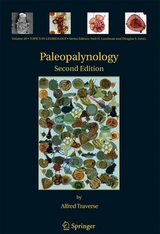
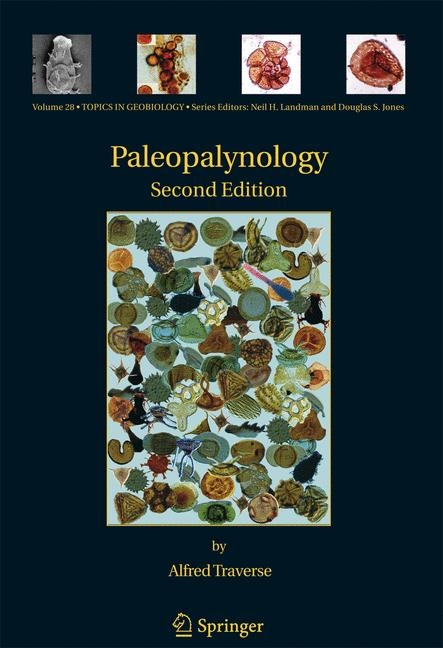
This book provides complete coverage of all aspects of the study of all fossil palynomorphs yet studied. It is a profusely illustrated treatment. The book serves both as a student text and general reference work. Palynomorphs yield information about age, geological and biological environment, climate during deposition, and other significant factors about the enclosing rocks. Extant spores and pollen are treated first, preparing the student for more difficult work with fossil sporomorphs and other kinds of palynomorphs. An appendix describes laboratory methods. The glossary, bibliographies and index are useful tools for study of the literature.
Alfred Traverse first encountered palynology, then a smaller subject called 'pollen analysis', in courses at Cambridge University under Harry Godwin and others, in 1946-47. At Harvard University he did a Ph. D. dissertation with E. S. Barghoorn on a mid-Cenozoic palynoflora, it was in 1951 the first doctoral dissertation on paleopalynology in the USA. He then worked as a coal technologist and palynologist for the U.S. Bureau of Mines and Shell Oil Company, 1951-1965, and became Assistant Professor of Palynology at Pennsylvania State University, 1966-92. He was guest professor of palynology at the Swiss Federal Technical Institute, 1980-81, and at the Senckenberg Museum, Frankfurt, Germany, 1991-92. He is now Emeritus Professor Palynology at Penn State, and continues to do research in the field. His publications in palynology cover all geological periods from Ordovician to present, and many of the kinds of palynomorphs, as well a such contributions to general palynological topics as the books, Paleopalynology (1st Ed., Unwin-Hyman, 1988), and Sedimentation of Organic Particles (Cambridge Univ. Press, 1994). He was for some years Editor of the Catalog of Fossil Spores and Pollen, and remains keenly interested in nomenclature and systematics of fossil palynomorphs.
Paleopalynology, second edition, provides profusely illustrated treatment of fossil palynomorphs, including spores, pollen, dinoflagellate cysts, acritarchs, chitinozoans, scolecodonts, and various microscopic fungal and algal dispersal bodies. The book serves both as a student text and general reference work. Palynomorphs yield information about age, geological and biological environment, climate during deposition, and other significant factors about the enclosing rocks.Extant spores and pollen are treated first, preparing the student for more difficult work with fossil sporomorphs and other kinds of palynomorphs. Recognizing that palynomorphs occur together in rocks because of chemical robustness and stratigraphic distribution, not biological relationship, the central sections are organized stratigraphically. Among many other topics presented are the sedimentation and geothermal alteration of palynomorphs, and palynofacies analysis. An appendix describes laboratory methods. The glossary, bibliographies and index are useful tools for study of the literature.
Alfred Traverse first encountered palynology, then a smaller subject called ‘pollen analysis’, in courses at Cambridge University under Harry Godwin and others, in 1946-47. At Harvard University he did a Ph. D. dissertation with E. S. Barghoorn on a mid-Cenozoic palynoflora, it was in 1951 the first doctoral dissertation on paleopalynology in the USA. He then worked as a coal technologist and palynologist for the U.S. Bureau of Mines and Shell Oil Company, 1951-1965, and became Assistant Professor of Palynology at Pennsylvania State University, 1966-92. He was guest professor of palynology at the Swiss Federal Technical Institute, 1980-81, and at the Senckenberg Museum, Frankfurt, Germany, 1991-92. He is now Emeritus Professor Palynology at Penn State, and continues to do research in the field. His publications in palynology cover all geological periods from Ordovician to present, and many of the kinds of palynomorphs, as well a such contributions to general palynological topics as the books, Paleopalynology (1st Ed., Unwin-Hyman, 1988), and Sedimentation of Organic Particles (Cambridge Univ. Press, 1994). He was for some years Editor of the Catalog of Fossil Spores and Pollen, and remains keenly interested in nomenclature and systematics of fossil palynomorphs.
Chapter 1 What Paleopalynology Is and Is Not 1. Definition of the subject 2. Historical Matters 3. Annotated Bibliography of Readily Available Publications Chapter 2 Why One 'Does' Paleopalynology and Why It Works 1. Purposes 2. Why Paleopalynology Works 3 Disadvantages and Limitations Chapter 3 The Natural History of Palynomorphs 1. Introduction 2. Chitin 3. Sporopollenin 4. Palynomorphs in Petroleum 5. General Occurrence of Palynomorphs in Time Chapter 4 Spores/Pollen Basic Biology 1. Introduction 2. Bryophyte Life Cycles 3. Pteridophyte Life Cycles 4. Seed Plant Life Cycles 5. Spores, Pollen, 'Miospores,' and Other Terminological Troubles Chapter 5 Spores/Pollen Morphology 1. Introduction 2. Morphological Types 3. 'Shell Code' 4. Morphological Types in Detail 5. Supplemental Notes on Morphology 6. Exine Surface, and Subsurface: Sculpture and Structure 7. Spores/Pollen Orientation and Shape 8. Microscopic Methods and Sporomorph Morphology Chapter 6 Stratigraphic Palynology--Precambrian, Cambrian, Ordovician 1. Introduction 2. Acritarchs and Other Phytoplankton of Precambrian–Ordovician 3. Cambrian/Ordovician Cryptospores 4. Cambrian/Ordovician Chitinozoans 5. Cambrian/Ordovician Scolecodonts Chapter 7 Cambrian to Silurian Non-Marine Palynology 1. General Discussion 2. 'Non-Spore' Palynology Chapter 8 Devonian Palynology 1. Introduction 2. Paleozoic Spore Morphology andPertinence to the Devonian 3. Megaspores, Seeds, and Pollen 4. Pollen vs. Spore Morphology, Polarity, and Germination 5. Non-Spore Palynomorphs in the Devonian 6. Devonian Palynostratigraphy Chapter 9 Carboniferous/Permian Palynology to the End of the 'Paleophytic' 1. Introduction 2. Potonié's Turmal System and Modifications of It 3. 'Turmal' Classification of Paleophytic (Silurian To About Mid-Permian) Spores and Pollen 4. Paleobotanical Matters Regarding the Late 'Paleophytic' 5. 'Paleophytic' Spores/pollen: the Plants Which Produced Them 6. Paleoecology of Late Paleozoic Spores 7. Comments on Trends in the 'Paleophytic' and the 'Paleophytic'/'Mesophytic' Boundary 8. Morphological Comment Regarding Carboniferous/Permian Pseudosaccate and Saccate Spores/Pollen and Related Matters 8.1. About 'Protosaccate' and 'Eusaccate' 9. Late Carboniferous-Permian Megaspores 10. Carboniferous-Permian Acritarchs Chapter 10 Permo-Triassic Palynofloras 1. Introduction 2. Striates and Bisaccates, Permo-Triassic Hallmarks 3. Other Spore/Pollen Types of Permo-Triassic 4. Permo-Triassic Acritarchs 5. Terminal Permian 'Fungal Spike' (?) and Related Matters Chapter 11 Triassic-Jurassic Palynology 1. Introduction 2. Circumpolloid Pollen 3. Colpate (Sulcate) Forms in The Triassic/Jurassic 4. Further Notes on Triassic/Jurassic Saccates 5. Jurassic Palynomorph Paleogeography 6. Major Known Botanical Relationships of 'Mesophytic' (Late Permian-Early Cretaceous) Dispersed Spores/Pollen Genera Chapter 12 Triassic-Jurassic Megaspores, Dinoflagellates, Other Microplankton 1.
| Erscheint lt. Verlag | 21.5.2007 |
|---|---|
| Reihe/Serie | Topics in Geobiology | Topics in Geobiology |
| Zusatzinfo | XVIII, 814 p. |
| Verlagsort | Dordrecht |
| Sprache | englisch |
| Themenwelt | Naturwissenschaften ► Biologie ► Botanik |
| Naturwissenschaften ► Geowissenschaften ► Geografie / Kartografie | |
| Naturwissenschaften ► Geowissenschaften ► Geologie | |
| Naturwissenschaften ► Geowissenschaften ► Mineralogie / Paläontologie | |
| Technik | |
| Schlagworte | climate change • Ecology • Evolution • Flora • Palaeoecology • paleontology • Palynofacies • Palynomorphs • Palynostratigraphy • Sediment • Sedimentation • seed • Spore • Sporomorphs • taphonomy |
| ISBN-10 | 1-4020-5610-9 / 1402056109 |
| ISBN-13 | 978-1-4020-5610-9 / 9781402056109 |
| Informationen gemäß Produktsicherheitsverordnung (GPSR) | |
| Haben Sie eine Frage zum Produkt? |
 PDF (Wasserzeichen)
DRM: Digitales Wasserzeichen
Dieses eBook enthält ein digitales Wasserzeichen und ist damit für Sie personalisiert. Bei einer missbräuchlichen Weitergabe des eBooks an Dritte ist eine Rückverfolgung an die Quelle möglich.
Dateiformat: PDF (Portable Document Format)
Mit einem festen Seitenlayout eignet sich die PDF besonders für Fachbücher mit Spalten, Tabellen und Abbildungen. Eine PDF kann auf fast allen Geräten angezeigt werden, ist aber für kleine Displays (Smartphone, eReader) nur eingeschränkt geeignet.
Systemvoraussetzungen:
PC/Mac: Mit einem PC oder Mac können Sie dieses eBook lesen. Sie benötigen dafür einen PDF-Viewer - z.B. den Adobe Reader oder Adobe Digital Editions.
eReader: Dieses eBook kann mit (fast) allen eBook-Readern gelesen werden. Mit dem amazon-Kindle ist es aber nicht kompatibel.
Smartphone/Tablet: Egal ob Apple oder Android, dieses eBook können Sie lesen. Sie benötigen dafür einen PDF-Viewer - z.B. die kostenlose Adobe Digital Editions-App.
Buying eBooks from abroad
For tax law reasons we can sell eBooks just within Germany and Switzerland. Regrettably we cannot fulfill eBook-orders from other countries.
aus dem Bereich