Atmospheric and Biological Environmental Monitoring (eBook)
311 Seiten
Springer Netherland (Verlag)
9781402096747 (ISBN)
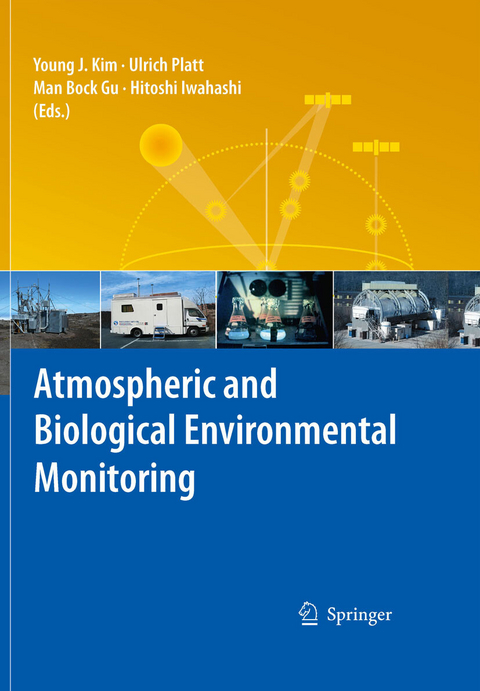
The extent of harmful effects of pollution on atmospheric, terrestrial and aquatic environments can be translated into extreme temperature changes, dirty air, clean water shortages, and increased incidence of toxicity that harms every life on earth. Within a lifetime, our environment is changing drastically. Much of the information of environmental pollution impacts needs to be studied, from the mechanism of toxic nanoparticles on the molecular level to the detection of trace gases on the satellite perspective. It is therefore essential to develop advanced monitoring techniques, e- cient process technologies and health impact assessment tools to ?ll the gaps in our scienti?c knowledge. This edition of "e;Atmospheric and Biological Environmental Monitoring"e; is a handful of recent developments and techniques from environmental scientists in well-diversi?ed ?elds. These collections of manuscripts are extracts from the recently concluded "e;7th International Symposium on Advanced Environmental Monitoring"e; organized by the ADvanced Environmental Monitoring and Research Center (ADEMRC), Gwangju Institute of Science and Technology (GIST), Korea and held on February 25-28, 2008 in Honolulu, Hawaii. The three parts highlight important aspects of emerging environmental monitoring technologies: Atmospheric Environment, Contaminants Control Process, and Environmental Toxicity Asse- ment. Observational tools presented in the ?rst part ranges from in-situ measurements to satellite remote sensing for atmospheric monitoring. Highlighted in the second part is the recently developed water quality monitoring system for lake strati?cation and membrane technologies for detection and removal of contaminants. Lastly, toxicity monitoring of endocrine disruptors andnanoparticles are highlighted in the third part with new discoveries.
Preface 5
About the Editors 7
Contents 9
Contributors 12
Part I Atmospheric Environment Monitoring 19
Two- and Three Dimensional Observation of Trace Gas and Aerosol Distributions by DOAS Techniques 20
1 Introduction 20
2 Spatially Resolved Doas –Measurements 20
3 Summary and Outlook 27
References 28
Atmospheric Aerosol Monitoring from Satellite Observations: A History of Three Decades 29
1 Introduction 29
2 Satellite Observations for Aerosol Monitoring 30
3 Satellite Aerosol Remote Sensing Techniques 33
4 Data Products and Applications 39
5 Future Instruments 45
6 Summary 47
References 49
Digital Photographic Technique to Quantify Plume Opacity During Daytime and Nighttime 55
1 Introduction 55
2 Digital Optical Method 56
3 Field Tests 60
4 Results and Discussion 62
5 Summary 65
Abbreviations 65
References 66
Scanning Infrared Remote Sensing Systemfor Detection, Identification and Visualization of Airborne Pollutants 67
1 Introduction 67
2 Theory of Passive FTIR 68
3 The Scanning Infrared Remote Sensing System 71
4 Laboratory and FieldMeasurements 72
5 Summary 78
References 78
Remote Sensing of Tropospheric Trace Gases (NO2 and SO2) from SCIAMACHY 79
1 Introduction 79
2 Principle of Spectral Fitting 80
3 Air Mass Factor (AMF) 81
4 Retrieval of Tropospheric Columns 83
5 Conclusions 86
References 86
An Advanced Test Method forMeasuring Fugitive Dust Emissions Using a Hybrid System of Optical Remote Sensing and PointMonitor Techniques 89
1 Introduction 89
2 TheMethod 90
3 Method Demonstration and Validation 91
4 Conclusion 96
References 97
Aerosol Sampling Efficiency Evaluation Methods at the US Army Edgewood Chemical Biological Center 98
1 Introduction 98
2 Background 102
3 Chambers and Equipment 104
4 Sampler Efficiency TestMethods 111
5 Applications: Example Aerosol Samplers and Their Sampling Efficiencies 113
6 Discussion 116
7 Summary 117
References 118
Smog Chamber Measurements 119
1 Introduction 119
2 Smog Chamber Experiments 123
3 Applications 145
4 Summary 146
References 148
Aerosol Concentrations and Remote Sources of Airborne Elements Over Pico Mountain, Azores, Portugal 151
1 Introduction 151
2 Experimental 153
3 Results and Discussion 156
4 Conclusion 164
References 168
Part II Contaminants Control Process Monitoring 172
Removal of Selected OrganicMicropollutants fromWWTP Effluent with Powdered Activated Carbon and Retention by Nanofiltration 173
1 Introduction 173
2 Material and Methods 177
3 Results and Discussion 181
4 Summary 187
References 188
Development of Vertically Moving AutomaticWater Monitoring System (VeMAS) for LakeWater Quality Management 191
1 Introduction 191
2 Advances in Water Quality Modeling 193
3 AutomaticWater Quality Monitoring System in Korea 194
4 Development of VeMAS (Vertically Moving Automatic Water Monitoring System) 196
5 Future Improvements 197
6 Conclusions 200
Abbreviation (Dongil Seo) 201
References 201
Part III Environmental Toxicity Monitoring and Assessment 203
Toxicity of Metallic Nanoparticles inMicroorganisms- a Review 204
1 Introduction 204
2 Physical and Chemical Properties of Nanoparticles 206
3 Nanoparticles Pose Potential Threat to Bacteria 207
4 Nanoparticles Disrupt the Integrity of Cell Membrane 207
5 Nanoparticles Induce Oxidative Toxicity by Generating Reactive Oxygen Species (ROS) 210
6 Current Understanding on Toxicity of Nano-Sized Particles to Bacteria 212
7 Toxicity Assays of NPs Using Bacteria as Models 213
8 Summary and Future Outlook 213
References 214
EnvironmentalMonitoring by Use of Genomics andMetabolomics Technologies 218
1 Introduction 218
2 Materials and Methods 219
3 Results and Discussion 221
4 Conclusion 228
References 228
A Gene Expression Profiling Approach to Study the Influence of Ultrafine Particles on Rat Lungs 230
1 Introduction 230
2 Material and Methods 231
3 Results and Discussion 232
4 Conclusion 237
References 237
Effects of Endocrine Disruptors on Nervous SystemRelated Gene Expression: Comprehensive Analysis of Medaka Fish 239
1 Introduction 239
2 Materials and Methods 240
3 Results 241
4 Discussion 245
References 248
Assessment of River Health by CombinedMicroscale Toxicity Testing and Chemical Analysis 250
1 Introduction 250
2 Materials and Methods 251
3 Results 253
References 257
Saccharomyces cerevisiae as Biosensor ´ for Cyto- and Genotoxic Activity 259
1 Regulatory Framework 259
2 Biotest Based Analysis of Environmental Pollutants 260
3 New Technologies 264
4 Summary 265
References 265
The Application of Cell Based Biosensor and Biochip for EnvironmentalMonitoring 268
1 Introduction 268
2 On Chip Cell Cultivation Technologies 269
4 The Environmental Application of cell Based Biosensor 272
5 Prospects 277
References 277
Fabrication of Electrophoretic PDMS/PDMS Lab-on-a-chip Integrated with Au Thin-Film Based Amperometric Detection for Phenolic Chemicals 281
1 Introduction 281
2 Experimental 283
3 Results and Discussion 285
4 Conclusion 289
References 289
Swimming Behavioral Toxicity in JapaneseMedaka (Oryzias latipes) Exposed to Various Chemicals for Biological Monitoring ofWater Quality 291
1 Introduction 291
2 Material and Methods 292
3 Results 293
4 Discussion 295
References 299
The Effects of EarthwormMaturity on Arsenic Accumulation and Growth After Exposure to OECD Soils ContainingMine Tailings 300
1 Introduction 300
2 Material and Methods 301
3 Results 302
4 Discussion 304
5 Conclusions 305
References 305
Abbreviations 308
Index 311
| Erscheint lt. Verlag | 4.6.2009 |
|---|---|
| Zusatzinfo | XIX, 311 p. |
| Verlagsort | Dordrecht |
| Sprache | englisch |
| Themenwelt | Naturwissenschaften ► Biologie ► Ökologie / Naturschutz |
| Naturwissenschaften ► Geowissenschaften ► Geografie / Kartografie | |
| Technik ► Umwelttechnik / Biotechnologie | |
| Schlagworte | Aerosol • Air Pollutants • air pollution and air quality • biological • Contaminants • Desalination • Emission • Emissions • Environment • Environmental monitoring • Health • Monitoring • pollution • remediation • Satellite • scale • Smog • Temperature • Toxicity |
| ISBN-13 | 9781402096747 / 9781402096747 |
| Informationen gemäß Produktsicherheitsverordnung (GPSR) | |
| Haben Sie eine Frage zum Produkt? |
 PDF (Wasserzeichen)
Größe: 53,8 MB
DRM: Digitales Wasserzeichen
Dieses eBook enthält ein digitales Wasserzeichen und ist damit für Sie personalisiert. Bei einer missbräuchlichen Weitergabe des eBooks an Dritte ist eine Rückverfolgung an die Quelle möglich.
Dateiformat: PDF (Portable Document Format)
Mit einem festen Seitenlayout eignet sich die PDF besonders für Fachbücher mit Spalten, Tabellen und Abbildungen. Eine PDF kann auf fast allen Geräten angezeigt werden, ist aber für kleine Displays (Smartphone, eReader) nur eingeschränkt geeignet.
Systemvoraussetzungen:
PC/Mac: Mit einem PC oder Mac können Sie dieses eBook lesen. Sie benötigen dafür einen PDF-Viewer - z.B. den Adobe Reader oder Adobe Digital Editions.
eReader: Dieses eBook kann mit (fast) allen eBook-Readern gelesen werden. Mit dem amazon-Kindle ist es aber nicht kompatibel.
Smartphone/Tablet: Egal ob Apple oder Android, dieses eBook können Sie lesen. Sie benötigen dafür einen PDF-Viewer - z.B. die kostenlose Adobe Digital Editions-App.
Zusätzliches Feature: Online Lesen
Dieses eBook können Sie zusätzlich zum Download auch online im Webbrowser lesen.
Buying eBooks from abroad
For tax law reasons we can sell eBooks just within Germany and Switzerland. Regrettably we cannot fulfill eBook-orders from other countries.
aus dem Bereich