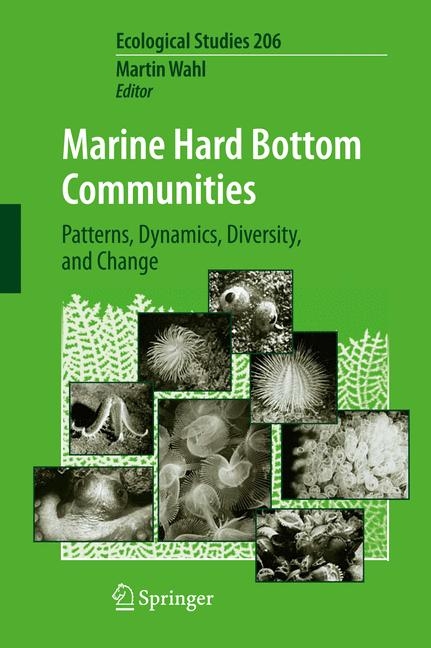
Marine Hard Bottom Communities (eBook)
XXIV, 446 Seiten
Springer Berlin (Verlag)
978-3-540-92704-4 (ISBN)

Marine hard bottoms feature some of the most spectacular and diverse biological communities on this planet. These not only contain a rich treasure of genetic, taxonomic and functional information but also deliver irreplaceable ecosystem services. At the same time, they are highly vulnerable and increasingly threatened by anthropogenic pressures. This volume has collected contributions by 50 scientists from numerous biogeographic regions, dealing with characteristics of hard bottom communities. Distributional patterns in space and time are described, followed by analyses of the intrinsic and extrinsic dynamics producing these patterns. A strong emphasis is placed on the ongoing changes occurring in the structure and diversity of these communities in response to spiralling environmental impacts, and on state-of-the-art countermeasures aiming to preserve these ecological treasures. Finally, various values of diversity are assessed, hopefully as an incentive for enhanced conservation efforts.
Preface 6
Contents 8
Contributors 20
Part I Habitat, Substrata and Communities 26
Introduction 27
Conclusion 28
References 29
Chapter 1 Habitat Characteristics and Typical Functional Groups 30
1.1 Particularities of the Aquatic Medium 30
1.2 Life Forms in Hard Bottom Communities 33
References 39
Chapter 2 The Role of Mineral, Living and Artificial Substrata in the Development of Subtidal Assemblages 41
2.1 Patterns on Temperate Hard Substrata 41
2.2 The Colonisation Process 44
2.3 The Role of Substrata in the Colonisation and Development of Assemblages 44
2.4 Future Focus 52
References 53
Chapter 3 Communities on Deep-Sea Hard Bottoms 60
3.1 Islands in a Sea of Mud 60
3.2 Types of Hard Substrata in the Deep Sea 61
3.3 Major Groups of Deep-Sea Organisms 64
3.4 Population and Community Ecology of Hard-Bottom Deep-Sea Epifauna 66
3.5 Conclusions 75
References 76
Chapter 4 Epibiosis: Ecology, Effects and Defences 82
4.1 Sessile Mode of Life 82
4.2 Establishment of an Epibiotic Community 82
4.3 Consequences of Epibioses 84
4.4 Distributional Patterns of Epibioses 86
4.5 Responses of the Host 88
References 90
Part II Diversity Patterns and Their Causes 94
Introduction 95
Conclusion 97
Chapter 5 Latitudinal Patterns of Species Richness in Hard-Bottom Communities 100
5.1 Introduction 100
5.2 Case Studies 101
5.3 Discussion 103
References 104
Chapter 6 Regional-Scale Patterns 107
6.1 Introduction 107
6.2 Regional Diversity—Biotic Interchange and Speciation 108
6.3 Influence of Regional Species Pools on Local Diversity 110
6.4 Local Diversity 112
6.5 Conclusions 114
References 115
Chapter 7 Patterns Along Environmental Gradients 118
7.1 Introduction 118
7.2 Zonation 120
7.3 Gaps in Knowledge 123
References 126
Chapter 8 Evolutionary Patterns of Diversity and Their Causes 130
8.1 Introduction 130
8.2 Evolutionary Process 130
8.3 Regional Biogeographic Patterns 133
8.4 Discussion 138
References 139
Chapter 9 Environmental Variability: Analysis and Ecological Implications 143
9.1 Introduction 143
9.2 A Framework for Investigating Ecological Variability 144
9.3 Observational Approaches: Variability in Ecological Responses 146
9.4 Experimental Approaches: Manipulation of Intensity and Variance of Ecological Drivers 148
9.5 Future Directions 152
9.6 Conclusions 154
References 155
Part III Community Dynamics 158
Introduction 159
Conclusion 160
Chapter 10 Fertilization Strategies 162
10.1 Introduction 162
10.2 Scope and Definition of Terms 163
10.3 Main Topics in Fertilization Ecology of Rocky Shore Species 163
10.4 Gamete Traits that Influence Fertilization Success 166
10.5 Gamete Mixing 169
10.6 Risk of Polyspermy and the Role of Polyspermy Blocks 171
10.7 Fertilization Compatibility 172
10.8 Conclusions 173
References 173
Chapter 11 Larval Supply and Dispersal 178
11.1 Introduction 178
11.2 Variability in the Production of Larvae 178
11.3 Mortality in the Plankton 180
11.4 Scales of Dispersal and Larval Supply 182
11.5 Genetic Consequences of Variation in Larval Production and Dispersal 185
11.6 Conclusions 186
References 186
Chapter 12 Settlement and Recruitment 190
12.1 Introduction 190
12.2 Definitions of Settlement and Recruitment 190
12.3 Patterns of Settlement and Recruitment on Hard Substrata 191
12.4 Behaviour at Settlement 193
12.5 Biological and Physical Interactions at Settlement 194
12.6 Early Post-Settlement Survival 196
12.7 Consequences of Variation in Settlement and Recruitment 197
12.8 Summary 199
References 199
Chapter 13 Seasonal Dynamics 204
13.1 Introduction 204
13.2 Causes, Cues and Clocks 205
13.3 Identifying Drivers and Responses 206
13.4 From Intertidal Habitats to Deep-Sea Communities 208
13.5 Future Directions 211
References 211
Chapter 14 Disruption, Succession and Stochasticity 214
14.1 Definitions 214
14.2 Disruptions as Unique Events 218
14.3 Disruption as a Chronically Recurring Process 220
References 224
Chapter 15 Changes in Diversity and Ecosystem Functioning During Succession 226
15.1 Introduction 226
15.2 Concepts and Terminology 226
15.3 Creation of New Space 228
15.4 Early Colonisation by Microorganisms 228
15.5 Macrobiotic Succession on Rocky Shores 229
15.6 Succession, Species Diversity and Ecosystem Processes 231
15.7 Overview and Concluding Remarks 233
References 234
Chapter 16 Simple and Complex Interactions 237
16.1 Introduction 237
16.2 Intraspecific Interactions 237
16.3 Interspecific Interactions 239
16.4 Community Interactions 243
References 246
Part IV Changing Biodiversity 250
Introduction 251
Conclusion 252
References 254
Chapter 17 Anthropogenic Changes in Patterns of Diversity on Hard Substrata: an Overview 256
17.1 Introduction 256
17.2 Scales of Disturbances Affecting Distributions and Abundances 257
17.3 Conclusions 263
References 264
Chapter 18 Shifts in Abiotic Variables and Consequences for Diversity 266
18.1 Introduction 266
18.2 Global-Scale Change 266
18.3 Regional-Scale Change 270
18.4 Local-Scale Change 272
18.5 Conclusions 275
References 275
Chapter 19 The Loss of Natural Habitats and the Addition of Artificial Substrata 278
19.1 Human Changes to Coastal Habitats 278
19.2 Causes of Habitat Loss 279
19.3 Trends of Habitat Loss 280
19.5 The Importance of Regional and Historical Contexts 285
19.6 The Case for Mitigating Habitat Loss 286
References 287
Chapter 20 Multiple Stressors and Disturbances: When Change Is Not in the Nature of Things 290
20.1 Introduction 290
20.2 A Framework of Disturbance by Multiple Stressors 291
20.3 Types of Stressors and Responses 291
20.4 Temporal Stressors 292
20.5 Spatial Patterns of Stressors 293
20.6 Empirical Evidence of Stressor Effects 293
20.7 Conclusions 300
References 300
Chapter 21 Mass Mortalities and Extinctions 304
21.1 Introduction 304
21.2 Porifera 304
21.3 Cnidaria 305
21.4 Molluscs 309
21.5 Echinoderms 309
21.6 Ascidians 310
21.7 Extinctions and Massive Mortalities: Effects on Benthic Communities 310
References 312
Chapter 22 Biological Invasions: Insights from Marine Benthic Communities 317
22.1 Introduction 317
22.2 The Arrival of Introduced Species: Vectors and Propagule Pressure 317
22.3 What Makes a Good Invader? 319
22.4 Which Communities Are More Susceptible to Invasion? 320
22.5 The Effects of Invasions 323
22.6 Overview 325
References 325
Chapter 23 Habitat Distribution and Heterogeneity in Marine Invasion Dynamics: the Importance of Hard Substrate and Artificial Structure 329
23.1 Introduction 329
23.2 Habitat Distribution of Non-native Species in North America 329
23.3 Integrating Substratum Heterogeneity and Spatial Scale 337
References 339
Chapter 24 Rehabilitation of Habitat and the Value of Artificial Reefs 341
24.1 Introduction 341
24.2 Rehabilitation of Marine Habitats 342
24.3 Evaluating Success of Rehabilitation 346
24.4 Conclusions 349
References 349
Chapter 25 Protection of Biota and the Value of Marine Protected Areas 353
25.1 Introduction 353
25.2 Protection Outside Reserves 353
25.3 Reserves as Protection—Principles 356
25.4 Reserves as Protection—Practice 357
25.5 What Happens Outside Reserves? 358
25.6 Assessing Effectiveness of Marine Reserves 360
25.7 Conclusions 361
References 361
Part V Role of Diversity 364
Introduction 365
Conclusion 365
Chapter 26 The Role of Biodiversity for the Functioning of Rocky Reef Communities 367
26.1 Introduction 367
26.2 How and Why Biodiversity Can Be Linked to Ecosystem Performance 368
26.3 Roles of Species in Mediating Ecosystem Performance 369
26.4 Biodiversity and Primary Production 370
26.5 The Role of Consumer Diversity 372
26.6 The Role of Within-Species Diversity 373
26.7 Conclusions and Outlook 374
References 375
Chapter 27 Functional and Taxonomic Perspectives of Marine Biodiversity: Functional Diversity and Ecosystem Processes 380
27.1 Introduction 380
27.2 Defining Diversity 380
27.3 Operational Characterisation of Functional Diversity 382
27.4 How to Test the Validity and Value of Particular Methods/Groupings 386
27.5 Evidence from Hard Substrata Regarding Sensitivity of Systems to Changes in Functional Diversity 389
27.6 The Relative Importance of Functional and Taxonomic Diversity: Summary of Current Knowledge and Suggestions for the Future 391
References 392
Chapter 28 Mechanisms Underpinning Diversity–Stability Relationships in Hard Bottom Assemblages 396
28.1 Introduction 396
28.2 Measures of Stability 398
28.3 Three Mechanisms Relating Stability to Diversity 399
28.4 Diversity–Stability Relationships in Assemblages of Rocky Shores 403
28.5 Discussion 408
References 410
Chapter 29 The Aesthetic Value of Littoral Hard Substrata and Consideration of Ethical Frameworks for Their Investigation and Conservation 413
29.1 Introduction 413
29.2 Aesthetics 414
29.3 Ethics 416
29.4 Conclusions 422
References 423
Part VI Appropriate Research Methods 427
Chapter 30 Field and Research Methods in Marine Ecology 428
30.1 Field Methods in Marine Ecology 428
30.2 Experimental and Sampling Designs 431
References 437
Index 439
| Erscheint lt. Verlag | 22.6.2009 |
|---|---|
| Reihe/Serie | Ecological Studies | Ecological Studies |
| Zusatzinfo | XXIV, 446 p. 36 illus., 1 illus. in color. |
| Verlagsort | Berlin |
| Sprache | englisch |
| Themenwelt | Naturwissenschaften ► Biologie ► Botanik |
| Naturwissenschaften ► Biologie ► Ökologie / Naturschutz | |
| Technik | |
| Schlagworte | biodiversity • Ecology • ecosystem • ecosystem processes • Environment • Evolution • global change • hard bottom habitats • marine and freshwater sciences • marine community ecology • reefs • seasonal dynamics • Species richness |
| ISBN-10 | 3-540-92704-2 / 3540927042 |
| ISBN-13 | 978-3-540-92704-4 / 9783540927044 |
| Informationen gemäß Produktsicherheitsverordnung (GPSR) | |
| Haben Sie eine Frage zum Produkt? |
 PDF (Wasserzeichen)
DRM: Digitales Wasserzeichen
Dieses eBook enthält ein digitales Wasserzeichen und ist damit für Sie personalisiert. Bei einer missbräuchlichen Weitergabe des eBooks an Dritte ist eine Rückverfolgung an die Quelle möglich.
Dateiformat: PDF (Portable Document Format)
Mit einem festen Seitenlayout eignet sich die PDF besonders für Fachbücher mit Spalten, Tabellen und Abbildungen. Eine PDF kann auf fast allen Geräten angezeigt werden, ist aber für kleine Displays (Smartphone, eReader) nur eingeschränkt geeignet.
Systemvoraussetzungen:
PC/Mac: Mit einem PC oder Mac können Sie dieses eBook lesen. Sie benötigen dafür einen PDF-Viewer - z.B. den Adobe Reader oder Adobe Digital Editions.
eReader: Dieses eBook kann mit (fast) allen eBook-Readern gelesen werden. Mit dem amazon-Kindle ist es aber nicht kompatibel.
Smartphone/Tablet: Egal ob Apple oder Android, dieses eBook können Sie lesen. Sie benötigen dafür einen PDF-Viewer - z.B. die kostenlose Adobe Digital Editions-App.
Buying eBooks from abroad
For tax law reasons we can sell eBooks just within Germany and Switzerland. Regrettably we cannot fulfill eBook-orders from other countries.
aus dem Bereich