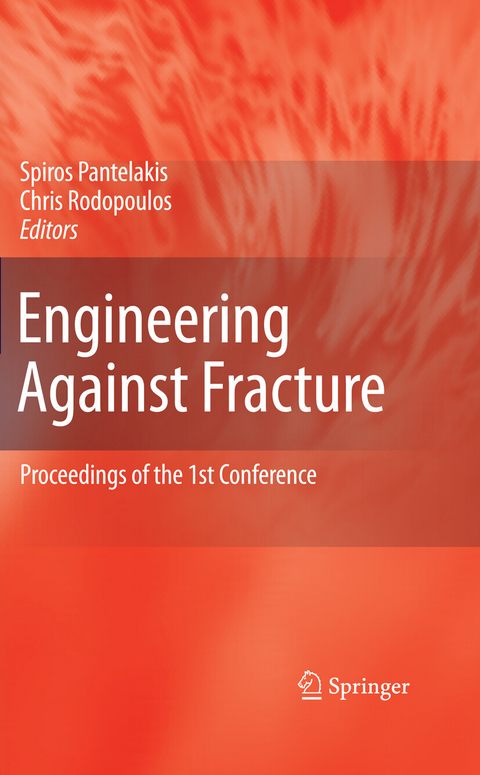
Engineering Against Fracture (eBook)
XI, 581 Seiten
Springer Netherland (Verlag)
978-1-4020-9402-6 (ISBN)
Within the last thirty years there is a growing acknowledgement that prevention of catastrophic failures necessitates engagement of a large pool of expertise. Herein it is not excessive to seek advice from disciplines like materials science, structural engineering, mathematics, physics, reliability engineering and even economics. Today's engineering goals, independently of size; do not have the luxury of being outsideaglobalperspective.Survivaloftheintegratedmarketsand?nancialsystems require a web of safe transportation, energy production and product manufacturing. It is perhaps the ?rst decade in engineering history that multidisciplinary - proaching is not just an idea that needs to materialise but has matured beyond infancy. We can witness such transition by examining engineering job descriptions and postgraduate curricula. The undertaking of organising a conference to re?ect the above was not easy and de?nitely, not something that was brought to life without a lot of work and c- st mitment. The 1 Conference of Engineering Against Fracture from its conceptual day until completion was designed in a way of underlying the need of bringing all the key players on a common ground that once properly cultivated can ?ourish. To achieve that the conference themes were numerous and despite their, in principle notional differences, it was apparent that the attendees established such common ground through argumentation. The reader can see this from the variety of research areas re?ected by the works and keynote lecturers presented.
Preface 5
Contents 7
Ball-Burnishing and Roller-Burnishing to Improve Fatigue Performance of Structural Alloys 12
1 Introduction 12
2 Experimental 13
3 Results and Discussion 14
References 21
Dual Scale Fatigue Crack Monitoring Scheme Considering Random Material, Geometric and Load Characteristics 23
1 Introduction 24
2 Micro/Macro Fatigue Crack Growth Model 25
3 Determination of Crack Growth History 27
4 Physical Model of Random Material Properties 28
and FutureWork 37
5 Concluding Remarks 37
References 39
Exploitation of the TRIP Effect for the Development of Formable, Fracture and Fatigue Resistant Steels for Automotive Applications 40
1 Introduction 41
2 Austenite Stabilization 41
3 Kinetics of the Mechanically-Induced Transformation 45
4 Enhancement of Formability 45
5 Enhancement of Fracture Toughness 46
6 Implications on Fatigue Resistance 48
References 49
Hybrid Metal Laminates for Low Weight Fuselage Structures 50
1 Introduction 50
2 Current Challenges for a Metallic Fuselage 51
3 Experimental Investigations 52
4 Fuselage Structural Design with MLs 55
5 Static Stability of Metal Bonded Structures 56
6 Curved Shell Under Pressurization and Biaxial Loads 58
7 Conclusions 65
References 66
Multifunctional Materials Used in Automotive Industry: A Critical Review 67
1 Introduction 67
2 Materials Used in Automotive Industry 68
3 Multi-material Approach in Automotive Industry 74
4 Conclusions 75
References 76
Session I Engineering Properties 79
Effect of Talc Filler Content on Poly(Propylene) Composite Mechanical Properties 80
1 Introduction 80
2 Experimental 81
3 Results and Discussion 83
4 Conclusions 86
References 86
Fracture Properties of Polypropylene Reinforced with Short Glass Fibres: The In.uence of Temperature, Notch Length and Geometry 88
1 Introduction 88
2 Materials and Experimental Technique 89
3 Results and Discussion 93
4 Conclusion 97
References 98
Influence of Width of Specimen on Tensile Properties of NiCo Thin Film 99
1 Introduction 99
2 Experimental Procedures 100
3 Results and Discussion 103
4 Summary and Conclusions 106
References 108
Session II Fatigue Damage Physics and Modeling 109
Dynamic Properties and Fatigue Failure of Aircraft Component 110
1 Introduction 110
2 The Method of ConcentratedWeights 112
3 The Analysis of Dynamic Characteristics of a Beam Under Ideal Boundary Conditions 114
4 The Account of In.uence of Non-classic Internal and External Constraints 115
5 The Estimation of Nominal Stress of a Beam Under its Form Bended Axes 117
6 Conclusions 119
References 119
Investigation of the Fatigue Behaviour of the Structural Magnesium Alloy AZ31 120
1 Introduction 120
2 Material and Experimental Procedure 121
3 Results and Discussion 122
4 Conclusions 128
References 129
Session III Engineering Properties II 130
Coulomb Failure Surfaces in Ductile Non Linear Elastic Materials 131
1 Introduction 131
2 Theoretical Considerations 132
3 Application in Case of a Mild Steel 136
4 Conclusions 138
References 139
Effect of Stress on the Fire Reaction Properties of Polymer Composite Laminates 140
1 Introduction 140
2 Materials and Experimental 143
3 Results and Discussion 146
4 Conclusions 155
References 156
Investigation of Failure and Failure Progression in Stiffened Composite Structures 158
1 Introduction 158
2 Analysis Tool 159
3 Experimental Investigation 162
4 Numerical Simulation 165
5 Conclusions 169
References 169
Next Generation Composite Aircraft Fuselage Materials under Post-crash Fire Conditions 171
1 Introduction 172
2 Materials and Experimental 173
3 Results and Discussion 175
4 Modelling and Results 179
5 Conclusions 182
References 183
Progressive Fracture Analysis of Planar Lattices and Shape-Morphing Kagome Structure 184
1 Introduction 184
2 Problem De.nition 185
3 FE Analysis 186
4 Numerical Results 188
5 Conclusions 192
References 192
Session IV Fatigue Damage (Experimental) 193
Fatigue Behavior of Non-crimp Fabrics 194
1 Introduction 194
2 Specimens 195
3 Testing 196
4 Results 198
5 Conclusions 201
References 201
Fatigue Crack Growth Assessment of Corroded Aluminum Alloys 203
1 Introduction 203
2 Corrosion-Dependent Local Fracture Toughness 204
3 Fatigue Crack Growth Code 205
4 Stress Spectrum Simulation 206
5 Fatigue Crack Growth Calculation 206
6 Implementation of Crack Growth Model for Corroded Material 208
7 Summary 211
References 211
Fatigue Crack Growth Behavior under Spectrum Loading 213
1 Introduction 213
2 Experimental Setup 214
3 Results 219
4 Discussion 222
5 Conclusions 230
References 230
Small Crack in a Simulated Columnar Polycrystalline Aggregate with Random 2D and 3D Lattice Orientations 232
1 Introduction 232
2 Model description 233
3 Results 238
4 Summary 242
References 243
Thermo-Mechanical Methods for Improving Fatigue Performance of Wrought Magnesium Alloys 245
1 Introduction 245
2 Experimental 246
3 Results and Discussion 246
4 Conclusions 252
References 252
Session V Applied Fracture Mechanics 254
Investigations on Fracture of Collector Copper Lamellas 255
1 Introduction 255
2 The Collector Assembly 256
3 The Notch Stress Intensity Factor 258
4 Numerical Analysis of the Stress Field in Copper Lamella 259
5 Crack Initiation 260
6 Crack Propagation 263
7 Conclusions 264
References 266
The Regularities of Fatigue Crack Growth in Airframes Elements at Real Operation Conditions 268
1 Introduction 268
2 Some Problems of Fatigue Damage Predicting 270
3 Indication of Fatigue Crack Growth 273
4 Conclusions 278
References 278
Session VI Engineering Applications 281
Fracture in Electronics 282
1 Introduction 282
2 Fundamentals of Electronics Equipment 283
3 The Special Challenges in Electronics 284
4 Modes of Failure 287
5 Case Studies 290
6 Concluding Comments 294
References 295
Improving the Crashworthiness of Aluminium Rail Vehicles 296
1 Introduction 297
2 Experimental 297
3 Modeling 302
4 Welded Joint Design 305
5 Conclusions 307
References 308
Information Fusion in Ad hocWireless Sensor Networks for Aircraft Health Monitoring 309
1 Introduction 309
2 Wireless Sensor Nodes 310
3 Sensors for Structural Health Monitoring 311
4 Wireless Sensor Network 312
5 Information Fusion 313
6 Summary 315
References 316
Roll Forming of AHSS: Numerical Simulation and Investigation of Effects of Main Process Parameters on Quality 317
1 Introduction 317
2 Background and PreviousWork 318
3 Modeling of Roll Forming Process 319
4 Results and Discussion 320
5 Conclusions and FutureWork 325
References 326
Session VII Scale Effects and Modeling 327
Dependency of Micro-mechanical Properties of Gold Thin Films on Grain Size 328
1 Introduction 328
2 Experimental Procedure 329
3 Results and Discussion 331
4 Summary and Conclusions 334
References 334
Fracture and Failure in Micro- and Nano-Scale 336
1 Introduction 337
2 Experimental 338
3 Results 339
4 Discussion–Conclusions 342
References 343
Local, Semilocal and Nominal Approaches to Estimate the Fatigue Strength of Welded Joints 345
1 Introduction 345
2 Parameters Affecting the Applicability of the Approach 351
3 Conclusions 355
References 355
Superficial Strength Properties Modification of 2024 Aluminum Specimens Subjected to Cyclic Loading, Detected by Nanoindentations 357
1 Introduction 357
2 Specimens’ Super.cial Hardness Increase at Repeatedly Loads Through Nanoindentation Measurements 359
3 Indentation Depth Alteration Versus the Operational Cycles and Local Material Stressing at Various Stress Gradients 361
4 Super.cial Strength Properties Alteration Versus the Operational Cycles and Local Material Stressing at Various Stress Gradients 363
5 Conclusions 365
References 366
Session VIII Surface Treatments and Engineering 368
Characterisation of Residual Stresses Generated by Laser Shock Peening by Neutron and Synchrotron Diffraction 369
1 Introduction 370
2 Experimental 371
3 Results and Discussion 376
4 Conclusions 383
References 384
Dry Ice Blasting – Energy-Ef.ciency and New Fields of Application 385
1 Introduction 385
2 Solid Carbon dioxide 386
3 Dry Ice Blasting 386
4 Centrifugal Wheel Blasting with Sensitive Blasting Media 387
5 Surface Pre-treatment 389
6 Conclusions 395
References 395
Fatigue Life Improvement for Cruciform Welded Joint by Mechanical Surface Treatment using Hammer Peening and UNSM 396
1 Introduction 396
2 Specimens and Procedures of Post Treatment 397
3 Geometry of Weld Bead and Welding Residual Stress 399
4 Calculation of Fatigue Life 400
5 Results and Discussion 402
6 Summary 403
References 403
The use of Ultrasonic Impact Treatment to Extend the Fatigue Life of Integral Aerospace Structures 405
1 Introduction 405
2 Experimental Investigation 406
3 Conclusions 413
References 414
Session IX Theoretical Fracture Mechanics and Modeling I 415
Analysis of Crack Patterns Under Three-Dimensional Residual Stress Field 416
1 Introduction 416
2 Cracked Plate under RS Field 417
3 Analysis of Stiffened Panels 419
4 Conclusions 423
References 423
BEM Solutions of Crack Problems in Gradient Elasticity 425
1 Introduction 426
2 Simpli.ed Form II Gradient Elastic Theory 427
3 Special Elements with Variable Order of Singularity 429
4 BEM Procedure and SIF Calculation 430
5 3D Mode I Crack Problem: Numerical Results 432
6 Conclusions 434
References 434
Fracture Analysis of Medium Density Polyethylene 436
1 Introduction 436
2 Reference Stress Based J Estimation for Surface Cracked Pipe 437
3 C-Integral Estimation for MDPE 442
4 Conclusions 444
References 445
Session X Structural Analysis (Metals) 446
Buckling Evaluation in Case of Complicated Stress Condition 447
1 Introduction 447
2 Probability Analysis for Buckling Stresses 448
3 Buckling Criterion in Case of Complicated Stress Condition 451
4 Experimental 452
5 Conclusions 454
References 454
Comparison of Two Currently used and One Proposed Seismic Design Methods for Steel Structures 456
1 Introduction 456
2 Force Based Design (FBD) 457
3 Direct Displacement Based Design (DDBD) 458
4 Hybrid Force/Displacement Based Design (HFD) 461
5 Comparison of the Methods Through a Design Example 462
References 464
Experimental and Numerical Investigation of Failure Pressure of Valve Housing 466
1 Introduction 466
2 Experiments 468
3 Finite Element Analysis 470
4 Finite Element Results and Comparison with the Experiment 472
5 Allowable Pressure 474
6 Conclusion 475
References 476
Fracture Analysis of a Bolted Joint of a Large Pump Frame of a Desalination Plant 477
1 Introduction 477
2 Description of the Case-Study 478
3 Investigation Activity 479
4 FE Modeling of the as Built Structure 481
5 FE Modeling of Possible Retro.tting Solutions 483
6 Re.nements of Retro.tting Works 487
7 Conclusions 489
References 490
The Accurate Prediction of the Thermal Response of Welded Structures Based on the Finite Element Method: Myth or Reality? 491
1 Introduction 492
2 Experimental Set-Up 493
3 Numerical Modelling 495
4 Prediction Results and Discussion 497
5 The Adaptation Procedure, Results and Discussion 500
6 Conclusions 505
References 506
Session XI Theoretical Fracture Mechanics and Modeling II 508
Application of a Fracture Methodology for Studying the Mechanics that Govern Failure of Aluminum Structures 509
1 Introduction 510
2 Methodology Description 511
3 Numerical Simulations 513
4 Analysis and Results 514
5 Experimental Program 514
6 Synopsis 524
References 525
BEM Prediction of TBC Fracture Resistance 526
1 Introduction 526
2 Boundary Element Analysis of Time Dependent Thermo-elasticity 527
3 Calculation of Fracture Parameters 530
4 Numerical Results and Discussion 530
5 Conclusions 534
References 535
Session XII Structural Analysis Composites 536
A Numerical Investigation of Fractured Sandwich Composites under Flexural Loading 537
1 Introduction 537
2 Nature of the Problem 538
3 Numerical Investigation 539
4 Numerical Results 540
5 Summary 543
References 544
Mechanical Properties and Failure Investigation of Metallic Open Lattice Cellular Structures 546
1 Introduction 546
2 Conclusions 553
References 554
| Erscheint lt. Verlag | 14.2.2009 |
|---|---|
| Zusatzinfo | XI, 581 p. |
| Verlagsort | Dordrecht |
| Sprache | englisch |
| Themenwelt | Naturwissenschaften ► Physik / Astronomie ► Mechanik |
| Technik ► Bauwesen | |
| Technik ► Maschinenbau | |
| Schlagworte | alloy • Crystal • damage • engineering troubleshooting • failure engineering • fatigue • finite element modelling • Fracture • fracture and fatigue • fracture mechanics • Magnesium • Mechanics • Modeling • Polymer • Retarder • Simulation • Stress • Surfaces • Thin Films |
| ISBN-10 | 1-4020-9402-7 / 1402094027 |
| ISBN-13 | 978-1-4020-9402-6 / 9781402094026 |
| Informationen gemäß Produktsicherheitsverordnung (GPSR) | |
| Haben Sie eine Frage zum Produkt? |
 PDF (Wasserzeichen)
DRM: Digitales Wasserzeichen
Dieses eBook enthält ein digitales Wasserzeichen und ist damit für Sie personalisiert. Bei einer missbräuchlichen Weitergabe des eBooks an Dritte ist eine Rückverfolgung an die Quelle möglich.
Dateiformat: PDF (Portable Document Format)
Mit einem festen Seitenlayout eignet sich die PDF besonders für Fachbücher mit Spalten, Tabellen und Abbildungen. Eine PDF kann auf fast allen Geräten angezeigt werden, ist aber für kleine Displays (Smartphone, eReader) nur eingeschränkt geeignet.
Systemvoraussetzungen:
PC/Mac: Mit einem PC oder Mac können Sie dieses eBook lesen. Sie benötigen dafür einen PDF-Viewer - z.B. den Adobe Reader oder Adobe Digital Editions.
eReader: Dieses eBook kann mit (fast) allen eBook-Readern gelesen werden. Mit dem amazon-Kindle ist es aber nicht kompatibel.
Smartphone/Tablet: Egal ob Apple oder Android, dieses eBook können Sie lesen. Sie benötigen dafür einen PDF-Viewer - z.B. die kostenlose Adobe Digital Editions-App.
Buying eBooks from abroad
For tax law reasons we can sell eBooks just within Germany and Switzerland. Regrettably we cannot fulfill eBook-orders from other countries.
aus dem Bereich