


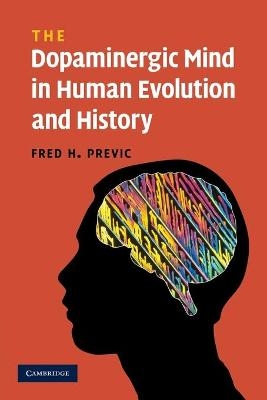
The Dopaminergic Mind in Human Evolution and History
Seiten
2011
Cambridge University Press (Verlag)
9780521360890 (ISBN)
Cambridge University Press (Verlag)
9780521360890 (ISBN)
Dopamine is the most widely studied of all neurotransmitters in the human brain. In this text, Fred Previc puts forth a provocative evolutionary theory, positing that high levels of dopamine account for all major aspects of uniquely human behaviour, including abstract intelligence, creativity, exploration, religious behaviour and left-hemispheric thought.
What does it mean to be human? There are many theories of the evolution of human behavior which seek to explain how our brains evolved to support our unique abilities and personalities. Most of these have focused on the role of brain size or specific genetic adaptations of the brain. In contrast, in this text, Fred Previc presents a provocative theory that high levels of dopamine, the most widely studied neurotransmitter, account for all major aspects of modern human behavior. He further emphasizes the role of epigenetic rather than genetic factors in the rise of dopamine. Previc contrasts the great achievements of the dopaminergic mind with the harmful effects of rising dopamine levels in modern societies and concludes with a critical examination of whether the dopaminergic mind that has evolved in humans is still adaptive to the health of humans and to the planet in general.
What does it mean to be human? There are many theories of the evolution of human behavior which seek to explain how our brains evolved to support our unique abilities and personalities. Most of these have focused on the role of brain size or specific genetic adaptations of the brain. In contrast, in this text, Fred Previc presents a provocative theory that high levels of dopamine, the most widely studied neurotransmitter, account for all major aspects of modern human behavior. He further emphasizes the role of epigenetic rather than genetic factors in the rise of dopamine. Previc contrasts the great achievements of the dopaminergic mind with the harmful effects of rising dopamine levels in modern societies and concludes with a critical examination of whether the dopaminergic mind that has evolved in humans is still adaptive to the health of humans and to the planet in general.
1. What makes humans special?; 2. Dopamine in the brain; 3. Dopamine and behaviour; 4. Dopamine and mental health; 5. Evolution of the dopaminergic mind; 6. The dopaminergic mind in history; 7. Relinquishing the dopaminergic imperative.
| Erscheint lt. Verlag | 14.7.2011 |
|---|---|
| Zusatzinfo | Worked examples or Exercises |
| Verlagsort | Cambridge |
| Sprache | englisch |
| Maße | 152 x 229 mm |
| Gewicht | 340 g |
| Themenwelt | Geisteswissenschaften ► Psychologie ► Allgemeine Psychologie |
| Geisteswissenschaften ► Psychologie ► Verhaltenstherapie | |
| Naturwissenschaften ► Biologie ► Humanbiologie | |
| Naturwissenschaften ► Biologie ► Zoologie | |
| ISBN-13 | 9780521360890 / 9780521360890 |
| Zustand | Neuware |
| Informationen gemäß Produktsicherheitsverordnung (GPSR) | |
| Haben Sie eine Frage zum Produkt? |
Mehr entdecken
aus dem Bereich



aus dem Bereich
Lernen, Emotion, Motivation, Gedächtnis
Buch | Softcover (2025)
Beltz (Verlag)
CHF 39,20
Wahrnehmung, Aufmerksamkeit, Denken, Sprache
Buch | Softcover (2025)
Julius Beltz (Verlag)
CHF 39,20


