


Insect Olfaction
Seiten
2010
Springer Berlin (Verlag)
978-3-642-08449-2 (ISBN)
Springer Berlin (Verlag)
978-3-642-08449-2 (ISBN)
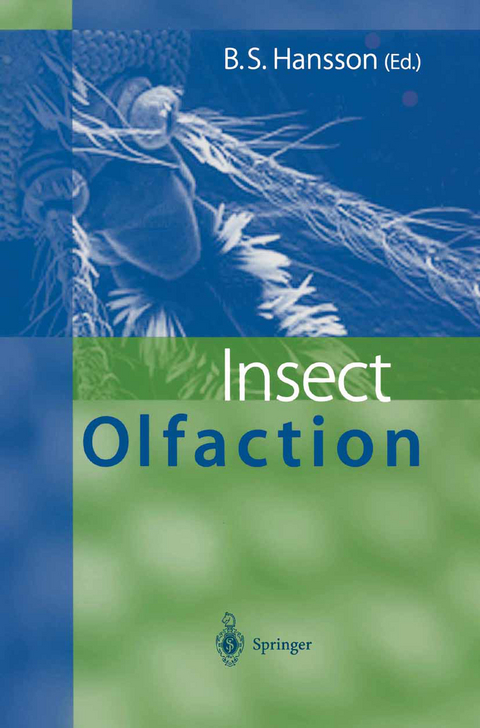
JOHN G. HILDEBRAND Research on insect olfaction is important for at least two reasons. First, the olfactory systems of insects and their arthropod kin are experi mentally favourable models for studies aimed at learning about general principles of olfaction that apply to vertebrates and invertebrates alike. Detailed comparisons between the olfactory pathways in vertebrates and insects have revealed striking similarities of functional organisation, physiol ogy, and development, suggesting that olfactory information is processed through neural mechanisms more similar than different in these evolution arily remote creatures. Second, insect olfaction itself is important because of the economic and medical impact of insects that are agricultural pests and disease vectors, as well as positive impact of beneficial species, such as the bees and moths responsible for pollination and production of honey. The harm or benefit attributable to an insect is a function of what it does - that is, of its behaviour - which is shaped by sensory information. Often olfaction is the key modality for control of basic insect behaviour, such as ori entation and movement toward, and interactions with, potential mates, appro priate sites for oviposition, and sources of food. Not surprisingly, therefore, much work on insect olfaction has been motivated by long-term hopes of using knowledge of this pivotal sensory system to design strategies for mon itoring and managing harmful species and fostering the welfare of beneficial ones.
1 Morphology and Development of the Peripheral Olfactory Organs.- 2 Perireceptor Events and Transduction Mechanisms in Insect Olfaction.- 3 Function of Peripheral Olfactory Organs.- 4 Antennal Lobe Structure.- 5 Functional Characteristics of the Antennal Lobe.- 6 Neural Dynamics, Oscillatory Synchronisation, and Odour Codes.- 7 Neuroactive Substances in the Antennal Lobe.- 8 Development of Olfactory Glomeruli.- 9 Protocerebral Olfactory Processing.- 10 Olfactory Neurogenetics.- 11 Olfactory-Released Behaviours.- 12 Applied Aspects of Insect Olfaction.- References.
| Erscheint lt. Verlag | 18.12.2010 |
|---|---|
| Zusatzinfo | X, 458 p. |
| Verlagsort | Berlin |
| Sprache | englisch |
| Maße | 155 x 235 mm |
| Gewicht | 709 g |
| Themenwelt | Medizin / Pharmazie ► Studium |
| Naturwissenschaften ► Biologie ► Humanbiologie | |
| Schlagworte | Development • Entomology • Geruchssin • insect • insecticide • insecticides • Insects • Insekten • Insektizid • Insektizide • Morphology • neurethology • Neurophysiology • Odour • Olfaction • pest control • Pheromon • Pheromone • Pheromones • Physiology • Schädlingsbekämpfung • sensory Physiology • Sinnesphysiologie |
| ISBN-10 | 3-642-08449-4 / 3642084494 |
| ISBN-13 | 978-3-642-08449-2 / 9783642084492 |
| Zustand | Neuware |
| Informationen gemäß Produktsicherheitsverordnung (GPSR) | |
| Haben Sie eine Frage zum Produkt? |
Mehr entdecken
aus dem Bereich


aus dem Bereich
die Geschichte der Menschheit in 15 Porträts
Buch | Hardcover (2025)
DVA (Verlag)
CHF 39,20
23 Techniken, um Stress abzubauen, Negativspiralen zu unterbrechen …
Buch | Softcover (2023)
FinanzBuch Verlag
CHF 25,20
produktiv sein ohne Stress – und mehr vom Leben haben
Buch | Softcover (2023)
dtv Verlagsgesellschaft
CHF 25,20


